Published: 26 September 2025. The English Chronicle Desk
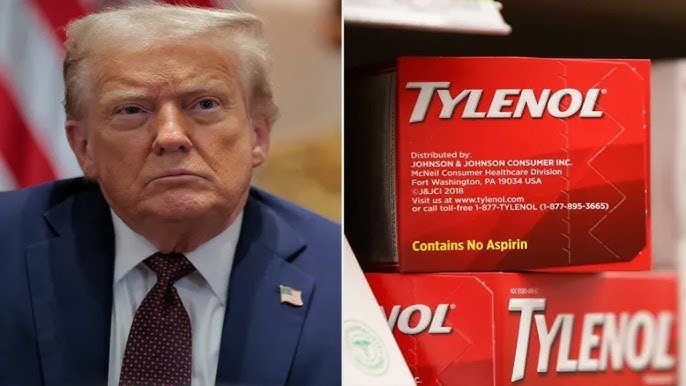
A fresh controversy has emerged in the United States following a press conference at the White House earlier this week in which President Donald Trump, alongside U.S. Health Secretary Robert F. Kennedy Jr., made startling new claims about the origins of autism. The pair suggested that autism could be linked to the use of Tylenol during pregnancy and reiterated their long-standing calls for parents to space out childhood vaccinations. Their remarks, delivered to an audience of journalists and health officials, have reignited one of the most contentious debates in modern medicine, drawing widespread criticism from the global scientific community.
Although the latest claims appear to focus on paracetamol use during pregnancy, the underlying mistrust toward vaccines and their supposed connection to autism has a far longer and more troubling history. It is a history that began not in the United States, but in the United Kingdom, more than two decades ago, with the publication of a paper that has since been described as one of the greatest medical frauds in recent history.
In 1998, former British physician Andrew Wakefield published a study in the medical journal The Lancet, alleging a link between the measles, mumps and rubella (MMR) vaccine and autism in children. At the time, the study sent shockwaves through both the medical establishment and the general public. Parents became fearful of vaccinating their children, vaccination rates plummeted, and outbreaks of previously controlled diseases began to reappear. Yet within a few years, it became clear that Wakefield’s research was not only deeply flawed but deliberately misleading.
Investigations revealed that the study had been based on manipulated data, small sample sizes, and undisclosed financial conflicts of interest. Wakefield was found to have been paid by lawyers who were preparing lawsuits against vaccine manufacturers, and his methodology fell far short of scientific standards. In 2010, more than a decade after the study’s publication, The Lancet formally retracted the paper, declaring it “utterly false.” Wakefield was subsequently struck off the UK medical register and barred from practising medicine.

Despite his disgrace, the damage was already done. Wakefield’s theory spread rapidly beyond the borders of the United Kingdom, seeding mistrust of vaccines across Europe and North America. His false claims became the foundation for a vast movement of anti-vaccine activism that has grown and adapted with the rise of social media. What began as a discredited study turned into a conspiracy theory, one that exploited parental fears and sowed division between public health authorities and communities.
It is this disinformation that has, over the years, found receptive audiences within certain political circles in the United States. Both President Trump and Robert F. Kennedy Jr. have long expressed scepticism about vaccines. Trump, during his first presidential campaign in 2016, made repeated comments suggesting a link between vaccines and autism, despite overwhelming scientific consensus to the contrary. Kennedy, a prominent vaccine sceptic, has for decades campaigned against established immunisation schedules, often citing unsubstantiated claims about vaccine safety.
On Monday, the pair extended these doubts further by suggesting a possible connection between autism and the use of Tylenol (acetaminophen), one of the world’s most widely used over-the-counter painkillers, during pregnancy. Medical experts were quick to condemn these remarks, pointing out that decades of rigorous scientific research have failed to establish any such link. The U.S. Centers for Disease Control and Prevention (CDC), the World Health Organization (WHO), and countless independent studies have consistently affirmed that vaccines do not cause autism and that acetaminophen remains a safe and effective medication when used as recommended.
Nevertheless, Trump and Kennedy’s press conference has already attracted significant media coverage and appears to have reignited vaccine hesitancy discussions at a time when health authorities are working to strengthen public confidence in immunisation campaigns. Critics argue that by reviving debunked claims, the administration risks undermining public health, particularly in communities where mistrust of medical authorities is already high.
Science journalist Adam Rutherford, in a recent discussion on The Global Story, described Wakefield’s discredited study as “the biggest medical disinformation disaster in recent history.” He warned that the persistence of these ideas demonstrates how medical myths can outlive their originators and be reshaped to suit new political or cultural contexts. “Wakefield planted the seed,” Rutherford observed, “but it was the fertile ground of mistrust and political opportunism that allowed it to grow.”
The consequences of such disinformation are not abstract. In the years following Wakefield’s original publication, vaccination rates dropped significantly in both the UK and the US. This decline led to the resurgence of measles outbreaks, a disease that had once been nearly eradicated in many developed nations. Public health experts fear that repeating these claims in 2025, at the highest level of political discourse, could have similarly damaging effects, potentially reversing hard-won gains in the fight against preventable childhood illnesses.
For Trump and Kennedy, however, the narrative appears to serve a dual purpose. On one hand, it appeals to a political base that has grown increasingly sceptical of scientific institutions, particularly in the aftermath of the COVID-19 pandemic. On the other, it underscores their long-standing resistance to what they portray as overreach by pharmaceutical companies and government health agencies. While this framing resonates with some segments of the population, health officials caution that it conflates legitimate discussions about corporate accountability with unfounded medical myths that endanger lives.
Medical institutions have been quick to respond. The American Academy of Pediatrics issued a statement reiterating that vaccines are safe, effective, and crucial to preventing serious disease. Leading obstetricians also stressed that there is no credible evidence linking acetaminophen to autism and warned that discouraging its use could leave pregnant women without a safe option for managing pain and fever, both of which can themselves pose risks during pregnancy.
The broader implications of this renewed controversy extend beyond the immediate question of vaccine safety. Public trust in science, already strained by political polarisation and misinformation during the pandemic, faces further erosion. In this climate, conspiracy theories thrive, creating an environment where individuals struggle to discern credible evidence from fabricated narratives. Experts argue that this environment, once shaped by fringe figures like Andrew Wakefield, is now being amplified from the podium of the White House itself.
While Wakefield himself has long been discredited, his ideas have taken on a life of their own. He has since moved to the United States, where he remains a figure of influence within anti-vaccine circles, despite his lack of medical credibility. His presence on the fringes of American public discourse has provided a bridge between discredited science and political populism, ensuring that the seeds he planted in 1998 continue to bear fruit nearly three decades later.
As President Trump and Secretary Kennedy continue to voice their scepticism, public health officials face an uphill battle to reaffirm confidence in vaccines and evidence-based medicine. The resurgence of these debunked claims highlights the enduring impact of misinformation and raises urgent questions about how societies can protect themselves from medical myths in an age dominated by digital media.

For many experts, the lesson remains clear: disinformation, once released, can never be fully contained. It mutates, adapts, and finds new champions, even in the most powerful offices in the world. And as the current debate in the United States shows, the legacy of Andrew Wakefield’s falsehoods continues to reverberate, shaping public health discussions in ways that threaten both national and global well-being.
Related News:
 Kinnock’s Rebuke Echoes Loudly as Corbyn Allies Launch Left-Wing Breakaway: “A Gift to Farage”
 Post Office Scandal Compensation Tops £1 Billion as Victims Finally See Justice
 UK and Norway Forge Stronger Ties Through Joint Sanctions and Enhanced Defence Cooperation
 Exclusive: Leaked Documents Reveal Khan’s Controversial Road Policy Overhaul – Drivers Warn of ‘Final Nail in Coffin’
 NHS Resident Doctors Vote for Strike Action Amid Escalating Pay Dispute
 UK Banks Granted Reprieve as BoE Delays Basel III Capital Rules Until 2028
 Trump Administration Dismisses 17 Immigration Judges, Sparking Debate Over Judicial Independence
 England Grapples with Unprecedented Bluetongue Virus Outbreak: Entire Nation Declared Infected Zone
 Justice Deferred, Not Denied: Government Orders Full Statutory Inquiry into Orgreave Clash Four Decades On
 Northern Ireland Family of Three Shot Dead in Maguiresbridge Home Incident
 West End Exposed as London’s Knife Crime Epicentre Amid Alarming Surge in Violence
 Singapore Corruption Scandal: Details Emerge on Iswaran’s Luxury Flight and Ties to Tycoon Ong Beng Seng
 Mystery Wallaby Spotted on Norfolk-Suffolk Border Sparks Police Appeal
 Manchester Airport Faces Delays After EasyJet Planes’ Wings ‘Clip’ on Runway
 Peter Andre Breaks 16-Year Silence with Scathing Statement Against Katie Price
 UK Weather: Heat Alerts Extended as Temperatures Set to Reach 30°C This Weekend
 Access to Iconic Cornish Beach Cut Off by National Trust Amid Safety Concerns
 Where Is Prince William and Kate Middleton’s New House? Inside the Historic Lodge Set to Become Their ‘Forever Home’
 Costa Blanca Holiday Horror as Food Poisoning Outbreak Hits Four-Star Hotel
 Hundreds of Swimming Pool Closures Leave Children ‘At Risk of Drowning’, Union Warns
 Xi, Putin and Kim Display Unified Front at Massive Beijing Military Parade
 British Holidaymaker’s Tragic Death in Greece Confirmed as Drowning
 India Triumph in Dubai Amid Unexpected Twists
 Public Executions in Gaza City Captured on Video Amid Ongoing Conflict
 Macron Phones Trump Over Traffic Jam in New York
 Denmark Investigates Professional Drone Incursions Across Multiple Airports, No Evidence of Russian Involvement
 Comey Indictment Deepens Fears of Political Retribution Under Trump
 Aston Villa Fight Back to End Winless Run with Convincing Victory over Fulham
 Bournemouth Stun Fulham with Dramatic Comeback in Premier League Thriller
 Misinformation and Political Pressure Force Weston-super-Mare to Abandon Refugee Sanctuary Plan
 Arsenal Showcase Depth and Flexibility as Arteta Eyes Title Challenge
 UK Affirms No Relaxation of Visa Rules for India Amid Trade Push
 Nobel Peace Prize Officials Probe Suspicious Online Bets
 Women Challenge Meta Over Targeted Ads After Miscarriage
 Vice President Vance Warns of ‘Painful’ Job Cuts as U.S. Government Shutdown Deepens
 Japanese Court Sentences Man to Death for 2023 Quadruple Murder in Rare Gun and Knife Attack
 Zelensky to Urge Missile Aid as Trump and Putin Plan Summit
 Gibbs-White Inspires Forest to Thrilling Win Over Porto
 Manchester United triumph as Mbeumo brace seals thrilling win
 Hospice Cuts Raise Alarm Across England Amid Funding Crisis
 Tragedy on Lizard Island: Cruise Passenger Dies
 Fed Cuts US Interest Rates Again Amid Labour Market Uncertainty
 Zarah Sultana Launches Party to Change Politics
 Ex-Army Sergeant Jailed for Assault on Soldier Who Later Died
 US Senate Passes Funding Bill to End Historic Shutdown
 Mary Earps’s Manchester United Return Faces Mixed Reception
 Son Reveals UK Couple in Iran Resort to Hunger Strike for Help
 Pressure Mounts on Starmer to Sack Chief of Staff Over Briefing Row
 US Justice Department Files Lawsuit Against California Over Partisan Voting Maps
 Former Lion Heskey Warns of Shortage of England Strikers
 How Cultures Interpreted the Aurora Through History
 Orban Says Ukraine Has ‘No Chance’ as EU Support Continues
 Mother Watches in Horror as Teen Daughter Dies on Tracks
 Seven Countries, One Winner: Europe’s Best Christmas Market
 Israeli Strike Kills 13 Near Palestinian Camp in Lebanon
 Commuters warned as yellow snow and ice alert hits Northern Ireland
 Haiti Qualifies for World Cup Despite Coach Never Visiting Country
 US Judge Says Meta Did Not Hold Illegal Social Media Monopoly
 Serial Rapist and Former Cop Found Guilty Again
 Pentagon Officials in Ukraine to Discuss War End
 Ex-Harvard President Pauses Teaching Over Epstein Emails
 Vietnam Battles Deadly Floods as Rains Continue
 Scottish Families Take Legal Action Over School CO Leak
 Venezuela Threatens Nobel Winner Machado with Fugitive Status
 At Least Three Dead in Bangladesh Earthquake
 Vicki Fears Losing Motability Car
 Israel Confirms Hamas Returned Dror Or’s Body
 Millions Face Higher Taxes Under Reeves New Budget
 Two National Guard Soldiers Critically Injured Near White House
 Mbappe Scores 4 as Real Madrid Edge Olympiakos
 Sri Lanka Floods Leave 56 Dead, Dozens Missing
 Scotland Gains 33 New Towns – Life in Growing Communities
 Jordan Bardella: France’s Young Presidential Contender
 AI Actress Creator Says Tilly Norwood Won’t Replace Actors
 Search underway for British man overboard off Tenerife
 Pavarotti statue frozen in Italian ice rink sparks backlash
 Barcelona, Atletico set for decisive La Liga showdown
 EU plans $105bn Ukraine aid using frozen Russian assets
 Global campaign launched to free Palestinian leader Barghouti
 Kenya Signs $2.5bn Health Deal with US Amid Data Concerns