Published: 15 October 2025. The English Chronicle Desk. The English Chronicle Online.
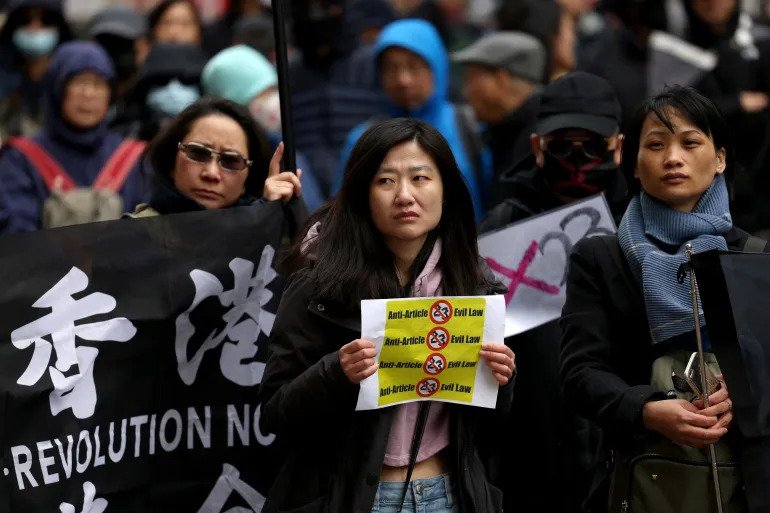
Exiled Hong Kong dissidents have warned that recent UK plans to restart some extraditions with the city could place them in danger, saying Hong Kong authorities are likely to exploit any legal loophole to pursue political opponents abroad.
The concern follows an amendment to UK extradition laws passed on Tuesday, more than five years after the UK and several other countries suspended extradition treaties with Hong Kong in response to the government crackdown on pro-democracy activists and the imposition of Beijing’s national security law. At the time, the suspension reflected concerns that Hong Kong’s legal system could no longer guarantee fair treatment or independence from political influence.
According to the UK Home Office, the suspension of the treaty had effectively rendered all extraditions with Hong Kong impossible, even where there were “strong operational grounds,” because Hong Kong was still legally listed as a treaty state. The new amendment reclassifies Hong Kong as a non-treaty state, bringing it in line with other countries, including China, where extraditions are assessed individually on a case-by-case basis.

Security Minister Dan Jarvis emphasised that the UK will “never allow” extraditions for political purposes, stressing that all requests will be rigorously assessed by courts and that individuals have the right to appeal decisions.
A Home Office spokesperson said, “This government is uncompromising in its commitment to human rights, the rule of law, and the protection of all individuals who reside in the United Kingdom, including the many Hongkongers who have chosen to make their lives here.”
Despite these assurances, exiled dissidents and advocates remain deeply concerned that Hong Kong authorities could exploit the discretionary, case-by-case process to target political figures. Since the 2019 pro-democracy protests, Hong Kong has issued arrest warrants and bounties against activists overseas, with at least 38 targeted for alleged crimes, many of which are widely regarded as politically motivated.
About 220,000 Hongkongers holding British national overseas status have fled to the UK, seeking safety and residency, while others have resettled in the US, Australia, Canada, and beyond. Yet the city’s government has signalled that it intends to pursue overseas activists “to the end.” Chloe Cheung of the Committee for Freedom in Hong Kong Foundation warned, “Even if the current government does not intend to hand us over, we need binding commitments that this will never happen under any future government.”
Carmen Law, a former Hong Kong politician now living in London, echoed these fears, noting that UK assurances that extradition requests must be “non-political” could be easily circumvented. “When you are the subject of an international arrest warrant and a bounty—a clear act of hostile state behaviour on UK soil—a statement of commitment is simply not enough,” she said.
The concerns are not unfounded. Chinese and Hong Kong authorities have a documented history of using ostensibly non-political charges to prosecute dissidents, only to later alter the allegations. Media tycoon Jimmy Lai, a leading pro-democracy activist, faced convictions on lease fraud charges widely regarded as politically motivated, while he simultaneously faces national security trials. Conservative MP Iain Duncan Smith criticised the amendment, saying, “The idea, after watching the Jimmy Lai show trial, that we should be sending anybody back to China is an absurdity.”
Luke de Pulford, cofounder of the Inter-Parliamentary Alliance on China, called on the UK government to implement a “dedicated and concrete appeal mechanism to ensure nothing slips through the cracks,” arguing that ad hoc assessments alone are insufficient to protect vulnerable individuals.
Dissidents have expressed wariness even before the amendment’s passage. Feng Chongyi, a Hong Kong academic now living in Australia and wanted in Hong Kong for alleged support of a “subversive” organisation, said he would avoid the UK if the law were amended. “Making such amendments is a clear indication that the UK government is willing to compromise and cooperate with Beijing,” he stated.
The timing of the law’s revision has drawn further scrutiny, coming amid ongoing efforts by the UK to negotiate a trade deal with China and a perceived softer approach by the British government towards Beijing. Critics argue that such political and economic considerations risk undermining the UK’s historic stance on human rights.

Emily Lau, a veteran pro-democracy politician and former Hong Kong legislator, stressed that the UK must not sacrifice the rights of the Hong Kong people for commercial gains. “I have no problem with countries doing business, but the UK must not sacrifice the rights of the Hong Kong people,” she said.
The Home Office maintains that extraditions are governed by strict legal safeguards and operate independently of trade negotiations or economic considerations. Nevertheless, concerns remain that the amendment could inadvertently expose exiled dissidents to the very risks that led to the original treaty suspensions.
This development marks a significant shift in UK-Hong Kong relations. In 2020, then opposition leader Keir Starmer praised Boris Johnson’s suspension of the extradition treaty as a “step in the right direction.” Today, however, dissidents fear that past safeguards may be eroded, leaving them vulnerable in a complex and increasingly uncertain international legal landscape.
The debate highlights the tension between legal formalities, political realities, and human rights protections. While the UK asserts its commitment to the rule of law, many exiled Hongkongers view the amendment as a potential vulnerability, fearing that even non-political extraditions could be manipulated in ways that threaten their safety.
As discussions continue, the amendment’s implications will likely be closely scrutinised by human rights groups, legal experts, and the global community, with the safety of thousands of exiled Hongkongers hanging in the balance.
Related News:
 Trump Administration Dismisses 17 Immigration Judges, Sparking Debate Over Judicial Independence
 Ministers Accused of Defamation Over Palestine Action Ban and Mass Arrests
 Father’s Tip Leads to Arrest in Charlie Kirk Murder Case
 Charlie Kirk Killing Used to Mobilise UK’s Largest Far-Right Rally in Decades
 Jailed Georgian Opposition Leaders Warn UK of Iranian Links to Ruling Party
 Shabana Mahmood Warns Border Failings Are Eroding Trust in States
 Johnson Approved China’s London ‘Super-Embassy’ in 2018
 China-critical UK academics face ‘extremely heavy’ pressure from Beijing
 Trump Urges Herzog to Grant Netanyahu Full Pardon
 US Justice Department Files Lawsuit Against California Over Partisan Voting Maps
 Trump Deploys DHS to Charlotte in Major Arrest Operation
 Congress Approves Release of Epstein Files, Trump Expected to Sign
 Texas Governor Faces Lawsuit From CAIR
 Chinese & Japanese Boats Clash Near Disputed Islands
 Putin Meets US Envoy Amid Key Ukraine Peace Talks
 Kinnock’s Rebuke Echoes Loudly as Corbyn Allies Launch Left-Wing Breakaway: “A Gift to Farage”
 UK and Norway Forge Stronger Ties Through Joint Sanctions and Enhanced Defence Cooperation
 Modi’s London Visit Seals Historic UK-India Trade Pact Amid Global Tensions
 UK Must Act with Courage and Clarity on Israel-Palestine Conflict, Says Foreign Affairs Committee Report
 Tasers Introduced in UK Prisons to Combat Rising Violence and Protect Staff
 Northern Ireland Family of Three Shot Dead in Maguiresbridge Home Incident
 Trump Threatens 100% Tariff on Nations Importing Russian Oil Amid India Standoff Over Ukraine War
 Ex-Army Chief Under Fire for Lobbying Allegations Tied to US Defence Firm
 Netanyahu Announces Plan to Take Over Gaza City, Escalating Conflict Further
 Radioactive Leak at UK’s Nuclear Warhead Base Sparks Outcry Over Safety and Secrecy
 Lammy and Vance Meet in Britain to Advance US-Brokered Ukraine Peace Talks
 Mutual Inconvenience: Why Alaska Was Chosen for the Trump-Putin Summit on Ukraine
 Hong Kong Summons UK and Australian Envoys Following Asylum Grants to Democracy Activists
 Is the UK Ready to Put Boots on the Ground in Ukraine? Assessing Military Capacity and Challenges
 Ukraine-Russia War Latest: Trump Suggests Putin Avoiding Zelensky Summit Due to ‘Personal Dislike’
 Angela Rayner Faces Scrutiny as Stamp Duty Row Deepens
 Tanni Grey-Thompson Faces Abuse Over Opposition to Assisted Dying Bill
 Protests Expected as Israeli Arms Firms Join Global Defence Trade Fair in London
 Trump Appears Sidelined as Israel’s Unprecedented Strikes Hit Qatar
 Conservative Influencer Charlie Kirk Fatally Shot During University Debate
 Thousands Gather in London to Protest Donald Trump’s Second UK State Visit
Trump Urges UK to “Call Out the Military” to Secure Borders Amid State Visit
Thousands Gather in London to Protest Donald Trump’s Second UK State Visit
Trump Urges UK to “Call Out the Military” to Secure Borders Amid State Visit
 Channel Crossings Surge: Over 1,000 People Arrive in the UK in Small Boats in a Single Day
 Widow of Charlie Kirk Forgives Killer at Emotional Memorial Service
 Mahmood Pledges Reform of Modern Slavery Laws After Court Blocks Deportation Appeal
 Denmark Investigates Professional Drone Incursions Across Multiple Airports, No Evidence of Russian Involvement
 UK Fighter Jet Purchase Could Breach Nuclear Treaty, Warns CND
 Yvette Cooper Signals Global Momentum Towards Gaza Peace Deal Amid Humanitarian Crisis
 Migrants in UK May Need to Contribute or Face Removal, Home Secretary Signals
 A Third of EU Citizens in UK Report Discrimination by Public Bodies Post-Brexit
 Misinformation and Political Pressure Force Weston-super-Mare to Abandon Refugee Sanctuary Plan
 Digital ID Plans Ignite Debate Over £600m Treasury Tax Boost and Privacy Concerns
 Public Trust in SNP Hits Historic Low Amid NHS Concerns
 Johnson Suggests Mandelson Linked to China Spy Controversy
 Witness statements reveal the CPS China spy row collapse in the UK
 Nigel Farage Calls Vladimir Putin ‘A Very Bad Dude’
 Rachel Reeves signals welfare reform ahead of key budget
 Nigel Farage’s partner linked to Brussels fraud probe
 Kosovo agrees to host Britain’s refused asylum seekers
 Lucy Powell urged ministers to reconsider costly legal case for Labour donor’s firm
 Ireland Votes as Two Women Compete for Presidency
 Experts Warn Russia’s Burevestnik Missile Could Destabilise Arms Control
 British Woman in Iran ‘Losing Hope’ Amid Ongoing Detention
 BBC Journalist Held and Interrogated in Vietnam
 UK University Suspends Human Rights Research Following Pressure from China
UK University Faces Counter-Terror Probe Over China Pressure
UK University Suspends Human Rights Research Following Pressure from China
UK University Faces Counter-Terror Probe Over China Pressure
 Just Stop Oil Protesters Convicted Amid Climate Defence Row
 WASPI Women May Get Second Chance at Pension Redress
 Ukraine-Russia war latest: Putin’s troops exploit bad weather to force Kyiv withdrawal from multiple towns
 New review urges UK to repatriate Shamima Begum, others from Syria
 Peers Flood Assisted Dying Bill with 942 Amendments
 Oklahoma Governor Grants Last-Minute Clemency to Death Row Inmate
 UK Asylum Overhaul Sparks Debate Over Human Rights and Deportations
 UK Asylum Reforms: Temporary Refugee Status and Faster Deportations
 Mahmood Defends Tough Overhaul of UK Asylum System
 South African Detained After Neo-Nazi Rally in Australia
 Federal Court Blocks Texas Republican Maps Over Racial Bias
 Rama Rebukes Mahmood for Targeting Albanian Families
 Pentagon Officials in Ukraine to Discuss War End
 Venezuela Threatens Nobel Winner Machado with Fugitive Status
 Trump Envoy to Discuss Ukraine Peace at Kremlin
 Peers Get Extra Time to Debate Assisted Dying Bill
 India’s Labour Law Overhaul Sparks Fierce Debate
 Video shows Israeli troops kill Palestinians after surrender
 Indonesia to Repatriate Two Dutch Drug Convicts