Published: 28 October 2025. The English Chronicle Desk. The English Chronicle Online.
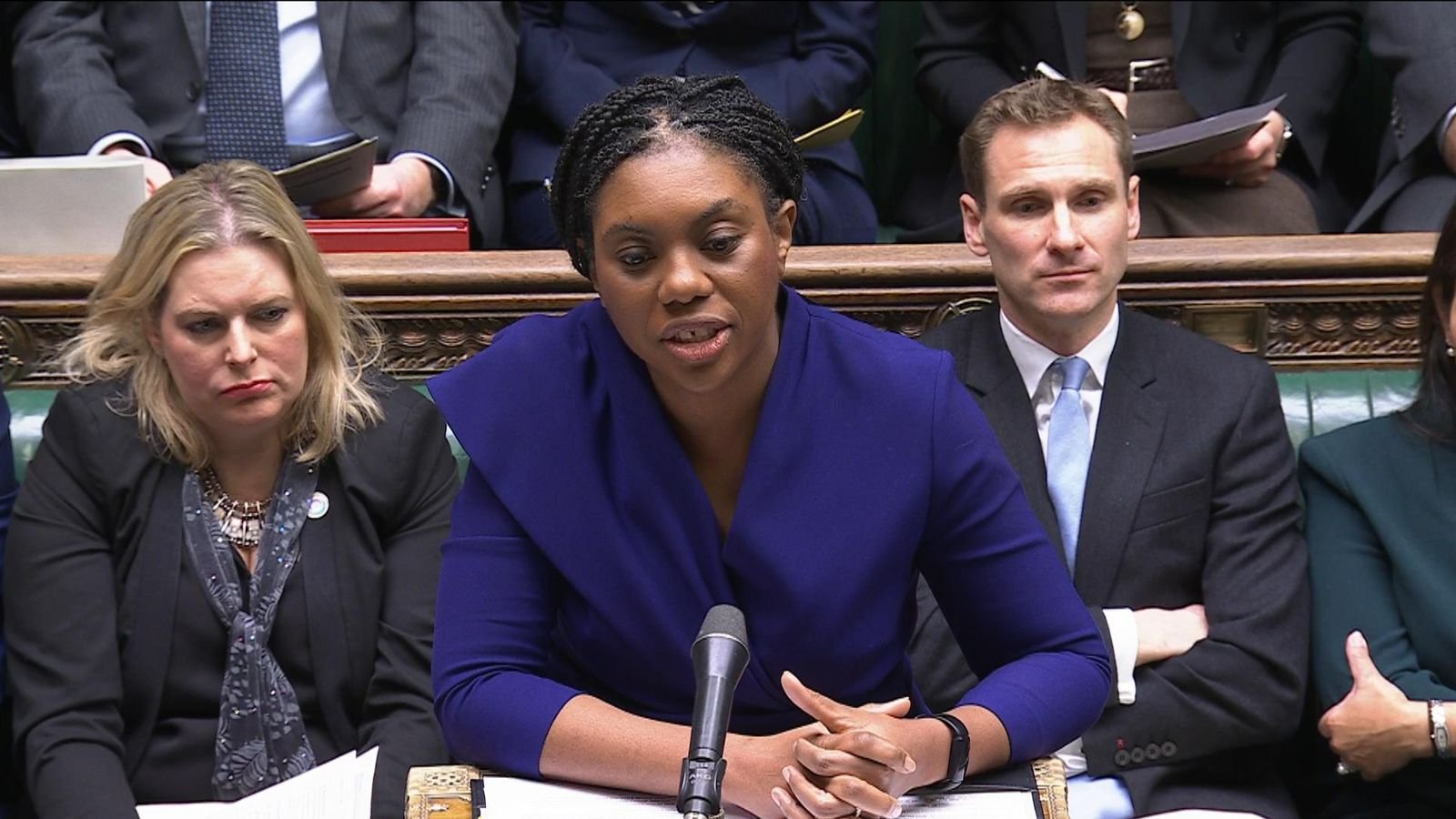
The growing political debate over how to handle the UK’s grooming gangs scandal intensified this week after Kemi Badenoch warned that Nigel Farage’s proposed “solution” could inadvertently derail ongoing and future trials. The Reform UK leader’s call for Parliament to assume control of the inquiry into grooming gangs has sparked concern from legal experts and politicians who say the plan could undermine the very prosecutions it seeks to secure.
Mr. Farage proposed that MPs should take over the inquiry and operate it as either a select committee or a joint parliamentary commission with the House of Lords. Speaking on Monday, the Reform leader said Parliament should “become a court,” allowing witnesses to give evidence under oath in order to identify those responsible for systemic failures and ensure justice for victims.
However, Ms. Badenoch, the Conservative leader, strongly rejected the idea during an appearance on ITV’s Peston. She argued that such an approach would create significant legal risks and potentially prejudice ongoing cases. “We have seen cases where evidence given in parliamentary select committees becomes inadmissible in court,” she said. “They could prejudice a court case, and you can’t discuss matters that are sub judice in Parliament. From what I know, that is not a workable plan. What we need is a national inquiry — I’ve been calling for this since January.”

Legal analysts have noted that while parliamentary proceedings are occasionally referenced in court, judges often refuse to admit them as evidence due to the principle of parliamentary privilege. This longstanding rule is intended to protect the independence of Parliament but can also create barriers to using parliamentary testimony in judicial proceedings.
Reform UK swiftly hit back at Badenoch’s criticism. A party spokesperson accused her of hypocrisy and political opportunism, claiming that during her tenure as women and equalities minister, she “never once mentioned the grooming gangs” issue in the House of Commons. “Quite simply, she ignored this issue, unlike Nigel Farage, who has been raising it since 2013,” the spokesman said. “The Tories and Kemi can never be trusted — they have failed the victims time and time again.”
The dispute comes amid renewed public anger over the government’s slow progress on the grooming gangs inquiry. Both Ms. Badenoch and Mr. Farage have called for a national inquiry since early this year, following widespread outrage over reports of systemic failures to protect victims. Their calls were initially dismissed by Prime Minister Sir Keir Starmer, who accused critics of “jumping on a far-Right bandwagon.” However, mounting public and political pressure forced Downing Street to announce a national inquiry in June, following an independent audit led by Baroness Casey.
Despite the announcement, progress has stalled. The inquiry’s launch is expected to face further delays after both leading candidates for its chairmanship — former police officer Jim Gamble and ex-Lambeth Council director Annie Hudson — withdrew from the process last week. Their resignations left the post vacant, compounding frustrations among victims and campaigners. Adding to the turmoil, five members of the victims’ advisory panel resigned earlier this month, demanding that the inquiry be chaired by a judge — a proposal the government has rejected.

At a press conference on Monday, Mr. Farage insisted that the government’s approach had “lost all credibility.” He confirmed plans to meet Commons Speaker Sir Lindsay Hoyle and to write to Dame Karen Bradley, chairwoman of the Commons Home Affairs Select Committee, urging the formation of a subcommittee to investigate the scandal. Mr. Farage likened his proposed parliamentary model to the Independent Commission on Banking, which was formed after the 2008 financial crisis and had powers to compel witnesses and take sworn testimony. “We need an inquiry that is laser-focused on the grooming gangs issue,” he said. “The current one, under Sir Keir, won’t deliver the truth victims deserve.”
Among those standing with Mr. Farage was Ellie-Ann Reynolds, one of five women who resigned from the victims’ liaison panel. She said the inquiry’s internal culture had been “gaslighting and manipulative,” adding: “We all went on to do the right thing — to seek justice, to find the truth, and not be silenced anymore. This was supposed to be about helping our future, not covering up the past.”
The controversy underscores a deepening divide over how to balance political accountability, judicial integrity, and victims’ rights in one of the UK’s most sensitive and traumatic national scandals. While both Farage and Badenoch claim to be fighting for victims, their clash reveals profound disagreements over process and power — and the future of justice for survivors remains uncertain.
Related News:
 It’s time to come clean on the China spy case
 Five More Prisoners Freed by Mistake in Essex Week
 Nearly 48,000 Zombie Knives Removed from UK Streets in a Year
 Afghan man charged with murder after west London knife attack
 Man Charged Over Cambridgeshire Train Stabbing
 Pregnant UK Teen to Be Freed from Georgian Jail
 Police Probe Four Knife Incidents Linked to Cambridgeshire Train Attack
 French Taxi Driver Cleared in David Lammy Theft Case After Fare Dispute
 Just Stop Oil Protesters Convicted Amid Climate Defence Row
 Lammy ‘misinformed’ over Wandsworth prisoner releases
 Prison sentencing reforms expected to raise crime by up to 6%, police warn
 Met Police Culture Makes Racial Harm ‘Inevitable’
 British Grandmother to Return Home After Death Sentence in Bali
 Remaining rebel Labour MPs have whip restored
 Bar Council urges legal aid for all domestic abuse family cases
 Judges to Decide Fate of Chief Constable Guilty of Contempt
 South Korea’s Jeju Island Faces Rising Tide of Illicit Drugs
 Oklahoma Governor Grants Last-Minute Clemency to Death Row Inmate
 Rio Raid’s Death Toll Raises Questions About Gang Impact
 ‘Fake Admiral’ Sparks Outrage at Remembrance Event
 Delhi Car Bomb Arrest: Suspect Linked to Deadly Attack
 Paralegal Fired After Exposé on Illegal Worker Scam
 Dan Wootton Rejects Catfishing Allegation in Court
 Charlotte Raids: 130 Arrested in Major Immigration Sweep
 South African Detained After Neo-Nazi Rally in Australia
 Convicted Killer Challenges Vegemite Ban Behind Bars
 Newport Man Left Injured After Electric Bike Collision
 Teens ‘Ran Amok’ at Ex-MP’s Covid Testing Firm
 Liverpool Council ‘Failed to Respond’ Before Fatal Flood
 Serial Rapist and Former Cop Found Guilty Again
 Man Charged Over Attempted Murder of Senior Officer
 Two Officers Injured After Van Deliberately Rams Patrol Car
 Man Denies Stealing Bronze Age Gold from Museum
 Trump Signs Bill Releasing Justice Department Files on Epstein
 Trump Slams Democrats With ‘Seditious’ Death Claim
 Gardener Guilty of Brutal Attack on Teacher Partner
 Runaway Driver Caught by DNA Evidence
 Man Arrested Over Manchester Synagogue Terror Attack
 Twelve Prisoners Released in Error, Two Still Missing
 Man Swallows $19K Fabergé Egg Pendant in Theft
 Tasers Introduced in UK Prisons to Combat Rising Violence and Protect Staff
 Northern Ireland Family of Three Shot Dead in Maguiresbridge Home Incident
 Tragedy in the Skies: Inquest Reveals Devastating Cause of Death in Southend Plane Crash
 Targeted Attack in Bury Sparks Murder Investigation as Community Awaits Justice
 Man Remanded After Children Fall Ill at Leicestershire Summer Camp in Shocking Child Cruelty Case
 Merseyside Police Helicopter Crew Cleared After Low-Altitude Pursuit of Suspect
 UK Launches Major Crackdown on Networks Profiting from Online Child Sexual Abuse
 No Evidence Found to Substantiate Alleged Rape in Oxfordshire Churchyard, Police Confirm
 Peterborough Mosques Tighten Security After Attack
 FBI Director Kash Patel Defends Girlfriend Amid Government Jet Claims
 Experts Warn on Home Birth Risks, Call for Skilled Midwives
 Newcastle United Lifts Ban on Fan Over Gender-Critical Views
 Jailed UK climate protesters face extremist-style restrictions
 King Charles to Lead Nation in Remembrance Sunday Service
 How to get help when a child goes missing – call 999 urgently
 ‘Reckless’ cuts to victims’ services will cost more than they save
 Government urges schools to ban phones to curb classroom disruption
 Pop Stars Call on UK Government to Cap Resale Prices for Fans
 Peers Flood Assisted Dying Bill with 942 Amendments
 US Justice Department Files Lawsuit Against California Over Partisan Voting Maps
 Israel Confirms Returned Hostage as Meny Godard
 Trump Deploys DHS to Charlotte in Major Arrest Operation
 New Evidence Emerges in Haditha Family Killings
 UK Asylum Overhaul Sparks Debate Over Human Rights and Deportations
 Mum Calls for New Licence Rules After Teen Road Death
 Mother Watches in Horror as Teen Daughter Dies on Tracks
 Agency Workers Vote to Join Picket Lines Amid Dispute
 Eminem Takes Legal Aim at Australian ‘Swim Shady’ Brand
 The Lasting Legacy of Seven: Crime, Morality, and Urban Decay
 Ex-Harvard President Pauses Teaching Over Epstein Emails
 Ex-Olympian Snowboarder Now Drug Kingpin Charged with Murder
 Venezuela Threatens Nobel Winner Machado with Fugitive Status
 Most Tories Expect to Support a Farage-Led Government
 Trump Envoy to Discuss Ukraine Peace at Kremlin
 Peers Get Extra Time to Debate Assisted Dying Bill
 Two National Guard Soldiers Critically Injured Near White House
 Southern Lebanon reels as Israeli strikes shatter communities
 Jordan Bardella: France’s Young Presidential Contender
 Virgin Media Fined £23.8m Over Telecare Safety Failures
 Starmer’s communications chief to outline media strategy overhaul