Published: 12 November 2025. The English Chronicle Desk. The English Chronicle Online
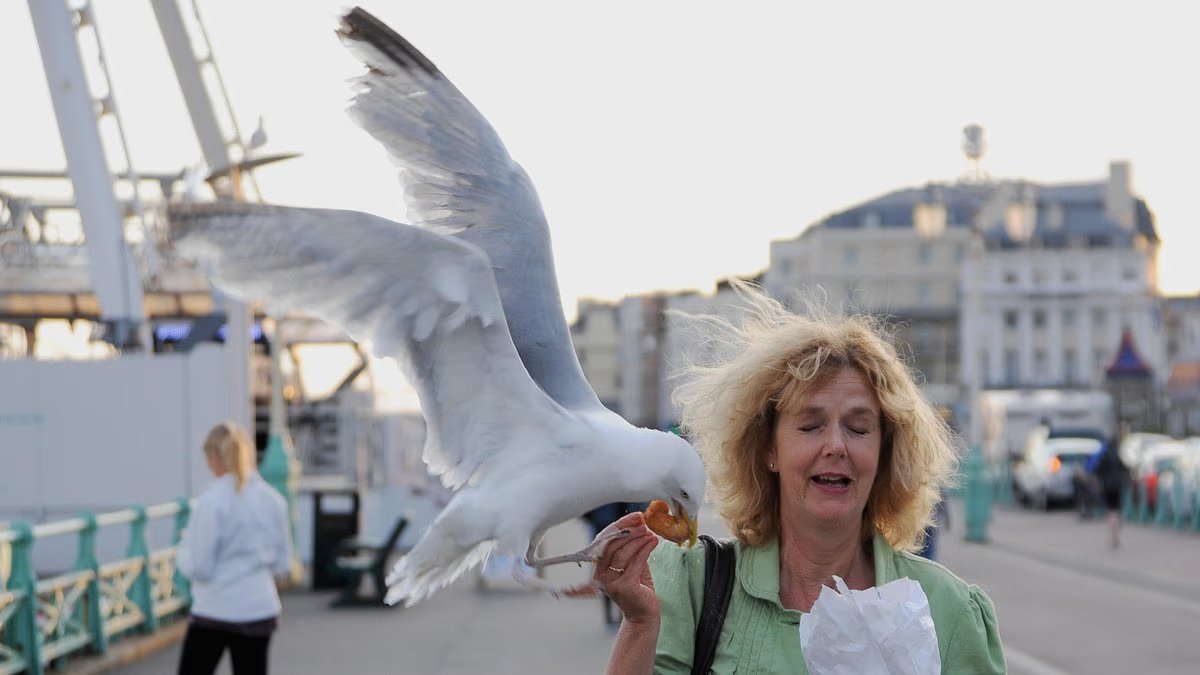
For seaside visitors in the UK, the sight of a herring gull swooping toward an unattended pasty or a bag of chips is all too familiar. Many react instinctively, waving their arms frantically or retreating toward the nearest shelter, hoping to avoid losing their snack. But a new study from the University of Exeter suggests there may be a more effective—and surprisingly simple—method: a no-nonsense shout.
Researchers from Exeter’s Centre for Ecology and Conservation aimed to identify the most effective way to deter gulls without resorting to harmful or aggressive measures. In a controlled experiment across nine Cornish seaside towns, the team placed portions of chips in locations where gulls were almost guaranteed to find them. Once the birds approached, the scientists played one of three recordings to test gull responses: a male voice shouting, a male voice speaking the same words at the same volume, and a neutral recording of a robin’s song.
The results were striking. Nearly half of the gulls exposed to the shouting voice flew away within a minute, demonstrating that the birds were highly responsive to the tone and delivery of human speech. By contrast, only 15% of gulls exposed to the spoken voice flew off, although the majority still distanced themselves from the food, indicating that they sensed a potential threat. Interestingly, 70% of gulls hearing the robin song remained at the food, showing minimal reaction to non-threatening natural sounds.

Crucially, the shouting and speaking recordings were played at the same volume. This meant that it was not the loudness of the sound but the acoustic properties of the delivery that influenced the gulls’ behaviour. The researchers suggested this could be the first study to examine whether wild, non-captive animals can perceive differences in the way humans speak the same words at the same volume—a trait previously observed mainly in domesticated species like dogs, pigs, and horses.
“We found that urban gulls were more vigilant and pecked less at the food container when we played them a male voice, whether it was speaking or shouting,” said Neeltje Boogert, a lead researcher at Exeter’s Penryn campus in Cornwall. “But the difference was that the gulls were more likely to fly away at the shouting and more likely to walk away at the speaking. So when trying to scare off a gull that’s trying to steal your food, talking might stop them in their tracks, but shouting is more effective at making them fly away.”
Boogert explained that the study demonstrates gulls’ ability to interpret subtle variations in human vocal signals. “Normally when someone is shouting, it’s scary because it’s a loud noise, but in this case all the noises were the same volume and it was just the way the words were being said that was different. It seems that gulls pay attention to the way we say things, which we don’t think has been seen before in any wild species, only in those domesticated species that have been bred around humans for generations, such as dogs, pigs, and horses.”
The study also underscores the importance of non-harmful methods for managing human-wildlife interactions. Herring gulls are considered a species of conservation concern, and traditional deterrent methods—such as chasing or physically threatening birds—can be stressful or damaging. “This experiment shows there are peaceful ways to deter them that don’t involve physical contact,” Boogert noted.
The researchers plan to extend their study to explore whether female voices have a similar effect on gulls’ behaviour. This could provide further insight into how gulls perceive human vocal signals and whether their responses are influenced by gendered variations in pitch or tone.
An unexpected finding emerged regarding gulls’ behaviour in different types of towns. The researchers initially hypothesised that gulls in larger, more populated towns such as Penzance would be more aggressive, given their frequent exposure to human activity. Instead, gulls in smaller, highly touristy towns like St Ives were more likely to target human food. Boogert suggested that this may be because these birds are accustomed to foraging opportunistically for meals provided by visitors, highlighting how local ecological conditions and human activity patterns influence wildlife behaviour.
The study sheds new light on the complex relationship between humans and wildlife in urban and coastal environments. Gulls have long been a source of fascination and frustration for the public, their adaptability and boldness making them both charming and challenging neighbours. By understanding the nuances of their behaviour, researchers hope to provide evidence-based recommendations that reduce conflict while supporting conservation goals.
In addition to practical guidance for beachgoers, the research contributes to a growing field of animal cognition studies. It demonstrates that wild animals can perceive and respond to human vocal cues in ways that were previously underestimated. Such findings have implications beyond coastal towns, informing strategies for managing urban wildlife interactions and encouraging coexistence without harm.
Boogert concluded: “The study shows that subtle variations in human vocalisation can be a powerful tool in deterring wildlife. A simple, assertive shout—without raising the volume—can make a herring gull reconsider its approach. It’s a method that is easy to implement, non-invasive, and considerate of the birds’ welfare.”

The findings have practical appeal for anyone visiting coastal regions during the busy tourist season. From families enjoying ice cream to holidaymakers savoring pasties on Cornish beaches, knowing how to assertively communicate with gulls could reduce food theft and enhance the seaside experience. Rather than flailing arms or sprinting away, a clear, assertive voice may be all that is required.
As humans and wildlife continue to interact in shared spaces, studies like this one highlight the importance of understanding animal behaviour to prevent conflict while respecting ecological and conservation considerations. With gull populations increasingly adapting to urban and tourist environments, such insights are invaluable in promoting peaceful coexistence.
By combining field observations with controlled experiments, the Exeter team has offered a rare glimpse into how herring gulls interpret human vocal signals. Their work not only informs public behaviour but also contributes to broader research on the cognitive abilities of wild birds, demonstrating adaptability and environmental awareness that extend far beyond instinctual feeding behaviours.
Ultimately, the study reinforces the idea that simple, non-invasive interventions—like a measured shout—can effectively manage interactions with wildlife, safeguarding both human interests and the wellbeing of animal populations. For seaside visitors, it turns out that raising one’s voice might be the most humane and effective way to protect a Cornish pasty from an opportunistic gull.
Related News:
 Hospice Cuts Raise Alarm Across England Amid Funding Crisis
 No link found between paracetamol in pregnancy and autism
 Five-Year-Old Dies After Rare Tonsil Surgery Complication
 Search underway for British man overboard off Tenerife
 More Patients Now Contacting GPs Online, Data Shows
 Women Challenge Meta Over Targeted Ads After Miscarriage
 Mother dies after black market weight loss injection
 Young Woman Missed 13 Times by GPs Before Bowel Cancer Diagnosis
 Man Trapped in Quicksand Rescued in Dramatic Coastal Rescue
 Derby Bounce Centre to Close Amid Car Park Dispute
 Morning-After Pill Now Free Across England’s Pharmacies
 The diet that can significantly ease symptoms of IBS
 UK launches search for first-ever ‘town of culture’ to highlight overlooked areas
 Experts Warn on Home Birth Risks, Call for Skilled Midwives
 The Lowry Hotel: Manchester’s Iconic Five-Star Retreat
 Experts Urge Legal Right to Timely Cancer Care
 NHS Takes Over Nuffield Hospital in ‘Windfall’ for London Care
 North Sea oil workers must lose weight or face job loss
 Crisis charity to become landlord amid UK housing emergency
 Seven Conditions That Automatically Qualify You for a Free Bus Pass
 UK Disability Pay Gap Means Millions Work for Free From Today
 Reeves rejects £1bn plea for NHS redundancy payouts
 NHS trust fined after woman takes life in mental health unit
 Leading doctors issue warning amid ‘bad’ flu season
 PM Condemns Leaks, Vows Loyalty to Ministers and Stability
 Son Reveals UK Couple in Iran Resort to Hunger Strike for Help
 Two in Three Women in UK Armed Forces Report Harassment
 UK Asylum Reforms: Temporary Refugee Status and Faster Deportations
 Five Young People Killed in Tragic Dundalk Road Crash
 New Campaign Trains Vets to Spot Farmers’ Health Risks
 Stroke Patient Mistaken for Drunk, Care Delayed
 Mother Watches in Horror as Teen Daughter Dies on Tracks
 Seven Countries, One Winner: Europe’s Best Christmas Market
 Van Dwellers Face Eviction After Park Misuse Sparks Outcry
 ‘Traumatic Wait’: Northern Ireland Women Face Breast Cancer Delays
 Commuters warned as yellow snow and ice alert hits Northern Ireland
 Court to Hear Challenge to Wimbledon Expansion Plan
 Woman Meets Boy Whose Life She Saved with Kidney
 Covid Doctor’s Emotional Farewell Letter to Family
 TikTok Star Jessie Yendle Mocked by KFC
 UK Energy Bills to Rise Slightly in January
 Coffins Now Too Large to Cremate Amid Rising Obesity Crisis
 David Cameron Reveals Prostate Cancer Diagnosis, Advocates Screening
 Inquiry Opens Into Disgraced Surgeon Eljamel Scandal
 Rookie Driver Hollie McRae Flips Car but Walks Away Safe
 Vicki Fears Losing Motability Car
 Planned Palestinian Flag Raising at Belfast City Hall Faces Delay Amid Legal Concerns
 Sudanese Family Vows to Stay After Racist Graffiti
 Fibromyalgia Patients Struggle as NHS Fails to Provide Care
 Scotland Gains 33 New Towns – Life in Growing Communities
 Machynlleth High Street Left Without Christmas Lights
 Second homes curbs quashed in Gwynedd legal ruling
 The Ketamine Crisis in the UK is a Silent Epidemic Leaving Users with Lifelong Pain
 Alarming rise in abusive teen relationships in the UK sparks urgent warnings
 Manchester Airport Faces Delays After EasyJet Planes’ Wings ‘Clip’ on Runway
 Access to Iconic Cornish Beach Cut Off by National Trust Amid Safety Concerns
 Why E-Bikes and E-Scooters Are Making Streets a ‘Nightmare’ for Blind People
 One in Three GPs in England Do Not Work in NHS, Raising Concerns Over Access to Care
 M&S and Morrisons Lead Christmas Supermarket Taste Test
 Army Barracks to House Migrants as Hotels Phase Out
 Peterborough Mosques Tighten Security After Attack
 Children to Learn Local History in Major Curriculum Overhaul
 Prince William Plants Trees with Brazil’s Nature Heroes
 Kent village told to remove flags before Christmas lights go up
 Patients to Test Health at Home to Ease NHS Winter Pressure
 How to get help when a child goes missing – call 999 urgently
 From Lego to Pokémon: How Adults Are Driving UK Toy Market Growth
 Mary Earps’s Manchester United Return Faces Mixed Reception
 Politics latest: Starmer ‘will fight any leadership coup’ as Streeting denies attempt to oust Labour PM
 Working-Class Men with Prostate Cancer Left Behind by NHS
 Former Lion Heskey Warns of Shortage of England Strikers
 Mum Calls for New Licence Rules After Teen Road Death
 Healthy Habits in Your 30s That Boost Life in Your 70s
 Serial Rapist and Former Cop Found Guilty Again
 Scottish Families Take Legal Action Over School CO Leak
 Labour MP claims devolution bill is ‘blatant discrimination’ against Cornwall
 Millions Face Higher Taxes Under Reeves New Budget
 Delhi’s Toxic Air Crisis Leaves Children Sick and Vulnerable
 Virgin Media Fined £23.8m Over Telecare Safety Failures
 Pavarotti statue frozen in Italian ice rink sparks backlash