Published: 13 November 2025. The English Chronicle Desk. The English Chronicle Online.
A landmark independent review has urged the United Kingdom to bring back Shamima Begum and other British-linked individuals stranded in Syrian detention camps, arguing that the current government policy of stripping citizenship and refusing repatriation has become both legally and morally indefensible. The report, released by the Independent Commission on UK Counter-Terrorism Law, Policy and Practice, describes Britain’s ongoing approach as “increasingly untenable,” citing severe humanitarian concerns and long-term security implications.
According to the commission, the UK’s continued reluctance to facilitate voluntary repatriation of its nationals — including those who have been deprived of citizenship — is in direct conflict with international legal obligations and fundamental human rights standards. The report asserts that those detained in northeast Syrian camps are enduring “inhuman and degrading” conditions, with little access to healthcare, food, or due process. It stresses that a “coherent, humane, and security-conscious repatriation strategy” would not only fulfill Britain’s moral responsibilities but also strengthen national security by allowing for better oversight, rehabilitation, and reintegration.

The issue has come under renewed scrutiny amid growing international pressure, particularly from allies such as the United States, which has repeatedly urged all nations to take responsibility for their citizens detained in Syria. The report warns that the UK risks isolating itself as an “outlier among comparable democracies,” as other Western countries, including France, Germany, and Canada, have already repatriated many of their nationals.
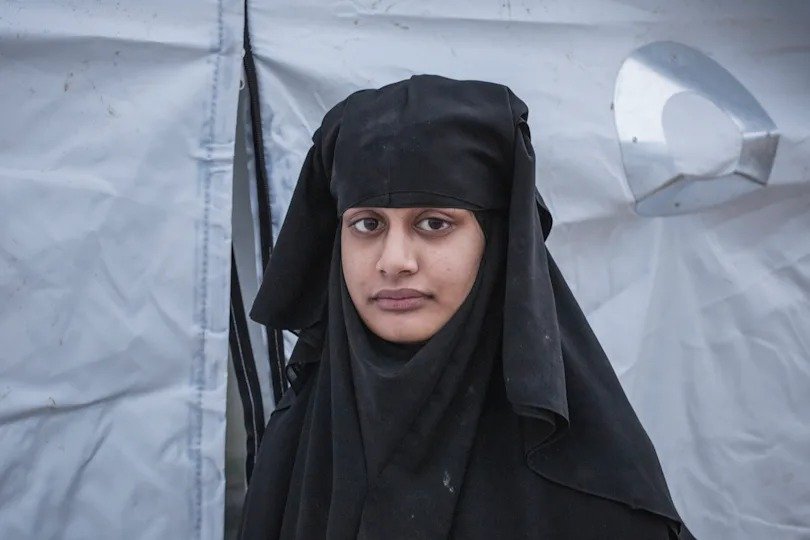
At the centre of this debate lies the case of Shamima Begum, the British-born woman who left her home in east London in 2015 at the age of fifteen to join the Islamic State group in Syria. Accompanied by two school friends, Begum’s teenage decision made international headlines and became a symbol of the complex intersection between radicalisation, national security, and citizenship law. After marrying an ISIL fighter and giving birth to three children — all of whom later died in infancy — Begum was discovered living in the al-Roj detention camp in 2019. Shortly afterwards, the UK Home Office revoked her citizenship, citing national security grounds.
Begum has since fought a lengthy legal battle to overturn the decision, arguing that she was a victim of grooming and trafficking. However, her appeal was dismissed by the Court of Appeal in February 2024, which upheld the government’s position that the deprivation of her nationality was lawful. Born to Bangladeshi parents, Begum has been left stateless, as Bangladesh has publicly confirmed that she is not a citizen of the country.
The new report takes a notably different stance, acknowledging the complexity of individual cases but maintaining that indefinite detention in harsh conditions does not serve justice or security. “Many detainees, especially women and children, are victims of coercion, trafficking, or exploitation, even if some have been involved in terrorism-related activity,” the commission wrote. It further argued that blanket exclusion policies ignore the nuances of these situations and may, in fact, contribute to radicalisation in the long term by denying individuals any path toward accountability or rehabilitation.
The commission estimates that between 55 and 72 UK-linked individuals remain detained across Syria’s sprawling camp system, including around 30 to 40 children. Conditions in these facilities have deteriorated sharply in recent years, with overcrowding, disease, and malnutrition posing severe risks to health and safety. Aid groups and human rights organisations have repeatedly condemned the UK for refusing to intervene, warning that children in particular are suffering from a lack of education, proper nutrition, and medical care.
The report also points to a shifting geopolitical landscape that could soon render Britain’s hardline position unsustainable. It notes that as the situation in Syria evolves — including possible changes in local governance and increasing pressure from international allies — the British government may soon face little choice but to initiate repatriation. “As other states repatriate their citizens and the camps gradually empty, the prospect of what was once described as ‘Europe’s Guantanamo’ becoming ‘Britain’s Guantanamo’ grows increasingly real,” it said.
Security experts quoted in the report argue that bringing detainees back under controlled legal frameworks would allow British authorities to better assess risks, prosecute those who have committed crimes, and rehabilitate others. By contrast, abandoning them in deteriorating conditions leaves them outside the reach of justice and monitoring, creating potential security blind spots. “The current policy may feel like a short-term deterrent,” the report notes, “but in the long term it may be counterproductive to the UK’s own security interests.”
The Home Office has yet to issue an official response to the commission’s findings, but previous statements suggest that the government remains firm in its stance. Ministers have consistently argued that individuals who joined terrorist groups overseas pose an ongoing security threat and that the revocation of citizenship is a legitimate measure to protect national safety.

Nevertheless, public opinion appears to be softening, particularly as awareness grows of the dire humanitarian situation in the camps. Advocacy groups, human rights lawyers, and former counterterrorism officials have all joined the call for a more balanced approach — one that recognises both the necessity of security and the importance of justice and compassion.
Whether the government will heed the commission’s recommendation remains uncertain. Yet, the release of this report marks a significant moment in the ongoing national debate over citizenship, accountability, and moral responsibility. For many, it represents a call for the UK to confront the human realities behind its counterterrorism policies and to ensure that justice is pursued not only through strength, but through conscience.
Related News:
 Charlie Kirk Killing Used to Mobilise UK’s Largest Far-Right Rally in Decades
 UK Must Act with Courage and Clarity on Israel-Palestine Conflict, Says Foreign Affairs Committee Report
 Tasers Introduced in UK Prisons to Combat Rising Violence and Protect Staff
 Starmer and Trump to Meet in Scotland Amid Growing Gaza Ceasefire Pressure
 UK Government Unveils Tough Crackdown on Social Media Ads Promoting Illegal Channel Crossings
 MPs Call on UK Government to Delay Biometric Visa Checks for Gaza Students Amid Humanitarian Crisis
 Police Prepare for Potential Disorder as Far-Right Groups Promote Anti-Migrant Protests Across England
 Radioactive Leak at UK’s Nuclear Warhead Base Sparks Outcry Over Safety and Secrecy
 Mass Arrests in London as Protest Defies Ban on Palestine Action
 ‘I’m collateral damage’: ex-minister Tulip Siddiq on her Bangladesh corruption trial
 Mutual Inconvenience: Why Alaska Was Chosen for the Trump-Putin Summit on Ukraine
 “I Don’t Expect to Live a Normal Life”: How a Leeds Teenager Became the Target of a Chinese Bounty
 Ministers Accused of Defamation Over Palestine Action Ban and Mass Arrests
 Police Advised to Disclose Ethnicity of Suspects in High-Profile Cases
 Is the UK Ready to Put Boots on the Ground in Ukraine? Assessing Military Capacity and Challenges
 UK Police Face ‘Chronic Pressure’ Amid Surge in Protests Over Asylum and Gaza
 Graffiti Targeting Angela Rayner Removed After Resident Foots the Bill
 Protests Expected as Israeli Arms Firms Join Global Defence Trade Fair in London
 Madeleine McCann Case: German Woman at Centre of Hit-and-Run Theory Speaks Out
 Peter Mandelson Referred to Jeffrey Epstein as ‘My Best Pal’ in 50th Birthday Letter
 Peter Mandelson’s Letter to Jeffrey Epstein Sparks Renewed Scrutiny
 UK Home Office to Launch French Beach Signage to Warn Asylum Seekers of Risks
 UK Immigration Figures: Separating Facts from Perceptions
 Far-Right Rally in London Draws Record Crowds Amid Clashes with Police
 Thousands Gather in London to Protest Donald Trump’s Second UK State Visit
 Trump Urges UK to “Call Out the Military” to Secure Borders Amid State Visit
Trump’s UN Speech Criticises London and UK Policies, Draws Far-Right Attention
Trump Urges UK to “Call Out the Military” to Secure Borders Amid State Visit
Trump’s UN Speech Criticises London and UK Policies, Draws Far-Right Attention
 UK Fighter Jet Purchase Could Breach Nuclear Treaty, Warns CND
 Far-Right Facebook Groups Fuel Radicalisation in the UK, Investigation Reveals
 Metropolitan Police Considers Requiring Officers to Declare Freemasonry Membership
 A Third of EU Citizens in UK Report Discrimination by Public Bodies Post-Brexit
 Jailed Georgian Opposition Leaders Warn UK of Iranian Links to Ruling Party
 Russia repeatedly targets UK military satellites, warns Space Command chief
 Pro-Palestine March to Proceed in London Despite Calls to Cancel After Manchester Attack
 UK Police to Gain New Powers to Manage Repeated Protests, Home Office Announces
 Stephen Lawrence’s Father Demands Justice Before Killer’s Parole
 UK Universities Warn Students Ahead of 7 October Pro-Palestine Protests
 Starmer Condemns 7 October Student Protests as ‘Un-British’
Starmer Considers Stricter Measures on Pro-Palestinian Protest Chants
Starmer Condemns 7 October Student Protests as ‘Un-British’
Starmer Considers Stricter Measures on Pro-Palestinian Protest Chants
 Public Trust in SNP Hits Historic Low Amid NHS Concerns
 Cooper Unveils £4m Cyber Plan Against Russian Hackers
 Tony Blair Met Jeffrey Epstein at Downing Street in 2002
 UK Charities Warn Rising Hate Threatens Staff Safety
 Johnson Suggests Mandelson Linked to China Spy Controversy
 Witness statements reveal the CPS China spy row collapse in the UK
 Large scale Chinese spying in UK sparks political storm
 Nigel Farage Calls Vladimir Putin ‘A Very Bad Dude’
 Southport rioter dies in cell after prison disciplinary charge
 Rachel Reeves signals welfare reform ahead of key budget
 Prince Andrew met alleged Chinese spies during Pitch@Palace China trips
 Kosovo agrees to host Britain’s refused asylum seekers
 Plaid Cymru Triumphs in Caerphilly, Ending Labour Century-Long Hold
 UK Gamer Recruited by Wagner Group Found Guilty of Arson
 Rachel Reeves to lead UK trade push in Saudi Arabia amid rights debate
 British Woman in Iran ‘Losing Hope’ Amid Ongoing Detention
 Johnson Approved China’s London ‘Super-Embassy’ in 2018
 BBC Journalist Held and Interrogated in Vietnam
 Reform Councillor Defects to Tories Over ‘Uncomfortable’ Policies
 FBI Director Kash Patel Defends Girlfriend Amid Government Jet Claims
 Trump Speaks on Prince Andrew’s Royal Scandal Fallout
 French Taxi Driver Cleared in David Lammy Theft Case After Fare Dispute
 Just Stop Oil Protesters Convicted Amid Climate Defence Row
 Met Police Culture Makes Racial Harm ‘Inevitable’
 British Grandmother to Return Home After Death Sentence in Bali
 Eleven Arrested After Pro-Palestine Protest at Villa Match
 ‘Reckless’ cuts to victims’ services will cost more than they save
 BBC director-general and news chief resign amid bias row
 British state supplied victims to ‘worst sex offender in history’
 New Epstein Files Spark Political Clash in Washington
 Ukraine Energy Corruption Scandal Hits Zelensky’s Inner Circle
 Victims’ commissioner Baroness Newlove dies aged 63
 UK Candidate Moved to Safe House After Election Threats
 Rama Rebukes Mahmood for Targeting Albanian Families
 Russian Vessel Used Lasers on RAF Pilots, UK Claims
 WhatsApp Messages Expose Nathan Gill’s Bribery
 Venezuela Threatens Nobel Winner Machado with Fugitive Status
 Ex-Classmate Accuses Farage of Dishonesty on Racism Claims
 Trump Envoy to Discuss Ukraine Peace at Kremlin
 Video shows Israeli troops kill Palestinians after surrender
 Ex-Brexit MEP Rejects Claim of Pro-Russia Payments