Published: 14 November 2025. The English Chronicle Desk. The English Chronicle Online
Cristiano Ronaldo’s return to Dublin for Portugal’s World Cup qualifying clash against the Republic of Ireland was meant to be a nostalgic trip down memory lane. On the eve of the match, the five-time Ballon d’Or winner spoke fondly of his memories in the Irish capital, recalling the pre-season friendly he played for Real Madrid against Shamrock Rovers sixteen years ago at Aviva Stadium. Ronaldo had promised in the press conference that he would “try to be a good boy,” a tongue-in-cheek assurance meant to ward off the taunts of Irish fans. Yet, as the match unfolded, he instead cemented his reputation as one of Ireland’s footballing nemeses.
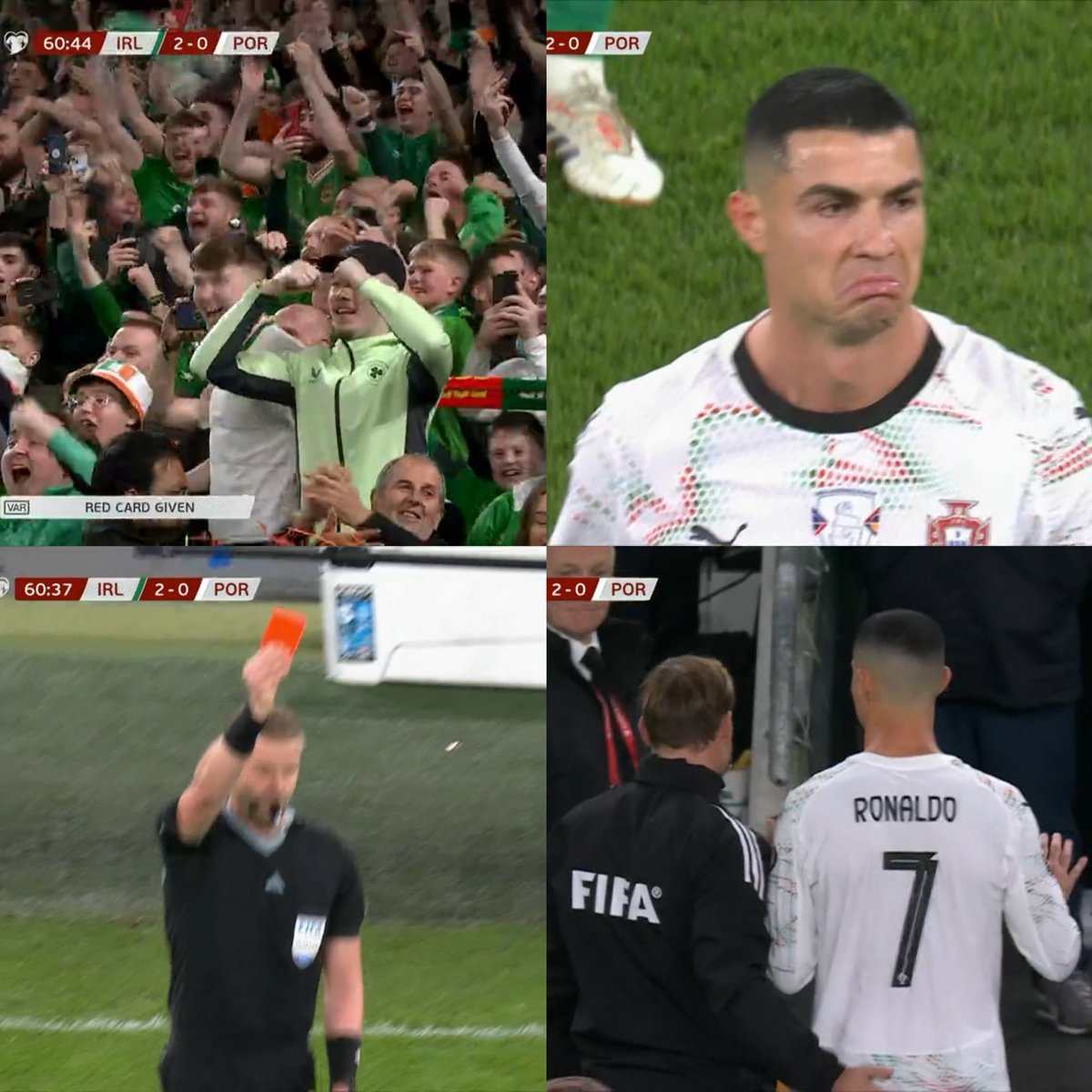
The drama reached its peak in the 60th minute, with Portugal trailing 2-0 thanks to Troy Parrott’s first-half brace. Ronaldo, awaiting a cross inside the Irish penalty area, found himself jostling for position against Ipswich defender Dara O’Shea. In a heated moment, the 40-year-old forward shoved his elbow into O’Shea’s back, sending the defender sprawling to the turf. The incident immediately sparked uproar among the Irish players and supporters, who vocally demanded action. Referee Glenn Nyberg initially brandished a yellow card, but following consultation with the video assistant referee and an on-pitch review, Nyberg upgraded the sanction to a red card.
The sending-off was a dramatic and controversial moment in a game already fraught with tension. Rather than quietly exiting the pitch, Ronaldo turned his departure into a theatrical display, sarcastically applauding the Irish supporters and exchanging sharp words with Republic of Ireland manager Heimir Hallgrimsson before leaving the field. The interaction marked the climax of an intriguing spat between the superstar and the Icelander, whose pre-match comments appeared to be aimed at influencing Ronaldo’s behavior.

Hallgrimsson had hinted at psychological tactics prior to the game, urging referees not to be swayed by Ronaldo’s stature and influence. The Irish manager cited Portugal’s previous meeting with Ireland in October, where Ronaldo had a penalty saved, claiming the star had “controlled the referee.” “He complimented me for putting pressure on the referee,” Hallgrimsson said, reflecting on a handshake that concluded their earlier press conference exchange. “It was his action on the pitch that cost him the red card. It had nothing to do with me—unless I got into his head.”
When asked if he spoke with Ronaldo following the match, Hallgrimsson downplayed any lingering tensions. “No, I think we spoke enough when he came off. There was nothing to speak about. This was just a moment of a little silliness from him, I would say.” His measured response contrasted sharply with the reaction from Portugal boss Roberto Martinez, who defended his captain while subtly criticizing Hallgrimsson’s comments.
Martinez framed the red card as an unfortunate moment for a player who had never been sent off in 226 international appearances. “The red card is just a captain that has never been sent off before in 226 games—I think that just deserves credit—and today, I thought it was a bit harsh because he cares about the team,” Martinez said. He emphasized that Ronaldo had been repeatedly impeded inside the box, “being grabbed, being pulled, being pushed,” and that the incident, while appearing dramatic on camera, was far less severe in reality. “I think the action looks worse than what it actually is. I don’t think it’s an elbow, I think it’s a full body, but from where the camera is, it looks like an elbow. But we accept it.”
Martinez also expressed frustration with Hallgrimsson’s pre-match comments about referees, implying that such remarks may have indirectly influenced how events unfolded on the pitch. “The only thing that leaves a bitter taste in my mouth is at the press conference yesterday, your coach was talking about the aspect of the referees being influenced, and then a big centre-half falls on the floor so dramatically at the turn of Cristiano’s body.”
The consequences of Ronaldo’s red card extend beyond disciplinary embarrassment. He will miss Portugal’s upcoming qualifier against Armenia, and under Fifa’s disciplinary code, he could face a three-match suspension for violent conduct. Chapter two, Article 14(i) of the Fifa regulations stipulates that players shall be suspended for assault, including elbowing, punching, kicking, or hitting an opponent, with a minimum of three matches or an appropriate period for the infraction.

If Ronaldo receives a three-match ban and Portugal automatically qualifies for the World Cup in North America, he would miss the first two group-stage games. Should Portugal instead drop into the playoff round, he would serve his suspension during those matches. The final determination will rest with Fifa’s disciplinary committee, meaning Ronaldo’s potential swansong on the world stage hangs in the balance. Regardless, his dramatic return to Dublin, replete with controversy and theatrics, captivated fans and media alike.
The context of the match added layers of complexity to the incident. Portugal, aiming to secure World Cup qualification, was under intense pressure, and Ronaldo’s frustration had been evident throughout the game. His interactions with the Irish defense showcased not only his competitive fire but also the tactical awareness that has defined his career. While the elbow—or shoving action—was brief, it became the focal point of discussions post-match, highlighting the fine line elite athletes navigate between physicality and disciplinary risk.
Media coverage of the red card emphasized both the symbolic and practical dimensions of the incident. For Irish fans, Ronaldo has long occupied the role of a pantomime villain, dating back to numerous encounters in high-stakes European and international fixtures. His behavior in Dublin reinforced that perception, combining skill, competitiveness, and occasional provocation into a package that ignites passion on both sides of the pitch.
For Portugal, the incident sparked debate about leadership and sportsmanship. Martinez’s defense framed Ronaldo as a devoted captain caught in the intensity of the match, while critics argued that veteran players bear responsibility for modeling composure and restraint. This tension underscores the broader discourse in professional sports, where star athletes are simultaneously celebrated for competitiveness and scrutinized for lapses in decorum.
In addition to tactical and disciplinary implications, Ronaldo’s red card has potential repercussions for Portugal’s World Cup campaign. With qualifying matches and the possibility of playoff fixtures looming, his availability—or lack thereof—could influence squad selection, team morale, and tactical planning. Coaches and analysts are now considering how to adjust strategies in light of a potential absence, particularly given Ronaldo’s centrality to Portugal’s offensive setup.

Beyond immediate sporting concerns, the incident also resonated in the broader cultural landscape of football. Ronaldo’s persona, both on and off the field, is a source of fascination for fans, journalists, and commentators worldwide. The Aviva Stadium episode adds another chapter to his storied career, illustrating how a single action—an elbow, a shove, or a moment of frustration—can reverberate across national narratives and international media coverage.
Despite the controversy, Ronaldo’s historical ties to Dublin remained a point of reflection. His first game in Ireland for Real Madrid, the media interactions leading up to the match, and his flamboyant response to the red card all underscore the complex interplay between personal history, competitive instinct, and public expectation. The city of Dublin, which once witnessed a young Ronaldo taking early steps in European football, became the stage for a dramatic and headline-grabbing episode decades later.
In summary, the Aviva Stadium incident captured the drama, skill, and unpredictability of modern football. Ronaldo’s red card sparked debate among managers, fans, and pundits alike, touching on issues of discipline, psychological gamesmanship, and the pressures facing elite athletes. While the disciplinary outcome remains pending, the event itself has already left an indelible mark on the narrative of Portugal’s World Cup qualifying campaign and on Ronaldo’s legendary career.
Related News:
 Dyche Criticises Corner Decision as Forest Draw with United
 Caicedo Shines as Chelsea Edge Spurs in Chaotic Derby
 Mary Earps’s Manchester United Return Faces Mixed Reception
 Sam Kerr Stars in Chelsea Return with Champions League Double
 This kid is something else: Alex Scott’s rise to England call-up
 Saka Solidifies Role as Tuchel’s Key England Lieutenant
 Former Lion Heskey Warns of Shortage of England Strikers
 Cardiff Nights Could Propel Wales to World Cup Glory
 Germany and Netherlands Confirm Places in 2026 World Cup
 Cristiano Ronaldo Joins Trump, Bin Salman at State Dinner
 Haiti Qualifies for World Cup Despite Coach Never Visiting Country
 Scotland Fans Celebrate Historic World Cup Qualification
 Major League Baseball Scores New Broadcast Deals Through 2028
 Rookie Driver Hollie McRae Flips Car but Walks Away Safe
 Chelsea Dominates Barcelona with 3-0 Champions League Win
 India, Pakistan to Clash in T20 World Cup 2026 Group Match
 Kids Football Coach Removed Over Suspected ‘Drugs Menu’
 Mbappe Scores 4 as Real Madrid Edge Olympiakos
 Man City Lose, Champions League Risk
 Barcelona, Atletico set for decisive La Liga showdown
 Maxwell withdraws from IPL 2026 after 13 seasons
 Barcelona Come From Behind to Beat Atletico 3-1
 Aston Villa Under Pressure as Newcastle Take on Hosts in Premier League Opener
 India Triumph in Dubai Amid Unexpected Twists
 Aston Villa Fight Back to End Winless Run with Convincing Victory over Fulham
 Bournemouth Stun Fulham with Dramatic Comeback in Premier League Thriller
 Arsenal Edge Past West Ham Amid Injury Concerns
 Chaos at Ibrox as Martin’s Rangers Era Comes to an End
 Arsenal Showcase Depth and Flexibility as Arteta Eyes Title Challenge
 Gibbs-White Inspires Forest to Thrilling Win Over Porto
 Manchester United triumph as Mbeumo brace seals thrilling win
 Hospice Cuts Raise Alarm Across England Amid Funding Crisis
 Wolvaardt’s Masterclass Fires South Africa into First World Cup Final
 Granit Xhaka Rescue Earns Everton Draw at Sunderland
 Bellingham has ‘the edge’ among England No 10s
 Man City Masterclass on Guardiola’s Milestone Day Exposes Liverpool Woes
 Britain deploys RAF specialists to assist Belgium with drone threats
 US Senate Passes Funding Bill to End Historic Shutdown
 VAR Must Rein Its Neck In to Save Football’s Spirit
 From Lego to Pokémon: How Adults Are Driving UK Toy Market Growth
 Shouting Works Best to Deter Gulls, UK Study Finds
 UK and Ireland Announce Venues for Euro 2028 Tournament
 PM Condemns Leaks, Vows Loyalty to Ministers and Stability
 Son Reveals UK Couple in Iran Resort to Hunger Strike for Help
 TalkTV Fires Mike Graham Over Racist Facebook Post
 US Justice Department Files Lawsuit Against California Over Partisan Voting Maps
 Israel Confirms Returned Hostage as Meny Godard
 Australia Mourns Paralympic Champion Paige Greco
 How Cultures Interpreted the Aurora Through History
 Orban Says Ukraine Has ‘No Chance’ as EU Support Continues
 Mother Watches in Horror as Teen Daughter Dies on Tracks
 Irish Hero Parrott Says Goal Brought First Tears in Years
 Seven Countries, One Winner: Europe’s Best Christmas Market
 Israeli Strike Kills 13 Near Palestinian Camp in Lebanon
 Zelensky Meets US Envoy in Turkey to Push Ukraine Peace Talks
 Commuters warned as yellow snow and ice alert hits Northern Ireland
 From heartbreak to glory: Scotland’s dramatic return to the World Cup
 US Judge Says Meta Did Not Hold Illegal Social Media Monopoly
 Serial Rapist and Former Cop Found Guilty Again
 Woman Meets Boy Whose Life She Saved with Kidney
 Pentagon Officials in Ukraine to Discuss War End
 Ex-Harvard President Pauses Teaching Over Epstein Emails
 Vietnam Battles Deadly Floods as Rains Continue
 Scottish Families Take Legal Action Over School CO Leak
 Venezuela Threatens Nobel Winner Machado with Fugitive Status
 At Least Three Dead in Bangladesh Earthquake
 Moyes Defends Gueye After Dramatic Everton Bust-Up
 Vicki Fears Losing Motability Car
 Israel Confirms Hamas Returned Dror Or’s Body
 Millions Face Higher Taxes Under Reeves New Budget
 Peers Get Extra Time to Debate Assisted Dying Bill
 Two National Guard Soldiers Critically Injured Near White House
 Sri Lanka Floods Leave 56 Dead, Dozens Missing
 India’s Labour Law Overhaul Sparks Fierce Debate
 Scotland Gains 33 New Towns – Life in Growing Communities
 Machynlleth High Street Left Without Christmas Lights
 Jordan Bardella: France’s Young Presidential Contender
 AI Actress Creator Says Tilly Norwood Won’t Replace Actors
 Search underway for British man overboard off Tenerife
 Pavarotti statue frozen in Italian ice rink sparks backlash