Published: 18 November 2025 Tuesday. The English Chronicle Desk. The English Chronicle Online
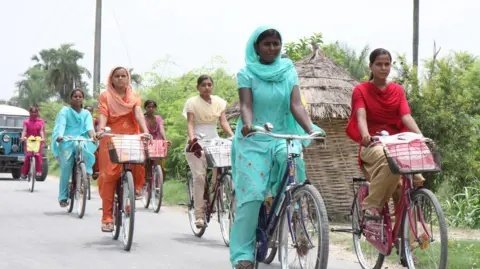
India’s election season has long been powered by handouts, but the rising scale and cost of these freebies is raising serious questions about the financial sustainability of state governments. From bicycles and televisions to cash transfers, election promises are increasingly blurring the line between welfare measures and pre-poll populism in the world’s largest democracy.
In recent years, cash transfers targeted at women have emerged as a particularly effective tool for political parties. The sweeping victory last week in the eastern state of Bihar, one of India’s poorest regions, is being partly attributed to a 10,000 rupee ($112; £85.18) cash handout to women. A record number of women turned out to vote, highlighting the impact of such financial incentives on electoral outcomes.
Similar schemes have been rolled out by the ruling Bharatiya Janata Party (BJP) in states like Maharashtra, and opposition parties have promised comparable initiatives in upcoming elections. Economists such as Jean Drèze argue that these handouts, while controversial, often represent the only way for the poor to extract tangible promises from political representatives. He notes that distinguishing between “useful” and “wasteful” handouts is essential, but without such electoral leverage, many vulnerable communities might receive nothing at all.

At the same time, critics warn of the dangers of a “revdi culture,” a term Prime Minister Narendra Modi has used to describe the frivolous distribution of sweets or handouts to win votes. India’s top court also intervened in 2023, attempting to curb “irrational freebies” during elections. Yet, the practice continues to dominate the political landscape, often straining state finances.
Research from brokerage Emkay Global highlights the fiscal pressure faced by states like Bihar, where the deficit—the gap between revenue and expenditure—stands at 6% of the state’s GDP. Pre-election schemes amounted to 4% of GDP, exceeding capital expenditure that could have been used for long-term development projects. Even fiscally prudent states are reportedly being drawn into this “freebie economics,” with 21 out of 29 Indian states exceeding the 3% deficit-to-GDP ceiling due, in part, to election-driven spending.
The Ladki Bahin (Beloved Sister) scheme in Maharashtra illustrates the unsustainability of such measures. The cash transfers led to a 0.4% increase in the state’s deficit, forcing the government to roll back some promises once the elections concluded. India’s central bank, the Reserve Bank of India (RBI), has warned of the growing burden of subsidies on state-level debt, noting that while overall state debt declined to 28.5% of GDP by March 2024, it remains above the recommended 20% threshold. The RBI has highlighted that rising expenditures on subsidies—including farm loan waivers, free services, and cash transfers to farmers, youth, and women—pose a risk to productive public investment.
The broader impact of election freebies extends beyond state budgets. With private investment in job-creating industries lagging, and governments constrained in infrastructure spending, political leaders increasingly rely on tax cuts and giveaways to stimulate consumption. However, with the visible success of schemes in Bihar, the incentive to continue this cycle of pre-election largesse remains high.

Economists from Emkay Global note that the pattern is likely to persist in upcoming elections in states such as Tamil Nadu, Kerala, and West Bengal. They warn that unless reforms are implemented, India may witness an ongoing “race to the bottom,” where states compete to offer increasingly unaffordable benefits to secure votes.
The debate over election freebies highlights a fundamental tension in Indian politics: the need to address poverty and promote welfare while ensuring fiscal responsibility and long-term economic development. As election season continues to drive the growth of such populist measures, the challenge for India’s states will be balancing immediate political gains with sustainable financial planning.
This news has been carefully compiled from verified social media sources, international and UK-based news outlets, and cross-checked with detailed online data. It is presented with professionalism, impartiality, and a human-centred narrative, providing readers with an engaging, in-depth look at the political and economic implications of election freebies in India.
Related News:
 India’s Labour Law Overhaul Sparks Fierce Debate
 Modi’s London Visit Seals Historic UK-India Trade Pact Amid Global Tensions
 The Explosive Fallout of a Broken Alliance Between Thailand and Cambodia
 Philippine Supreme Court Halts Impeachment of Sara Duterte, Fuelling 2028 Election Speculation
 Thailand and Cambodia Agree to Immediate Ceasefire Following Regional Diplomacy
 MPs Warn Thousands Still Face Poverty Despite Labour’s Welfare Reform Retreat
 Tensions Flare as Thailand Accuses Cambodia of Breaching Hours-Old Ceasefire Amid Border Clashes
 Chancellor Faces Mounting Pressure Amid “Impossible Trilemma” Over Tax Rises
 Labour Members Push for Wealth Tax as Public Finance Crisis Deepens
 Larger Families Could Gain Thousands if Labour Ends Two-Child Benefit Cap
 Reeves Weighs New Property Tax on Homes Worth Over £500,000
 UK Imposes 100 New Sanctions Targeting Russia’s Revenues and Military Supplies
 Rachel Reeves Hosts Top UK and US Financial Executives as Trump’s State Visit Begins
 Privatisation of UK Industries Exacerbates Cost of Living Crisis, Warns Green Party Leader
 Resolution Foundation Chief Urges Chancellor Reeves to Rethink Budget Before November
 Farage’s Reform UK Receives £100,000 from Design Firm with Past Tax Issues
 Rachel Reeves Faces Criticism Over Appearance at Gambling Industry Event Amid Tax Review
 King Charles Earns Over £1 Million from Duchy Land Linked to Scrapped HS2 Project
 Gatwick Secures Approval for £2.2bn Second Runway Expansion
 Labour to Unveil Ambitious Plan for 12 New Towns to Tackle England’s Housing Crisis
 UK Employment Bill Set to Grant Millions Greater Job Security, Thinktank Analysis Finds
 Holding Reform to Account: Why a Principled Conservative Future Matters
 Kemi Badenoch Unveils ‘Golden Rule’ to Halve Spending Cuts for Deficit Reduction at Tory Conference
 Bridget Phillipson Urges Starmer to Scrap Two-Child Benefit Cap
Rachel Reeves to Confirm Changes to Britain’s Planning System
Rachel Reeves Signals Tax Rises, Spending Cuts Ahead
Bridget Phillipson Urges Starmer to Scrap Two-Child Benefit Cap
Rachel Reeves to Confirm Changes to Britain’s Planning System
Rachel Reeves Signals Tax Rises, Spending Cuts Ahead
 Rachel Reeves urged to consider welfare cuts to boost fiscal credibility
 Rachel Reeves to lead UK trade push in Saudi Arabia amid rights debate
 Wales May Introduce Four-Day Work Week After Elections
 Green Party Surges Past Labour in Latest UK Poll
 Celebrities and Charities Demand UK Government Act on Child Poverty
 Rachel Reeves Eyes 20% Tax on Assets for UK Departures
 Trump’s UK Ambassador Urges North Sea Drilling to Strengthen US Ties
 Rachel Reeves Set to Break Labour Pledge and Raise Income Tax
Thinktanks Urge Rachel Reeves to Reform UK Tax System
MPs Press Rachel Reeves to Hike Gambling Taxes
Rachel Reeves Set to Break Labour Pledge and Raise Income Tax
Thinktanks Urge Rachel Reeves to Reform UK Tax System
MPs Press Rachel Reeves to Hike Gambling Taxes
 Labour Urged to Honour Tax Pledges Ahead of Budget
 Labour Falls to Fourth in Poll, Faces Historic Election Loss
 Cuts to home insulation funding threaten UK climate goals
 China’s Youth Save, Not Spend, Amid Job and Housing Worries
 Thai King Embarks on Historic China Visit After 50 Years
 Hasina Rejects Allegations Ahead of Bangladesh Tribunal Verdict
 Early Trends Suggest Modi’s Alliance Leading in Key Bihar Election
 Japan Tourism Stocks Slide Amid China-Taiwan Row
 South Korea Gains US Support for Nuclear Submarine Programme
 Ex-PM Hasina Gets Death Penalty for Crimes Against Humanity
 Why India is Unlikely to Return Sheikh Hasina to Face Execution
 Trump Says Crown Prince Knew Nothing About Khashoggi Death
 PM Highlights UK Business at G20 in South Africa
 India’s COP30 Delay Raises Global Climate Concerns
Reeves to Crack Down on Benefit Fraud While Lifting Two-Child Limit
India’s COP30 Delay Raises Global Climate Concerns
Reeves to Crack Down on Benefit Fraud While Lifting Two-Child Limit
 Video shows Israeli troops kill Palestinians after surrender
 Carney’s Alberta Pipeline Deal Sparks Immediate Pushback
 ICC to Rule on Duterte’s Provisional Release
 Huawei, ZTE secure 5G deals in Vietnam amid US tensions
 Starmer Says Labour’s Economic Plan Needs Years to Deliver
 Chinese & Japanese Boats Clash Near Disputed Islands
 Putin Meets US Envoy Amid Key Ukraine Peace Talks
 UK Banks Granted Reprieve as BoE Delays Basel III Capital Rules Until 2028
 UK Must Act with Courage and Clarity on Israel-Palestine Conflict, Says Foreign Affairs Committee Report
 The Fight for Trans Safety Is a Fight for Everyone’s Safety — MPs Must Debate This Crucial Issue
 Singapore Corruption Scandal: Details Emerge on Iswaran’s Luxury Flight and Ties to Tycoon Ong Beng Seng
 Hong Kong Summons UK and Australian Envoys Following Asylum Grants to Democracy Activists
 Is the UK Ready to Put Boots on the Ground in Ukraine? Assessing Military Capacity and Challenges
 Police Scotland Spends £500,000 Compensating Officers Over Trump Visit
 Rylan Clark Criticizes UK Immigration Policies on This Morning, Sparking Public Debate
 Urgent Action Needed on Windrush Compensation as Survivors Speak of “Waiting to Die”
 Tanni Grey-Thompson Faces Abuse Over Opposition to Assisted Dying Bill
 Rising Food Bank Dependence Highlights Deepening Hardship Across the UK
 Nigel Farage Unveils Controversial Immigration and Welfare Plans at Reform UK Press Conference
 Yvette Cooper Signals Global Momentum Towards Gaza Peace Deal Amid Humanitarian Crisis
 UK border officers deployed to Balkans to tackle migrant smuggling
 UK MPs warn of repeat riots over online misinformation
 Russia’s Latest Push to Win US Favors Shows Deep Desperation
BBC to Apologise Over Edited Trump Speech Amid Backlash
Russia’s Latest Push to Win US Favors Shows Deep Desperation
BBC to Apologise Over Edited Trump Speech Amid Backlash
 Millionaires group urge Reeves to introduce wealth tax to ‘lift kids out of poverty’
 Reeves rejects £1bn plea for NHS redundancy payouts
 PM Condemns Leaks, Vows Loyalty to Ministers and Stability
 Greene Pushes Epstein Files Amid Trump Fallout
 Most Tories Expect to Support a Farage-Led Government