Published: 19 November 2025 Wednesday . The English Chronicle Desk. The English Chronicle Online
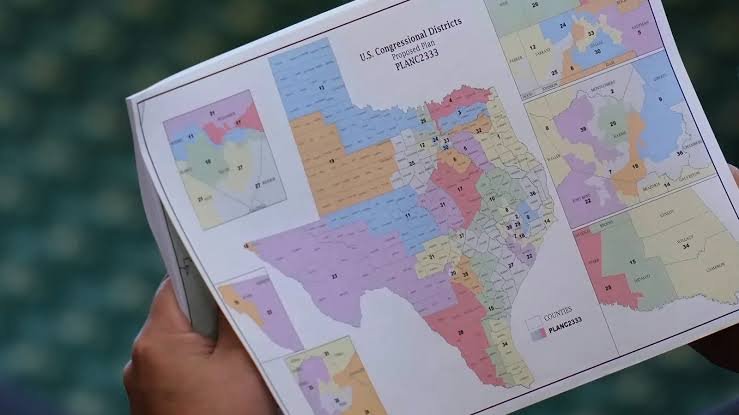
A US federal court has blocked Texas from implementing newly redrawn voting maps that were widely criticised as politically motivated, ruling that the state’s Republican-led redistricting plan constitutes racial gerrymandering. The decision represents a significant legal setback for Governor Greg Abbott and the Republican-controlled legislature, which had redrawn the state’s congressional districts in an effort to consolidate their advantage ahead of the 2026 midterm elections.
The ruling, handed down by a three-judge panel, orders Texas to revert to the congressional maps created in 2021, effectively setting aside the newly approved 2025 districts. The judges found substantial evidence that the 2025 maps had been drawn with the purpose of diluting the voting power of Black and Hispanic communities, thereby violating federal protections against racial discrimination in voting.
US Judge Jeffrey Brown, a Trump appointee, acknowledged the political dimension of the case but stressed that the gerrymandering went beyond ordinary political strategy. “To be sure, politics played a role in drawing the 2025 Map. But it was much more than just politics. Substantial evidence shows that Texas racially gerrymandered the 2025 Map,” he wrote in his opinion. The decision underscores the judiciary’s willingness to intervene when electoral boundaries appear to undermine minority representation.
The ruling has provoked sharply divided reactions along party lines. Democratic leaders in Texas hailed the decision as a victory for voters’ rights and a check on Republican efforts to manipulate the electoral process. Statehouse Democrat Gene Wu described the ruling as a rebuke of what he called “one of the most brazen attempts to steal our democracy that Texas has ever seen.” He further accused Governor Abbott and other Republican leaders of attempting to suppress minority voices to benefit former President Donald Trump’s political base.
Governor Abbott, meanwhile, condemned the ruling as “clearly erroneous and undermining the authority the U.S. Constitution provides the state.” He argued that the redrawn maps were intended solely to reflect the conservative voting preferences of Texans and rejected the claim that they discriminated against minority communities. Abbott pledged to appeal the ruling swiftly to the US Supreme Court, signalling that the legal battle over Texas’ electoral maps is far from over.

“Any claim that these maps are discriminatory is absurd and unsupported by the testimony offered during ten days of hearings,” Abbott said in a statement. He maintained that the redistricting effort was designed to ensure fair representation for the state’s electorate rather than to manipulate electoral outcomes.
The Texas case highlights the ongoing controversy surrounding gerrymandering in the United States. Gerrymandering, the practice of redrawing electoral districts to benefit a particular political party, is legally permissible unless it intentionally discriminates against racial or ethnic groups. Critics argue that the practice undermines democratic principles by allowing politicians to select their voters, rather than voters selecting their representatives.
Mid-decade redistricting, as seen in Texas, is especially contentious. Traditionally, states redraw their congressional maps every ten years following the national census, but Republican lawmakers in Texas and other states have redrawn districts mid-decade to gain political advantage. The strategy has drawn criticism from both Democrats and some Republican-led states, which argue that such moves distort representation and exacerbate political polarization.
The 2025 Texas maps were designed to create five new Republican-leaning congressional districts, a move that Democrats argued would dilute the influence of minority voters in key urban areas. Evidence presented in court suggested that the new district lines split communities of color and concentrated minority voters into fewer districts, effectively limiting their influence in statewide elections.
The Texas case is part of a broader national pattern of legal battles over redistricting and gerrymandering. Earlier this month, a federal judge in Utah rejected a Republican-drawn electoral map and ordered the adoption of a new map that would create one Democrat-leaning district. Similarly, California recently voted to redraw its congressional districts, resulting in the creation of five districts favorable to Democratic candidates.
These cases illustrate how both major parties in the United States have increasingly sought to use redistricting as a tool to secure electoral advantage. The strategy has become particularly pronounced in competitive states where a few key districts can determine control of the House of Representatives or influence statewide elections.
The Texas ruling is likely to trigger an immediate appeal to the US Supreme Court, where the case could set a precedent on the limits of mid-decade redistricting and racial gerrymandering. A decision from the Supreme Court could have nationwide implications, affecting how states redraw electoral maps and potentially constraining political maneuvering by both parties.
Legal experts note that the Texas case underscores the tension between state authority and federal oversight. While states have the power to draw congressional districts, federal law, including the Voting Rights Act, prohibits intentional discrimination against racial or ethnic minorities. The court’s ruling highlights the ongoing need for judicial scrutiny to ensure that electoral maps do not undermine minority representation or dilute votes unfairly.
The court’s order to revert to the 2021 maps comes just over a year before the 2026 midterm elections, a critical test for both parties. Republicans, who sought to consolidate their advantage through the 2025 redistricting, now face the prospect of competing under maps that may be less favorable to their candidates. For Democrats, the ruling preserves the potential for more equitable representation, particularly in urban and minority-majority areas.

Political analysts predict that the decision could shift campaign strategies in Texas, forcing both parties to reassess their outreach and messaging in affected districts. The ruling also sends a signal to other states considering mid-decade redistricting that courts may intervene if evidence suggests racial discrimination.
Texas has a long and contentious history with gerrymandering, dating back decades. Minority voters, particularly in Hispanic and Black communities, have repeatedly challenged redistricting plans in federal courts, arguing that the state has attempted to marginalize their influence in elections. Courts have occasionally struck down maps, requiring states to redraw districts to ensure compliance with federal protections.
The 2025 case continues this legacy, highlighting the ongoing struggle to balance political strategy with equitable representation. Observers note that as demographic shifts continue across Texas, the state will face increasing pressure to create maps that accurately reflect its diverse population while maintaining compliance with federal law.
The US federal court’s decision to block Texas’ 2025 voting maps represents a significant intervention in the state’s electoral process, reinforcing the principle that redistricting cannot be used to systematically disenfranchise racial or ethnic minorities. With appeals expected to the Supreme Court, the case will continue to shape national debates over gerrymandering, election integrity, and minority representation.
As the 2026 midterms approach, both parties will closely monitor the legal proceedings, aware that the outcome could influence not only Texas’ congressional makeup but also broader national political dynamics. The ruling serves as a reminder that the judiciary plays a critical role in safeguarding the democratic process and ensuring that every vote carries equal weight.
Related News:
 Tories Push to Dilute Labour’s Workers’ Rights Bill
 It’s time to come clean on the China spy case
 Rachel Reeves Admits Renting Home Without Required Licence
 Experts Question HMRC Over Possible Child Benefit Privacy Breach
 Phillipson urges careful review of gender recognition guidance
 French Taxi Driver Cleared in David Lammy Theft Case After Fare Dispute
 China-critical UK academics face ‘extremely heavy’ pressure from Beijing
 Met Police Culture Makes Racial Harm ‘Inevitable’
 Remaining rebel Labour MPs have whip restored
 Tim Davie resigns as BBC director general amid bias claims
 Palace to reinstate hyphen in Andrew’s surname
 BBC Apologises to Trump but Rejects $1bn Compensation Claim
 Major Rent Reform Ends No-Fault Evictions in England
 Peers Flood Assisted Dying Bill with 942 Amendments
 US Justice Department Files Lawsuit Against California Over Partisan Voting Maps
 Your Party Turmoil Deepens Over Withheld Donations
 Mahmood Plans Major Crackdown on Illegal Migration
 UK Unveils Fast-Track Deportation and Asylum Overhaul
 Trump Deploys DHS to Charlotte in Major Arrest Operation
 UK Asylum Overhaul Sparks Debate Over Human Rights and Deportations
 UK Asylum Reforms: Temporary Refugee Status and Faster Deportations
 Mahmood Defends Tough Overhaul of UK Asylum System
 Scottish Ministers Express Alarm Over UK Asylum Reforms
 South African Detained After Neo-Nazi Rally in Australia
 Westminster Advances Legacy Bill Amid Criticism
 Minister Defends Tough New Asylum Reform Plan
 UK Net Migration Falls Sharply After ONS Revisions
 Only One Republican Opposes Mass Release of Epstein Files
 Congress Approves Release of Epstein Files, Trump Expected to Sign
 Senedd Suspends Politician Over Offensive Racial Slur
 Trump Signs Bill Releasing Justice Department Files on Epstein
 Trump Slams Democrats With ‘Seditious’ Death Claim
 Covid Response in NI ‘Chaotic’, Says Inquiry
 Texas Governor Faces Lawsuit From CAIR
 Peers Get Extra Time to Debate Assisted Dying Bill
 US National Guard Member Killed in DC Shooting
 ICC to Rule on Duterte’s Provisional Release
 Trump to pause migration from ‘third-world countries’
 Chinese & Japanese Boats Clash Near Disputed Islands
 Putin Meets US Envoy Amid Key Ukraine Peace Talks
 Franklin Turtle, Sabrina Carpenter Slam US Social Media Use
 Trump Administration Dismisses 17 Immigration Judges, Sparking Debate Over Judicial Independence
 Tanni Grey-Thompson Faces Abuse Over Opposition to Assisted Dying Bill
 Mahmood Pledges Reform of Modern Slavery Laws After Court Blocks Deportation Appeal
 Digital ID Plans Ignite Debate Over £600m Treasury Tax Boost and Privacy Concerns
 Badenoch Warns Farage’s Grooming Gangs Plan Could Backfire
 Johnson Approved China’s London ‘Super-Embassy’ in 2018
 Green Party Surges Past Labour in Latest UK Poll
 Celebrities and Charities Demand UK Government Act on Child Poverty
 Army Officers Orders to Cut Ties with Men-Only Clubs
 Trump’s UK Ambassador Urges North Sea Drilling to Strengthen US Ties
 FBI Director Kash Patel Defends Girlfriend Amid Government Jet Claims
 Just Stop Oil Protesters Convicted Amid Climate Defence Row
 Labour immigration crackdown could cost UK £4.4bn
BBC to Apologise Over Edited Trump Speech Amid Backlash
Labour immigration crackdown could cost UK £4.4bn
BBC to Apologise Over Edited Trump Speech Amid Backlash
 King Charles to Lead Nation in Remembrance Sunday Service
 Britain deploys RAF specialists to assist Belgium with drone threats
 Millionaires group urge Reeves to introduce wealth tax to ‘lift kids out of poverty’
 Starmer Faces Growing Dissent as Labour MPs Weigh Leadership Challenge
 Reeves rejects £1bn plea for NHS redundancy payouts
 PM Condemns Leaks, Vows Loyalty to Ministers and Stability
 Trump Urges Herzog to Grant Netanyahu Full Pardon
 Senator John Fetterman Hospitalized After Fall from Heart Flare-Up, Keeps Sense of Humor
 Rio Raid’s Death Toll Raises Questions About Gang Impact
 Greene Pushes Epstein Files Amid Trump Fallout
 December Run-Off in Chile as Election Produces No Winner
 Canada Passes Carney’s First Budget in Tight Parliamentary Vote
 Charlotte Raids: 130 Arrested in Major Immigration Sweep
 Labour Faces Historic Decline in Wales
 Serial Rapist and Former Cop Found Guilty Again
 Man Charged Over Attempted Murder of Senior Officer
 Pentagon Officials in Ukraine to Discuss War End
 PM Highlights UK Business at G20 in South Africa
 Venezuela Threatens Nobel Winner Machado with Fugitive Status
 Most Tories Expect to Support a Farage-Led Government
 Labour MP claims devolution bill is ‘blatant discrimination’ against Cornwall
 Millions Face Higher Taxes Under Reeves New Budget
 India’s Labour Law Overhaul Sparks Fierce Debate
 Jordan Bardella: France’s Young Presidential Contender
 Virgin Media Fined £23.8m Over Telecare Safety Failures