Published: 19 November 2025 Wednesday . The English Chronicle Desk. The English Chronicle Online
Northern Ireland’s public housing estates are home to nearly 200 murals and memorials linked to paramilitary groups, according to documents obtained by BBC News NI. These displays, largely unauthorised, appear across properties managed by the Northern Ireland Housing Executive (NIHE), highlighting the enduring legacy of conflict in the region and raising questions about how public space is managed and regulated.
The records reveal that these murals and memorials are not limited to one political community. They include loyalist and republican imagery, alongside other memorials with no specific alignment. The NIHE has acknowledged the difficulty in managing such displays, noting that “issues with murals, memorials, and flags can be difficult to deal with and no single agency can be solely responsible.” Despite this, the public body is actively involved in “re-imaging” projects, which aim to work with communities to change or remove contentious and territorial displays.
In total, more than 400 murals and memorials have been identified on NIHE land and property. Of these, over 300 are considered either loyalist or republican in nature, while the remainder are unaligned or unspecified. A significant number—177—are directly related to paramilitary organisations, including the Irish Republican Army (IRA), the Ulster Defence Association (UDA), and the Ulster Volunteer Force (UVF).
An assessment carried out by NIHE in June this year specifically recorded the number and location of memorials on its land, identifying 134 as a starting point for further review. Yet despite these figures, enforcement and oversight remain complex. Many murals and memorials have been erected without permission, often as a result of community-driven initiatives or local pressures that can make removal or alteration contentious.
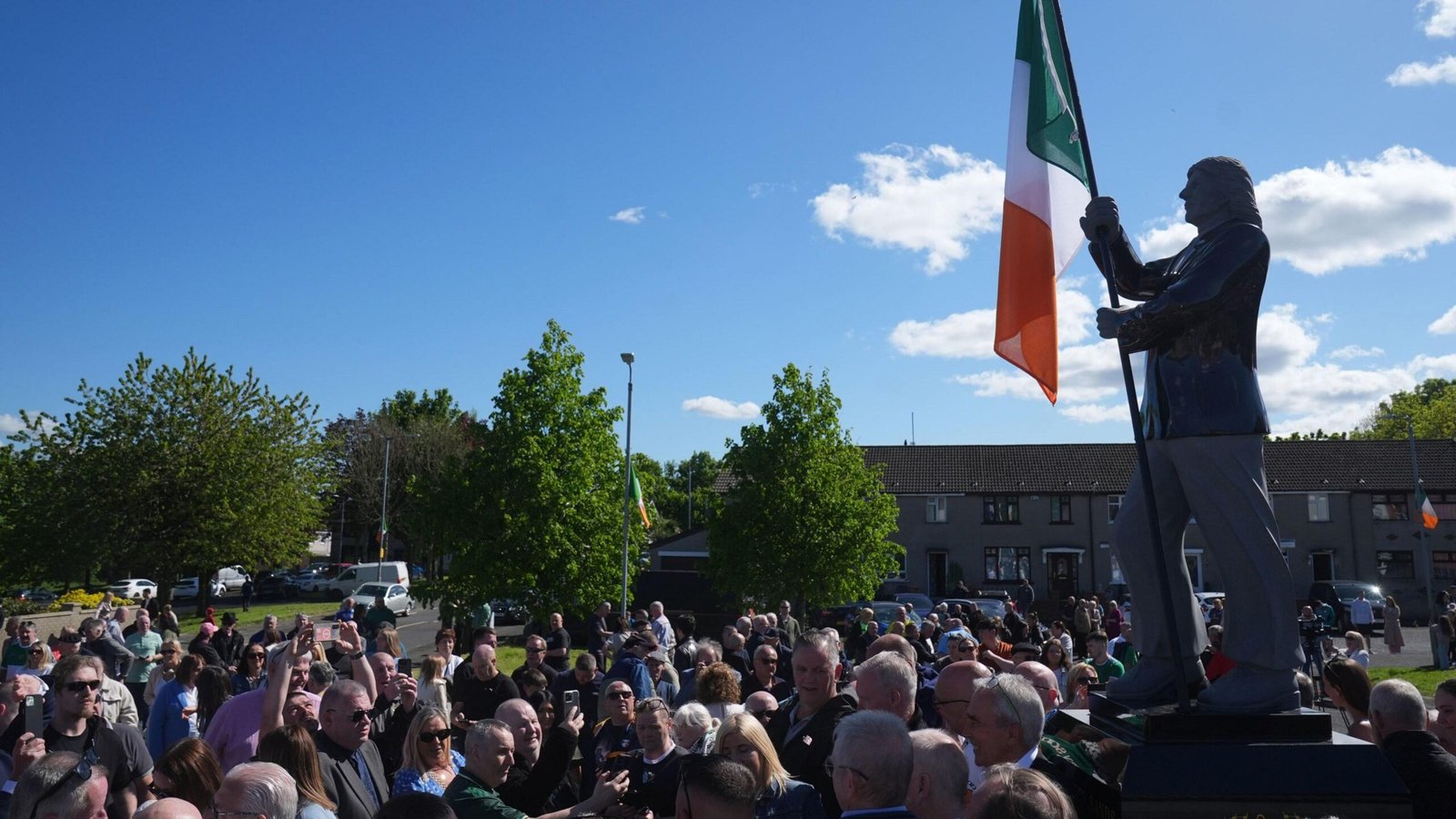
One notable example occurred earlier this year when a statue of IRA hunger striker Bobby Sands was installed on NIHE land in the Twinbrook area of west Belfast. The statue, unveiled without the Executive’s permission, immediately drew attention from both political figures and the public. First Minister Michelle O’Neill attended the unveiling and defended her decision, while Belfast City Council continues to investigate the lack of planning approval. The incident underscores the challenge authorities face in regulating memorials that hold deep symbolic meaning for certain communities while being unauthorised under existing planning and public land use rules.

Another example comes from the loyalist Mount Vernon estate in north Belfast, where a paramilitary mural damaged during Storm Darragh last year was recently restored. The NIHE confirmed that the restoration took place without formal permission and stated there are currently no plans to remove the mural, citing concerns about staff and contractor safety as a priority consideration. This illustrates a broader tension between respecting community sentiment and maintaining legal oversight of public property.
The issue has gained traction in the Northern Ireland Assembly, where members recently debated the prevalence of unauthorised memorials on public land. The debate followed a motion by the Alliance Party calling for ministers to conduct a full audit of memorials and lead a programme supporting communities to re-image these sites by removing paramilitary imagery. Proponents argue that removing or re-imaging paramilitary murals can foster social cohesion and reduce the symbolic presence of violence in everyday life, particularly in housing estates where residents include families and children.
Artists and community practitioners involved in re-imaging projects stress that engagement with local residents is crucial to success. Belfast-based artist Lesley Cherry, who has been leading such projects for around 15 years, emphasises that relationship-building often matters more than imposing directives. “You don’t want to be going in and saying, ‘This is what you have to do,’ because they’ll just tell you exactly where to go,” Cherry explains. She highlights that a collaborative approach, where communities are actively involved in deciding the form and content of re-imaged murals, can lead to more sustainable and widely accepted outcomes.
Re-imaging initiatives typically involve transforming murals and memorials into artworks that celebrate culture, history, or community achievements, rather than commemorating paramilitary activity. These projects can be sensitive and complex, requiring negotiation, trust, and careful management of community expectations. For many residents, the murals and memorials represent identity, memory, and history, making the process of change challenging. Yet advocates argue that such transformation is vital for promoting shared public spaces that are safe and inclusive for all.
The presence of paramilitary murals and memorials on NIHE land also raises broader societal questions. Critics argue that these displays can perpetuate division and hinder reconciliation efforts, particularly in areas with a history of sectarian violence. For younger residents growing up in these neighbourhoods, such imagery can normalize conflict and reinforce territorial boundaries, affecting community cohesion and perceptions of safety.

At the same time, some political representatives caution against unilateral removal of these memorials, highlighting that a nuanced approach is necessary to avoid inflaming tensions. Northern Ireland’s recent history of political and social instability means that public interventions must be carefully calibrated. Community consultation, engagement with local leaders, and transparent communication are essential components of any policy aimed at re-imaging or removing contentious displays.
The NIHE continues to monitor and respond to the evolving situation, balancing legal responsibilities with sensitivity to local community dynamics. The organisation has reiterated its commitment to supporting initiatives that foster social harmony while ensuring public spaces are safe and compliant with planning regulations. However, the sheer scale of the issue—nearly 200 paramilitary-linked murals and memorials—demonstrates the challenges involved and highlights the need for a coordinated strategy involving multiple agencies, including housing authorities, local councils, and community organisations.
As Northern Ireland continues to grapple with the legacy of its past, the presence of paramilitary imagery on public housing land remains a visible and potent reminder of the region’s conflict. Addressing the issue requires a careful blend of enforcement, dialogue, and creative solutions that acknowledge the historical and cultural significance of these murals while promoting peace, safety, and inclusivity in public spaces.
Ultimately, the ongoing debate around paramilitary murals and memorials reflects broader efforts to reconcile memory, identity, and community in Northern Ireland. While the murals and memorials serve as markers of history and memory for some, they are also symbolic of the violence that shaped communities for decades. Moving forward, the challenge for public authorities, artists, and community leaders is to find pathways that respect heritage while fostering environments where all residents feel safe, represented, and included.
Related News:
 PM Condemns Leaks, Vows Loyalty to Ministers and Stability
 UK Asylum Reforms: Temporary Refugee Status and Faster Deportations
 Senedd Suspends Politician Over Offensive Racial Slur
 Planned Palestinian Flag Raising at Belfast City Hall Faces Delay Amid Legal Concerns
 Ed Miliband Faces Setback as Government Quietly Shelves Divisive ‘Zonal Pricing’ Energy Policy
 “Social Housing Crisis in England: Tenant Complaints Soar Amid Dangerous Living Conditions”
 Army Barracks to House Migrants as Hotels Phase Out
 Hospice Cuts Raise Alarm Across England Amid Funding Crisis
 Army Officers Orders to Cut Ties with Men-Only Clubs
 Mikie Sherrill Elected New Jersey’s Governor in Key Win
 Who is Rama Duwaji? What Zohran Mamdani’s wife has said about Gaza and ICE as he’s elected NYC mayor
 Boris Johnson accused of undermining BBC leadership
 Britain deploys RAF specialists to assist Belgium with drone threats
 ‘Reckless’ cuts to victims’ services will cost more than they save
 From Lego to Pokémon: How Adults Are Driving UK Toy Market Growth
 Seven Conditions That Automatically Qualify You for a Free Bus Pass
 Shouting Works Best to Deter Gulls, UK Study Finds
 Tim Davie Defends BBC Amid Bias Scandal Storm
 Reeves rejects £1bn plea for NHS redundancy payouts
 Politics latest: Starmer ‘will fight any leadership coup’ as Streeting denies attempt to oust Labour PM
 Son Reveals UK Couple in Iran Resort to Hunger Strike for Help
 Two in Three Women in UK Armed Forces Report Harassment
 Senator John Fetterman Hospitalized After Fall from Heart Flare-Up, Keeps Sense of Humor
 US Justice Department Files Lawsuit Against California Over Partisan Voting Maps
 South Sudan President Removes Vice-President Amid Political Uncertainty
 December Run-Off in Chile as Election Produces No Winner
 UK Asylum Overhaul Sparks Debate Over Human Rights and Deportations
 Mother Watches in Horror as Teen Daughter Dies on Tracks
 South African Detained After Neo-Nazi Rally in Australia
 Seven Countries, One Winner: Europe’s Best Christmas Market
 Minister Defends Tough New Asylum Reform Plan
 Van Dwellers Face Eviction After Park Misuse Sparks Outcry
 Only One Republican Opposes Mass Release of Epstein Files
 Congress Approves Release of Epstein Files, Trump Expected to Sign
 Shadow Fleet at Sea: Europe’s Battle Against Illicit Oil Shipping
 Commuters warned as yellow snow and ice alert hits Northern Ireland
 UK Vulnerable to Attack, Defence Committee Finds
 Bangladesh Families Call for Hasina’s Return and Execution
 Rama Rebukes Mahmood for Targeting Albanian Families
 Russian Vessel Used Lasers on RAF Pilots, UK Claims
 PM Shares Emotional Letter to Son on Men’s Struggles
 MP Offers Seat to Help Burnham Challenge Starmer
 Court to Hear Challenge to Wimbledon Expansion Plan
 Woman Meets Boy Whose Life She Saved with Kidney
 Pentagon Officials in Ukraine to Discuss War End
 Raccoons Could Become America’s Next Pet
 Australia to Ban Social Media for Kids Under-16 Starting December
 Kate Forbes: Motherhood Harder Than Politics
 TikTok Star Jessie Yendle Mocked by KFC
 WhatsApp Messages Expose Nathan Gill’s Bribery
 UK Energy Bills to Rise Slightly in January
 Venezuela Threatens Nobel Winner Machado with Fugitive Status
 Texas Governor Faces Lawsuit From CAIR
 Reeves to Crack Down on Benefit Fraud While Lifting Two-Child Limit
 Labour MP claims devolution bill is ‘blatant discrimination’ against Cornwall
 English Mayors Set to Introduce Tourist Taxes
 Ex-Classmate Accuses Farage of Dishonesty on Racism Claims
 Vicki Fears Losing Motability Car
 Trump Envoy to Discuss Ukraine Peace at Kremlin
 Millions Face Higher Taxes Under Reeves New Budget
 Peers Get Extra Time to Debate Assisted Dying Bill
 Sudanese Family Vows to Stay After Racist Graffiti
 Pope Leo XIV Begins Historic Trip to Turkey and Lebanon
 Zambia’s President Faces Stone-Throwing Anger Amid Challenges
 India’s Labour Law Overhaul Sparks Fierce Debate
 Video shows Israeli troops kill Palestinians after surrender
 Trump to Recheck Green Cards from 19 Nations After DC Attack
 Ex-Brexit MEP Rejects Claim of Pro-Russia Payments
 Scotland Gains 33 New Towns – Life in Growing Communities
 Machynlleth High Street Left Without Christmas Lights
 Government righting decades-old injustice for miners
 Second homes curbs quashed in Gwynedd legal ruling
 Guinea-Bissau President Flees After Military Coup
 Jordan Bardella: France’s Young Presidential Contender
 Search underway for British man overboard off Tenerife
 Chinese & Japanese Boats Clash Near Disputed Islands
 Hong Kong Orders Probe Into Deadly 151-Death Fire
 Putin Meets US Envoy Amid Key Ukraine Peace Talks
 UK Criticises Gaza Aid Delays as Tents Arrive After Year
 Pavarotti statue frozen in Italian ice rink sparks backlash