Published: 19 November 2025 Wednesday . The English Chronicle Desk. The English Chronicle Online
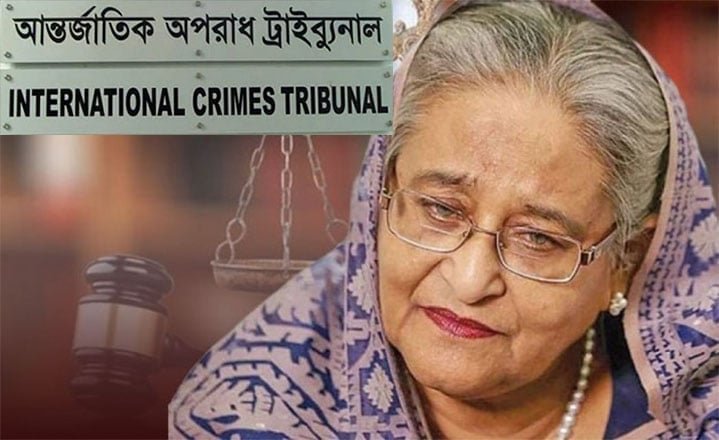
In Dhaka, waves of raw emotion swept across the capital and beyond as families of victims of last year’s deadly crackdown reacted to the historic judgment delivered by Bangladesh’s International Crimes Tribunal. The court on Monday sentenced deposed Prime Minister Sheikh Hasina and her trusted ally, former Home Minister Asaduzzaman Khan, to death for crimes against humanity linked to what has come to be known as the July Uprising. For many families who had waited more than a year for justice, the verdict marked a moment of reckoning. Yet, the sense of closure remained elusive, largely because the two condemned leaders are now residing in neighbouring India, far from the reach of Bangladeshi authorities.
Shahina Begum, whose 20-year-old son Sajjat Hosen Sojal was among those killed on August 5, 2024, embodies the grief and desperation felt by thousands. On that fateful day, as protests swept the nation, Sajjat was shot, his body later burned by police. His crime was simply being part of a student-led movement that challenged Hasina’s prolonged authoritarian rule. When the tribunal announced its verdict, Shahina broke down in tears, overwhelmed by a mix of relief and lingering agony. Her reaction, echoing the sentiments of other families, made clear that while the judgment was a step toward justice, it was not an end in itself. Speaking to reporters, she said she could not feel calm until Hasina was brought back to Bangladesh and executed.
The charges against Hasina and Khan stem from their alleged direct involvement in the brutal suppression of protesters. Prosecutors presented evidence that on August 5 alone, six students were killed in Ashulia, an industrial hub on the outskirts of Dhaka. Five of the victims were shot and their bodies later burned, while another was reportedly burned alive inside a police station. These events were part of a much wider campaign by security forces to quell the uprising that engulfed Bangladesh throughout July. According to United Nations figures, more than 1,400 protesters were killed nationwide during the crackdown. The government at the time denied the scale of the violence, but human rights groups described it as one of the most deadly political crackdowns in the region’s recent history.
Hasina, who had been in power for fifteen consecutive years, fled Bangladesh hours after resigning on the night of August 5, 2024. She was widely accused of using state institutions to suppress dissent, manipulate elections, and silence critics, leading many to compare her governance style to other entrenched authoritarian regimes. When the student-led uprising gained momentum in early July, the government resorted to increasingly harsh tactics. What began as a movement over job quotas and allegations of systematic corruption quickly evolved into a nationwide demand to end dynastic rule.

The tribunal’s judgment followed months of dramatic legal proceedings, during which the prosecution presented hundreds of documents, eyewitness testimonies, forensic evidence, and leaked communications reportedly linking Hasina to orders for the violent crackdown. Since both Hasina and Khan had already crossed into India before the trial began, the court processed the case in absentia. A third accused, former police chief Chowdhury Abdullah al-Mamun, received a reduced five-year prison term after turning state witness. His testimony proved crucial in reconstructing the chain of command during the crackdown, confirming prosecutors’ claims about who gave the most critical operational instructions.
For many families, the trial has been both painful and cathartic. It allowed them to publicly recount the horrors they witnessed, the loved ones they lost, and the trauma that continues to shape their daily lives. These stories were often difficult to hear, but they formed an essential part of the narrative that compelled the tribunal to deliver its harshest sentence. Relatives of victims gathered outside the court after the judgment, many holding framed photographs of their children, siblings, or husbands. Amid the mixture of mourning and celebration, chants for justice echoed through the streets of Dhaka, symbolising a society determined to rebuild itself after years of fear and state repression.
Hasina’s supporters, though significantly diminished since her downfall, argue that the trial was politically motivated. However, the tribunal rejected these claims, emphasising that the evidence presented met the legal threshold for crimes against humanity. International observers who monitored parts of the proceedings said the trial adhered to established judicial norms, although they noted the difficulties inherent in prosecuting individuals who were not physically present. India, where Hasina is believed to be residing, has not released any public statement regarding possible extradition, contributing to uncertainty about whether the death sentence can ever be carried out.
Human rights groups, while acknowledging the gravity of the crimes, have expressed concern about the use of capital punishment. Several international organisations reiterated their stance against the death penalty, urging Bangladesh to consider alternative forms of accountability. Nonetheless, within Bangladesh, public opinion remains overwhelmingly in favour of the harshest sentence for those responsible for the crackdown. Many citizens view the verdict as a turning point, marking a break from years of political impunity and signalling a renewed commitment to human rights and democratic values.
The political landscape of Bangladesh has undergone a profound transformation since Hasina’s departure. A caretaker administration is now overseeing a transition process, although challenges remain. Street protests still occur sporadically, as some groups demand faster reforms and investigations into other alleged abuses under Hasina’s rule. The tribunal’s verdict, however, has provided a sense of direction for many, reinforcing a collective desire for accountability and closure.

For Shahina Begum and thousands like her, justice will only be truly served when the convicted leaders face the consequences within Bangladesh. Her voice, trembling yet resolute, reflects the emotional weight borne by families who lost children in the uprising. As the sun set over Dhaka on the day the verdict was announced, people across the nation grappled with the significance of the judgment. While it represents a milestone in the pursuit of justice, it also opens a new chapter in the nation’s reckoning with its recent past.
Many believe this verdict will shape Bangladesh’s political discourse for years to come. It stands not only as a response to specific acts of brutality but also as a symbolic break from a period marked by fear, repression, and a closing democratic space. As the country continues to heal, the stories of those who suffered, like Shahina, remain central to understanding the human cost of political turmoil. Their determination to cling to the hope of justice highlights both the fragility and resilience of ordinary people in the face of state violence.
As Bangladesh moves forward, questions linger about the possibility of bringing Hasina and Khan back to face their sentences. Diplomatic negotiations, public pressure, and international legal considerations will all play crucial roles in determining the future course of action. For now, however, the tribunal’s verdict has at least provided a sense of acknowledgment that the atrocities committed during the July Uprising were not forgotten, nor were they overlooked by the nation’s judiciary.
The story of this verdict is ultimately a story of people who refused to be silenced, who stood up against tyranny, and who continue to seek justice even when the path remains uncertain. The emotions that poured across Bangladesh following the announcement demonstrate that, although the wounds run deep, the collective will to hold perpetrators accountable has never been stronger. The tribunal’s decision has thus become a defining moment, marking a crucial step in Bangladesh’s ongoing struggle to rebuild trust, restore justice, and reclaim democratic dignity.
Related News:
 Out of reach: stalled newbuilds leave Labour’s social housing targets in tatters
 Mikie Sherrill Elected New Jersey’s Governor in Key Win
 Who is Rama Duwaji? What Zohran Mamdani’s wife has said about Gaza and ICE as he’s elected NYC mayor
 Britain deploys RAF specialists to assist Belgium with drone threats
 PM Condemns Leaks, Vows Loyalty to Ministers and Stability
 US Justice Department Files Lawsuit Against California Over Partisan Voting Maps
 South Sudan President Removes Vice-President Amid Political Uncertainty
 December Run-Off in Chile as Election Produces No Winner
 UK Asylum Reforms: Temporary Refugee Status and Faster Deportations
 Ex-PM Hasina Gets Death Penalty for Crimes Against Humanity
 UN Security Council Approves Trump’s Gaza Peace Plan
 South African Detained After Neo-Nazi Rally in Australia
 Sheikh Hasina Sentenced to Death Over Protest Crackdown
 Why India is Unlikely to Return Sheikh Hasina to Face Execution
 Minister Defends Tough New Asylum Reform Plan
 UK Net Migration Falls Sharply After ONS Revisions
 Only One Republican Opposes Mass Release of Epstein Files
 Congress Approves Release of Epstein Files, Trump Expected to Sign
 Shadow Fleet at Sea: Europe’s Battle Against Illicit Oil Shipping
 UK Vulnerable to Attack, Defence Committee Finds
 Paramilitary Murals and Memorials Persist on Public Housing Land
 Rama Rebukes Mahmood for Targeting Albanian Families
 Russian Vessel Used Lasers on RAF Pilots, UK Claims
 MP Offers Seat to Help Burnham Challenge Starmer
 Senedd Suspends Politician Over Offensive Racial Slur
 Pentagon Officials in Ukraine to Discuss War End
 Trump Slams Democrats With ‘Seditious’ Death Claim
 WhatsApp Messages Expose Nathan Gill’s Bribery
 Venezuela Threatens Nobel Winner Machado with Fugitive Status
 At Least Three Dead in Bangladesh Earthquake
 Texas Governor Faces Lawsuit From CAIR
 English Mayors Set to Introduce Tourist Taxes
 Ex-Classmate Accuses Farage of Dishonesty on Racism Claims
 Trump Envoy to Discuss Ukraine Peace at Kremlin
 Millions Face Higher Taxes Under Reeves New Budget
 Peers Get Extra Time to Debate Assisted Dying Bill
 Planned Palestinian Flag Raising at Belfast City Hall Faces Delay Amid Legal Concerns
 Pope Leo XIV Begins Historic Trip to Turkey and Lebanon
 Zambia’s President Faces Stone-Throwing Anger Amid Challenges
 Georgians Defy Government Crackdown After Year of Protests
 Thousands Homeless After Massive Fire in Dhaka Shantytown
 UK Military Chiefs Warn Funding Gap Threatens Defence
 Putin Intensifies Territorial Demands Before US Talks
 US National Guard Member Killed in DC Shooting
 India’s Labour Law Overhaul Sparks Fierce Debate
 Video shows Israeli troops kill Palestinians after surrender
 Trump to Recheck Green Cards from 19 Nations After DC Attack
 Ex-Brexit MEP Rejects Claim of Pro-Russia Payments
 Labour U-turn: Unfair Dismissal Rights Delayed Six Months
 Government righting decades-old injustice for miners
 Guinea-Bissau President Flees After Military Coup
 Ukraine Anti-Corruption Agents Search Zelensky Adviser
 ICC to Rule on Duterte’s Provisional Release
 Jordan Bardella: France’s Young Presidential Contender
 Trump to pause migration from ‘third-world countries’
 Chinese & Japanese Boats Clash Near Disputed Islands
 Putin Meets US Envoy Amid Key Ukraine Peace Talks
 Kremlin Talks With US Yield No Ukraine Peace Breakthrough
 Republicans Hold Tennessee Seat Despite Democratic Surge
 Franklin Turtle, Sabrina Carpenter Slam US Social Media Use
 Army Barracks to House Migrants as Hotels Phase Out
 Army Officers Orders to Cut Ties with Men-Only Clubs
 Trump’s UK Ambassador Urges North Sea Drilling to Strengthen US Ties
 French Taxi Driver Cleared in David Lammy Theft Case After Fare Dispute
BBC to Apologise Over Edited Trump Speech Amid Backlash
French Taxi Driver Cleared in David Lammy Theft Case After Fare Dispute
BBC to Apologise Over Edited Trump Speech Amid Backlash
 Millionaires group urge Reeves to introduce wealth tax to ‘lift kids out of poverty’
 From Lego to Pokémon: How Adults Are Driving UK Toy Market Growth
 Shouting Works Best to Deter Gulls, UK Study Finds
 Reeves rejects £1bn plea for NHS redundancy payouts
 Major Rent Reform Ends No-Fault Evictions in England
 Saka Solidifies Role as Tuchel’s Key England Lieutenant
 Greene Pushes Epstein Files Amid Trump Fallout
 Zelenskyy Signs Fighter Jet Deal Amid Russian Drone Attacks
 Stroke Patient Mistaken for Drunk, Care Delayed
 Serial Rapist and Former Cop Found Guilty Again
 Scottish Families Take Legal Action Over School CO Leak
 Most Tories Expect to Support a Farage-Led Government
 Vicki Fears Losing Motability Car
 Two National Guard Soldiers Critically Injured Near White House
 Pavarotti statue frozen in Italian ice rink sparks backlash