Published: 20 November 2025 Thursday . The English Chronicle Desk. The English Chronicle Online
The scene inside the sports hall in Caerphilly could easily have been mistaken for any other by-election count. In the centre of the hall, trestle tables stood neatly arranged, ballot boxes were carried in one after another, and teams of counting staff quickly began sorting through the bundles of votes. Yet despite the familiar set-up, there was something noticeably different this time. Gathered around the hall was an unusually large contingent of journalists, photographers, and camera crews—many of them sent from London. Their presence made one thing clear: what was happening here was more than a routine local contest.
Caerphilly, a former coal mining community best known for its historic castle and its famous cheese, rarely attracts this level of national media attention during Welsh Parliament elections. But this by-election was being watched for reasons far larger than the seat itself. The question was not only who would win, but—crucially—who would lose. And the answer to that turned out to be deeply troubling for the Labour Party.
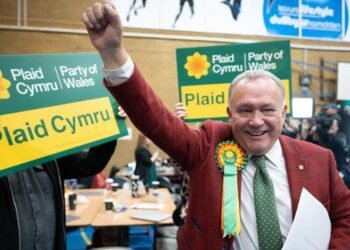
When the votes were counted, Labour suffered a defeat of historic proportions. They finished in third place, beaten not only by Plaid Cymru but also by Reform UK, and secured a mere 11% of the vote. This was more than a simple loss; it was Labour’s first major setback in Caerphilly in a century. The symbolic weight of such a result has sent shockwaves through the party. For many, it represents something deeper: a sign that Wales, long considered Labour’s most reliable stronghold, may finally be slipping away.

The implications of this outcome stretch far beyond one constituency. Wales is set to adopt a new proportional representation voting system for the next Senedd election in May 2026. If the voting patterns seen in Caerphilly are repeated across the country, Labour could be facing an existential political crisis. Senior party figures have already warned that the elections next May—taking place not only in Wales, but also in parts of Scotland and several English local councils—could prove to be a decisive moment for Sir Keir Starmer’s leadership.
Labour’s internal concerns come at a time when the prime minister is already grappling with mounting pressures. Speculation over possible leadership challenges has grown, and questions continue to swirl around the chancellor’s tax proposals ahead of the upcoming Budget. The Caerphilly result has therefore struck at a particularly sensitive moment, adding yet another problem to an already crowded political agenda.
Commentators have been quick to underline the seriousness of the situation. Richard Wyn Jones, one of Wales’s most respected political analysts, described the possibility of Labour losing power next May as “seismic.” And that assessment is no exaggeration. Labour has been the dominant political force in Wales for more than a century. It has topped every UK general election in Wales since 1922 and has held the largest number of seats in the Senedd since its creation in 1999. For most Welsh voters, a Wales not led by Labour is something they have never experienced.
To imagine Labour losing its grip on Welsh politics is to imagine a political landscape transformed. It would also mark a dramatic shift in public sentiment—one that many in the party admit they did not see coming. The combination of discontent over policy decisions, dissatisfaction with national leadership, a growing appetite for political alternatives, and frustration with the status quo appears to have eroded the deep loyalty Labour once enjoyed in many Welsh communities.
For Sir Keir Starmer, the potential consequences are profound. The prime minister has spent much of his time addressing internal tensions and what many allege to be crises emerging from within Downing Street itself. Questions about his ability to maintain strong leadership have been quietly circulating. Now, with the prospect of losing Wales—a scenario that would have been unthinkable even a few years ago—the pressure has intensified dramatically.
One senior party source encapsulated the seriousness of the moment by saying: “Keir Starmer would be the first Labour leader to lose Wales. It will not matter after that who blames who for what—history will remember we lost Wales.” Their words reflect a fear that such a defeat would permanently mark Starmer’s leadership, overshadowing any previous accomplishments and shaping his legacy in a way that could prove politically damaging for years to come.
The situation in Wales also reflects a broader shift taking place across the United Kingdom. Voters appear increasingly willing to abandon old political loyalties in favour of new movements or smaller parties that better reflect their frustrations or aspirations. Reform UK’s strong performance in Caerphilly, for example, highlights a growing appetite among some voters for a more disruptive alternative, particularly in areas that feel left behind after years of economic and political stagnation. Plaid Cymru, meanwhile, continues to offer a distinct Welsh voice, appealing to those who feel the major UK parties are no longer in tune with Welsh priorities.

The next six months are likely to define the direction of Welsh politics for a generation. The new voting system, designed to produce a more representative Senedd, could make coalition governments the norm rather than the exception. If Labour is unable to maintain its traditional dominance, it may be forced into power-sharing arrangements—or pushed into opposition altogether. Such an outcome would not only reshape governance in Wales but would also carry heavy symbolic weight across the wider UK.
For Starmer, this moment is both a warning and a test. The Caerphilly by-election has exposed vulnerabilities that many inside and outside the party believe cannot be ignored. Rebuilding trust in Wales will require more than campaign visits or policy announcements; it will demand a genuine understanding of why long-standing Labour voters are turning away. Whether the party can respond effectively—and quickly enough—remains to be seen.
What is clear is that Labour’s relationship with Wales is undergoing a profound shift. Once considered its most dependable heartland, Wales is now emerging as a political battleground. The outcome of the next Senedd election will determine whether Caerphilly was an anomaly or the first clear sign of a political realignment that will shape the future of Wales—and possibly the future of the Labour Party itself.
Related News:
 Boris Johnson: Tories Risk Election Loss if They ‘Bash the Green Agenda’
 Green Party Surges Past Labour in Latest UK Poll
 Celebrities and Charities Demand UK Government Act on Child Poverty
Boris Johnson accused of undermining BBC leadership
Celebrities and Charities Demand UK Government Act on Child Poverty
Boris Johnson accused of undermining BBC leadership
 Tim Davie resigns as BBC director general amid bias claims
 ‘Reckless’ cuts to victims’ services will cost more than they save
 Politics latest: Starmer ‘will fight any leadership coup’ as Streeting denies attempt to oust Labour PM
 Scottish Ministers Express Alarm Over UK Asylum Reforms
 MP Offers Seat to Help Burnham Challenge Starmer
 BBC to Expand Standards Panel and Create Deputy Director Role
 Most Tories Expect to Support a Farage-Led Government
 Polanski’s Rise Signals a Shift in British Political Landscape
 Bridget Phillipson and Lucy Powell Emerge as Main Contenders in Labour Deputy Leadership Race
 Katie Lam’s Rise Signals Conservative Party’s Rightward Turn on Migration
 Greens Gain Ground in London as Zack Polanski Eyes Labour’s Stronghold
 Zarah Sultana and Jeremy Corbyn Reunite Amid New Party Plans
 Plaid Cymru Triumphs in Caerphilly, Ending Labour Century-Long Hold
 How the Royal Navy Can’t Stop the Channel Boats
 British Woman in Iran ‘Losing Hope’ Amid Ongoing Detention
 BBC Journalist Held and Interrogated in Vietnam
 Sultana says new party is aiming to ‘run government’
 Trump’s UK Ambassador Urges North Sea Drilling to Strengthen US Ties
 FBI Director Kash Patel Defends Girlfriend Amid Government Jet Claims
 Phillipson urges careful review of gender recognition guidance
 French Taxi Driver Cleared in David Lammy Theft Case After Fare Dispute
 Rachel Reeves Set to Break Labour Pledge and Raise Income Tax
 Who is Rama Duwaji? What Zohran Mamdani’s wife has said about Gaza and ICE as he’s elected NYC mayor
 MPs Press Rachel Reeves to Hike Gambling Taxes
 Met Police Culture Makes Racial Harm ‘Inevitable’
 Nicola Sturgeon Urges SNP to Oppose New Oil Fields
 London’s Childlessness Crisis: Schools Closing as Families Shrink
 Eleven Arrested After Pro-Palestine Protest at Villa Match
 Remaining rebel Labour MPs have whip restored
 Cuts to home insulation funding threaten UK climate goals
 BBC director-general and news chief resign amid bias row
 Millionaires group urge Reeves to introduce wealth tax to ‘lift kids out of poverty’
 Starmer Faces Growing Dissent as Labour MPs Weigh Leadership Challenge
 VAR Must Rein Its Neck In to Save Football’s Spirit
 BBC Faces Backlash as Reform UK Withdraws from Film
 Mary Earps’s Manchester United Return Faces Mixed Reception
 Tim Davie Defends BBC Amid Bias Scandal Storm
 Reeves rejects £1bn plea for NHS redundancy payouts
 Farage appointee to lead Reform youth accused of anti-British views
 Palace to reinstate hyphen in Andrew’s surname
 Trump Claims Victory as Longest Shutdown Ends
 PM Condemns Leaks, Vows Loyalty to Ministers and Stability
 Major Rent Reform Ends No-Fault Evictions in England
 Peers Flood Assisted Dying Bill with 942 Amendments
 England’s Special Needs Support Faces Breaking Point
 MoD warned over Excel risks before Afghan data breach
 UK Unveils Fast-Track Deportation and Asylum Overhaul
 UK Asylum Overhaul Sparks Debate Over Human Rights and Deportations
 UK Asylum Reforms: Temporary Refugee Status and Faster Deportations
 UK Candidate Moved to Safe House After Election Threats
 Mahmood Defends Tough Overhaul of UK Asylum System
 Why Russian Liberals Push Strongly Pro-Israel Narratives
 UK Warns China After MI5 Issues Espionage Alert
 Westminster Advances Legacy Bill Amid Criticism
 Minister Defends Tough New Asylum Reform Plan
 UK Vulnerable to Attack, Defence Committee Finds
 Rama Rebukes Mahmood for Targeting Albanian Families
 Russian Vessel Used Lasers on RAF Pilots, UK Claims
 PM Shares Emotional Letter to Son on Men’s Struggles
 PM Highlights UK Business at G20 in South Africa
 Boris Johnson Oversaw Toxic No 10 Culture, Covid Inquiry Finds
 Kate Forbes: Motherhood Harder Than Politics
 Welsh Government Christmas 2020 Lockdown Criticised
 Mamdani’s Vision: Affordable, Democratic Socialism
Reeves to Crack Down on Benefit Fraud While Lifting Two-Child Limit
Mamdani’s Vision: Affordable, Democratic Socialism
Reeves to Crack Down on Benefit Fraud While Lifting Two-Child Limit
 Nigel Farage Responds to Racism Claims from School Days
 Labour MP claims devolution bill is ‘blatant discrimination’ against Cornwall
 English Mayors Set to Introduce Tourist Taxes
 Ex-Classmate Accuses Farage of Dishonesty on Racism Claims
 Millions Face Higher Taxes Under Reeves New Budget
 Peers Get Extra Time to Debate Assisted Dying Bill
 Planned Palestinian Flag Raising at Belfast City Hall Faces Delay Amid Legal Concerns
 Ex-Brexit MEP Rejects Claim of Pro-Russia Payments
 Government righting decades-old injustice for miners
 UK refugee resettlement under UN schemes drops sharply in one year
 UK delays ruling on China embassy plan until January