Published: 20 November 2025 Thursday . The English Chronicle Desk. The English Chronicle Online
Labour MP Clive Lewis has thrust himself into the centre of an intensifying debate over the future of the Labour Party’s leadership by declaring he would be willing to give up his parliamentary seat to help Greater Manchester Mayor Andy Burnham mount a challenge against Sir Keir Starmer. His remarks have added fresh fuel to ongoing rumours about discontent within Labour’s upper ranks and speculation that Burnham could be preparing to return to Westminster to contest the leadership.
Speaking on the BBC’s Politics Live, Lewis said he would consider standing aside from his Norwich South constituency if doing so created a path for Burnham to re-enter Parliament and position himself for a leadership contest. He framed the idea as an act of political principle, saying that his commitment to putting “country before party, and party before personal ambition” would make such a sacrifice justifiable if it benefited the public and strengthened Labour.
Lewis, who has represented the seat since 2015, suggested that the conversation was not purely theoretical. He revealed he had spoken with Burnham and had thought seriously about the implications of stepping down. When the programme’s host pressed him on whether this meant he would genuinely vacate his seat, he responded that he had to answer “yes” if he wanted to remain consistent with his own values.
Burnham, who served as an MP for many years before becoming mayor, has long been floated as a potential rival to Starmer. He can only enter a leadership contest if he sits in the House of Commons, meaning he would need to secure a seat either through a by-election or by standing in the next general election. Although many Labour MPs admire Burnham’s profile, his potential return has created tension within the party, prompting repeated questions about loyalty, timing, and political motivations.
Lewis’s willingness to step aside appeared to be a significant development, but the picture became more complicated when further comments later emerged. Kate Ferguson, political editor of The Sun, reported on social media that Lewis told her he had “no plans to stand down,” characterising his remarks on television as a response to a hypothetical question. He insisted that his comments still aligned with his broader view that Labour figures must prioritise the national interest above personal ambition.
This contradictory messaging reflects the uncertain mood inside Labour after a week of politically bruising headlines for Sir Keir Starmer. Dissatisfaction among some party members has increasingly spilled into public view, amplified by rumours that several cabinet ministers—including Health Secretary Wes Streeting—were quietly positioning themselves for a potential leadership contest. All involved have denied the accusations, but the speculation itself has been damaging for the prime minister, raising questions about internal unity and faith in his direction.

Wes Streeting, a senior figure in the party and one of those rumoured to have leadership ambitions, described Lewis’s suggestion as “peculiar.” Speaking to LBC, Streeting argued that MPs should prioritise their responsibilities to voters rather than contemplating strategic swaps that would effectively trade one representative for another. He also defended Burnham, calling him a “top player” and arguing that he would be valuable to Labour whether serving in Manchester or Westminster. However, Streeting made it clear that treating parliamentary seats as negotiable political assets was not appropriate, warning that no MP should take their constituents for granted.
Lewis’s seat, Norwich South, is one he has held for a decade. He strengthened his position in the last election by extending his majority to more than 13,000 votes. But even if he chose to resign, Burnham could not simply inherit the position. Labour members in the constituency would first need to run a selection process to choose a candidate, followed by a public by-election. This adds procedural complexity that appears to undermine the feasibility of Lewis’s offer, particularly given the party’s current focus on defending the prime minister’s authority.
Burnham, meanwhile, has sent mixed signals about his own intentions. While he has repeatedly insisted that he does not intend to abandon Manchester, he has at times declined to rule out a leadership challenge entirely. Earlier this year, he acknowledged that colleagues had encouraged him to consider standing in the future. His popularity as mayor, along with his experience in senior cabinet roles under previous Labour governments, has kept him in the national political conversation even while working outside Westminster.
Two Labour MPs representing Manchester constituencies—Andrew Gwynne and Graham Stringer—have already made it clear that they would not step down to make room for Burnham. Their refusal highlights the political difficulty of orchestrating such a move, particularly in seats where sitting MPs have long-established ties to their communities and no desire to give up their roles.
Sir Keir Starmer, meanwhile, has attempted to quell rumours of internal plots by asserting his determination to lead the Labour Party into the next general election. His position has been challenged by recent anonymous briefings to the press, which suggested that top ministers were manoeuvring behind the scenes to replace him after a difficult series of policy setbacks and public disagreements. Though all ministers named in the reports have dismissed the claims, the episode has kept leadership tensions at the forefront of public attention.

There is also growing anxiety within Labour about the party’s expected performance in elections scheduled for May. With the party preparing for contests in Scotland, Wales, and local English councils, many analysts predict that Labour could suffer severe losses. Should that happen, Starmer may face renewed calls to prove he retains the confidence of his MPs. Under party rules, anyone seeking to challenge the leader would first need the support of 80 Labour MPs, a high threshold designed to prevent frivolous contests but one that could become attainable if dissatisfaction continues to grow.
For now, the prime minister remains publicly committed to his role. But Lewis’s televised remarks—however hypothetical he later claimed they were—have added new momentum to the conversation about Labour’s direction and leadership. The suggestion that an MP might give up his seat to facilitate Burnham’s return speaks to the desire among some within the party for change, or at least for stronger voices to join the parliamentary team.
The political climate remains fluid, and while Burnham has yet to make any definitive statement about standing for leadership, the speculation surrounding him shows no signs of fading. His national profile and ongoing popularity in the North of England position him as a candidate who could bring a different tone and strategy to Labour’s leadership. Whether he ultimately decides to pursue such a role—or whether the party will welcome him back into Westminster—remains to be seen.
Related News:
 Boris Johnson: Tories Risk Election Loss if They ‘Bash the Green Agenda’
 Green Party Surges Past Labour in Latest UK Poll
 Celebrities and Charities Demand UK Government Act on Child Poverty
 Out of reach: stalled newbuilds leave Labour’s social housing targets in tatters
 Who is Rama Duwaji? What Zohran Mamdani’s wife has said about Gaza and ICE as he’s elected NYC mayor
Boris Johnson accused of undermining BBC leadership
Who is Rama Duwaji? What Zohran Mamdani’s wife has said about Gaza and ICE as he’s elected NYC mayor
Boris Johnson accused of undermining BBC leadership
 Tim Davie resigns as BBC director general amid bias claims
 ‘Reckless’ cuts to victims’ services will cost more than they save
 Mary Earps’s Manchester United Return Faces Mixed Reception
 Politics latest: Starmer ‘will fight any leadership coup’ as Streeting denies attempt to oust Labour PM
 PM Condemns Leaks, Vows Loyalty to Ministers and Stability
 UK Asylum Reforms: Temporary Refugee Status and Faster Deportations
 Scottish Ministers Express Alarm Over UK Asylum Reforms
 Minister Defends Tough New Asylum Reform Plan
 UK Net Migration Falls Sharply After ONS Revisions
 UK Vulnerable to Attack, Defence Committee Finds
 Labour Faces Historic Decline in Wales
 Rama Rebukes Mahmood for Targeting Albanian Families
 Russian Vessel Used Lasers on RAF Pilots, UK Claims
 BBC to Expand Standards Panel and Create Deputy Director Role
 Most Tories Expect to Support a Farage-Led Government
 English Mayors Set to Introduce Tourist Taxes
 Ex-Classmate Accuses Farage of Dishonesty on Racism Claims
 Millions Face Higher Taxes Under Reeves New Budget
 Peers Get Extra Time to Debate Assisted Dying Bill
 Planned Palestinian Flag Raising at Belfast City Hall Faces Delay Amid Legal Concerns
 UK Military Chiefs Warn Funding Gap Threatens Defence
 Putin Intensifies Territorial Demands Before US Talks
 Ex-Brexit MEP Rejects Claim of Pro-Russia Payments
 Labour U-turn: Unfair Dismissal Rights Delayed Six Months
 Government righting decades-old injustice for miners
 Polanski’s Rise Signals a Shift in British Political Landscape
 Army Barracks to House Migrants as Hotels Phase Out
 How the Royal Navy Can’t Stop the Channel Boats
 British Woman in Iran ‘Losing Hope’ Amid Ongoing Detention
 Hospice Cuts Raise Alarm Across England Amid Funding Crisis
 BBC Journalist Held and Interrogated in Vietnam
 Zarah Sultana Launches Party to Change Politics
 Trump’s UK Ambassador Urges North Sea Drilling to Strengthen US Ties
 FBI Director Kash Patel Defends Girlfriend Amid Government Jet Claims
 French Taxi Driver Cleared in David Lammy Theft Case After Fare Dispute
 London’s Childlessness Crisis: Schools Closing as Families Shrink
 Britain deploys RAF specialists to assist Belgium with drone threats
 Millionaires group urge Reeves to introduce wealth tax to ‘lift kids out of poverty’
 Starmer Faces Growing Dissent as Labour MPs Weigh Leadership Challenge
 VAR Must Rein Its Neck In to Save Football’s Spirit
 Shouting Works Best to Deter Gulls, UK Study Finds
 Sam Kerr Stars in Chelsea Return with Champions League Double
 Reeves rejects £1bn plea for NHS redundancy payouts
 Son Reveals UK Couple in Iran Resort to Hunger Strike for Help
 Pressure Mounts on Starmer to Sack Chief of Staff Over Briefing Row
 Major Rent Reform Ends No-Fault Evictions in England
 Peers Flood Assisted Dying Bill with 942 Amendments
 England’s Special Needs Support Faces Breaking Point
 US Justice Department Files Lawsuit Against California Over Partisan Voting Maps
 Former Lion Heskey Warns of Shortage of England Strikers
 MoD warned over Excel risks before Afghan data breach
 December Run-Off in Chile as Election Produces No Winner
 UK Asylum Overhaul Sparks Debate Over Human Rights and Deportations
 Stroke Patient Mistaken for Drunk, Care Delayed
 Mother Watches in Horror as Teen Daughter Dies on Tracks
 UK Warns China After MI5 Issues Espionage Alert
 Van Dwellers Face Eviction After Park Misuse Sparks Outcry
 Shadow Fleet at Sea: Europe’s Battle Against Illicit Oil Shipping
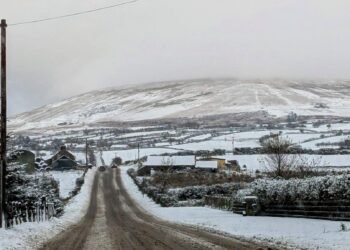 Commuters warned as yellow snow and ice alert hits Northern Ireland
 Serial Rapist and Former Cop Found Guilty Again
 Pentagon Officials in Ukraine to Discuss War End
 PM Highlights UK Business at G20 in South Africa
 Kate Forbes: Motherhood Harder Than Politics
 Welsh Government Christmas 2020 Lockdown Criticised
 Venezuela Threatens Nobel Winner Machado with Fugitive Status
 Labour MP claims devolution bill is ‘blatant discrimination’ against Cornwall
 Trump Envoy to Discuss Ukraine Peace at Kremlin
 India’s Labour Law Overhaul Sparks Fierce Debate
 Video shows Israeli troops kill Palestinians after surrender
 Machynlleth High Street Left Without Christmas Lights
 Jordan Bardella: France’s Young Presidential Contender
 Search underway for British man overboard off Tenerife
 Chinese & Japanese Boats Clash Near Disputed Islands
 UK delays ruling on China embassy plan until January