Published: 27 November 2025 Thursday. The English Chronicle Desk. The English Chronicle Online.
Israel has intensified its aerial attacks on southern and central Gaza, striking multiple areas that lie beyond the so-called yellow line — the boundary Israel agreed not to cross during the current ceasefire arrangement. The strikes mark a deepening breach of the fragile seven-week truce, raising renewed fears of a wider military escalation and further complicating already-stalled diplomatic efforts to stabilise the region.
The latest wave of attacks occurred early Thursday morning, targeting residential structures and densely populated neighbourhoods in central Gaza’s Bureij refugee camp and the eastern outskirts of Khan Younis. Al Jazeera reporters on the ground confirmed the strikes, stating that the bombardment carried on for several minutes, sending fireballs into the air and triggering widespread panic among already displaced families.
The renewed Israeli air campaign came despite repeated international appeals urging both parties to uphold the ceasefire, which has been described as “fragile but essential” by humanitarian agencies operating inside Gaza. Gaza’s Civil Defence Force accused Israel of “multiple, deliberate, and escalating violations,” stating that hundreds of similar attacks have taken place since the ceasefire began, often targeting areas specifically designated as no-strike zones.

For residents of Gaza, the resumption of heavy bombardment feels like a return to the darkest days of Israel’s ongoing war on the territory — a war that Palestinian authorities and numerous international human rights organisations have described as genocidal in its scale and relentless targeting of civilians.
Under the terms of the truce negotiated earlier this year, Israel committed to withdrawing its ground forces behind a demarcation known as the yellow line, a zone intended to create a buffer between military personnel and civilian populations. The agreement was meant to reduce direct confrontations and pave the way for humanitarian aid deliveries, as well as uphold certain phases of the hostage-prisoner exchange.
But Thursday’s airstrikes — which extended kilometres beyond the yellow line — underscore what Palestinian officials say is a “consistent pattern of Israeli violations,” repeated almost daily since the ceasefire began.
Residents of Bureij camp, one of the areas struck, described being jolted from their sleep by the sound of missiles smashing into surrounding streets. The explosion shattered windows, tore through the fragile sheet-metal structures many displaced families currently live in, and left at least several people injured, according to first responders.
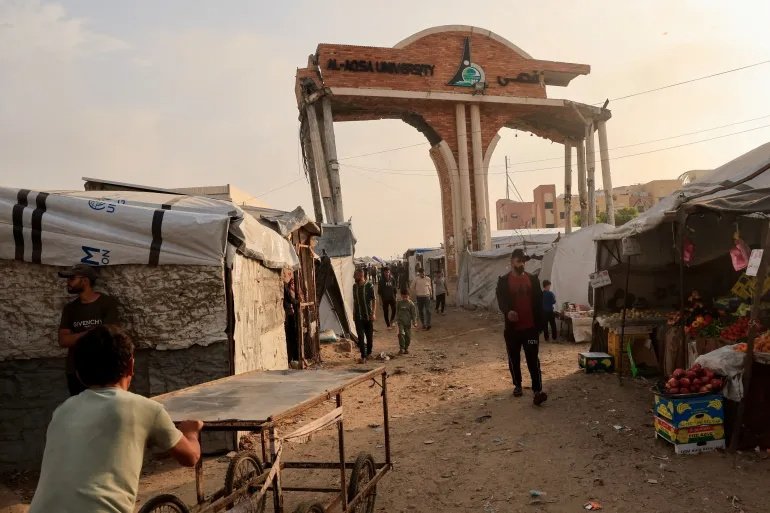
In Khan Younis, the strikes hit close to areas that have been heavily damaged in previous assaults, where thousands of displaced families are still sheltering in makeshift tents after losing their homes earlier in the conflict. Witnesses reported clouds of smoke drifting across the skyline shortly after dawn.
As airstrikes shook Gaza, the Israeli military simultaneously launched a series of late-night and early-morning raids across the occupied West Bank. Raids were reported in Qalqilya, Tubas, Hebron, Tulkarem, and Nablus, with residents describing the operations as among the most aggressive in recent weeks.
In Tubas, Israeli soldiers conducted field interrogations and assaulted at least 25 Palestinians, who later required medical attention, according to a Palestinian Red Crescent official cited by the state news agency Wafa. Videos posted on social media — verified by international news outlets — show heavily armed Israeli troops detaining men in the street, blindfolding some, and forcing others to kneel while being questioned.
Homes were ransacked, property damaged, and several people taken into custody. Israeli forces provided no statement on the reasons for the arrests or the scale of the operation.
Rights groups say the raids are part of a broader pattern of escalating repression in the West Bank, where Israeli forces have significantly intensified military operations since the Gaza war began. Detentions, home demolitions, road closures, and restrictions on movement have become routine across Palestinian towns and cities.
The first stage of the ceasefire agreement — which revolves around the exchange of captives and the repatriation of bodies — moved closer to completion on Wednesday. Israel transferred the remains of 15 Palestinian prisoners to Gaza authorities, one day after Hamas and the Palestinian Islamic Jihad returned the body of an Israeli captive.
With these transfers, Palestinian armed factions have now fulfilled nearly all obligations outlined in the initial phase, having released all living captives and returned the remains of 26 of the 28 individuals covered by the agreement.
Hamas spokesman Hazem Qassem said the latest handover demonstrates the group’s “steadfast commitment to fully complete the exchange process,” despite what he described as “major obstacles and constant Israeli violations” that have undermined the implementation of the truce.
Qassem added that Hamas remains willing to fulfil the next phase of negotiations if international mediators can guarantee Israeli compliance — something that appears increasingly uncertain given the intensifying military activity across Gaza and the West Bank.

Humanitarian organisations operating in Gaza have expressed grave concern over the escalating airstrikes. Aid deliveries, already limited by Israeli restrictions, have become even more difficult due to the renewed bombings and road closures.
Several NGOs say that if Israel fully abandons the yellow-line framework, the entire ceasefire could collapse within days, plunging Gaza back into a full-scale military onslaught.
Medical facilities, already operating at a fraction of their capacity due to damage sustained in earlier attacks, fear they will be unable to cope with a new influx of casualties. Hospitals in central and southern Gaza report shortages of fuel, surgical supplies, antibiotics, and even basic painkillers. Doctors have repeatedly warned that they are being forced to perform emergency procedures in conditions that violate international medical standards.
Even during the ceasefire, UN agencies estimate that more than 80% of Gazans do not have consistent access to food, while clean water remains scarce. Many families depend entirely on small humanitarian distributions that vary by location and availability. For them, renewed airstrikes mean both immediate danger and further disruptions to essential aid.
Despite the severity of the violations, global reaction to the latest airstrikes has been limited. Several European governments expressed “concern” but avoided issuing direct condemnation. A UK Foreign Office spokesperson said Britain urges “all parties to respect the ceasefire terms,” but stopped short of acknowledging Israeli violations.
In the US, officials reiterated similar calls while emphasising Israel’s “right to defend itself” — language that Palestinian leaders say effectively greenlights continued aggression.
Regional observers warn that international reluctance to hold Israel accountable is contributing to the erosion of the ceasefire, further endangering civilians and complicating mediation efforts led by Qatar, Egypt, and the United Nations.
For people in Gaza, Thursday’s airstrikes are a chilling reminder that the relative lull of the ceasefire can be shattered at any time. For Palestinians in the West Bank, the simultaneous raids underscore that life under occupation continues to grow increasingly dangerous.
Related News:
 US Super-Rich Are Draining Planet’s Safe Climate Space
 UK Charters Emergency Flights to Evacuate Britons from Jamaica
 Mikie Sherrill Elected New Jersey’s Governor in Key Win
 Britain deploys RAF specialists to assist Belgium with drone threats
 US Senate Passes Funding Bill to End Historic Shutdown
 BBC’s Tim Davie to Address Staff Amid Trump $1bn Threat
 Thailand Suspends Cambodia Border Peace Deal Amid Tensions
 Six Dead as Super Typhoon Fung-wong Hits the Philippines
 Fog Aids Russian Forces in Deep Push into Pokrovsk
 Hitler’s DNA Confirms He Truly Had Only One Testicle
 Meny Godard Identified as Israeli Hostage Body Returned by Hamas
 US Justice Department Files Lawsuit Against California Over Partisan Voting Maps
 Switzerland Rolls Out Charm Offensive to Cut Trump’s 39% Tariffs
 Bataclan Anniversary: France Remembers but Jihadist Danger Lingers
 Israel Confirms Returned Hostage as Meny Godard
 December Run-Off in Chile as Election Produces No Winner
 Zelenskyy Signs Fighter Jet Deal Amid Russian Drone Attacks
 Orban Says Ukraine Has ‘No Chance’ as EU Support Continues
 UN Security Council Approves Trump’s Gaza Peace Plan
 Cardiff Nights Could Propel Wales to World Cup Glory
 Israeli Strike Kills 13 Near Palestinian Camp in Lebanon
 Zelensky Meets US Envoy in Turkey to Push Ukraine Peace Talks
 Congress Approves Release of Epstein Files, Trump Expected to Sign
 Cristiano Ronaldo Joins Trump, Bin Salman at State Dinner
 Shadow Fleet at Sea: Europe’s Battle Against Illicit Oil Shipping
 Haiti Qualifies for World Cup Despite Coach Never Visiting Country
 Deadly Russian Strikes Hit Western Ukraine, 20 Killed in Ternopil
 Rama Rebukes Mahmood for Targeting Albanian Families
 Russian Vessel Used Lasers on RAF Pilots, UK Claims
 Scotland Fans Celebrate Historic World Cup Qualification
 Pentagon Officials in Ukraine to Discuss War End
 Ukraine Peace Plan: Zelensky Ready for Dialogue
 Vietnam Battles Deadly Floods as Rains Continue
 UPS Plane Engine Detaches Before Deadly Crash
 WhatsApp Messages Expose Nathan Gill’s Bribery
 South African Women Call Purple Protest Over Gender Violence
 Miss Mexico Wins Miss Universe After Walkout Drama
 Venezuela Threatens Nobel Winner Machado with Fugitive Status
 At Least Three Dead in Bangladesh Earthquake
 Texas Governor Faces Lawsuit From CAIR
 Israel Confirms Hamas Returned Dror Or’s Body
 Trump Envoy to Discuss Ukraine Peace at Kremlin
 Twenty-Four Nigerian Schoolgirls Freed After Abduction
 India, Pakistan to Clash in T20 World Cup 2026 Group Match
 US Suspends Afghan Immigration After White House Shooting
 Two National Guard Soldiers Critically Injured Near White House
 Pope Leo XIV Begins Historic Trip to Turkey and Lebanon
 Georgians Defy Government Crackdown After Year of Protests
 Mbappe Scores 4 as Real Madrid Edge Olympiakos
 Man City Lose, Champions League Risk
 Putin Intensifies Territorial Demands Before US Talks
 Sri Lanka Floods Leave 56 Dead, Dozens Missing
 India’s Labour Law Overhaul Sparks Fierce Debate
 Video shows Israeli troops kill Palestinians after surrender
 Trump to Recheck Green Cards from 19 Nations After DC Attack
 Chinese & Japanese Boats Clash Near Disputed Islands
 Putin Meets US Envoy Amid Key Ukraine Peace Talks
 UK Criticises Gaza Aid Delays as Tents Arrive After Year
 Kremlin Talks With US Yield No Ukraine Peace Breakthrough
 Indonesia to Repatriate Two Dutch Drug Convicts
 Putin visits India as Ukraine peace, trade push intensifies
 Russia-Ukraine war update: Key events, day 1,379
 Global campaign launched to free Palestinian leader Barghouti
 Macron Phones Trump Over Traffic Jam in New York
 Comey Indictment Deepens Fears of Political Retribution Under Trump
 “It Was Very Tough, But I Love Life”: Former Israeli Hostage Rebuilds Life After Family Killed by Hamas
 Chaos at Ibrox as Martin’s Rangers Era Comes to an End
 Trump Claims Modi Has Agreed to Halt Russian Oil Imports Amid Heightened US Pressure
 BBC to Apologise Over Edited Trump Speech Amid Backlash
 From Lego to Pokémon: How Adults Are Driving UK Toy Market Growth
 PM Condemns Leaks, Vows Loyalty to Ministers and Stability
 Saka Solidifies Role as Tuchel’s Key England Lieutenant
 Greene Pushes Epstein Files Amid Trump Fallout
 Stroke Patient Mistaken for Drunk, Care Delayed
 Tiny Curacao Makes History as Smallest Nation to Reach World Cup
 Snow and Ice Cause Travel Chaos in North Yorkshire
 Director Michael Caton-Jones Reflects on Career and Beginnings
 India’s COP30 Delay Raises Global Climate Concerns
 Runaway Driver Caught by DNA Evidence
 EU plans $105bn Ukraine aid using frozen Russian assets