Published: 10 December 2025. The English Chronicle Desk. The English Chronicle Online.
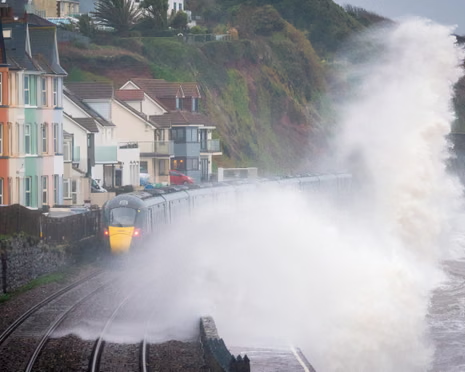
Storm Bram carved a disruptive path across Britain and Ireland, unleashing powerful winds and unrelenting rain that pushed communities, infrastructure and emergency services to their limits. The storm arrived with an intensity that felt sudden yet familiar for regions already burdened by weeks of unsettled conditions. As the slow-moving system crossed the Atlantic and deepened over the British Isles, its impact became clear through widespread travel chaos, rising river levels and communities bracing for yet another test of resilience.
From early Tuesday, forecasters warned that Bram’s rainbands would deliver sustained downpours over land already saturated from previous weather systems. Streets in towns from Cornwall to Cumbria soon transformed into fast-moving channels, and rivers rose with worrying speed. By the evening, more than 300 flood warnings and alerts were active across the UK, reflecting conditions that deteriorated far more quickly than many residents expected. High waves hammered coastal communities, and several holiday attractions as well as festive markets were forced to close due to dangerous winds and rising water.

Meteorologists described Bram as unusually intense for early December, and several rainfall readings supported this view. At White Barrow on Dartmoor, more than eleven centimetres of rain fell within twenty-four hours. Princetown nearby recorded nearly eight centimetres, with both locations receiving a significant share of their usual monthly precipitation in a single day. In south Wales, Treherbert registered more than eight centimetres of rain, and wind gusts exceeding eighty miles per hour were observed in parts of Gwynedd. These wind speeds caused tree damage, structural strain and power failures that spread throughout the afternoon.
The Met Office maintained amber alerts across north-west Scotland and Northern Ireland well into the night. Scotland also faced further yellow wind warnings on Wednesday, though southern regions experienced calmer intervals. However, the uneven pace at which Bram moved made it difficult for local authorities to predict which areas would see respite and which would face further disruption. Emergency planning units across the UK and Ireland therefore remained on high alert, ready to respond to new challenges as conditions evolved.
Among the most dramatic incidents were several vehicle rescues that highlighted the fast-moving nature of the floodwater. In Hampshire, a woman’s car was swept nearly forty metres downstream after she attempted to reverse from a flooded ford. Quick action from a bystander ensured she escaped unharmed. In Dorset, four people required assistance when their vehicles became stuck on a flooded road in Thornford, and similar scenes unfolded in parts of Cornwall where roads turned perilous within minutes. Devon firefighters also rescued two people trapped on the roof of their stranded vehicle near Newton Abbot after floodwaters rose too rapidly for them to leave safely.
Motorways and major routes suffered extensive delays, including long queues on crossings between south-west England and south Wales. Concerns over unstable lighting columns on the Prince of Wales Bridge meant only one lane remained open in each direction, amplifying congestion. Rail services experienced severe disruption as well. Great Western Railway reported widespread cancellations and diversions throughout Tuesday, with flooding affecting services from London to the south-west and Wales. Tracks between Par and Newquay in Cornwall were submerged, and a tunnel between Totnes and Ivybridge in Devon was also affected, leaving passengers facing difficult journeys or unexpected overnight changes.
Further north, a section of the M66 in Greater Manchester closed after a multi-vehicle crash linked to surface water on the motorway. Thousands of households were left without electricity in the south-west, the Midlands and parts of Wales, and more than twenty-five thousand homes and businesses lost power in the Republic of Ireland. Transport for Wales and Network Rail Scotland confirmed multiple line closures due to flood damage or landslips, and Scottish ferry operator CalMac reported disruptions across all its west coast routes, leaving island communities particularly isolated.
Several airports also struggled to maintain schedules. Dozens of flights were cancelled at Belfast and Dublin, stranding passengers amid rising winds that made landing conditions unsafe. In Belfast, the Christmas market was forced to shut for the day, and further south the causeway to St Michael’s Mount in Cornwall was closed as waves pounded the shoreline. Sporting events suffered disappointment as well, including the postponement of Port Vale’s match against Bradford after persistent rain left the pitch waterlogged.
Scientists continue to link storms like Bram to shifting climate patterns that are delivering more intense periods of rainfall to regions unprepared for such frequency. Experts note that warmer air holds greater moisture, allowing storms to release heavier bursts of rain once they develop. This trend has been evident across Europe, parts of Asia and sections of North and South America. While natural weather patterns play a role, human factors such as land management, flood defence strategies and urban development also influence how damaging each event becomes.
In Wales, officials warned that rivers were already swollen before Bram arrived, increasing the chance of rapid flooding. Charlotte Morgan, a tactical manager with Natural Resources Wales, said communities should remain vigilant as saturated ground reduces the landscape’s ability to absorb further rainfall. She emphasised the importance of checking flood risk maps and signing up for early warning alerts, particularly for households located near rivers or low-lying areas.
For many communities, the emotional toll of repeated storms is becoming as challenging as the physical damage. A non-profit initiative called Flooded People UK reported growing exhaustion among residents who have endured multiple alerts, evacuations and insurance frustrations. Co-director Louis Ramirez explained that some families in Wales and England have received flood warnings nearly every week in recent months, leaving them with limited time to recover between events. He described Bram as particularly stressful because it followed an already prolonged period of heavy rainfall, deepening anxiety for people still managing previous damage.

As the final rainbands of Storm Bram drifted eastward, forecasters predicted a short break before another unsettled front reaches the UK later in the week. Recovery efforts are underway across affected regions, but many residents fear that this pattern will continue, especially as winter storms become more intense. Across Britain and Ireland, emergency services, councils and climate specialists are calling for renewed investment in resilience measures, improved drainage infrastructure and stronger public awareness of weather risks. Bram’s arrival underscores the broader challenge facing the UK and Ireland as they contend with storms that feel increasingly relentless.
Yet communities have shown remarkable cooperation and courage throughout the crisis. From volunteers assisting with rescues to neighbours helping move belongings from threatened homes, the spirit displayed during Bram’s harshest hours offered some reassurance amid uncertainty. As authorities assess the storm’s long-term impact, many hope the lessons learned will strengthen preparedness for the months ahead.
Related News:
 Concerns Mount Over Accuracy of At-Home Health Tests as Study Calls for Stricter Regulation
 UK Must Act with Courage and Clarity on Israel-Palestine Conflict, Says Foreign Affairs Committee Report
 The Ketamine Crisis in the UK is a Silent Epidemic Leaving Users with Lifelong Pain
 London Set to Honour Euro 2025 Champions as Lionesses Take Victory Parade Through the Capital
 Targeted Attack in Bury Sparks Murder Investigation as Community Awaits Justice
 Chancellor Faces Mounting Pressure Amid “Impossible Trilemma” Over Tax Rises
 Princess of Wales Launches Animated Video Series to Support Early Childhood Development
 Heartbreak in the New Forest as Shetland Ponies Vanish, Community on Edge
 Radioactive Leak at UK’s Nuclear Warhead Base Sparks Outcry Over Safety and Secrecy
 Mutual Inconvenience: Why Alaska Was Chosen for the Trump-Putin Summit on Ukraine
 Fire Contained at Edinburgh’s Arthur’s Seat After Overnight Battle by Firefighters
 Premier League Supercomputer Predicts Tough Season for Man Utd Amid Three-Team Title Battle
 Mystery Wallaby Spotted on Norfolk-Suffolk Border Sparks Police Appeal
 UK Weather: Heat Alerts Extended as Temperatures Set to Reach 30°C This Weekend
 Terence Stamp, ’60s British Film Legend and Star of Superman, Dies at 87
 Chancellor Rachel Reeves Pushes for Sweeping Changes to Environmental Protections to Accelerate Development
 Inflation Latest: Cost of Living Expected to Rise Again in Key Figures Released Today
 Merseyside Police Helicopter Crew Cleared After Low-Altitude Pursuit of Suspect
 Is the UK Ready to Put Boots on the Ground in Ukraine? Assessing Military Capacity and Challenges
 Reform Voices Alarm as UK Asylum Figures Reveal Growing Hotel Crisis Amid Channel Crossings Surge
 Education Leaders Call for End to Compulsory GCSE Resits in English and Maths
 Police Scotland Spends £500,000 Compensating Officers Over Trump Visit
 Britain’s Migration Challenge: Rising Asylum Numbers and Hotel Pressures
 Elon Musk Sparks New Controversy by Backing Tommy Robinson Amid Farage Feud
 Thousands of New School Nursery Places to Be Rolled Out Across England
 Urgent Action Needed on Windrush Compensation as Survivors Speak of “Waiting to Die”
 Shein UK Faces Allegations of Shifting Majority of Profits to Singapore to Reduce UK Tax
 Tanni Grey-Thompson Faces Abuse Over Opposition to Assisted Dying Bill
 London to Regulate Pedicabs: Music Turned Down, Fares Set by the Minute
 Rising Food Bank Dependence Highlights Deepening Hardship Across the UK
 Birmingham Bin Strike Enters Sixth Month as Negotiations Stall
 TfL Invites RMT to Resume Talks as London Tube Strikes End
 Over 40% of Private Renters Forced to Ration Energy to Afford Bills, Study Reveals
 Jaguar Land Rover Extends Production Halt Following Cyber-Attack
 Systemic Racism in Maternity Care Continues to Endanger Black Women in England, MPs Warn
 One in Three GPs in England Do Not Work in NHS, Raising Concerns Over Access to Care
 Persistent Offenders Owe Over £700m in Ulez Fines as TfL Cracks Down on Evasion
 Northern Ireland Faces Fears of Prolonged Race Riot “Permacrisis”
 Nigel Farage Unveils Controversial Immigration and Welfare Plans at Reform UK Press Conference
 Great Britain’s Energy Operator Commits to Strengthening Grid to Prevent Blackouts
 Scottish Teenager’s Petition on Single-Use Plastics Gains Parliamentary Support
 White Low-Income Pupils in England Show Lowest Levels of School Engagement, Study Finds
 Ed Miliband Warns UK Government on X, Citing Elon Musk as a “Dangerous Influence”
 Everton Held by West Ham as Bowen Cancels Out Keane’s Header in Nuno’s First Game
 Monaco Hold Man City to Dramatic 2-2 Draw as Eric Dier Converts Late Penalty
 No Evidence Found to Substantiate Alleged Rape in Oxfordshire Churchyard, Police Confirm
 Arsenal Edge Past West Ham Amid Injury Concerns
 Questions Remain as Rugby Legend Lewis Moody Faces Motor Neurone Disease Diagnosis
 UK House Price Growth Slows as Buyers Exercise Caution Ahead of Autumn Budget
 Kemi Badenoch Unveils ‘Golden Rule’ to Halve Spending Cuts for Deficit Reduction at Tory Conference
 Massive London Poundland Fire Engulfs High Street
 Sussexes Warn on Children’s Phone Use Echoing Princess of Wales
 Paedophile Singer Ian Watkins Dies After Prison Attack
 Prince Andrew told Epstein “we are in this together”
 Former Premier League Referee David Coote Pleads Guilty to Child Image Offence
 UK border officers deployed to Balkans to tackle migrant smuggling
 UK MPs warn of repeat riots over online misinformation
 New V-Level qualification to transform post-16 education
Giuffre’s bombshell memoir names Prince Andrew 88 times in shocking revelations
New V-Level qualification to transform post-16 education
Giuffre’s bombshell memoir names Prince Andrew 88 times in shocking revelations
 Real living wage set to rise nearly 7% for UK workers in 2026
 M&S and Morrisons Lead Christmas Supermarket Taste Test
 New Prostate Cancer Drug Set to Halve Death Risk in England
 Army Barracks to House Migrants as Hotels Phase Out
 Reeves Faces Setback as Labour May Miss Homes Target
 Kate Winslet to Narrate Film Highlighting King’s Environmental Mission
 Trump’s UK Ambassador Urges North Sea Drilling to Strengthen US Ties
 UK Bans Fake Numbers: Scammers Lose Their Trick
 M&S Profits More Than Halve After Cyber-Attack
 Patients to Test Health at Home to Ease NHS Winter Pressure
 Millionaires group urge Reeves to introduce wealth tax to ‘lift kids out of poverty’
 Reeves rejects £1bn plea for NHS redundancy payouts
 Northern Lights may illuminate UK skies this week
 PM Condemns Leaks, Vows Loyalty to Ministers and Stability
 Major Rent Reform Ends No-Fault Evictions in England
 Stroke Patient Mistaken for Drunk, Care Delayed
 Inside the Helpline Protecting Missing Children in the UK
 Boots Showstopper Beauty Bundle Outshines Many Advent Calendars This Holiday Season
 PlayStation PS5 Deals Hit Lowest Prices Ahead of Black Friday
 Five-Year-Old Dies After Rare Tonsil Surgery Complication
 Starmer Says Labour’s Economic Plan Needs Years to Deliver