Published: 15 December 2025. The English Chronicle Desk. The English Chronicle Online.
England have made a single, carefully judged change to their playing eleven ahead of the third Ashes Test, as the series reaches a defining moment in Adelaide. With Australia leading 2–0 and poised to retain the urn, England’s margin for error has vanished entirely. Josh Tongue comes into the side as a like-for-like replacement for Gus Atkinson, a decision reflecting both faith in the broader squad and a desire for fresh impact in the bowling attack.
Atkinson’s omission follows a difficult start to his Ashes campaign, despite moments of resilience that hinted at his underlying quality. In the opening Test in Perth, he went wicketless but contributed a valuable 37 runs in the second innings, offering lower-order resistance when England needed it. His second outing in Brisbane brought improved returns, claiming three wickets while conceding 151 runs, yet it was not enough to halt Australia’s dominant momentum.

Tongue’s inclusion brings proven red-ball experience and a previous reminder of his ability to trouble Australian batters. The right-arm seamer has taken 31 wickets in six Test matches at an average just over 30, numbers that underline his effectiveness at the highest level. His five-wicket haul against Australia at Lord’s in 2023 remains a career highlight and a performance England will hope he can draw inspiration from under the lights at Adelaide Oval.
The selectors’ decision to make only one change speaks volumes about their wider approach. Despite England’s batters struggling collectively across the first two Tests, there has been no reshuffle of personnel or positions. Instead, the management has doubled down on continuity, trusting that the same group can deliver when circumstances align more favourably. It is a strategy rooted in belief, but also in necessity, given the limited time available to reverse fortunes.
England’s defeats in Perth and Brisbane were both by eight wickets, margins that reflect Australia’s control rather than complete English collapse. In each match, there were phases where England competed strongly, only to lose ground during critical sessions. Those moments have become the focal point of analysis within the camp, as players search for marginal gains that could shift the balance.
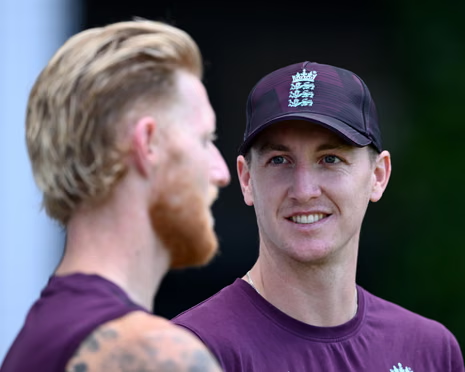
Harry Brook, England’s vice-captain and one of their most gifted batters, has been candid about his own contributions so far. Across four innings, Brook has scored 98 runs, a tally that falls short of expectations set by his explosive rise in Test cricket. Rather than deflecting criticism, the 26-year-old has openly acknowledged that some of his shot selections have let him down.
Speaking at Adelaide Oval ahead of the Test, Brook admitted he may need to temper his natural aggression. He described one dismissal in Perth as “bad batting”, recalling a bouncer that he attempted to drive, a decision he would reconsider given another chance. In Brisbane, he fell attempting to clear the boundary, another moment where ambition outweighed situation.
Brook’s reflections underline a broader challenge facing England’s batting group. Under coach Brendon McCullum, the team has embraced an assertive style that seeks to dominate bowlers rather than survive them. That philosophy has delivered remarkable successes, but the Ashes have presented conditions and opponents capable of exploiting any lapse in judgement.
McCullum has been clear that England will not abandon their aggressive intent, even after heavy defeats. However, Brook’s comments suggest a subtle recalibration rather than a retreat. The emphasis, he explained, is on reading the game more accurately, choosing when to attack and when to accumulate. In Adelaide, where conditions can reward patience as much as flair, that balance will be tested relentlessly.
Australia, meanwhile, arrive with confidence and clarity. Their bowlers have applied sustained pressure, rarely offering easy scoring opportunities. Brook was quick to credit their discipline, noting that they have consistently executed plans during high-pressure moments. That contrast, he suggested, has been decisive so far.
Within the England camp, discussions have focused on staying present and resisting the weight of the series situation. With Australia able to clinch the Ashes in Adelaide, the psychological challenge is as significant as the tactical one. Brook spoke of the need to remain “in the moment”, concentrating on each ball rather than the looming consequence of defeat.
Pressure situations have been a recurring theme throughout the first two Tests. Brook acknowledged that England have not yet matched Australia when matches have hung in the balance. Small advantages have slipped away, allowing the hosts to seize control and extend leads. Recognising that pattern is the first step, but correcting it will require collective resolve.
As one of England’s brightest stars, Brook has inevitably attracted scrutiny. Yet he insists that external criticism plays no role in his preparation. His focus, he said, remains on scoring runs and contributing to the team’s cause. For players of his calibre, these moments define careers, offering the chance to change narratives through performance rather than words.
Brook’s determination reflects a broader mindset within the squad. There is an understanding that the series can still be competitive, even if the urn is lost. Pride, momentum, and belief are all at stake, particularly with two Tests remaining after Adelaide. Avoiding a 3–0 deficit has become the immediate objective, providing something tangible to fight for.
Josh Tongue’s role could prove pivotal in that pursuit. Adelaide’s conditions often favour bowlers who can extract bounce and movement, especially under lights. Tongue’s ability to hit the deck hard and generate awkward angles offers England a different dynamic, complementing the pace of Jofra Archer and the emerging presence of Brydon Carse.

England’s confirmed team reflects continuity alongside that single change. Zak Crawley and Ben Duckett will open, followed by Ollie Pope, Joe Root, and Brook in the middle order. Captain Ben Stokes leads a side that also includes Jamie Smith, Will Jacks, Carse, Archer, and Tongue. It is a line-up that blends experience with athleticism, but now requires cohesion under pressure.
As the third Test approaches, the narrative is clear. England stand at a crossroads, facing the prospect of an early Ashes defeat or the chance to reignite the contest. One selection change may seem modest, yet its significance is magnified by the circumstances. In Adelaide, execution will matter more than intent, and moments will define outcomes.
For Brook and his teammates, the challenge is to harness their natural instincts without being consumed by them. If England can find that equilibrium, the third Test could yet become a turning point, restoring belief and reminding supporters why this side has captured attention worldwide.
Related News:
 Sri Lanka Crush Bangladesh by 99 Runs to Seal ODI Series 2-1
 England’s Euro Odyssey: A Tale of Grit, Glory and the Lionesses’ Miraculous March to the Final
 Predicted Leicester Line-ups Reflect Cifuentes’ Tactical Plans Ahead of New Season
 Central London Gears Up for Lionesses’ Victory Parade as Thousands Prepare to Celebrate Historic Women’s Euros Win
 London Set to Honour Euro 2025 Champions as Lionesses Take Victory Parade Through the Capital
 Rangers Boss Russell Martin Launches Blistering Critique After Disappointing Draw with Motherwell
 Tottenham Takes On Newcastle
 Ngumoha Shines Bright as Liverpool’s Future Looks Fiercely Promising
 Golden Glory Beckons: Ballon d’Or 2025 Nominee Frenzy Ignites Global Football Stage
 It’s Thanks to Gabby That I Caught My Prostate Cancer in Time’ – Kenny Logan Opens Up on His Battle and His Mission to Save Lives
 Minute’s Silence for Diogo Jota Abruptly Ended After Wembley Tribute Disrupted
 Rugby Confronts Safety Concerns with Smart Mouthguards at Women’s World Cup
 Premier League Supercomputer Predicts Tough Season for Man Utd Amid Three-Team Title Battle
 Aston Villa Under Pressure as Newcastle Take on Hosts in Premier League Opener
 Isaac Price Shines as West Brom Clinch 3-2 Victory at Wrexham’s Championship Return
 FIFA Eyes Biennial Club World Cup from 2029, Plans Possible Expansion
 European Football: Atlético Madrid Stumble at Espanyol as Vitinha Secures PSG Win
 Leeds Mark Premier League Return with Gritty Win Over Everton
 Nottingham Forest Clarifies Position on Nuno Espirito Santo’s Future Following Opening Weekend Victory
 Manchester United Face £300m Transfer Loss as Squad Value Highlights Long-Term Mismanagement
 Grimsby Stun Manchester United in Dramatic Penalty Shootout
 Club Brugge Crush Ten-Man Rangers to Deepen Russell Martin’s Crisis
 Guardiola Admits City ‘Forgot to Play’ After Shock Defeat to Brighton
 Morgan MacRae: From 17 Minutes Dead to Returning to Rugby in Six Weeks
 Serbia Humiliated 0-5 by England in World Cup Qualifier
 India Triumph in Dubai Amid Unexpected Twists
 Fábio Carvalho’s Last-Minute Heroics Deny Chelsea Victory at Brentford
 Simeone Explains Emotional Reaction to Fan Incident After Liverpool’s Late Winner
 Dembélé and Bonmatí Shine as Ballon d’Or Winners in Glittering Paris Ceremony
 Hannah Hampton Makes History as First Winner of Women’s Yashin Trophy at Ballon d’Or Awards
Liverpool Vs outhampton Set for Carabao Cup Clash at Anfield
Hannah Hampton Makes History as First Winner of Women’s Yashin Trophy at Ballon d’Or Awards
Liverpool Vs outhampton Set for Carabao Cup Clash at Anfield
 Chelsea Survive Lincoln City Scare to Advance in Carabao Cup
 Aston Villa Edge Bologna as Europa League Campaign Kicks Off
 Dramatic Derby: Sorloth Strikes as Atletico and Real Madrid Share the Spoils
 Arsenal VS Newcastle Hearts with Dramatic Late Turnaround at St James’ Park
 Aston Villa Fight Back to End Winless Run with Convincing Victory over Fulham
 Barcelona vs Real Sociedad
 Everton Held by West Ham as Bowen Cancels Out Keane’s Header in Nuno’s First Game
 ICC Women’s World Cup 2025: India to Host as Pakistan Fixtures Moved to Neutral Venues
 Mbappé Hat-Trick Powers Real Madrid to 5-0 Rout Over Kairat
 Monaco Hold Man City to Dramatic 2-2 Draw as Eric Dier Converts Late Penalty
 Postecoglou Stands Firm Amid Mounting Forest Fan Frustration
 Bournemouth Stun Fulham with Dramatic Comeback in Premier League Thriller
 Arsenal Edge Past West Ham Amid Injury Concerns
 Chaos at Ibrox as Martin’s Rangers Era Comes to an End
 Arsenal Showcase Depth and Flexibility as Arteta Eyes Title Challenge
 Questions Remain as Rugby Legend Lewis Moody Faces Motor Neurone Disease Diagnosis
 Cristiano Ronaldo Becomes Football’s First Billionaire Player
 Tuchel Critiques Wembley Atmosphere After England Victory, Sparks Debate on Fan Engagement
 Kane’s Double Seals England’s World Cup Qualification
 Hyped by Zlatan, Hidden by Maldini: Italy’s Rising Star Francesco Camarda
 Fulham vs Arsenal Trossard Strike Sends Gunners Three Points Clear
 Son of ex-England footballer dies in tractor crash
 Gibbs-White Inspires Forest to Thrilling Win Over Porto
 Brentford 3-2 Liverpool: Reds suffer fourth straight PL defeat
 Manchester United triumph as Mbeumo brace seals thrilling win
 Fabio Wardley stuns Joseph Parker to earn Usyk title shot
 Wolvaardt’s Masterclass Fires South Africa into First World Cup Final
 Sarr Double Sinks Young Liverpool in Carabao Cup
 Salah & Gravenberch Lead Liverpool to Win Against Villa
 Granit Xhaka Rescue Earns Everton Draw at Sunderland
 Burn and Joelinton Head Newcastle to Victory Over Bilbao
 Tension and Turmoil at Aston Villa v Maccabi Match
 Bellingham has ‘the edge’ among England No 10s
Man City Masterclass on Guardiola’s Milestone Day Exposes Liverpool Woes
Bellingham has ‘the edge’ among England No 10s
Man City Masterclass on Guardiola’s Milestone Day Exposes Liverpool Woes
 Lando Norris Dominates Brazil GP to Strengthen F1 Title Bid
 VAR Must Rein Its Neck In to Save Football’s Spirit
 Trescothick Hints Pope Will Keep Number Three Spot
 Mary Earps’s Manchester United Return Faces Mixed Reception
 Sam Kerr Stars in Chelsea Return with Champions League Double
 UK and Ireland Announce Venues for Euro 2028 Tournament
 Saka Solidifies Role as Tuchel’s Key England Lieutenant
 Former Lion Heskey Warns of Shortage of England Strikers
 Australia Mourns Paralympic Champion Paige Greco
 From heartbreak to glory: Scotland’s dramatic return to the World Cup
 Tiny Curacao Makes History as Smallest Nation to Reach World Cup
 Haiti Qualifies for World Cup Despite Coach Never Visiting Country
 Moyes Defends Gueye After Dramatic Everton Bust-Up
 Mbappe Scores 4 as Real Madrid Edge Olympiakos
 Barcelona, Atletico set for decisive La Liga showdown