Published: 22 December 2025. The English Chronicle Desk. The English Chronicle Online.
More than 800 people crossed the English Channel in small boats on Saturday, setting a new daily record for December and intensifying debate around migration policy. According to figures released by the Home Office, 803 people arrived in the UK aboard 13 dinghies after departing from northern France overnight on Friday. The crossings continued into Saturday morning, despite December being widely regarded as one of the most dangerous months for such journeys.
Traditionally, December sees far fewer Channel crossings because winter conditions create serious risks at sea. Low temperatures, strong winds, high waves, reduced daylight hours, and poor visibility combine to make the journey particularly hazardous. Border Force officials and maritime safety experts have long described winter crossings as unpredictable and potentially fatal, yet this weekend’s figures underline how persistent the pressures driving migration have become.

Saturday’s arrivals marked the largest number recorded on a single December day since small boat monitoring began. It was also the highest daily total since 8 October, when 1,075 people crossed in one day during calmer autumn weather. The scale of the movement surprised officials, given that meteorological forecasts earlier in the week warned of deteriorating sea conditions.
The December record comes amid an already high annual total. With Saturday’s arrivals included, 41,455 people have crossed the Channel so far this year. That figure brings 2025 close to the record annual total of 45,755 crossings recorded in 2022. Although it remains below that peak, the pace of arrivals in recent weeks has raised concerns that the year could end with one of the highest totals on record.
Home Office data shows that December has historically been quieter than other months. In December 2024, a total of 3,254 people crossed the Channel across the entire month. So far this December, 2,163 people have already arrived, meaning the month is on course to challenge previous winter totals if crossings continue at the current rate.
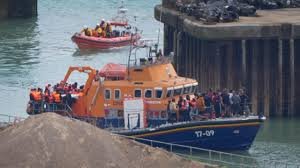
On Saturday morning, a Border Force vessel was seen arriving at the port of Dover in Kent, bringing people ashore after the overnight crossings. Local witnesses reported seeing several dinghies being escorted into British waters. The night before, observers on the French coast described multiple small boats launching from beaches in northern France under cover of darkness.
French authorities also confirmed increased activity over the weekend. The maritime prefecture for the Channel and the North Sea said that 151 people were rescued at sea by French services and returned safely to French shores. Officials explained that patrol vessels intervened when boats encountered difficulties or when weather conditions worsened unexpectedly.
The French statement highlighted the risks involved in winter crossings, noting that many of the boats used were overcrowded and ill-equipped for rough seas. French rescue teams said they remain on high alert during periods of increased departure attempts, especially when smugglers encourage migrants to take advantage of brief weather windows.
The UK government responded to the latest figures by reiterating its commitment to reducing small boat crossings and addressing what it describes as the “upstream” causes of irregular migration. Ministers have repeatedly argued that international cooperation is central to tackling the issue, particularly collaboration with neighbouring European countries.
A Home Office spokesperson described the number of small boat crossings as unacceptable and said the public expected decisive action. The spokesperson stated that the government had already removed almost 50,000 people who were in the UK illegally. They added that a new agreement with France meant individuals arriving by small boats were now being returned, although the practical implementation of returns remains complex.
The government has emphasised that its approach combines enforcement with international diplomacy. Officials argue that dismantling smuggling networks, improving border security, and accelerating asylum decision-making are all essential elements of a long-term solution. However, critics continue to question whether current measures are sufficient to deter dangerous crossings.
Political pressure has intensified in recent months, with migration remaining one of the most divisive issues in UK public debate. Prime Minister Keir Starmer has urged European partners to take stronger action against smuggling gangs operating along the northern French coast. France recently indicated that it plans to stop small boats at sea before they are able to collect migrants heading for the UK.

This proposed shift in French policy follows sustained discussions between London and Paris. French officials have acknowledged that current tactics, which focus heavily on beach patrols, have limitations. Intercepting boats at sea could represent a significant operational change, though it also raises legal and humanitarian questions.
Germany has also taken legislative steps aimed at disrupting people-smuggling operations linked to Channel crossings. Earlier this week, the German parliament passed a new law that could see convicted people smugglers face prison sentences of up to 10 years. The legislation is expected to come into force before the end of the year.
German officials said the law is designed to strengthen law enforcement powers and improve cooperation with international partners, including the UK. The measures will allow prosecutors to pursue cases more aggressively and expand information sharing between agencies. UK ministers have welcomed the move, describing it as an important contribution to tackling transnational criminal networks.
Despite these developments, humanitarian organisations warn that tougher enforcement alone may not stop people risking their lives at sea. Many migrants crossing the Channel are fleeing conflict, persecution, or severe economic hardship. Aid groups argue that without safe and legal routes to seek asylum, people will continue to rely on smugglers.
Weather conditions remain a critical factor in determining daily crossing numbers. Experts note that even brief periods of calmer seas during winter can trigger sudden spikes in departures. Smuggling networks are known to monitor forecasts closely and act quickly when conditions appear marginally favourable.
Local authorities in Kent have also expressed concern about the strain on reception facilities during sudden influxes. Emergency accommodation and processing centres must be ready to respond at short notice, even during holiday periods. Officials have stressed the importance of maintaining safety and dignity for those arriving, while ensuring border procedures are followed.
As the year draws to a close, attention will remain focused on whether further crossings occur during the remaining days of December. The latest figures suggest that the Channel continues to be a focal point of irregular migration, despite increased enforcement and diplomatic efforts.
The record December day underscores the complexity of the challenge facing the UK and its European neighbours. While governments pursue tougher laws and closer cooperation, the persistence of crossings highlights deep-rooted global pressures that are unlikely to disappear quickly. For now, the Channel remains a dangerous route, and each new record serves as a reminder of the human stakes involved.
Related News:
 UK Must Act with Courage and Clarity on Israel-Palestine Conflict, Says Foreign Affairs Committee Report
 The Ketamine Crisis in the UK is a Silent Epidemic Leaving Users with Lifelong Pain
 London Set to Honour Euro 2025 Champions as Lionesses Take Victory Parade Through the Capital
 Targeted Attack in Bury Sparks Murder Investigation as Community Awaits Justice
 Princess of Wales Launches Animated Video Series to Support Early Childhood Development
 Heartbreak in the New Forest as Shetland Ponies Vanish, Community on Edge
 Radioactive Leak at UK’s Nuclear Warhead Base Sparks Outcry Over Safety and Secrecy
 Fire Contained at Edinburgh’s Arthur’s Seat After Overnight Battle by Firefighters
 Premier League Supercomputer Predicts Tough Season for Man Utd Amid Three-Team Title Battle
 Mystery Wallaby Spotted on Norfolk-Suffolk Border Sparks Police Appeal
 UK Weather: Heat Alerts Extended as Temperatures Set to Reach 30°C This Weekend
 Terence Stamp, ’60s British Film Legend and Star of Superman, Dies at 87
 Merseyside Police Helicopter Crew Cleared After Low-Altitude Pursuit of Suspect
 Is the UK Ready to Put Boots on the Ground in Ukraine? Assessing Military Capacity and Challenges
 Education Leaders Call for End to Compulsory GCSE Resits in English and Maths
 Police Scotland Spends £500,000 Compensating Officers Over Trump Visit
 Thousands of New School Nursery Places to Be Rolled Out Across England
 Urgent Action Needed on Windrush Compensation as Survivors Speak of “Waiting to Die”
 Tanni Grey-Thompson Faces Abuse Over Opposition to Assisted Dying Bill
 Rising Food Bank Dependence Highlights Deepening Hardship Across the UK
 Birmingham Bin Strike Enters Sixth Month as Negotiations Stall
 TfL Invites RMT to Resume Talks as London Tube Strikes End
 Over 40% of Private Renters Forced to Ration Energy to Afford Bills, Study Reveals
 Systemic Racism in Maternity Care Continues to Endanger Black Women in England, MPs Warn
 One in Three GPs in England Do Not Work in NHS, Raising Concerns Over Access to Care
 Northern Ireland Faces Fears of Prolonged Race Riot “Permacrisis”
 Nigel Farage Unveils Controversial Immigration and Welfare Plans at Reform UK Press Conference
 Great Britain’s Energy Operator Commits to Strengthening Grid to Prevent Blackouts
 Scottish Teenager’s Petition on Single-Use Plastics Gains Parliamentary Support
 White Low-Income Pupils in England Show Lowest Levels of School Engagement, Study Finds
 Ed Miliband Warns UK Government on X, Citing Elon Musk as a “Dangerous Influence”
 No Evidence Found to Substantiate Alleged Rape in Oxfordshire Churchyard, Police Confirm
 Questions Remain as Rugby Legend Lewis Moody Faces Motor Neurone Disease Diagnosis
 UK House Price Growth Slows as Buyers Exercise Caution Ahead of Autumn Budget
 Kemi Badenoch Unveils ‘Golden Rule’ to Halve Spending Cuts for Deficit Reduction at Tory Conference
 Massive London Poundland Fire Engulfs High Street
 Sussexes Warn on Children’s Phone Use Echoing Princess of Wales
 UK Rules Out Troop Deployment to Monitor Gaza Ceasefire, Pledges Diplomatic and Financial Support
 Paedophile Singer Ian Watkins Dies After Prison Attack
 Prince Andrew told Epstein “we are in this together”
 Former Premier League Referee David Coote Pleads Guilty to Child Image Offence
 DNA Test Confirms Alleged Stalker Is Not Madeleine McCann
 UK border officers deployed to Balkans to tackle migrant smuggling
 UK MPs warn of repeat riots over online misinformation
 New V-Level qualification to transform post-16 education
 Son of ex-England footballer dies in tractor crash
Giuffre’s bombshell memoir names Prince Andrew 88 times in shocking revelations
Son of ex-England footballer dies in tractor crash
Giuffre’s bombshell memoir names Prince Andrew 88 times in shocking revelations
 Real living wage set to rise nearly 7% for UK workers in 2026
 UK Campaigners Launch Bill to Grant Legal Rights to Nature
 M&S and Morrisons Lead Christmas Supermarket Taste Test
 New Prostate Cancer Drug Set to Halve Death Risk in England
 Brentford 3-2 Liverpool: Reds suffer fourth straight PL defeat
 Army Barracks to House Migrants as Hotels Phase Out
 Peterborough Mosques Tighten Security After Attack
 Reeves Faces Setback as Labour May Miss Homes Target
 Kate Winslet to Narrate Film Highlighting King’s Environmental Mission
 Trump’s UK Ambassador Urges North Sea Drilling to Strengthen US Ties
 French Taxi Driver Cleared in David Lammy Theft Case After Fare Dispute
 UK Bans Fake Numbers: Scammers Lose Their Trick
 M&S Profits More Than Halve After Cyber-Attack
 Kent village told to remove flags before Christmas lights go up
 Patients to Test Health at Home to Ease NHS Winter Pressure
 I’m a Celebrity 2025 line-up revealed: Osbourne joins
 Palace May Restore Hyphen to Andrew Mountbatten-Windsor’s Name
 Millionaires group urge Reeves to introduce wealth tax to ‘lift kids out of poverty’
 Shouting Works Best to Deter Gulls, UK Study Finds
 Reeves rejects £1bn plea for NHS redundancy payouts
 Northern Lights may illuminate UK skies this week
 PM Condemns Leaks, Vows Loyalty to Ministers and Stability
 Major Rent Reform Ends No-Fault Evictions in England
 Criminal Gangs Pose as Truckers to Hijack UK Supply Chains
 Stroke Patient Mistaken for Drunk, Care Delayed
 Inside the Helpline Protecting Missing Children in the UK
 Boots Showstopper Beauty Bundle Outshines Many Advent Calendars This Holiday Season
 PlayStation PS5 Deals Hit Lowest Prices Ahead of Black Friday
 Five-Year-Old Dies After Rare Tonsil Surgery Complication
 Starmer Says Labour’s Economic Plan Needs Years to Deliver
 England delays four mayoral elections amid criticism
 UK unemployment rises to four-year high of 5.1% before budget
 Wiltshire Police Use Lasso to Catch Rampaging Village Goat