Published: 29 December 2025. The English Chronicle Desk. The English Chronicle Online.
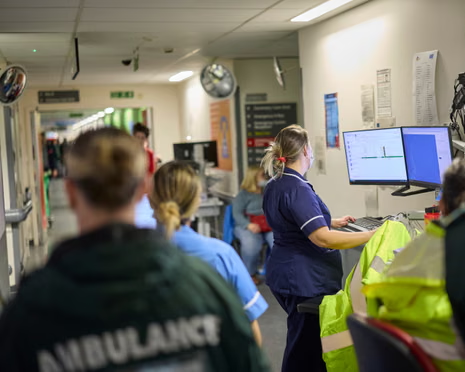
Hospitals across England are increasingly turning to artificial intelligence to ease pressure on accident and emergency departments during one of the most demanding winters the National Health Service has faced in recent years. With cold weather, seasonal illnesses, and staffing pressures converging, health leaders believe predictive technology could play a vital role in reducing waiting times and improving patient flow in emergency care settings.
At the centre of this initiative is a new A&E forecasting tool that uses artificial intelligence to predict periods of high demand. The system analyses historical and real-time data, including weather patterns, school holiday schedules, flu prevalence, and Covid infection rates. By identifying when emergency departments are most likely to become overwhelmed, NHS trusts can plan staffing levels, allocate beds more effectively, and prepare specialist teams in advance.

Emergency departments have long struggled with unpredictable surges in demand, particularly during winter months. Traditionally, hospitals relied on experience and broad seasonal trends to anticipate busy periods. While staff knew weekends and colder months were challenging, they often lacked precise forecasting. The new AI-driven approach aims to replace guesswork with data-led planning, offering a clearer picture of what lies ahead.
The government has positioned the technology as a way to free clinicians from administrative burdens and allow them to focus on patient care. Officials argue that better forecasting reduces last-minute scrambling for staff and resources, leading to smoother operations and shorter waits for patients needing urgent attention.
Ian Murray, the minister for digital government and data, described A&E departments as the frontline entry point of the NHS. He explained that hospitals rarely know in advance how many patients will arrive on any given day. While broad assumptions can be made about weekends or winter demand, the forecasting tool provides more refined insight. By combining seasonal trends with daily projections, hospitals can deploy resources where they are needed most.
Murray noted that the technology allows trusts to anticipate which days or nights will be busiest. This insight means additional consultants can be scheduled in high-demand specialities, and extra nursing staff can be placed in departments expected to experience surges. He added that planning does not stop at the emergency department door, as hospitals can also prepare wards further down the care pathway.
One of the major contributors to long A&E waits is bed availability. When wards are full, patients cannot be admitted from emergency departments, leading to congestion. The AI tool helps hospitals identify when bed shortages are likely, enabling managers to plan earlier discharges where appropriate. By improving patient flow throughout the hospital, emergency departments can operate more efficiently.
The forecasting system is now available to all NHS trusts in England. Around 50 NHS organisations have already adopted the technology, and early feedback suggests positive results. According to Murray, trusts using the tool are seeing improvements in planning and resource allocation, particularly during peak periods.
Supporters of the initiative emphasise that the technology is not about replacing human judgement but enhancing it. Clinicians and managers still make final decisions, but they now have access to clearer, evidence-based forecasts. This combination of professional expertise and advanced analytics is seen as a step towards a more modern, responsive health service.
The AI forecasting tool forms part of the government’s broader AI Exemplars programme, launched under Prime Minister Keir Starmer. The programme aims to demonstrate practical uses of artificial intelligence across public services, with healthcare identified as a priority area. In January, Starmer said AI had the potential to drive significant change across the country, improving efficiency while maintaining public trust.
Within the NHS, enthusiasm for digital innovation has grown alongside recognition of the system’s deep-rooted challenges. Rising demand from an ageing population, workforce shortages, and funding pressures have all contributed to long waits in emergency care. While AI alone cannot solve these structural issues, leaders believe it can provide meaningful support.
Professor Julian Redhead, national clinical director for urgent and emergency care at NHS England, said early and efficient planning is essential during busy periods like winter. He described the AI tool as a promising development that could improve how care is managed for patients. By anticipating pressure points, hospitals can act sooner, reducing stress for staff and improving experiences for those seeking urgent care.
Patient groups have cautiously welcomed the initiative, highlighting the importance of transparency and safety. They stress that any technology used in healthcare must be rigorously tested and continuously monitored. NHS officials insist that data protection and patient confidentiality are central to the system’s design, with strict safeguards in place.
The use of artificial intelligence in healthcare is not without controversy. Critics warn against overreliance on algorithms and stress the need for human oversight. There are also concerns about data quality, as inaccurate or incomplete information could lead to flawed predictions. NHS England has responded by emphasising ongoing evaluation and refinement of the tool as more trusts adopt it.
Despite these concerns, many frontline staff see potential benefits. Emergency department teams often face intense pressure during winter, with overcrowding contributing to burnout and low morale. Better planning could help create more manageable working conditions, improving staff retention and patient safety.

The initiative also reflects a wider shift towards preventative and predictive healthcare. Rather than reacting to crises as they occur, the NHS is exploring ways to anticipate demand and intervene earlier. This approach aligns with broader reforms aimed at making the health service more resilient in the face of growing challenges.
As winter continues, the true impact of the AI forecasting tool will become clearer. Early indications suggest it can support smarter decision-making, but long-term success will depend on integration with existing systems and sustained investment. Health leaders acknowledge that technology is only one piece of a complex puzzle.
For patients, the promise is straightforward. Shorter waits, smoother journeys through emergency care, and a system better prepared for peak demand could make a tangible difference during moments of vulnerability. Whether artificial intelligence can deliver consistently on that promise remains under close scrutiny.
What is clear is that the NHS is entering a new phase in its relationship with technology. As pressures mount, innovations like AI forecasting are being tested not as futuristic concepts but as practical tools for everyday challenges. This winter may mark an important chapter in how emergency care is planned and delivered across England.
Related News:
 Concerns Mount Over Accuracy of At-Home Health Tests as Study Calls for Stricter Regulation
 NHS Under Pressure: Waiting Times Soar as Staffing Crisis Deepens
 The Ketamine Crisis in the UK is a Silent Epidemic Leaving Users with Lifelong Pain
 UK Launches World-First Gonorrhoea Vaccine Amid Record Infection Surge
 Woman Warned She Might Need Leg Amputation to Survive After Liquid Brazilian Butt Lift
 AI Tools Used by English Councils Found to Downplay Women’s Health Issues, Raising Concerns Over Gender Bias in Care
 Cats Develop Dementia Similarly to Humans, Study Finds
 Appalling Rise in Pharmacy Crimes: Staff Face Increasing Theft and Aggression
 Alarming rise in abusive teen relationships in the UK sparks urgent warnings
 Learner Drivers to Face CPR and Defibrillator Questions in New Theory Tests
 Inquest Finds Agency Worker Failings Led to Unlawful Death of Vulnerable 14-Year-Old
 UK Patients Face Steep Price Rise for Weight-Loss Drug Mounjaro
 Shocking Rise in Children’s Exposure to Violent Online Pornography Raises Alarm
 Baby Food Manufacturers Given 18 Months to Improve Nutrition and Labelling
 Why E-Bikes and E-Scooters Are Making Streets a ‘Nightmare’ for Blind People
 Millions in the UK at Higher Risk of Heart Failure and Stroke Due to Air Pollution, Study Warns
 Norfolk Hospital Ranked Worst in England as NHS League Tables Return
 NHS Trials £100 Blood Test That Could Revolutionise Alzheimer’s Diagnosis
 More Than Half of UK Births Now Involve Medical Intervention
 UK Graduates in Healthcare Report Highest Satisfaction with Degree Choices
 NHS ‘Toxic Culture’ Risks Harm to Mothers and Babies, Health Leader Warns
 Systemic Racism in Maternity Care Continues to Endanger Black Women in England, MPs Warn
 One in Three GPs in England Do Not Work in NHS, Raising Concerns Over Access to Care
UK Doctors Guilty of Sexual Misconduct Continue Practising Amid Weak Sanctions, Research Finds
One in Three GPs in England Do Not Work in NHS, Raising Concerns Over Access to Care
UK Doctors Guilty of Sexual Misconduct Continue Practising Amid Weak Sanctions, Research Finds
 Private Psychology Costs Surge in UK as Practitioners Turn Away Clients Amid Record Demand
 Heavy Drinkers Lead Growth in Non-Alcoholic and Low-Alcohol Market
 Omeprazole Alert: NHS Issues Guidance on Safe Use for Heartburn and Indigestion
 Starmer Unveils Plan for NHS “Online Hospital” to Tackle Waiting Lists
 Tragic Death Strikes Half-Marathon in Stoke-on-Trent: Runner Dies Shortly After Crossing Finish Line
 Call to Allow ‘Safe and Effective’ At-Home Abortions Up to 12 Weeks in the UK
 Questions Remain as Rugby Legend Lewis Moody Faces Motor Neurone Disease Diagnosis
 Eligibility Confusion Over COVID Vaccination Leaves Pharmacies Struggling Across the UK
 Majority of UK Men Would Opt for Prostate Cancer Screening, Survey Finds
 Scientists Announce First Potentially Accurate Blood Test for Chronic Fatigue Syndrome
 NHS Facilities Staff Vote to Strike Over Pay Discrimination
 Survey Shows Most GPs Rushing Appointments
 NHS Staff Strike Over £30m Pay Discrimination Claim
 Ambulance Worker Fired After Flinging Amputee from Wheelchair and Offering Bribe
 Women Challenge Meta Over Targeted Ads After Miscarriage
 Mum’s Final Wish: Donating Her Body to Science
 Genetic Tests May Predict Return of Blood Cancer
 UK Woman Becomes Longest Survivor of Heart-Lung Transplant
£18 Prostate Cancer Test Could Save Thousands of Lives
UK Woman Becomes Longest Survivor of Heart-Lung Transplant
£18 Prostate Cancer Test Could Save Thousands of Lives
 Thousands in the UK sue Johnson & Johnson over alleged talcum powder, linked to cancer
 Pregnant Women in England Face Rising Risk of Severe Birth Injury
 ‘Game-Changing’ HIV Prevention Jab Set for NHS Approval
 One in 12 Secondary Pupils Sent to Isolation Weekly
 M&S and Morrisons Lead Christmas Supermarket Taste Test
New Prostate Cancer Drug Set to Halve Death Risk in England
M&S and Morrisons Lead Christmas Supermarket Taste Test
New Prostate Cancer Drug Set to Halve Death Risk in England
 UK Health Leaders Push for Urgent Tobacco & Vape Bill
 Man Trapped in Quicksand Rescued in Dramatic Coastal Rescue
 Hospice Cuts Raise Alarm Across England Amid Funding Crisis
 Celebrities and Charities Demand UK Government Act on Child Poverty
 Experts Warn on Home Birth Risks, Call for Skilled Midwives
 Experts Urge Legal Right to Timely Cancer Care
 Patients to Test Health at Home to Ease NHS Winter Pressure
 London’s Childlessness Crisis: Schools Closing as Families Shrink
 North Sea oil workers must lose weight or face job loss
 Crisis charity to become landlord amid UK housing emergency
 Shouting Works Best to Deter Gulls, UK Study Finds
 Reeves rejects £1bn plea for NHS redundancy payouts
 Leading doctors issue warning amid ‘bad’ flu season
 Stroke Patient Mistaken for Drunk, Care Delayed
 UK launches major AI drive to fight deadly superbugs
 ‘Traumatic Wait’: Northern Ireland Women Face Breast Cancer Delays
 Welsh Government Christmas 2020 Lockdown Criticised
 Coffins Now Too Large to Cremate Amid Rising Obesity Crisis
 NHS paediatric leave parents waiting months for answers
 Catherine urges end to stigma around addiction
 Five-Year-Old Dies After Rare Tonsil Surgery Complication
 Fibromyalgia Patients Struggle as NHS Fails to Provide Care
 “Enough is Enough”: Local MP Vows to Fight Rainham Quarry Plans
 More Patients Now Contacting GPs Online, Data Shows
 GPs Failing Frail Elderly: Only 1 in 6 Assessed – NAO
 NHS Maternity Failings Leave Families Traumatized, Investigation Finds
 NHS braces for worst winter crisis amid rising flu cases
 Inquiry Launched into North-East NHS Trust Patient Deaths
 Ministers to back regulation of England’s funeral industry
 Teen Nicotine Pouch Use Sparks Growing Health Alarm
 People in England’s Poorest Areas Face Higher Lung Health Emergencies