Published: 07 January 2026. The English Chronicle Desk. The English Chronicle Online.
The discovery of an Iron Age carnyx in eastern England has electrified archaeologists, historians, and the wider public alike, offering a rare and evocative glimpse into Britain’s turbulent ancient past. Unearthed during a routine archaeological investigation in west Norfolk, the Iron Age carnyx has been described by experts as an extraordinary survival, both for its remarkable state of preservation and for its possible links to the Iceni tribe, famously led by Queen Boudicca during their violent rebellion against Roman rule. The Iron Age carnyx, fashioned in bronze and shaped like a snarling animal head, immediately captured attention as one of the most significant Iron Age finds ever made in Britain.
The Iron Age carnyx is a type of war trumpet known from classical texts and scattered archaeological finds across Europe, yet examples are exceptionally rare. This newly recovered instrument is only the third confirmed Iron Age carnyx discovered in Britain and, crucially, it is the most complete example found anywhere in the world. Archaeologists believe it dates to the first century AD, a period marked by intense conflict between indigenous British tribes and the expanding Roman Empire. Its discovery within Iceni territory has inevitably fuelled speculation about a connection to Boudicca’s uprising, which erupted in AD 60 and briefly threatened Roman control of southern Britain.
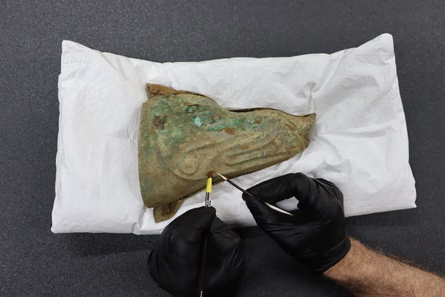
Excavations ahead of a housing development revealed the Iron Age carnyx buried alongside an assemblage of other martial objects. These included five iron shield bosses and a bronze boar’s head battle standard, itself a unique find in Britain. The careful placement of these objects suggests a deliberate act of deposition rather than casual disposal. Specialists believe the hoard was intentionally buried, perhaps as a ritual offering, a memorial to fallen warriors, or an attempt to protect sacred objects during a time of crisis. The Iron Age carnyx lay partially dismantled, yet astonishingly intact, with its animal head and bell preserved in remarkable detail.

Mark Hinman, chief executive of Pre-Construct Archaeology, whose team uncovered the hoard, described the find as a once-in-a-career moment. With more than four decades of experience, he admitted he had never encountered anything comparable. According to Hinman, the quality and craftsmanship of the Iron Age carnyx indicate it was not an ordinary instrument but a powerful symbol likely associated with elite warriors or tribal leaders. Its presence among other high-status military items reinforces the impression that these objects belonged to individuals of considerable importance within Iron Age society.
The possible association with Boudicca has added an emotional and historical resonance to the discovery. The Iceni heartland encompasses the area where the hoard was found, and the dating aligns closely with the years surrounding the famous rebellion. While archaeologists caution against drawing firm conclusions, the Iron Age carnyx almost certainly would have been known to influential figures within the tribe. Even if it was not directly used in Boudicca’s campaign, it belonged to the same cultural and political world that produced one of Britain’s most enduring historical figures.
Classical writers provide vivid descriptions of the Iron Age carnyx in use. Greek historian Diodorus Siculus wrote of barbarian trumpets producing harsh, terrifying sounds suited to the chaos of battle. Roman accounts similarly mention the unnerving effect of these instruments, which were held high above warriors’ heads, amplifying their sound across the battlefield. The Norfolk Iron Age carnyx, shaped like a wild animal with open jaws and exaggerated ears, was clearly designed to intimidate. Its appearance alone suggests it was meant to embody ferocity, power, and perhaps even supernatural force.
The craftsmanship of the newly discovered Iron Age carnyx has already impressed experts. Unlike fragmentary examples found elsewhere, this instrument retains its distinctive features, including large, flared ears that survive intact. Evidence of repairs indicates it was used over a long period, suggesting it held enduring significance rather than being made for a single event. Archaeologists believe such objects were not merely tools of war but carried symbolic meaning, possibly believed to possess their own spirit or agency within Iron Age belief systems.
Fraser Hunter, Iron Age and Roman curator at the National Museum of Scotland, described the find as extraordinary and transformative. Having studied carnyces from across Europe, he noted that this example would fundamentally reshape understanding of sound, music, and ritual in Iron Age Britain. The Iron Age carnyx from Norfolk promises insights not only into warfare but also into performance, ceremony, and identity during a period often known only through Roman perspectives.
Until now, Britain’s best-known carnyx fragment came from Moray in northern Scotland, discovered in 1816 and now housed at the National Museum of Scotland. That example, incomplete and damaged, left many questions unanswered. Another British carnyx was reportedly melted down by antiquarians in the past, making the Norfolk find even more precious. Its survival allows researchers to study construction techniques, acoustic properties, and artistic choices in unprecedented detail.
Conservation work is currently underway at Norfolk Museums Service, where specialists are stabilising the fragile bronze before further analysis. This painstaking process will take time, but researchers are eager to examine tool marks, repairs, and residues that may reveal how the Iron Age carnyx was made and used. Scientific testing may also refine its dating, helping to clarify its relationship to historical events such as the Iceni revolt.
The hoard’s legal status is now under consideration by a coroner, who will determine its fate under the Treasure Act 1996. If declared treasure, it is likely that a museum will seek to acquire the objects for public display, ensuring that the Iron Age carnyx can be seen and appreciated by future generations. There is already strong interest from regional and national institutions, reflecting the find’s cultural importance.
Public fascination with the discovery has been further fuelled by its inclusion in the forthcoming series of the BBC programme Digging for Britain. The Iron Age carnyx will feature in the second episode, scheduled for broadcast on BBC Two on 14 January. The programme is expected to explore the excavation, conservation, and historical context of the hoard, bringing this remarkable story to a wide audience.

Beyond its immediate archaeological value, the Iron Age carnyx serves as a powerful reminder of how much remains unknown about Britain’s ancient past. Objects like this once carried stories, names, and meanings that have largely been lost to time. Yet their survival allows modern viewers to feel a tangible connection to people who lived, fought, and believed more than two thousand years ago. As Hinman observed, encountering the carnyx can feel uncanny, as though the object itself is looking back across the centuries.
Whether or not a direct link to Boudicca can ever be proven, the Iron Age carnyx from Norfolk stands as a symbol of resistance, identity, and artistry during one of the most dramatic chapters in British history. Its discovery enriches understanding of the Iron Age world and invites renewed reflection on the voices, sounds, and experiences that once echoed across ancient battlefields.
Related News:
 Peterborough Mosques Tighten Security After Attack
 Reeves Faces Setback as Labour May Miss Homes Target
 Hospice Cuts Raise Alarm Across England Amid Funding Crisis
 UK Woman Loses Child Benefit After Booking Flight She Never Took
 Kate Winslet to Narrate Film Highlighting King’s Environmental Mission
 Green Party Surges Past Labour in Latest UK Poll
 Celebrities and Charities Demand UK Government Act on Child Poverty
 Trump’s UK Ambassador Urges North Sea Drilling to Strengthen US Ties
 Children to Learn Local History in Major Curriculum Overhaul
 FBI Director Kash Patel Defends Girlfriend Amid Government Jet Claims
 Granit Xhaka Rescue Earns Everton Draw at Sunderland
 French Taxi Driver Cleared in David Lammy Theft Case After Fare Dispute
 The Lowry Hotel: Manchester’s Iconic Five-Star Retreat
 UK Bans Fake Numbers: Scammers Lose Their Trick
 Prince William Plants Trees with Brazil’s Nature Heroes
 Top Christmas Books Reads: Classics to Cozy Romcoms
 M&S Profits More Than Halve After Cyber-Attack
 Just Stop Oil Protesters Convicted Amid Climate Defence Row
 Greta Thunberg Backs Student Facing UK Visa Revocation
 Kent village told to remove flags before Christmas lights go up
 Tony Blair think tank warns Rachel Reeves must cut taxes if manifesto broken
 Pauline Collins, Beloved ‘Shirley Valentine’ Star, Dies at 85
 Patients to Test Health at Home to Ease NHS Winter Pressure
 London’s Childlessness Crisis: Schools Closing as Families Shrink
 Bellingham has ‘the edge’ among England No 10s
 King Charles to Lead Nation in Remembrance Sunday Service
 Man City Masterclass on Guardiola’s Milestone Day Exposes Liverpool Woes
 How to get help when a child goes missing – call 999 urgently
 ‘Reckless’ cuts to victims’ services will cost more than they save
 Palace May Restore Hyphen to Andrew Mountbatten-Windsor’s Name
 Millionaires group urge Reeves to introduce wealth tax to ‘lift kids out of poverty’
 Starmer Faces Growing Dissent as Labour MPs Weigh Leadership Challenge
 VAR Must Rein Its Neck In to Save Football’s Spirit
 Shouting Works Best to Deter Gulls, UK Study Finds
 Mary Earps’s Manchester United Return Faces Mixed Reception
 Reeves rejects £1bn plea for NHS redundancy payouts
 Binman killed in lorry crash in Leominster
 Northern Lights may illuminate UK skies this week
 Politics latest: Starmer ‘will fight any leadership coup’ as Streeting denies attempt to oust Labour PM
 PM Condemns Leaks, Vows Loyalty to Ministers and Stability
 Son Reveals UK Couple in Iran Resort to Hunger Strike for Help
 Major Rent Reform Ends No-Fault Evictions in England
 Peers Flood Assisted Dying Bill with 942 Amendments
 Former Lion Heskey Warns of Shortage of England Strikers
 Global markets drop amid tech sell-off and China slowdown
 Criminal Gangs Pose as Truckers to Hijack UK Supply Chains
 Mum Calls for New Licence Rules After Teen Road Death
 Stroke Patient Mistaken for Drunk, Care Delayed
 Mother Watches in Horror as Teen Daughter Dies on Tracks
 Van Dwellers Face Eviction After Park Misuse Sparks Outcry
 ‘Traumatic Wait’: Northern Ireland Women Face Breast Cancer Delays
 Commuters warned as yellow snow and ice alert hits Northern Ireland
 Serial Rapist and Former Cop Found Guilty Again
 Mossmorran Plant Closure Hits Cowdenbeath Hard
 Royal Navy Shadows Russian Warships Entering the Channel
 Coffins Now Too Large to Cremate Amid Rising Obesity Crisis
 Inside the Helpline Protecting Missing Children in the UK
 Most Tories Expect to Support a Farage-Led Government
 HS2 woes leave Warwickshire village struggling with pollution
 Boots Showstopper Beauty Bundle Outshines Many Advent Calendars This Holiday Season
 Bill Murray Terrified Wes Anderson but Became His Closest Collaborator
 Labour’s ‘blinkered’ drive to build risks pushing wildlife to point of no return, nature experts warn
 Labour MP claims devolution bill is ‘blatant discrimination’ against Cornwall
 PlayStation PS5 Deals Hit Lowest Prices Ahead of Black Friday
 Karen Carney Stuns on Blackpool Week, Deserves Strictly Final
 Prisoner 951 Review: arrowing Retelling of Nazanin Zagharz-Ratcliffe
 Millions Face Higher Taxes Under Reeves New Budget
 Five-Year-Old Dies After Rare Tonsil Surgery Complication
 Fibromyalgia Patients Struggle as NHS Fails to Provide Care
 Search underway for British man overboard off Tenerife
 Starmer Says Labour’s Economic Plan Needs Years to Deliver
 Virgin Media Fined £23.8m Over Telecare Safety Failures
 More Patients Now Contacting GPs Online, Data Shows
 Rising Water Bills Lift Troubled Thames Back to Profit
 UK unemployment rises to four-year high of 5.1% before budget
 Culture secretary to review Telegraph takeover by Daily Mail owner
 Wiltshire Police Use Lasso to Catch Rampaging Village Goat
 Prince George Helps Father at London Homelessness Charity
 Stokes urges empathy for England players amid Ashes struggles
 Children to Receive Home Vaccines as England Acts