Published: 06 February 2026. The English Chronicle Desk. The English Chronicle Online.
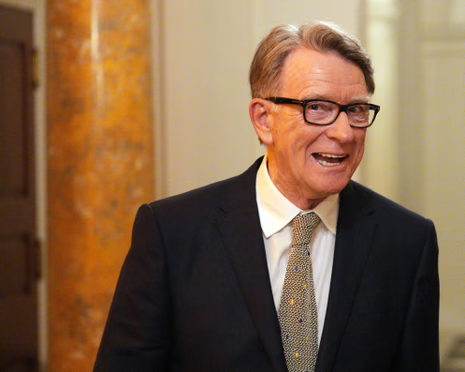
Barclays has reportedly ended its relationship with Global Counsel following mounting scrutiny around the firm’s co-founder Peter Mandelson. The decision comes after renewed attention on Mandelson’s past connections with Jeffrey Epstein triggered political and corporate concern across Britain. The Global Counsel matter has rapidly shifted from a reputational issue into a wider governance debate among major UK institutions. Large companies are now reassessing how advisory partnerships are structured and monitored in sensitive political environments.
According to multiple financial and political sources, the bank moved quietly but decisively after internal reviews raised reputational risk questions. Executives were said to be dissatisfied with how ownership and distancing measures were communicated after the controversy intensified. The Global Counsel leadership structure and Mandelson’s remaining interests reportedly became a focal point during those internal discussions. While the bank has not publicly detailed every factor behind the move, informed figures describe reputational exposure as the central driver.
 Vodafone has also confirmed that it is reviewing its own public affairs contract with Global Counsel as scrutiny continues. The telecom group stated that its current agreement runs until March and remains under routine evaluation procedures. No final decision has been announced, yet the timing places additional pressure on the advisory firm’s corporate relationships. Market observers say such reviews are common, but context often determines how renewal outcomes are ultimately decided.
The controversy escalated after newly surfaced investigation materials revived questions about Mandelson’s past communications and associations. Released emails examined by investigators appeared to show extended exchanges connected to business planning and introductions. These records were drawn from broader justice department files related to Epstein’s network and contacts. Their publication reignited debate about judgement, transparency, and disclosure standards among senior political and advisory figures.
Mandelson has publicly attempted to distance himself from operational involvement connected to Global Counsel in recent statements. He stressed that he no longer plays a management role and rejected claims of improper advisory influence. However, critics argue that ownership stakes and historic communications still raise legitimate questions for institutional clients. The firm itself has not been accused of criminal wrongdoing, yet reputational exposure remains commercially significant.
Political consequences have also followed swiftly, intensifying pressure on government leadership and appointment vetting processes. Mandelson previously resigned from party membership amid the fallout surrounding his disclosed Epstein contacts. He was also removed from a diplomatic post after earlier email revelations drew public and parliamentary criticism. The renewed document releases have added further detail, extending the lifecycle of an already damaging political episode.
Government officials have faced calls to publish fuller timelines of meetings, disclosures, and internal risk assessments. Opposition figures say transparency is necessary to restore public confidence in appointment and advisory screening standards. Supporters of the administration argue that decisions were made based on available facts at the time. They say hindsight should not automatically redefine earlier judgement calls made under incomplete information conditions.
Financial sector reaction has been cautious but clearly attentive to reputational risk exposure pathways and client perception. Advisory firms often operate in complex spaces linking policy, corporate strategy, and international regulatory frameworks. That positioning can amplify scrutiny when founders or partners become subjects of controversy or investigation. Banks and listed companies typically respond quickly when public trust variables shift under intense media examination.
Rokos Capital Management, a major London hedge fund, confirmed it halted advisory discussions linked to Mandelson. The firm said talks regarding a potential advisory position were terminated after the latest document disclosures emerged. That move signalled how quickly counterparties can step back when controversy threatens investor confidence or governance optics. Industry analysts note that even informal advisory talks now receive stricter reputational screening than before.
Additional attention has focused on client overlaps and introductions described within the disclosed communication records. Some emails referenced business development efforts and strategic positioning discussions involving multiple corporate entities. Among referenced names were large technology and resource groups that previously confirmed receiving advisory services. None of those companies have been formally accused of misconduct within the disclosed correspondence material.
Global Counsel’s co-founder and chief executive Benjamin Wegg-Prosser was also mentioned within certain historical contact references. Documents suggested he had at least limited direct interaction during the early formation period of the firm. The advisory group has not issued a detailed point-by-point rebuttal of each published reference to date. Instead, representatives emphasise the firm’s current governance structure and compliance frameworks.
Corporate governance specialists say the episode highlights evolving expectations around advisory firm transparency and founder legacy risk. Clients increasingly examine not only present compliance systems but also historical relationship exposure among senior partners. That shift reflects a broader governance culture change following multiple high-profile institutional trust failures over recent years. Due diligence now often extends beyond legal risk into ethical perception and stakeholder trust metrics.
Prime Minister Keir Starmer has publicly expressed regret regarding earlier appointment decisions connected to Mandelson’s advisory background. He stated that key facts were not fully represented during earlier vetting discussions and nomination considerations. He also issued an apology directed toward victims connected to Epstein’s crimes and related networks. The statement aimed to separate institutional accountability from ongoing legal and investigative processes.
Communications experts say crisis response speed now strongly influences how institutional decisions are interpreted by the public. Delayed distancing or unclear ownership explanations can magnify suspicion even without proven wrongdoing by organisations involved. That dynamic appears central to how the Global Counsel situation developed across banking and corporate advisory circles. Silence or partial clarification often invites further speculation rather than stabilising reputational narratives.
Market reaction so far has been measured, with no immediate systemic financial stability concerns reported by analysts. However, advisory sector reputation risk is expected to remain under closer scrutiny in upcoming contract cycles. Firms operating at the intersection of politics and corporate lobbying may face expanded disclosure expectations going forward. Clients are likely to request clearer statements on ownership, influence boundaries, and conflict management safeguards.

Observers say the episode may ultimately reshape how large institutions select and monitor external policy advisers. Governance committees increasingly want ongoing disclosure obligations rather than one-time onboarding declarations from advisory partners. Continuous transparency models are gaining support among risk officers and institutional ethics committees across sectors. That trend could permanently alter advisory contracting standards within politically sensitive consulting environments.
For now, the separation between Barclays and Global Counsel marks the most concrete commercial consequence of the controversy. Whether additional client exits follow will depend on internal reviews, contract timelines, and public perception shifts. The advisory firm continues operating, yet faces a challenging period of reputational rebuilding and client reassurance efforts. How it responds in detail may determine its long-term standing within competitive public affairs advisory markets.
Related News:
 Tories Push to Dilute Labour’s Workers’ Rights Bill
 Trump’s UK Ambassador Urges North Sea Drilling to Strengthen US Ties
 Rachel Reeves Set to Break Labour Pledge and Raise Income Tax
 Thinktanks Urge Rachel Reeves to Reform UK Tax System
 Company linked to Michelle Mone owes £39m in tax
MPs Press Rachel Reeves to Hike Gambling Taxes
Company linked to Michelle Mone owes £39m in tax
MPs Press Rachel Reeves to Hike Gambling Taxes
 Cuts to home insulation funding threaten UK climate goals
 Millionaires group urge Reeves to introduce wealth tax to ‘lift kids out of poverty’
 PM Highlights UK Business at G20 in South Africa
 English Mayors Set to Introduce Tourist Taxes
 Starmer Says Labour’s Economic Plan Needs Years to Deliver
BBC bosses ‘right to stick by their guns’ against Trump, says minister
Starmer Says Labour’s Economic Plan Needs Years to Deliver
BBC bosses ‘right to stick by their guns’ against Trump, says minister
 China Dependence Threatens UK Energy Supply Chains and Jobs
 MPs warn AI financial risks threaten UK stability
 MPs warn AI financial risks threaten UK stability
 UK Government Borrowing Drops to £11.6bn in December
 Labour Must Revive High Streets to Avoid Election Collapse
 Chancellor Rachel Reeves Pushes for Sweeping Changes to Environmental Protections to Accelerate Development
 Senior Tories Condemn Badenoch’s Vow to Repeal Climate Change Act as Catastrophic
 Kemi Badenoch Unveils ‘Golden Rule’ to Halve Spending Cuts for Deficit Reduction at Tory Conference
 British Woman in Iran ‘Losing Hope’ Amid Ongoing Detention
 Reeves Faces Setback as Labour May Miss Homes Target
 BBC Journalist Held and Interrogated in Vietnam
 Green Party Surges Past Labour in Latest UK Poll
 Celebrities and Charities Demand UK Government Act on Child Poverty
 FBI Director Kash Patel Defends Girlfriend Amid Government Jet Claims
 French Taxi Driver Cleared in David Lammy Theft Case After Fare Dispute
 ABF May Split Primark from Food Division Amid Tough Market
M&S Profits More Than Halve After Cyber-Attack
ABF May Split Primark from Food Division Amid Tough Market
M&S Profits More Than Halve After Cyber-Attack
 Tony Blair think tank warns Rachel Reeves must cut taxes if manifesto broken
 ‘Reckless’ cuts to victims’ services will cost more than they save
 Starmer Faces Growing Dissent as Labour MPs Weigh Leadership Challenge
 Reeves rejects £1bn plea for NHS redundancy payouts
 UK toy market enjoys bumper year as ‘kidults’ fuel demand
 Politics latest: Starmer ‘will fight any leadership coup’ as Streeting denies attempt to oust Labour PM
 PM Condemns Leaks, Vows Loyalty to Ministers and Stability
 Major Rent Reform Ends No-Fault Evictions in England
 Peers Flood Assisted Dying Bill with 942 Amendments
 England’s Special Needs Support Faces Breaking Point
 MoD warned over Excel risks before Afghan data breach
 Global markets drop amid tech sell-off and China slowdown
 UK Asylum Overhaul Sparks Debate Over Human Rights and Deportations
 Canada Passes Carney’s First Budget in Tight Parliamentary Vote
 UK Warns China After MI5 Issues Espionage Alert
 Labour Faces Historic Decline in Wales
 Mossmorran Plant Closure Hits Cowdenbeath Hard
 Kate Forbes: Motherhood Harder Than Politics
 Most Tories Expect to Support a Farage-Led Government
 Steel billionaire Lakshmi Mittal reportedly leaves UK
 Labour MP claims devolution bill is ‘blatant discrimination’ against Cornwall
 Millions Face Higher Taxes Under Reeves New Budget
 Peers Get Extra Time to Debate Assisted Dying Bill
 India’s Labour Law Overhaul Sparks Fierce Debate
 Virgin Media Fined £23.8m Over Telecare Safety Failures
 Rising Water Bills Lift Troubled Thames Back to Profit
 Culture secretary to review Telegraph takeover by Daily Mail owner
 Andy Burnham Apologises for Past LGBTQ+ Police Discrimination
 Plans to Limit Jury Trials Face Retreat After Mounting Opposition
 Jenrick Reform defection deepens Tory civil war
 Right Must Unite After Jenrick Defection, Urges Rees-Mogg
 UK Ministers Drop Foreign Student Targets for Global Education Push
 No Gas Boiler Ban as UK Warm Homes Plan Backs Heat Pumps
 Hugh Grant Joins Call for Under-16 Social Media Ban in UK
 Shinzo Abe’s killer receives life sentence in Japan
 Lords Vote Piles Pressure on Starmer Over Social Media Ban
 Planned Troubles Board Game Sparks Outrage in Northern Ireland
 Reform UK Health Plan ‘Would Cost £1.7bn’, Streeting Says
 Police response times face strict new national limits
 Labour policing overhaul sparks fears over growing central control
 Tories criticised after Braverman defection sparks mental health row
 Burnham Westminster return hopes fade amid Labour rift
 Starmer warns of toxic division politics in Reform challenge
 Starmer China visit raises human rights pressure on Beijing
 Households in England Face Rising Water Bills in April
 UK food industry urges transition if post-Brexit rules reset
 Calls Grow for King Charles to Apologise for Crown’s Role in Slavery
 UK New Car Discounts Near £6,000 as Prices Are Slashed
 Study Finds One in Seven England Takeaways Are Dark Kitchens
 Riverford sales surge as UK organic market booms
 Palantir contracts face UK halt calls over transparency