Published: 26 February 2026. The English Chronicle Desk. The English Chronicle Online.
The future of Britain’s defence investment plan has ignited fierce political debate this week. A senior trade union leader has warned that failure to act could cost the chancellor her job. The row centres on delays to a multibillion-pound defence investment plan intended to secure thousands of skilled roles across the United Kingdom.
Sharon Graham, general secretary of Unite the Union, said the Treasury must urgently approve new contracts. She insisted that if Rachel Reeves continues to block progress, she should be dismissed. Her comments followed a protest staged outside 10 Downing Street on Wednesday afternoon.
Speaking to reporters, Graham accused ministers of dithering while workers faced uncertainty. She argued that Britain’s defence investment plan should prioritise domestic manufacturing and protect long-term industrial capacity. According to her, the government must back British industry rather than delay critical funding decisions.
The dispute comes amid wider pledges by Keir Starmer to boost military spending. Last year, the prime minister committed to raising defence expenditure to 2.5 percent of GDP by 2027. He later promised a further rise to 3.5 percent by 2035, representing an additional £30 billion in real terms. Yet unions claim few concrete contracts have followed these announcements.
At the heart of the controversy lies the Leonardo helicopter factory in Yeovil. The site, operated by the Italian defence giant, employs around 3,300 workers. Average salaries reportedly stand at £58,000 per year, reflecting the highly skilled nature of the workforce. The factory is currently the sole bidder on a stalled £1 billion manufacturing contract.

Company executives have warned that without swift approval, the Yeovil facility may close. They argue that production lines cannot remain idle indefinitely without financial consequences. The deadline of 1 March has intensified anxiety among employees and local businesses alike.
Adam Dance, the constituency’s MP, said the impact would stretch far beyond the factory gates. He explained that local hotels, retailers and housing providers already feel economic strain. Workers are reportedly postponing property purchases due to mounting uncertainty. Such hesitation threatens to ripple across the town’s broader economy.
Graham stressed that the defence investment plan represents more than military procurement. She framed it as a cornerstone of industrial renewal in regions reliant on manufacturing. In her view, a failure to deliver would undermine confidence in the government’s commitment to working people.
The defence industrial strategy was initially expected last autumn. Officials later suggested publication before Christmas, but that target also passed. The latest indications suggest March or April may now be realistic. These repeated delays have fuelled suspicions of Treasury resistance over overall affordability.
Reports indicate that the Ministry of Defence requires an additional £28 billion over four years. This funding would support commitments outlined in last summer’s strategic defence review. The total package is said to involve £67 billion in planned investments. Treasury officials have privately expressed concern about budgetary pressures and fiscal discipline.
Supporters of the defence investment plan argue that defence spending strengthens both security and employment. They contend that domestic production reduces reliance on foreign suppliers during geopolitical tensions. Critics, however, warn that unchecked commitments risk destabilising public finances.
Graham’s remarks have intensified political pressure on the chancellor. She accused Reeves of lacking a clear industrial vision for Britain’s future. In a pointed statement, she said government must demonstrate leadership rather than slogans. Her intervention highlights growing frustration among labour groups traditionally aligned with the governing party.
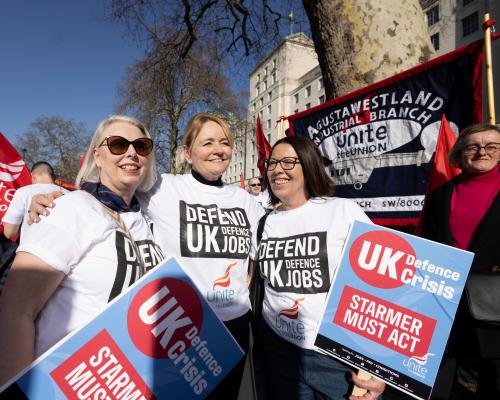
Unite members gathered outside Downing Street carrying banners urging ministers to safeguard British jobs. Demonstrators described the protest as a defence of livelihoods rather than party politics. They emphasised the long-term skills and apprenticeships supported by defence contracts.
The Treasury has yet to publish detailed responses to the criticism. Officials maintain that spending decisions must balance ambition with responsibility. They argue that strong economic foundations enable sustainable investment in security and infrastructure.
Meanwhile, opposition parties have seized upon the uncertainty. Some Conservative figures claim the government has mishandled defence procurement timelines. Liberal Democrats have echoed concerns about regional economic impacts. The cross-party scrutiny suggests defence funding will remain a central parliamentary issue.
Economic analysts note that defence manufacturing clusters often anchor regional economies. The Yeovil plant exemplifies this dynamic, supporting supply chains across the southwest. Closure would not only displace employees but also threaten smaller contractors dependent on steady orders.
Industry experts emphasise that long-term clarity is essential for capital-intensive sectors. Investment decisions require confidence in future workloads and government backing. Repeated postponements may deter international partners considering UK collaboration.
The broader geopolitical environment adds urgency to the debate. Ongoing instability in Eastern Europe and the Middle East has heightened defence awareness. NATO allies continue to review readiness levels and procurement capabilities. Within this context, Britain’s defence investment plan carries symbolic and practical weight.
Starmer has consistently linked higher defence spending with national resilience. He argues that modern threats demand updated equipment and strengthened supply chains. However, translating ambition into signed contracts requires coordinated Treasury and defence cooperation.
Some economists caution that rising borrowing costs complicate large-scale commitments. The government faces competing demands from healthcare, education and infrastructure sectors. Fiscal choices inevitably involve trade-offs that test political unity.
Yet union leaders insist that delaying the defence investment plan ultimately costs more. They argue that lost skills, factory closures and supply disruptions erode strategic capacity. Rebuilding such expertise later would require substantial public expenditure.
Residents in Yeovil express mixed emotions as deadlines approach. Many families depend directly or indirectly on the helicopter facility. Community leaders fear a blow to morale if the plant closes.

Business groups have called for constructive dialogue rather than confrontation. They urge ministers and unions to seek common ground swiftly. Certainty, they argue, is essential for both workers and investors.
As the government prepares its spring budget announcements, attention will intensify. Reeves must demonstrate fiscal credibility while addressing industrial concerns. Her handling of the defence investment plan may shape perceptions of economic stewardship.
Political observers suggest that cabinet unity will prove crucial. Public disagreements risk undermining confidence at home and abroad. Delivering a coherent message on defence and industry remains a pressing challenge.
For now, workers await concrete decisions rather than promises. The coming days could determine the fate of thousands of skilled positions. Whether the defence investment plan proceeds smoothly may influence broader trust in government strategy.
The controversy illustrates the complex balance between fiscal caution and industrial ambition. Britain’s security needs intersect with economic renewal aspirations. Resolving this tension requires clear leadership and timely action.
As March approaches, scrutiny of the Treasury will intensify. Trade unions, opposition MPs and local communities will watch closely. The outcome may define not only regional prosperity but also political credibility at the highest level.
Related News:
 British Woman in Iran ‘Losing Hope’ Amid Ongoing Detention
 BBC Journalist Held and Interrogated in Vietnam
 Green Party Surges Past Labour in Latest UK Poll
 Celebrities and Charities Demand UK Government Act on Child Poverty
 Trump’s UK Ambassador Urges North Sea Drilling to Strengthen US Ties
 FBI Director Kash Patel Defends Girlfriend Amid Government Jet Claims
 French Taxi Driver Cleared in David Lammy Theft Case After Fare Dispute
 Boris Johnson accused of undermining BBC leadership
 ‘Reckless’ cuts to victims’ services will cost more than they save
 Millionaires group urge Reeves to introduce wealth tax to ‘lift kids out of poverty’
 Starmer Faces Growing Dissent as Labour MPs Weigh Leadership Challenge
 Reeves rejects £1bn plea for NHS redundancy payouts
 Politics latest: Starmer ‘will fight any leadership coup’ as Streeting denies attempt to oust Labour PM
 PM Condemns Leaks, Vows Loyalty to Ministers and Stability
 Major Rent Reform Ends No-Fault Evictions in England
 Peers Flood Assisted Dying Bill with 942 Amendments
 England’s Special Needs Support Faces Breaking Point
 MoD warned over Excel risks before Afghan data breach
 UK Asylum Overhaul Sparks Debate Over Human Rights and Deportations
 UK Candidate Moved to Safe House After Election Threats
 Mahmood Defends Tough Overhaul of UK Asylum System
 UK Warns China After MI5 Issues Espionage Alert
 UK Vulnerable to Attack, Defence Committee Finds
 Labour Faces Historic Decline in Wales
 Rama Rebukes Mahmood for Targeting Albanian Families
 PM Highlights UK Business at G20 in South Africa
 Kate Forbes: Motherhood Harder Than Politics
 Welsh Government Christmas 2020 Lockdown Criticised
 Most Tories Expect to Support a Farage-Led Government
 Labour MP claims devolution bill is ‘blatant discrimination’ against Cornwall
 Millions Face Higher Taxes Under Reeves New Budget
 Peers Get Extra Time to Debate Assisted Dying Bill
 Planned Palestinian Flag Raising at Belfast City Hall Faces Delay Amid Legal Concerns
 Starmer Says Labour’s Economic Plan Needs Years to Deliver
 Culture secretary to review Telegraph takeover by Daily Mail owner
 Andy Burnham Apologises for Past LGBTQ+ Police Discrimination
 Plans to Limit Jury Trials Face Retreat After Mounting Opposition
 Jenrick Reform defection deepens Tory civil war
 Right Must Unite After Jenrick Defection, Urges Rees-Mogg
 UK Ministers Drop Foreign Student Targets for Global Education Push
 MPs warn AI financial risks threaten UK stability
 MPs warn AI financial risks threaten UK stability
 No Gas Boiler Ban as UK Warm Homes Plan Backs Heat Pumps
 Hugh Grant Joins Call for Under-16 Social Media Ban in UK
 Shinzo Abe’s killer receives life sentence in Japan
 Lords Vote Piles Pressure on Starmer Over Social Media Ban
 Planned Troubles Board Game Sparks Outrage in Northern Ireland
 Reform UK Health Plan ‘Would Cost £1.7bn’, Streeting Says
 Police response times face strict new national limits
 Labour policing overhaul sparks fears over growing central control
 Tories criticised after Braverman defection sparks mental health row
 Burnham Westminster return hopes fade amid Labour rift
 Starmer warns of toxic division politics in Reform challenge
 Starmer China visit raises human rights pressure on Beijing
 Labour Must Revive High Streets to Avoid Election Collapse
 Calls Grow for King Charles to Apologise for Crown’s Role in Slavery
 Starmer Signals UK Return to EU Defence Pact Talks
 Palantir contracts face UK halt calls over transparency
 Labour Thinktank Row Deepens Over Journalist Probe Claims
 Sarwar call shakes Labour as No 10 calms fears
 Labour Lord Doyle Apologises Over Paedophile Ties in Political Storm
 Palestine Action Verdict Sparks Debate on Activist Tactics
 Cabinet Secretary Shake-Up Triggers Due Diligence Warning
 Starmer Faces Inquiry Calls Over Thinktank Probe
 Royal Mail Delivery Crisis Deepens Amid Weather Chaos
 Labour Together probe scandal sparks fresh Cabinet Office investigation
 Farage to Name Jenrick as Reform Chancellor Pick
 Farage Unveils Reform UK Frontbench Team
 NHS Negligence Ruling Raises Payout Costs
 Civil Service Pay: Union Urges Ministers to End ‘Barking Mad’ Limits
 Antonia Romeo appointment sparks criticism
 Trump and Chagos Deal Rift Over Iran Strikes
 Andrew Mountbatten-Windsor Arrest After FBI Radar
 Farage Chagos Islands Row Sparks Fury
 Trump Tariffs Threat Spark UK and EU Alarm
 Gasfield Deal Sparks Debate Over Fracking in Lincolnshire
 Reform UK targets workers’ rights repeal
 Ministers Urged to Ban Crypto Political Donations
 Mandelson Denounces Arrest Over ‘Baseless’ Fleeing Claims
 Russian Trade Routed Through British Islands Exposed