Published: 03 March 2026. The English Chronicle Desk. The English Chronicle Online.
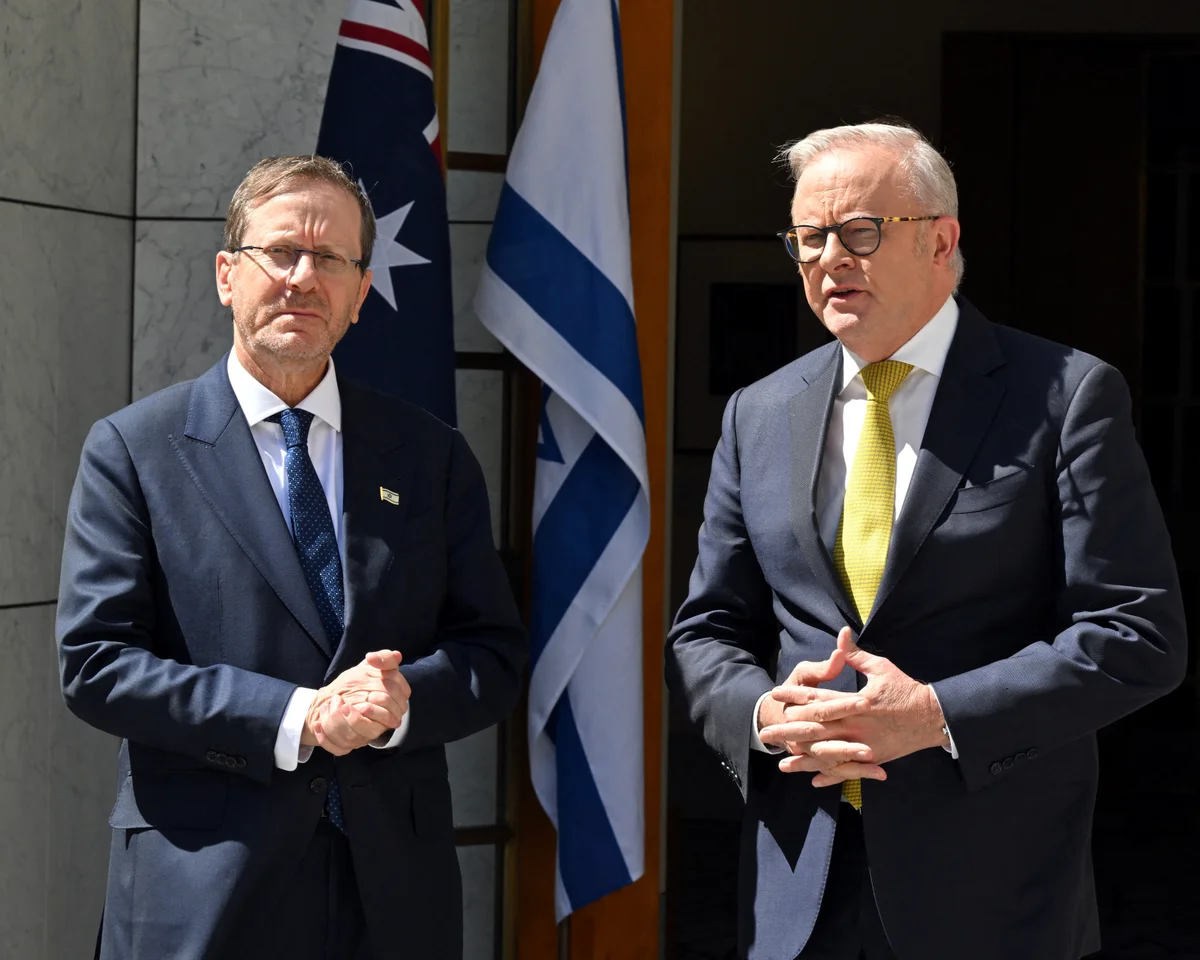
The Herzog Asio meeting has ignited political debate across Australia and beyond. Confirmation that Isaac Herzog met Australia’s intelligence chief during his recent visit has raised fresh questions about transparency and national security. The Australian Security Intelligence Organisation acknowledged the encounter after days of speculation in Canberra.
During a Senate session on Tuesday, scrutiny intensified around the undisclosed engagement. ACT independent senator David Pocock pressed the government to clarify whether the Israeli president visited Asio headquarters. Foreign minister Penny Wong declined to confirm the details, citing the sensitive nature of intelligence matters.
Her cautious reply fuelled further interest in the Herzog Asio meeting. Observers noted her refusal to provide a direct answer in parliament. She told senators that questions relating to security agencies were often highly sensitive. She added that further information could be offered on notice if appropriate.
Later that day, an Asio spokesperson confirmed the meeting publicly. The statement acknowledged that Herzog met Director-General of Security Mike Burgess during his Australian trip. He was also briefed by Asio’s counter-terrorism team regarding their ongoing work.

Officials said such meetings strengthen international cooperation against global threats. They emphasised that intelligence agencies maintain enduring relationships with foreign partners. However, critics argue that the secrecy surrounding the Herzog Asio meeting has damaged public trust. They question why the engagement did not appear on the president’s public schedule.
Herzog attended several official events during his four-day stay. He met political leaders and addressed members of Australia’s Jewish community. Yet there was no public reference to any visit to an intelligence facility. That omission has become central to the unfolding political controversy.
Pocock described the development as potentially unprecedented in Australian history. He said he believed no previous foreign head of state had accessed the domestic intelligence agency headquarters. Outside parliament, he voiced disappointment at what he called limited transparency. He argued that Australians deserved clearer answers about such high-level meetings.
The government has defended its cautious approach. Officials insist that intelligence relationships require discretion and confidentiality. They also point to Asio’s prominent role in investigating the recent Bondi attack. The briefing to Herzog reportedly focused on counter-terrorism efforts following that tragedy.
Herzog’s visit itself followed the antisemitic Bondi massacre in December, which killed 15 people. The attack shocked Australia and prompted an outpouring of grief nationwide. In response, the Israeli president said he came to express solidarity and friendship. He described Australia and Israel as longstanding allies bound by shared democratic values.
However, the trip was overshadowed by broader geopolitical tensions. Israel, alongside the United States, launched airstrikes on Iran at the weekend. The strikes reportedly included missile attacks that killed Ayatollah Ali Khamenei. The escalation added further complexity to Herzog’s diplomatic engagements abroad.
Australia is a member of the Five Eyes intelligence alliance. The network includes the United Kingdom, the United States, Canada, and New Zealand. Israel is not part of that intelligence-sharing partnership. This fact has amplified questions about the scope and purpose of the Herzog Asio meeting.
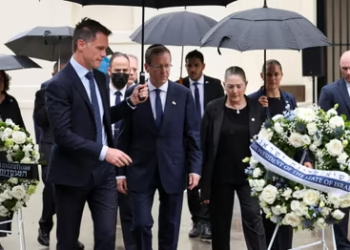
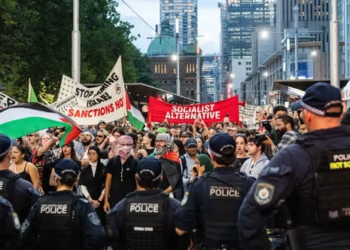
Critics within Australia’s parliament have voiced unease over the president’s invitation. Some lawmakers expressed concern about hosting a leader facing allegations over Gaza. Protests accompanied Herzog in every city he visited across the country. Demonstrations in Sydney were particularly tense and sometimes violent.
Footage showed clashes between police and protesters during the Sydney rallies. Officers were seen punching demonstrators and dragging Muslim men who were praying. Community leaders later called for calm and dialogue amid rising tensions. The images further polarised public opinion about the visit.
Herzog has faced scrutiny over comments made after the 7 October attacks. Following the assault by Hamas in 2023, he said the entire nation of Gaza bore responsibility. Those remarks drew condemnation from human rights groups internationally. He later clarified that his words had been taken out of context.
The Israeli president insisted that Israel’s military would follow international law. Nonetheless, the conflict in Gaza has resulted in devastating casualties. Reports indicate that more than 70,000 Gazans have been killed since 2023. Among them were thousands of children, deepening global concern.
Herzog was also named by a United Nations commission of inquiry. The panel alleged he had incited genocide against Palestinians in Gaza. Israel’s foreign ministry rejected the findings as distorted and false. The controversy has continued to shadow his international engagements.
In late 2023, Herzog was photographed signing an artillery shell destined for Gaza. The inscription, written in Hebrew, expressed reliance on the soldiers deploying it. Critics condemned the gesture as inflammatory and inappropriate. Herzog later admitted signing the shell was an error lacking good taste.
Against this backdrop, the confirmed Herzog Asio meeting carries wider implications. It touches not only on bilateral relations but also domestic political sensitivities. Australia has sought to balance support for Israel with concern for humanitarian issues. That delicate position has been tested repeatedly over recent months.
Security experts note that intelligence briefings between allies are not unusual. However, they also acknowledge that such engagements rarely involve foreign heads of state directly. Typically, intelligence liaison occurs at professional agency levels rather than presidential visits. This distinction has shaped much of the present debate.
Government sources stress that the meeting focused on counter-terrorism cooperation. They argue that solidarity after the Bondi attack justified high-level engagement. Nonetheless, transparency advocates maintain that secrecy breeds suspicion and misunderstanding. They call for clearer communication without compromising operational security.

The opposition has been measured in its response so far. Some members have urged caution before drawing conclusions. Others believe parliament deserves a fuller account of the Herzog Asio meeting. The issue may resurface during future Senate estimates hearings.
Internationally, analysts are watching developments closely. Australia’s diplomatic balancing act is under renewed examination. The country maintains strong security ties with Western allies. It also seeks stable relations across the Indo-Pacific region.
For many Australians, the core question concerns accountability. They want assurance that intelligence cooperation aligns with national interests and values. The confirmation of the meeting has answered one question while raising several others. Political leaders now face pressure to restore confidence through openness.
Herzog concluded his visit by reiterating friendship between the two nations. He thanked Australia for its support during challenging times. Meanwhile, debate over the Herzog Asio meeting continues in parliament and beyond. It reflects broader tensions shaping international politics today.
As further details emerge, the story is unlikely to fade quickly. Intelligence cooperation will remain essential in a volatile global environment. Yet democratic societies also demand transparency from those in power. Balancing those imperatives defines the controversy surrounding this remarkable meeting.
Related News:
 BBC to Apologise Over Edited Trump Speech Amid Backlash
 Britain deploys RAF specialists to assist Belgium with drone threats
 US Justice Department Files Lawsuit Against California Over Partisan Voting Maps
 Greene Pushes Epstein Files Amid Trump Fallout
 Trump Deploys DHS to Charlotte in Major Arrest Operation
 December Run-Off in Chile as Election Produces No Winner
 Canada Passes Carney’s First Budget in Tight Parliamentary Vote
 Shadow Fleet at Sea: Europe’s Battle Against Illicit Oil Shipping
 Pentagon Officials in Ukraine to Discuss War End
 Venezuela Threatens Nobel Winner Machado with Fugitive Status
 Georgians Defy Government Crackdown After Year of Protests
 India’s Labour Law Overhaul Sparks Fierce Debate
 EU plans $105bn Ukraine aid using frozen Russian assets
 Global campaign launched to free Palestinian leader Barghouti
 Trump Policies Boost China’s Global Rise, Survey Finds
 Iran unrest slows under brutal crackdown and global tensions
 Pentagon Signals Reduced Role in Deterring North Korea
 Thousands Protest ICE Operations in Nationwide US Day of Action
 Epstein Files Reveal Trump Officials’ Emails with Financier
 Starmer Condemns ‘Depraved’ Russian Strikes on Ukraine
 Herzog visit sparks protests across Australian cities
 UK and US Drop in Global Corruption Index Rankings
 Sydney Protest Escalates and Elderly Woman Suffers Severe Injury
 Tarique Rahman’s Rise Toward Bangladesh’s Top Job
 Glass Cliff Debate After Ley’s Ouster
 Canberra Poster Seizure Sparks Free Speech Row
 Evo Morales Returns After Mysterious Absence
 AFP Reviews Pauline Hanson Comments
 Duterte ICC Hearing Begins Amid Defiance
 Trump Tariffs Threat Spark UK and EU Alarm
 The Dangerous Rise of Remigration Across Modern Europe
 Trump’s Marathon Speech Fails to Mask a Growing National Disconnect
 Jacinda Ardern Moves To Australia Following Her US Fellowships
 US to offer passport services in West Bank settlements
 Jacinda Ardern Move Sparks Kiwi Reflection
 Health Funding Row Rocks US‑Africa Relations
 Nick Greiner Warns Over Election Review Fallout
 New UK-EU Reset Faces Criticism from Parliament
 Cuba charges six exiles for terrorism after speedboat raid
 US and Ecuadorian Forces Strike Drug Cartels Together
 Mojtaba Khamenei Chosen as Iran’s New Supreme Leader
 Mojtaba Khamenei Supporters Rally as Iranians Fear Repression
 Iran Defiance Grows Amid US-Israel War Pressure
 US Strikes on Iran Set for Most Intense Day Yet
 Iran Nuclear Stockpile Sparks US Special Forces Debate
 Queensland Protest Ban Sparks First Arrests
 China’s Ethnic Unity Law Set to Reshape Minority Schools
 Moscow Internet Blackouts Raise Censorship Fears
 Republicans Rebuke FCC Threat Over Iran War Coverage
 Oil Prices Surge as IEA Weighs Emergency Release
 Danish Election Deadlock Shakes Frederiksen’s Grip
 Trump to Visit China in May After Iran War Delay
 Pope Rebukes Leaders for War as Middle East Tensions Rise
 Trump to Deploy “God Squad” Over Gulf Wildlife Protections
 Army Probes Apache Flyover at Kid Rock’s Nashville Estate
 Italian Town Buys Mussolini Villa to Keep Away Fascist Fans
 Report Says Pezzullo Acted ‘Recklessly’ in Dealings
 Trump Employs Nixon’s Madman Theory Amid Iran Crisis
 Trump Voices Frustration Over Nato Role in Iran Conflict
 Hungary election: Orbán faces biggest test amid scandal
 Suspected Plot Targets Pipeline Before Hungary Vote
 Trump Slams UK Ties and Threatens To Rewrite Trade Deal
 Capitalism ‘Suicidal’, Warns Petro at Climate Summit
 Judge halts deportation of Yemeni refugees in US
 Trump approval plunges amid Iran war fears
 Ohio’s Battle for Trust: Democrats Vying to Flip the Buckeye State
 US ‘Narco Boat’ Strikes Draw Global Outcry
 Afghan Families Left in Limbo Face Risk of Deportation
 Tensions Emerge in Netanyahu-Trump Alliance
 US Awaits Iran Reply on New Ceasefire Proposal
 Hormuz Talks Near Critical Stage
 Discontent grows around Putin amid war strain
 Starmer Leadership Under Pressure After Setbacks
 House Curbs Trump’s War Powers in Rare Rebellion
 Germany Summons Chinese Envoy Over Russian Troop Training
 New South Wales Premier Chris Minns Signals Tough Road Ahead for Labor
 Le Pen to Run for President Despite Embezzlement Conviction
 Ukraine Creates Long-Range Strike Command
 Le Pen’s Popularity Holds Despite Conviction
 Houthis Strike Saudi Arabia as Middle East Tensions Rise