Published: 09 March 2026. The English Chronicle Desk. The English Chronicle Online.
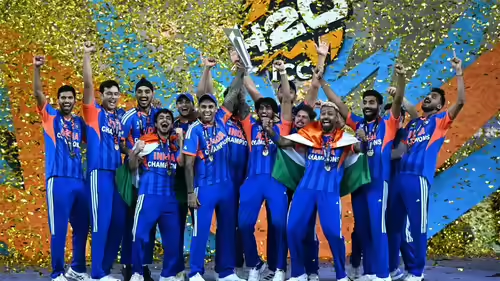
India produced a commanding performance to retain the India T20 World Cup crown in front of ecstatic home supporters. The victory marked a historic moment as India became the first men’s team to defend the T20 title successfully. It also confirmed their dominance during a tournament largely played in front of passionate home crowds.
More than 100,000 fans packed the stadium, most wearing blue and celebrating every moment passionately. The atmosphere felt electric long before the first ball, with anticipation filling every corner of the venue. Supporters sensed something special unfolding as India prepared for the decisive final against New Zealand.
When the match ended, the result felt inevitable rather than dramatic or suspenseful for neutral viewers. India overwhelmed New Zealand with relentless batting power before completing a comprehensive and confident victory. The triumph ensured the India T20 World Cup story would be remembered as one of dominance rather than suspense.
India’s innings began cautiously, with both openers appearing determined to settle before taking significant risks. For several overs they focused on timing rather than aggression, building a solid and stable platform. However, the tempo shifted dramatically once the batters found their rhythm and confidence.
Within moments, controlled strokes became explosive shots as boundaries began flowing across the field regularly. The scoring rate accelerated rapidly, leaving New Zealand’s bowlers struggling to control the match’s momentum. By the end of the powerplay, India had already matched a record powerplay score in World Cup history.

Ninety-two runs arrived without loss during the opening six overs, stunning the New Zealand fielding unit. The bowlers searched desperately for answers as India’s batters punished even the smallest mistakes. Every misdirected delivery seemed destined to reach the boundary or disappear into the stands.
Jacob Duffy returned to the side after missing earlier matches but faced immediate pressure. His first over disappeared for fifteen runs as India’s batters continued their fearless assault. Lockie Ferguson followed with an expensive spell that included wides and boundaries scattered across the field.
Matt Henry also struggled to maintain control, conceding runs quickly while India maintained relentless pressure. Each bowler found themselves attacked with confident strokes from a confident and composed Indian batting order. The scoreboard climbed rapidly, creating an overwhelming challenge for New Zealand before the halfway stage.
India’s top order delivered exactly the performance supporters had hoped for throughout the tournament. Three leading batters reached half centuries, each playing crucial roles in building a formidable total. Abhishek Sharma reached the milestone first, racing to fifty from only eighteen deliveries.
His aggressive innings briefly threatened to push India toward an extraordinary total beyond expectations. However, moments after reaching fifty, Sharma edged a delivery into the gloves of wicketkeeper Tim Seifert. Despite his dismissal, the early damage had already been inflicted on New Zealand’s hopes.
Sanju Samson then continued the attacking display with a controlled yet powerful innings. He reached his half century in thirty-three balls, blending calculated aggression with excellent shot selection. Ishan Kishan soon followed, bringing his own fifty with a rapid and entertaining display.
At the fourteen-over drinks interval, India stood at an astonishing 191 for one wicket. Samson thrilled supporters by sending three consecutive deliveries soaring into the stands before the break. Suddenly, conversations across the stadium turned toward the possibility of a record-breaking total approaching 300.
Yet cricket often shifts unpredictably, even when one side appears completely dominant during crucial moments. The short drinks interval disrupted India’s momentum and offered New Zealand a brief chance to regroup. Over the next five overs, the scoring rate slowed while several unexpected wickets fell.
Jimmy Neesham delivered an unusual over that produced just a single run but three dismissals. Despite bowling a relatively poor over overall, the sudden collapse temporarily halted India’s remarkable scoring surge. The sequence reminded everyone how unpredictable and chaotic T20 cricket can become.
Samson eventually departed after scoring an impressive eighty-nine runs from forty-six deliveries. He attempted to strike a full toss over long-on but found a fielder waiting beneath the ball. Moments later another full toss resulted in Kishan’s dismissal after a rapid fifty-four from twenty-five balls.
Captain Suryakumar Yadav then fell immediately, producing an audacious shot that ended with a superb diving catch. The sudden cluster of wickets briefly shifted energy within the stadium as spectators processed the surprising slowdown. Nevertheless, India’s total already looked intimidating and beyond typical chase expectations.
The innings regained momentum during the final over thanks to Shivam Dube’s late fireworks. Dube transformed his modest start dramatically, racing from two runs off two balls to twenty-six from eight. His powerful hitting ensured India closed their innings with a massive and imposing total of 255 runs.
New Zealand began their reply knowing they needed something extraordinary to challenge the scoreboard pressure. Their openers previously produced remarkable performances earlier in the tournament, including an explosive partnership against South Africa. Finn Allen’s astonishing century in that match proved how unpredictable T20 cricket can become.
However, the final unfolded very differently as India’s bowlers maintained relentless discipline from the beginning. Allen managed only nine runs before falling in the third over of the chase. His early dismissal removed one of New Zealand’s most dangerous attacking players immediately.
The following wickets arrived quickly as the batting order struggled against India’s precise bowling strategy. Three consecutive batters combined for only nine runs, highlighting the immense pressure building during the chase. India’s fielders supported the bowlers brilliantly, maintaining intensity and focus throughout the innings.
One remarkable moment captured the unusual nature of the final and delighted supporters inside the stadium. Ishan Kishan chased a catch while sprinting forward, diving and losing control after hitting the ground. His cap slipped across his eyes during the fall, briefly blinding him as the ball escaped his grip.
Yet the ball somehow remained lodged between his arm and chin before touching the ground. The extraordinary moment completed the dismissal of Rachin Ravindra and amused spectators across the venue. By then New Zealand were already struggling badly, with the required run rate climbing beyond realistic limits.
Tim Seifert produced a spirited half century that briefly restored pride to New Zealand’s performance. His innings included several determined boundaries that entertained spectators despite the inevitable outcome approaching. Still, the gap between the target and the scoreboard remained far too large.
India’s bowlers continued delivering disciplined spells that prevented any sustained partnership from forming. Even occasional fielding mistakes failed to shift the match’s overwhelming balance toward New Zealand. A couple of dropped catches by Dube and Hardik Pandya proved inconsequential given the enormous target.
Jasprit Bumrah delivered another memorable performance that highlighted his reputation as one of cricket’s finest bowlers. His precise slower yorkers repeatedly deceived batters and produced crucial wickets during the chase. Bumrah eventually finished with three important dismissals and deservedly earned the match’s highest individual honour.
He was named player of the match, receiving enthusiastic applause from supporters and teammates alike. His calm authority with the ball symbolised India’s overall control throughout the final contest. Performances like his defined the entire India T20 World Cup campaign from beginning to end.
New Zealand eventually ended their innings still ninety-six runs short of the towering target. The defeat extended a painful record for the team in major tournament finals. Since 2015 they have reached four global finals but lost every single one.

India’s victory therefore completed an unforgettable tournament journey filled with powerful batting and confident bowling. They scored more than 250 runs three separate times during this remarkable campaign. That consistent attacking style became a defining characteristic of the India T20 World Cup triumph.
The team’s supporters celebrated long after the final ball, filling streets and stadium surroundings with joyful scenes. For India, the tournament anthem declaring “This is our year” proved strikingly accurate. The confident message echoed throughout stadium speakers during the closing celebrations.
This India T20 World Cup victory also symbolised the nation’s growing dominance in modern white-ball cricket. Winning the title at home added emotional significance for players and millions of fans. It ensured the India T20 World Cup campaign would remain one of cricket’s most memorable tournament stories.
The final itself lacked tension, yet it showcased the quality and consistency of true champions. India combined fearless batting with disciplined bowling to produce a commanding and deserved title defence. Their performance confirmed why they entered the final as overwhelming favourites.
History will remember this India T20 World Cup success as a landmark moment for international cricket. Few teams have defended the title, and none previously achieved the feat on home soil. For India, it represented not only victory but also the culmination of a powerful generation.
As fireworks illuminated the night sky above celebrating fans, the players lifted the trophy proudly. Their triumph reflected months of preparation, skill, and confidence displayed throughout the competition. For the supporters dressed in blue, it was a night destined to be remembered forever.
Related News:
 Jos Buttler Searches for Form as the IPL Returns
 Tension and Turmoil at Aston Villa v Maccabi Match
 Lando Norris Dominates Brazil GP to Strengthen F1 Title Bid
 Ronaldo Confirms Final World Cup and Plans Retirement
 England Maintain Perfect World Cup Qualifying Record with Win Over Serbia
 Osimhen doubles as Nigeria reach CAF World Cup final
 Tears of Joy as Ireland Stun Hungary to Stay in World Cup Race
 Haaland Heroics and Portuguese Rampage Seal World Cup Qualification
 Irish Hero Parrott Says Goal Brought First Tears in Years
 Scotland Fans Reflect on France ’98 as World Cup Looms
 Nigeria Misses World Cup Again After Play-Off Loss
 Mark Wood Bowls Rapid Nets Spell, Ashes Test Hopes Rise
 Cardiff Nights Could Propel Wales to World Cup Glory
 Spain Qualify for 2026 World Cup After Dramatic Draw
 Scotland End 28-Year Wait With Stunning World Cup Qualification
 Cristiano Ronaldo Joins Trump, Bin Salman at State Dinner
 Tiny Curacao Makes History as Smallest Nation to Reach World Cup
 Haiti Qualifies for World Cup Despite Coach Never Visiting Country
 Scotland Fans Celebrate Historic World Cup Qualification
 Barcelona Returns to Camp Nou vs Athletic Bilbao
 India, Pakistan to Clash in T20 World Cup 2026 Group Match
 Mbappe Scores 4 as Real Madrid Edge Olympiakos
 Man City Lose, Champions League Risk
 Trump to attend 2026 FIFA World Cup draw in Washington
 2026 World Cup Draw Explained Ahead of Ceremony
 Ben Stokes injury joke after brutal ball strike
 England Too Careful in Windies Defeat
 Hilary Knight speaks out on Trump’s recent hockey remarks
 Brady Tkachuk Denies AI Video Claims After Olympic Gold
 Buttler Eyes Vital Run Surge as England Face New Zealand
 Iranian Captain Departs Australia Amid Asylum Tension
 Father and Son Score Record 590 Run Partnership
 Iran World Cup Move Talks Raise Global Concerns
 McCullum Faces Pressure to Bridge England County Gap
 Teenage Titan: Sooryavanshi Smashes IPL Records
 Middlesex Icons Launch Bold Revolt Against Club Leadership
 Sam Konstas Dropped as Australia Unveils New Contract List
 ECB Faces Backlash Over Disability Premier League Inclusion
 Peretz Targets FA Cup Upset Amid War Concerns
 Irvine Slams Trump Fifa Peace Prize
 $13bn World Cup Set to Break All Revenue Records
 Premier League drama defines crucial weekend
 Infantino’s Grip Tightens as FIFA Eyes a $14bn Future in Vancouver
 RFU Backs Borthwick Despite England’s Poor Six Nations
 Miami Upgrades Shake Up F1 Title Fight
 Infantino Defends Soaring World Cup 2026 Ticket Costs
 FIFA Confirms Global Ban for Benfica Star Prestianni
Streaming Giants Target Historic Ashes Broadcast Rights
Chasing Glory: The Quest for a New World Cup Champion
FIFA Confirms Global Ban for Benfica Star Prestianni
Streaming Giants Target Historic Ashes Broadcast Rights
Chasing Glory: The Quest for a New World Cup Champion
 Tuchel Boldly Reshapes England Squad for World Cup Glory
 Drama in New Zealand as Surf Final Halted by Marine Attack
 Afghan Women’s Cricket Dreams Remain Undimmed
 Stokes Captaincy Crisis After London Nightclub Incident
 Captain in the Spotlight: The Future of England Cricket
 Knicks Clinch Historic Comeback in Thrilling NBA Finals
 Football Hopes to Outshine World Cup Drama in Mexico
 Kane Williamson Retires From International Cricket
 Fifa Official Under Investigation Over Hand Gesture Controversy
 Blackpool Cricket Stands Firm Amid County Struggles
 Ben Stokes Was Fallible But That Made Him Our Champion
 Canada Secure Historic Last 16 Spot with Late Goal
 Women’s T20 World Cup Breaks Records But Gaps Remain
 Ben Stokes Retires: The End of an Extraordinary Era
 Mexico World Cup Joy Turns to Tragedy as Two Die in Crowds
 The Last Stand of English Cricket’s Greatest Partners
 The Stokes Departure: A New Era or a Tactical Mistake?
 England’s Historic Win Over India
 Sports, Women’s Cricket A Historic Lord’s Bow for Beaumont and England
 Bryne Backs Haaland Before England World Cup Clash
 England and Norway Fans Turn Miami Into World Cup Carnival
 Lamine Yamal’s Birthday: Football, Fame, and France
 England Rue Selection Errors in Defeat to India
 UK and US Drop in Global Corruption Index Rankings
 Canberra Poster Seizure Sparks Free Speech Row
 BBC World Cup Presenting Duties Shared Among Trio
 English Cricket Faces Moral Crisis Over Indian Investment
 Jacinda Ardern Move Sparks Kiwi Reflection
 US Advance Past Bosnia in World Cup Thriller
 Trump’s Red-Card Intervention Hurts the US World Cup
 Houthis Strike Saudi Arabia as Middle East Tensions Rise