Published: 26 May 2026. The English Chronicle Desk. The English Chronicle Online.
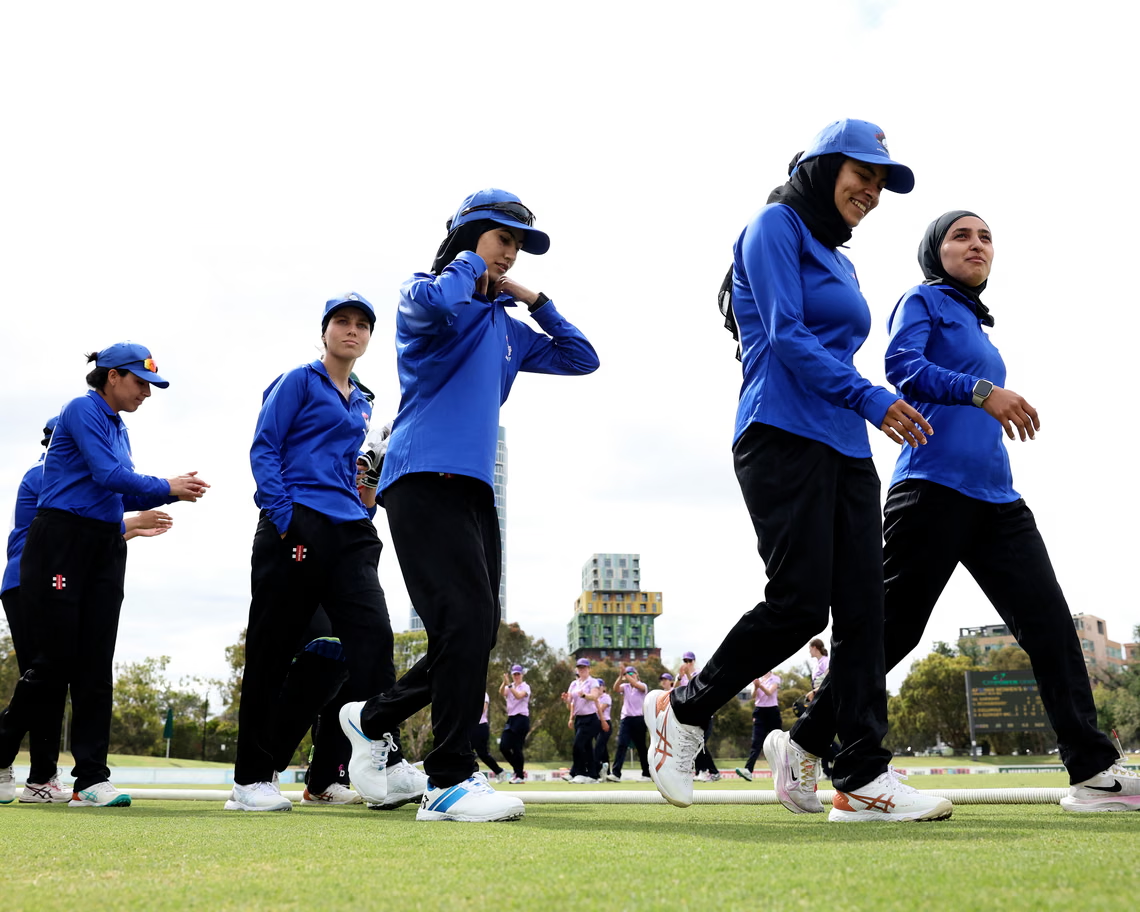
Benafsha Hashimi truly believes that her ultimate calling in life is playing professional cricket. She originally signed a contract with the Afghanistan Cricket Board when a women’s side developed. This important progression occurred just before the sudden return of the Taliban regime in 2021. She subsequently fled the country as an eighteen-year-old to find safety within welcoming Australia. Most of her dedicated teammates also made this long journey to the southern hemisphere. They successfully formed a resilient team in exile to keep their sporting dreams alive. Hashimi proudly played for the Afghan Women XI during their historic first match last year. This memorable and emotional fixture took place in the vibrant sporting city of Melbourne.
While the fundamental rights of women continue to vanish in Afghanistan, these players fight. Hashimi and her teammates have continuously defied the oppressive regime from their new home. The exiled cricketers experienced immense joy and celebrated deeply during the course of last month. They welcomed truly transformative news concerning another group of determined and brave Afghan athletes. At a major council meeting in Canada, Fifa officially approved a very significant return. The international football governing body cleared the Afghanistan women’s football team for global competition. Hashimi noted with immense pride that one of the girls’ teams finally did it. Both the football and cricket squads have fought hard since arriving in Australia.
Like the cricketers, the footballers fled immediately when the Taliban returned to absolute power. Those in exile successfully formed a dedicated refugee team during the previous calendar year. But official and full recognition from international sporting bodies was still completely lacking for them. The football side previously played under another title known as Afghan Women United. What they desperately needed was an amendment to the governance regulations of football’s body. That vital change finally took place during a momentous meeting held this April. The displaced players no longer require approval from the official Afghanistan Football Federation.
Like any other national side, they can now plot routes to World Cups. Midfielder Nazia Ali expressed great emotion when discussing the wonderful new international development. She explained that they previously played under many different names as simple refugees. They often competed as Afghan Women United or as guests of other clubs. But in their hearts, they were always the true national team of Afghanistan. Hashimi awoke to this incredible news with feelings of pure joy and wonder. She immediately wondered what this historic precedent would mean for her own cricket team.
They continue to wait patiently for full recognition from their own governing body. They want the International Cricket Council to follow the excellent precedent set by Fifa. The cricketers were incredibly happy for the footballers when the news was announced. They quickly created social media videos to congratulate them and pressure the cricket council. Hashimi believes that Fifa and the ICC are essentially the same as institutions. When Fifa can recognise a displaced team, the ICC should do the same. They want to be recognised and get their rights like other teams do.
Afghan players have long expressed deep frustration with the lack of cricket engagement. Meanwhile, the Afghanistan Cricket Board still retains its highly lucrative full ICC membership status. This remains true despite the board not operating any form of women’s team. There was some vital support last April when the ICC launched something new. They created a dedicated fund specifically designed for the displaced female cricket players. This fund grants them advanced coaching and access to world-class training facilities. They also receive personalized mentorship from experienced coaches to develop their skills further.
Assistance is generously provided by the cricket boards of England, India, and Australia. This excellent initiative led to a memorable trip to India during the world tournament. The Afghan side played friendly matches and received top coaching from elite staff. They also watched the thrilling opening game of the tournament in Guwahati. This match featured the eventual global champions playing against a strong Sri Lanka side. Hashimi says that watching your sporting idols in person is something completely different. The incredible experience left her totally speechless and wordless with genuine emotional awe.
She was still awestruck from meeting famous players Harmanpreet Kaur and Jemimah Rodrigues. She felt over the moon and could not believe what was happening. Usually they only see these world-class stars on television screens at home. They never imagined that they would see them in real life so soon. The players will travel to England this summer for another exciting cricket tour. They will also attend the highly anticipated Women’s T20 World Cup final match. This prestigious final showcase will be held at the historic Lord’s Cricket Ground.
In the official statement from the ECB, they received two distinct names. They were called both the Afghanistan Refugee Women’s Team and the Afghan Refugee version. Yet while Hashimi and her teammates continue to train, some fears remain. She expresses deep uncertainty over the long-term future of their crucial ICC support. They are practicing much more consistently than they ever did in the past. But they have no clear idea what they will do when funding finishes. After August she does not think they have any concrete answers from leadership.
Whenever they ask about the next step, officials say they have no idea. The International Cricket Council has been approached for official comment regarding this matter. Hashimi explains just what official recognition would truly mean to her whole life. It would be really great and she would achieve her long fight. Afghan girls who started playing were not just fighting against the sports boards. It took Hashimi nearly ten years to get family permission to play cricket.
Whenever she asked her mother, she was told women just do housework. Her mother believed women should only wash dishes and take care of babies. Her mother said that even letting her study was a very big thing. Hashimi felt really hopeless during that difficult time of her young life. Then that domestic fight finished and they finally received official cricket board contracts. When she signed the document, she still could not believe it was real. Her sister noticed her staring at the contract for the entire day.
Then the Taliban suddenly came in and changed everything overnight for everyone. Hashimi offers a pained laugh when reflecting on her incredibly bad timing. She calls herself deeply unlucky given how events transpired after her big signing. Now Hashimi is working hard on her game and figuring things out. She is a batter who previously bowled leg-spin before switching to pace. Now her main attention has turned toward the difficult skill of keeping wicket.
She looks up to stars Nat Sciver-Brunt and Alyssa Healy for inspiration. She also wants to study sports management, sports science, and modern psychology. Yet her absolute focus at the current moment remains singular and very clear. She simply wants to be a professional cricketer for her national team. Her future dreams now rest entirely on the decisions of the game’s powerbrokers.
Related News:
 Teenage Titan: Sooryavanshi Smashes IPL Records
 Sam Konstas Dropped as Australia Unveils New Contract List
 Captain in the Spotlight: The Future of England Cricket
 The Last Stand of English Cricket’s Greatest Partners
 England’s Historic Win Over India
 Geopolitical football: Iran, Trump and the World Cup clash
 Ben Stokes injury joke after brutal ball strike
 Infantino Faces Russia Threat and Trump Concerns at Uefa Congress
 England Too Careful in Windies Defeat
 Buttler Eyes Vital Run Surge as England Face New Zealand
 India T20 World Cup Triumph Seals Historic Title Defence
 Abramovich Chelsea Sale Cash Faces Jersey Probe
 Father and Son Score Record 590 Run Partnership
 McCullum Faces Pressure to Bridge England County Gap
 African World Cup Fans Face $15,000 Entry Bond Fee
 Jos Buttler Searches for Form as the IPL Returns
 LA 2028: Millions of Affordable Olympic Tickets Announced
 Middlesex Icons Launch Bold Revolt Against Club Leadership
 Italy Faces Third Successive World Cup Absence After Loss
 Turkey End Kosovo Dreams to Secure World Cup Return
 England’s Fragile Evolution Under Thomas Tuchel at Wembley
 ECB Faces Backlash Over Disability Premier League Inclusion
 Julián Alvarez: The Silent Rise of a Global Football Icon
 England Eye Landmark 500th Game Glory in Iceland
 FIFA Confirms Global Ban for Benfica Star Prestianni
 The Global Battle for Control Over the Women’s Game
 Grand Slam Pay Row Sparks Boycott Threat from Top Players
 World Cup Ticket Price Surge Leaves Many National Teams Stunned
 Rashford Fires Barcelona to Glory in Historic El Clasico
 Ancelotti Sets High Bar for Neymar Ahead of World Cup
 Chaos at Valdebebas: Florentino Pérez Calls for Elections
 Streaming Giants Target Historic Ashes Broadcast Rights
 Stokes Captaincy Crisis After London Nightclub Incident
 Tension Grips Mexico City Ahead of World Cup Opener
 Violence Tarnish World Cup Opener Outside Azteca Stadium
 Kane Williamson Retires From International Cricket
 World Cup Fury as Iran Coach Slams Fifa and US
 Tuchel’s England Mission Goes Beyond Football Success
 Blackpool Cricket Stands Firm Amid County Struggles
 Iran Files Official Fifa Complaint Over World Cup Travel
 Historic Victory for Canada as They Defeat Nine-Man Qatar
 Heartbreak for Canada as Koné Suffers Horrific Injury
 Ben Stokes Was Fallible But That Made Him Our Champion
 Canada Secure Historic Last 16 Spot with Late Goal
 Women’s T20 World Cup Breaks Records But Gaps Remain
 Paraguay Shock Germany in Historic Penalty Shootout
 Morocco Beat Dutch in Wild World Cup Penalty Drama
 Ben Stokes Retires: The End of an Extraordinary Era
 France Dominate Sweden as Deschamps’ New Era Takes Shape
 Haaland Heroics Send Norway Into Historic Last 16 Knockout
 Ramos Sends Portugal into the Last 16
 VAR Drama: Portugal Win in Thriller
 Swiss Star Manzambi Shines in World Cup Victory
 The Stokes Departure: A New Era or a Tactical Mistake?
 Norway’s Stunning World Cup Victory Over Brazil
 Spanish Late Winner Sends Ronaldo Into Final Sunset
 Belgium Thrashes USA After Red Card Controversy
 Ronaldo Says Farewell to the World Cup Stage
 China’s Football Dream: Can Amateur Leagues Spark Change?
 Egyptian Fury After Argentina World Cup Heartbreak
 World Cup 2026 Power Rankings: England on the Rise
 Sports, Women’s Cricket A Historic Lord’s Bow for Beaumont and England
 Belgium Draws Global Support Before Spain Showdown
 Haaland and Bellingham: A Dortmund Bond Tested
 Spain Clinch Final Spot in Masterclass Victory Over France
 England Rue Selection Errors in Defeat to India
 Saka Solidifies Role as Tuchel’s Key England Lieutenant
 Aston Villa Remain Arsenal’s Key Obstacle in Title Pursuit
 US and Iran Agree to Two-Week Provisional Ceasefire
 Security Alert Near Israeli Embassy as Police Investigate
 US-Iran Standoff: Will Trump Deploy Ground Troops?
 Investigation Into Anti-Trump Motives After Gala Shooting
 Scott Parker Leaves Burnley After Premier League Drop
 Arteta urges Arsenal to step up in Atlético semi-final
 RFU Backs Borthwick Despite England’s Poor Six Nations
 Trump and Xi Convene in Beijing for Historic High-Stakes Summit
 Alice Capsey Sparks England Win With Brilliant Fifty
 Teaching Machines Right From Wrong in the Digital Age
 Is Ollie Robinson the Chaos English Cricket Needs Today?
 Trump Urged to Condemn UFC Fighter Over Obama Slurs