Published: 15 July 2026 | The English Chronicle Desk | The English Chronicle Online
At least seven British nationals are among those killed in devastating wildfires that have swept across parts of Spain, as firefighters continue battling fast-moving blazes fueled by scorching temperatures, dry vegetation and strong winds.
Spanish authorities confirmed that the victims were among dozens of people caught in rapidly spreading fires that have forced thousands of residents and tourists to evacuate their homes, hotels and holiday accommodation. Emergency services remain on high alert as crews work around the clock to contain multiple fire fronts and prevent further loss of life.
The tragedy has sent shockwaves through both Spain and the United Kingdom, prompting messages of condolence from government leaders and renewed warnings about the growing threat posed by extreme wildfire conditions across southern Europe.
Firefighters, military emergency units and civil protection teams have been deployed to some of the country’s worst-affected regions.

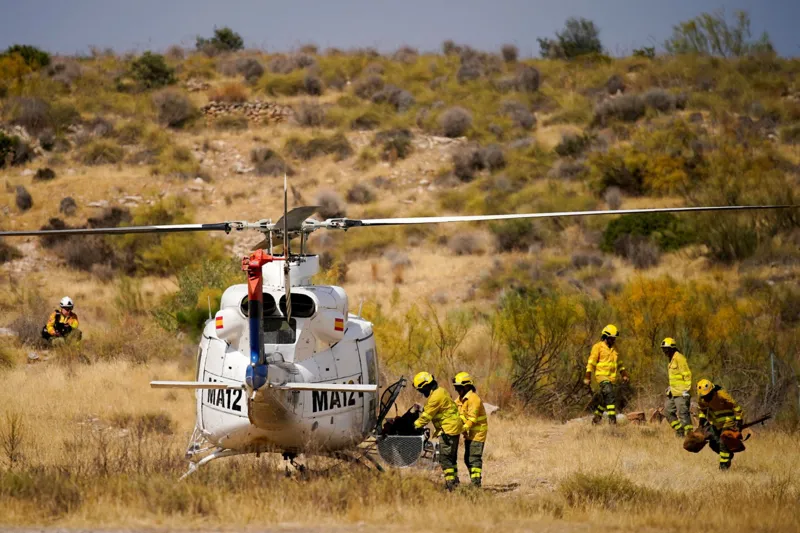
Helicopters and water-dropping aircraft have joined ground crews in an extensive operation to slow the advance of the flames, while emergency workers continue searching damaged areas for anyone who may still be missing.
Authorities said many of the fires spread with extraordinary speed after being intensified by powerful winds and prolonged dry weather.
In several communities, residents had only minutes to leave their homes as flames approached.
Emergency shelters have been established to accommodate evacuees, with local authorities providing food, medical assistance and temporary accommodation for displaced families.
The UK’s Foreign, Commonwealth and Development Office (FCDO) said it was supporting the families of British citizens who died in the disaster.
Consular officials are working closely with Spanish authorities to confirm identities, assist relatives and provide guidance on repatriation procedures where required.
The Foreign Office also advised British nationals currently in affected areas to follow instructions issued by local emergency services, monitor official updates and avoid travelling into regions threatened by active wildfires.
Officials expressed their deepest sympathies to the families of those who lost their lives and pledged continued assistance throughout the aftermath of the disaster.
The wildfires have prompted widespread evacuation orders affecting towns, villages and popular tourist destinations.
Roads have been closed, rail services disrupted and several recreational areas temporarily shut as emergency responders attempt to keep people away from danger.
Hotels and holiday resorts in some locations have assisted in relocating visitors to safer areas, while local authorities continue assessing whether additional evacuations are necessary.
Many residents described dramatic scenes as thick smoke covered communities and flames advanced through forests and farmland.
Some families were forced to leave behind personal belongings with little warning as emergency vehicles moved door to door urging immediate evacuation.
Meteorologists say exceptionally high temperatures combined with months of limited rainfall have created ideal conditions for wildfires.
Dry forests, low humidity and gusting winds have allowed fires to spread rapidly across difficult terrain, making containment operations particularly challenging.
Climate scientists have repeatedly warned that southern Europe is experiencing increasingly frequent and intense heatwaves, increasing the likelihood of prolonged wildfire seasons.
Although individual fires cannot automatically be attributed to climate change, researchers say rising temperatures and drier conditions are contributing to more severe fire behaviour across Mediterranean countries.
Emergency crews have described the operation as one of the most demanding in recent years.
Steep landscapes, dense vegetation and unpredictable wind patterns have complicated firefighting efforts, requiring personnel to adapt rapidly as fire fronts shift direction.
Several firefighters have reportedly suffered minor injuries while battling the blazes, although authorities said no emergency personnel were among the fatalities reported so far.
Additional firefighting resources have been mobilised from neighbouring regions as Spain coordinates one of its largest wildfire responses of the summer.
The fires have also disrupted Spain’s tourism sector during one of the busiest travel periods of the year.
Some holidaymakers have altered travel plans following evacuation orders and air quality warnings, while local businesses in affected regions face temporary closures.
Tourism officials have emphasised that much of the country remains safe for visitors but urged travellers to stay informed about conditions in specific destinations.
Airlines and transport operators are monitoring developments closely and advising passengers to check for possible disruptions before travelling.
Beyond the human tragedy, the fires have destroyed thousands of hectares of woodland, wildlife habitats and agricultural land.
Environmental experts warn that recovery may take years in areas where ecosystems have been severely damaged.
Burned forests also increase the risk of soil erosion and flooding during future rainfall, creating additional challenges for affected communities.
Authorities are expected to conduct comprehensive environmental assessments once the fires have been fully contained.
Several European countries have offered assistance through the European Union’s civil protection mechanisms, providing additional aircraft, equipment and specialist firefighting teams where required.
Cross-border cooperation has become increasingly important as extreme wildfire events become more frequent across southern Europe.
Experts say sharing resources enables countries to respond more effectively when multiple large fires occur simultaneously.
Emergency officials continue urging residents and visitors to avoid closed areas, comply immediately with evacuation orders and remain alert to changing weather conditions.
People living near active fire zones have been advised to prepare emergency supplies, keep communication devices charged and follow official announcements issued by local authorities.
Health agencies have also warned that smoke from the fires can pose significant risks, particularly for older adults, young children and individuals with respiratory conditions.
Authorities will begin investigating the causes of the fires once conditions are safe enough for forensic teams to access affected areas.
While some wildfires occur naturally, others may result from human activity, equipment failures or accidental ignition.
Officials have not yet indicated whether any of the current blazes are being treated as suspicious.

As firefighters continue working to bring the situation under control, attention is increasingly turning toward supporting grieving families, assisting displaced communities and beginning the long process of recovery.
The deaths of seven British nationals underscore the international impact of the disaster and serve as a stark reminder of the growing dangers posed by increasingly severe wildfire seasons across Europe.
With emergency operations still ongoing, authorities have stressed that protecting lives remains the highest priority as Spain confronts one of its most destructive wildfire emergencies in recent years.
Related News:
 Storm Hernando: Edinburgh Airport Flights Cancelled in US Travel Chaos
 Storm Hernando: Edinburgh Airport Flights Cancelled in US Travel Chaos
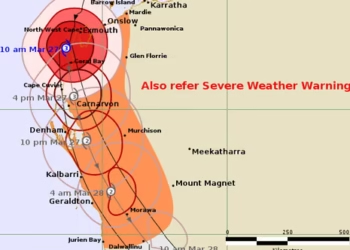 Tropical Cyclone Narelle Batters the Western Australian Coast
 The Banbridge Rescue: 300 Sheep Saved from Massive Hay Shed Inferno
 Country Diary: A Bum Note Amid the Dawn Chorus
 Country Diary: The Eagle’s Shadow Over the Lambing Shed
 High-Rise Rescue: The Dramatic Recovery of a Stranded Peregrine Falcon
 Escobar’s Hippos May Be Moved to India Zoo
 “A Food Security Timebomb”: Fertilizer Boss Warns Iran War Puts Billions of Meals at Risk
 Man killed in shark attack on Great Barrier Reef
 UK Must Act with Courage and Clarity on Israel-Palestine Conflict, Says Foreign Affairs Committee Report
 Radioactive Leak at UK’s Nuclear Warhead Base Sparks Outcry Over Safety and Secrecy
 Mutual Inconvenience: Why Alaska Was Chosen for the Trump-Putin Summit on Ukraine
 Terence Stamp, ’60s British Film Legend and Star of Superman, Dies at 87
 Where Is Prince William and Kate Middleton’s New House? Inside the Historic Lodge Set to Become Their ‘Forever Home’
 Is the UK Ready to Put Boots on the Ground in Ukraine? Assessing Military Capacity and Challenges
 Shein UK Faces Allegations of Shifting Majority of Profits to Singapore to Reduce UK Tax
 Thousands Gather in London to Protest Donald Trump’s Second UK State Visit
 Public Trust in SNP Hits Historic Low Amid NHS Concerns
 Johnson Suggests Mandelson Linked to China Spy Controversy
 Rachel Reeves signals welfare reform ahead of key budget
 Just Stop Oil Protesters Convicted Amid Climate Defence Row
 I’m a Celebrity 2025 line-up revealed: Osbourne joins
 Palace May Restore Hyphen to Andrew Mountbatten-Windsor’s Name
 Royal Navy Shadows Russian Warships Entering the Channel
 ‘Extinct’ Antelope Returns to Sahara, Bringing Hope
 Local Fish Could Boost UK Health and Economy Significantly
 Storm Goretti leaves Cornwall homes without power
 No Gas Boiler Ban as UK Warm Homes Plan Backs Heat Pumps
 Devon hosts first high-density hydro power system
 UK New Car Discounts Near £6,000 as Prices Are Slashed
 Wigan Dump Crisis Sparks Health and Safety Alarm
 What is Groundwater Flooding and Why Dorset is Seeing ‘Historical Highs’
 Dozens of Flood Warnings in England After Days of Non-Stop Rain
 Starmer Weighs Fast-Tracking Defence Boost
 Temperatures Dip Below Freezing as Arctic Air Sweeps Across the UK
 Snow and Rain Warnings as Cold Snap Continues in the UK
 Flooding May Worsen Before It Improves as More Rain Forecast for the UK
 Dual Nationals Face Scramble for UK Passports as New Rules Come Into Force
 Trump and Chagos Deal Rift Over Iran Strikes
 Fly-Tippers to Be Hunted by ‘Drone Squad’ in Crackdown from the Sky
 Australian PM Says Former Prince Andrew Has Suffered ‘Extraordinary Fall’ but That Won’t Prompt Republic Referendum
 Farage Chagos Islands Row Sparks Fury
 ‘We’ve been paying for happy endings for Andrew for years’: inside the royal disgrace, biographer says
 Islanders Advised on Travel to Middle East Amid Escalation
 Brit ‘in Good Spirits’ Amid Dubai Missile Attacks, Stranded but Safe
 Trump rebukes Starmer over Iran strikes
 Minister Meets Crews Who Will ‘Take Out’ Iranian Drones
 ‘We Must Finish This’: Israelis Rally Behind War Effort as Iran Strikes Tel Aviv
 UK–US Tensions Ease as Starmer and Trump Hold First Call Since Iran Row
 Yvette Cooper: UK Must Follow Principles, Not US Pressure
 Iran War Warning: Starmer Backs Ukraine Visit
 Australia Imposes Sudden Travel Ban on Iranian Visitors
 UK Forces Ready to Seize Russian Shadow Fleet Vessels
 Net Closes on Lyons Clan: Partner Arrested in Dubai as Crime Boss Snared in Bali
 ‘The Final Word’: Kathleen Stock’s Polemic Against Assisted Dying Reshapes the UK Debate
 Open Justice Prevails as Court Rejects Bondi Gunman’s Family Anonymity Bid
 Southern Skies: High Turnout and Surprise Visitors in Birdwatch 2026
 ‘The £100,000 Hammer’: War in Iran Forces UK Businesses to Absorb Historic Fuel Hikes
 “Three-Wheeled Triumph”: Mayor of Erewash Completes 2,000-Mile European Charity Run
 Capitalism ‘Suicidal’, Warns Petro at Climate Summit
 The “Charles Charm” Offensive: Did the Royals Find Their Mojo in D.C.?
 “An Endurance Test for the Mind”: British Couple Sentenced to 10 Years in Tehran
 Ukraine strikes Tuapse as oil disaster worsens
 Premier League drama defines crucial weekend
 “The Cost of Conviction”: Palestine Action Activists Found Guilty Over ‘Clinical’ Factory Damage
 “The Local Gavel”: Polls Open Across Hampshire and Isle of Wight in Delayed ‘Milestone’ Vote
 “The Blue Light Intersection”: Seventeen-Year-Old Critically Injured in ‘Nasty’ Police Pursuit Crash
 “The Fractured Frontier”: Sir John Curtice Declares the ‘Sacred’ Two-Party Era Over After ‘Milestone’ Results
 The Pathogen Protocol”: Third British National Monitored for ‘Nasty’ Suspected Hantavirus
 “The Reality Reckoning”: Government Demands Accountability as Channel 4 Pulls Married at First Sight UK Over Grave Sexual Assault Allegations
 “A Thorn in the Side”: Farage Faced with Fresh Financial Scrutiny as Corporate Accounts Challenge Reality TV Defense
 “The Iron Chancellor of the North”: Andy Burnham’s High-Stakes U-Turn to Prevent a Truss-Style Gilt Market Meltdown
 “A Historic Tumble”: Lost 1930s Film Reel Reveals the Untamed Origins of Gloucestershire’s Legendary Cheese-Rolling
 “The Pragmatic Pivot”: UK Eases Sanctions on Russian Energy Amid Escalating Global Fuel Crisis
 UK Faces Most Dangerous Era, Military Chief Warns
 Son Urges Iran Prisoner Exchange for Jailed British Pair
 Three-Year-Old Boy Attacked by Crocodile at Zoo as Man Released on Bail
 Weekly Quiz Explores Royal Challenges, Global Headlines and the Stories Behind the News
 China Storms Claim Fifteen Lives in Tragic Surge