Published: 10 March 2026. The English Chronicle Desk. The English Chronicle Online.
New Zealand’s Covid response has been widely praised globally, but the royal commission highlighted enduring scars.
A comprehensive inquiry into New Zealand’s Covid-19 pandemic response has concluded the country managed the crisis exceptionally well. The royal commission’s second report focused on February 2021 to October 2022, when the government transitioned from an elimination strategy to a suppression and minimisation approach. During this period, officials examined vaccine safety, the immunisation programme, lockdown measures, and tracing and testing technologies deployed across the country.
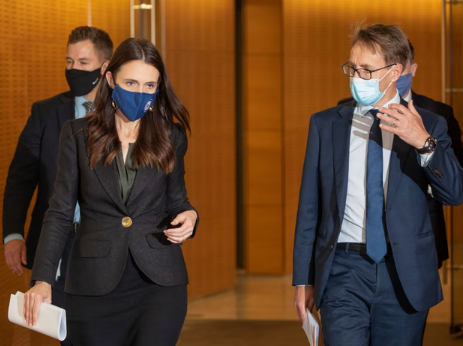
Established in 2022 under Jacinda Ardern’s Labour-led government, the royal commission sought to assess the pandemic response with clarity and transparency. New Zealand has officially recorded 5,641 Covid-related deaths since 2020, a comparatively low number thanks to strict border controls, quarantine measures, lockdowns, and vaccine mandates. These interventions were credited with saving tens of thousands of lives, though they also created tension among citizens over prolonged restrictions. Small but vocal anti-vaccine and anti-mandate groups organised protests, culminating in a violent demonstration on Parliament’s lawns.
The first phase of the inquiry, published in late 2024, found New Zealand’s per capita death rate among the lowest in developed nations. It broadly endorsed vaccine mandates while acknowledging the emotional and economic impacts on some communities. Tuesday’s report reaffirmed these findings, stating that the government’s decisions and methodologies were largely “considered and appropriate,” while also identifying areas where the response could have been stronger.
The commission emphasised that the government’s strategy and operational settings were not always adequately flexible to address rapidly evolving circumstances. Officials were slower than ideal in adapting to new virus variants, highlighting the challenges of managing a dynamic health crisis. Speed was critical in many situations, but the commission observed that some decisions were made with insufficient data, limited impact assessment, or inadequate monitoring, which occasionally compromised effectiveness.

Throughout its hearings, the commission listened to numerous individuals who shared their experiences of pain, frustration, and loss caused by the pandemic and its associated restrictions. The report described these emotional and social consequences as “scars” that persist today, acknowledging long-term health impacts, loss of trust in government institutions, and enduring scepticism among certain communities.
Despite these challenges, evidence indicated New Zealand maintained one of the most successful pandemic responses internationally. Ministers and officials faced extraordinarily complex circumstances and acted with dedication under high pressure, the report noted. While measures such as vaccine mandates were recognised as legitimate public health tools, the inquiry stressed these interventions require careful consideration and sensitivity due to their social consequences.
The report outlined 24 recommendations to improve future pandemic preparedness, emphasising that its purpose was not to assign blame but to ensure more informed decision-making in potential future crises. Exiting the elimination strategy was particularly difficult, with the commission observing that delays in updating the strategy contributed to perceptions of over-centralisation and excessive risk aversion. The report suggested presenting elimination strategies as inherently temporary to better manage public expectations.
Vaccine hesitancy was another focal point, with the commission highlighting that concerns raised by sceptical groups were often unsupported by reliable evidence or scientific consensus. It recommended that governments continue to follow the strongest scientific guidance and consider establishing an agency to monitor public trust and social cohesion, recognising that societal confidence is a critical component of effective public health responses.
Health Minister Simeon Brown acknowledged that while New Zealanders supported early pandemic measures, restrictions extended longer than necessary, and economic consequences were not sufficiently accounted for. He reflected on the public’s enormous sacrifices, underscoring the need to learn from past decisions to better protect citizens in the future.
Former Prime Minister Jacinda Ardern and ex-Deputy Prime Minister Grant Robertson jointly accepted the commission’s findings, noting that while the country’s response was superior to most, there were areas that could have been improved. Their statement highlighted the duality of success and reflection, acknowledging the difficulty of balancing stringent health measures with social and economic considerations.
Labour leader Chris Hipkins stressed that the nation must now focus on strengthening institutional structures, public trust, and processes to prepare for future health crises. He noted that repeated reviews often reiterate the same conclusions, suggesting that past lessons need to translate into actionable reforms. Hipkins urged the government to consider whether New Zealand is better prepared today than at the start of the pandemic, framing readiness as an ongoing, dynamic challenge.
The commission’s report also addressed mental health consequences, economic strain, and community tensions that emerged during prolonged restrictions. It highlighted that effective communication, transparency, and adaptability are essential components of a resilient pandemic response, emphasising that public compliance and trust are built through clarity and responsiveness. These factors, combined with robust health infrastructure, were cited as crucial to New Zealand’s overall success.

In assessing the government’s operational choices, the commission observed that some policies were necessarily reactive, reflecting the limited knowledge available during unprecedented global conditions. Decision-makers balanced competing priorities, including protecting lives, maintaining economic stability, and preserving civil liberties, often under severe time constraints. While the response was praised, the report noted that more agile adaptation to emerging scientific data and viral variants could have reduced residual harms.
The report concluded with recommendations designed to enhance public health preparedness, including the development of flexible response frameworks, clearer communication strategies, and mechanisms to safeguard social cohesion. By establishing such systems, the commission suggested that New Zealand could respond effectively to future pandemics while mitigating unintended social, economic, and psychological consequences. These measures, it argued, would ensure lessons from Covid-19 translate into practical improvements for future crisis management.
Ultimately, the royal commission presented a balanced appraisal of New Zealand’s Covid-19 response. It recognised that, although the nation demonstrated some of the most effective pandemic management strategies globally, lingering scars remain from the prolonged restrictions and societal disruptions. These findings reinforce the need for ongoing reflection, proactive planning, and a commitment to both scientific rigor and public engagement in health emergencies.
Related News:
 Celebrities and Charities Demand UK Government Act on Child Poverty
 Reeves rejects £1bn plea for NHS redundancy payouts
 Senator John Fetterman Hospitalized After Fall from Heart Flare-Up, Keeps Sense of Humor
 Welsh Government Christmas 2020 Lockdown Criticised
 Mandelson apologises over Epstein ties after public scrutiny
 US Senate rejects resolution limiting Trump military powers
 Trump Calls Greenland Critical for US Security After Denmark Talks
 Trump: Iran Killing Has Stopped, Strike Threats Pulled Back
 Iran unrest slows under brutal crackdown and global tensions
 Trump Allies Pursue $200m European Gas Pipeline Deal
 Starmer Challenges US Over Controversial Greenland Deal
 Spoof “Make America Go Away” Caps Rally Denmark Over Greenland
 UK Presses On With Chagos Handover Despite Trump Criticism
 Kim Jong-un Fires Vice-Premier Over Factory Failures
 Shinzo Abe’s killer receives life sentence in Japan
 Starmer Resists Matching Trump Amid Greenland Tensions
 Netanyahu Accepts Trump’s ‘Board of Peace’ Invitation
 South Korean Ex-PM Jailed 23 Years Over Martial Law Role
 Canada Rules Out Free Trade Deal With China Amid US Tensions
 Snow Threatens Japan Election Turnout Amid Extreme Cold
 Keir Starmer meets Xi to strengthen UK-China economic relations
 Thousands Protest ICE Operations in Nationwide US Day of Action
 Epstein Files Reveal Trump Officials’ Emails with Financier
 Thousands Protest ICE in New York Against Trump Deportation Campaign
 Trump-Petro Meeting Sparks Hopes of Diplomatic Detente
 Epstein UAE Emails Shake British Royal Andrew’s Legacy
 Liberal Fallout: Taylor Challenge Casts Shadow Over Sussan Ley’s Leadership
 Ukraine, Russia Meet in Geneva Ahead of War Anniversary
 UK, US Medics Barred from Gaza Amid Rising Aid Concerns
 US Accused of Exploitation Over Zambia Health Aid
 NHS Maternity Units Cover Up Harmful Childbirth Errors
 Tommy Robinson Meets Trump Officials at US State Department
 HMS Dragon to Head to Cyprus Amid Rising Tensions
 Starmer Praised for Stance on Trump and Iran Conflict
 Yvette Cooper: UK Must Follow Principles, Not US Pressure
 NHS Plans to Cut Overseas Workers Labeled Overambitious
 UK Ministers Signal Strategic Independence From Trump Demands
 Public satisfaction with the NHS rises for the first time
 Farage Shuns Truss as US Right-Wing Roadshow Hits London
 Starmer Urges Ambitious EU Ties Amid Middle East Conflict
 A Global Voice For Justice: Stephen Lewis Dies At Age 88
 NHS Staff Shortages Stifling Recovery for Stroke Survivors
 Trump Mocks Starmer and UK Carriers in White House Speech
 Final Countdown as Trump Deadline Looms Over Tehran
 Wes Streeting Accuses Doctors of Torpedoing Pay Deal
 Bangladesh Launches National Drive as Measles Deaths Rise
 Starmer visits Gulf as US and Iran agree ceasefire
 GOP Senator Criticizes Trump’s Feud With Pope Leo XIV
 Global Oil Prices Surge Amid Renewed Gulf Tensions
 Faith and Power: Catholics React to Trump-Pope Feud
 Timor-Leste Faces Tough Questions Over Resort Proposal
 NHS Safety Fears as Nurses Cover Doctor Gaps
 Security Scrutiny After Washington Shooting Incident
 UK Envoy Sparks Controversy Over Special Relationship Claims
 US Calls Australia Media Law “Foreign Extortion”
 USS Gerald R Ford Ends Record Naval Deployment
 Activists allege abuse after Gaza flotilla seizure
 Australia pushes Pacific security pact amid China tension
 Middle East Crisis Escalates as Oil Routes Shake Markets
 Britons from Hantavirus Ship Face 45-Day Isolation
 One Nation Candidate’s Surprising Ties to Independents
 Anika Wells Repays Over £5,000 in Travel Claims
 Tensions Emerge in Netanyahu-Trump Alliance
 FDA Chaos Deepens as Trump Eyes Makary Exit
 Mission to the World’s Edge: A Heroic Rescue in Tristan
 French Patient Told Hantavirus Was Just Anxiety
 WHO Issues Global Warning Over Rising Hantavirus Cases
 NHS Drug Deal Faces Legal Threat Over US Trade Agreement
 Hanson Stunner: Norway Model Sparking Energy Row
 Tony Abbott Returns as New Liberal Party President
 Tulsi Gabbard exits after turbulent intelligence tenure
 UK Urged to Build EU Rejoin Consensus, Says Miliband
 Discontent grows around Putin amid war strain
 Former ICC prosecutor condemns US sanctions
 The Race for Radical Change in Westminster
 Iran Prepares for Massive Six-Day Funeral for Khamenei
 Trump’s Mount Rushmore Speech: A Divisive Anniversary
 Iran Mourns: Millions at Khamenei’s Final Procession
 Trump Swaps Planes Amid Iran Tensions
 Houthis Strike Saudi Arabia as Middle East Tensions Rise