Published: 11 March 2026. The English Chronicle Desk. The English Chronicle Online.
The ongoing Hormuz crisis has triggered urgent warnings from energy leaders about severe risks to global oil markets. Saudi Arabia’s state-owned oil giant, Saudi Aramco, has cautioned that continued disruption to shipping routes could unleash catastrophic consequences for the world economy. The company’s leadership fears that prolonged instability in the strategic maritime corridor may deepen market volatility and tighten already strained energy supplies.
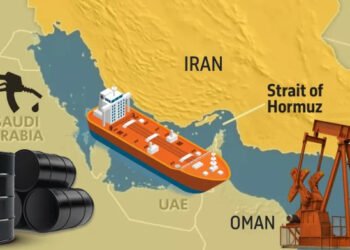
At the centre of the Hormuz crisis lies the narrow but crucial Strait of Hormuz, through which a significant share of the world’s oil exports travels daily. The waterway has effectively been blocked since recent military strikes by the United States and Israel targeted facilities inside Iran. The resulting tensions have halted the movement of tankers carrying crude from Gulf producers to global markets.
Energy analysts estimate that nearly twenty million barrels of oil per day have disappeared from global supply chains since the conflict escalated. Such a massive disruption represents roughly a fifth of daily global consumption, placing extraordinary pressure on traders, governments, and industries dependent on stable energy supplies.
The chief executive of Saudi Aramco, Amin H. Nasser, warned that the Hormuz crisis represents the most serious disruption the regional oil and gas industry has faced in decades. While previous geopolitical tensions have periodically rattled energy markets, he emphasised that the scale of the current shutdown remains unprecedented.
Nasser explained that although the company is working to maintain deliveries, a prolonged closure of the shipping lane would produce dramatic consequences for energy markets worldwide. Even if producers attempt alternative export routes, the limited infrastructure outside the Gulf region makes replacing lost shipping capacity extremely difficult.
 Saudi Arabia has therefore turned to its internal pipeline network to keep some crude flowing toward international buyers. The kingdom’s east–west pipeline system transports oil from fields in the eastern province across the country to the Red Sea port city of Yanbu. Tankers departing from that western terminal can avoid the blocked Gulf passage entirely.
Officials say the pipeline is being pushed to its operational limits as the crisis continues. The infrastructure is capable of transporting around seven million barrels of crude daily. Around two million barrels are expected to remain inside the kingdom for domestic refining, leaving approximately five million barrels available for export to global markets.
Despite these efforts, the workaround replaces only part of the normal flow. Saudi Arabia typically exports significantly larger volumes through the Gulf. Even with maximum pipeline capacity and additional supplies drawn from storage, officials estimate that only about seventy percent of usual exports can be maintained during the crisis.
Oil traders are closely watching developments around the strait, as the Hormuz crisis has introduced unprecedented uncertainty into global energy markets. In normal conditions, roughly one hundred oil tankers pass through the waterway each day. Recently that number has fallen dramatically, with only a handful attempting the journey under heightened security risks.
The sharp decline followed warnings from Iran’s powerful military force, the Islamic Revolutionary Guard Corps, which threatened to target vessels navigating the route. The warning effectively froze tanker traffic as shipping companies assessed the risks to crews and cargo.
Insurance costs for vessels operating near the strait have surged in response to the escalating conflict. Maritime security specialists say insurers have sharply increased premiums or refused coverage entirely for ships entering the area. This has discouraged operators from attempting the journey even where military escorts might be available.
Meanwhile, Saudi Aramco has been drawing from strategic crude stockpiles stored outside the Gulf to meet immediate customer demand. Nasser acknowledged that these reserves provide temporary relief but warned that they cannot sustain global supply for an extended period. If the blockade persists, markets may soon feel the full force of reduced exports.
Despite these concerns, financial markets showed tentative signs of relief after political signals suggested a potential diplomatic breakthrough. The former president of the United States, Donald Trump, recently indicated that negotiations might lead to a ceasefire sooner than expected. His remarks sparked cautious optimism among investors and energy traders.
Oil prices responded swiftly to those comments. The international benchmark, Brent crude, dropped sharply during trading as markets priced in the possibility of easing tensions. By Tuesday evening, Brent was trading near eighty-five dollars per barrel, marking a dramatic retreat from earlier peaks.
Only days earlier, prices had surged to nearly one hundred and nineteen dollars per barrel, the highest level recorded since the global turmoil triggered by the Russian invasion of Ukraine. That earlier conflict had already demonstrated how geopolitical crises can ripple across the global economy through energy markets.
Stock markets also responded positively to the possibility that the Hormuz crisis might be resolved quickly. In London, the benchmark FTSE 100 climbed strongly during Tuesday trading. European indices followed a similar pattern, with Germany’s DAX and France’s CAC 40 also recording gains.
Across the Atlantic, early trading on Wall Street reflected similar optimism among American investors. Analysts say that while the crisis remains unresolved, markets often react rapidly to even tentative signs of diplomatic progress.
Global leaders are also considering emergency measures to stabilise energy supplies if the crisis continues. The group of leading industrial economies known as the Group of Seven has urged energy agencies to prepare contingency plans for releasing strategic oil reserves.
The task of coordinating such emergency responses would fall largely to the International Energy Agency. The agency was created in the aftermath of the 1970s oil shocks to help industrialised nations manage sudden supply disruptions and maintain energy security.
Under its rules, member states must maintain emergency oil reserves equivalent to at least ninety days of imports. These strategic stockpiles can be released collectively if markets experience a severe supply shock that threatens economic stability.
According to the agency, member countries currently hold more than one point two billion barrels of oil in government-controlled reserves. An additional six hundred million barrels are stored by industry under mandatory reserve arrangements imposed by national governments.
 Other large energy consumers also possess significant stockpiles. China, the world’s largest crude importer, has accumulated vast reserves over recent years. Analysts estimate the country may hold as much as one point four billion barrels in strategic and commercial storage facilities.
The presence of these reserves offers a temporary safety valve during supply disruptions. However, experts caution that emergency stock releases are designed only for short-term crises rather than prolonged geopolitical conflicts. If the Hormuz crisis drags on, even these reserves may struggle to offset the enormous volume of oil normally transported through the strait.
Energy economists note that the waterway’s importance makes it one of the most sensitive geopolitical chokepoints in the global economy. Roughly one fifth of the world’s oil and a large share of liquefied natural gas exports travel through this narrow corridor each day.
For decades, governments and security analysts have warned that any sustained disruption to the strait would carry severe consequences for international trade and energy markets. The current situation appears to illustrate those fears with alarming clarity.
For now, the world watches closely as diplomatic efforts continue behind the scenes. If tensions ease quickly, markets may stabilise and shipping could resume within days. If not, the Hormuz crisis could reshape global energy dynamics for months to come.
Related News:
 Middle East Flights Halted After Iran Strikes
 UK Prepares Aircraft Carrier for Middle East Crisis
 Mojtaba Khamenei Chosen as Iran’s New Supreme Leader
 Tehran Oil Depot Strikes Darken City With Toxic Smoke
 Mojtaba Khamenei Supporters Rally as Iranians Fear Repression
 Iran Defiance Grows Amid US-Israel War Pressure
 Iranian Exile Factions Seek US Backing for Iran’s Future
 Injured Mojtaba Khamenei Elevated as Iran Leader
 Trump Iran War Stance Hardens as Conflict Widens
 Ghalibaf Iran: Survivor Emerges in Shifting Power Game
 Iran Crisis Tests Trump’s Global Leadership
 Trump likens US Navy actions to ‘pirates’
 Global order shifts amid Trump-era turmoil
 Middle East Crisis Escalates as Oil Routes Shake Markets
 Tensions Emerge in Netanyahu-Trump Alliance
 Former ICC prosecutor condemns US sanctions
 Trump Claims Iran Peace Deal Near Completion
 Houthis Strike Saudi Arabia as Middle East Tensions Rise
 BBC to Apologise Over Edited Trump Speech Amid Backlash
 Britain deploys RAF specialists to assist Belgium with drone threats
 US Justice Department Files Lawsuit Against California Over Partisan Voting Maps
 Greene Pushes Epstein Files Amid Trump Fallout
 Trump Deploys DHS to Charlotte in Major Arrest Operation
 December Run-Off in Chile as Election Produces No Winner
 Canada Passes Carney’s First Budget in Tight Parliamentary Vote
 Shadow Fleet at Sea: Europe’s Battle Against Illicit Oil Shipping
 Pentagon Officials in Ukraine to Discuss War End
 Venezuela Threatens Nobel Winner Machado with Fugitive Status
 Georgians Defy Government Crackdown After Year of Protests
 EU plans $105bn Ukraine aid using frozen Russian assets
 Trump Policies Boost China’s Global Rise, Survey Finds
 Iran unrest slows under brutal crackdown and global tensions
 Pentagon Signals Reduced Role in Deterring North Korea
 Thousands Protest ICE Operations in Nationwide US Day of Action
 Starmer Condemns ‘Depraved’ Russian Strikes on Ukraine
 Herzog visit sparks protests across Australian cities
 UK and US Drop in Global Corruption Index Rankings
 Canberra Poster Seizure Sparks Free Speech Row
 Evo Morales Returns After Mysterious Absence
 AFP Reviews Pauline Hanson Comments
 Trump Tariffs Threat Spark UK and EU Alarm
 The Dangerous Rise of Remigration Across Modern Europe
 Jacinda Ardern Moves To Australia Following Her US Fellowships
 US to offer passport services in West Bank settlements
 Jacinda Ardern Move Sparks Kiwi Reflection
 Nick Greiner Warns Over Election Review Fallout
 Tehran Strikes Mark War’s Most Devastating Night
 US Missile Strike on Iran School Sparks Global Shock
 Iran Gulf attacks escalate as ships and airports targeted
 Gulf Tensions Rise as Iran Alleges Covert Support
 Danish Election Deadlock Shakes Frederiksen’s Grip
 Trump to Visit China in May After Iran War Delay
 Iranian President’s Son Shares Wartime Hopes and Fears
 Pope Rebukes Leaders for War as Middle East Tensions Rise
 Trump to Deploy “God Squad” Over Gulf Wildlife Protections
 Army Probes Apache Flyover at Kid Rock’s Nashville Estate
 Iran Drone Strike Hits Kuwaiti Oil Tanker in Dubai Port
 Italian Town Buys Mussolini Villa to Keep Away Fascist Fans
 Report Says Pezzullo Acted ‘Recklessly’ in Dealings
 Trump Employs Nixon’s Madman Theory Amid Iran Crisis
 Hungary election: Orbán faces biggest test amid scandal
 Suspected Plot Targets Pipeline Before Hungary Vote
 Capitalism ‘Suicidal’, Warns Petro at Climate Summit
 Judge halts deportation of Yemeni refugees in US
 Trump approval plunges amid Iran war fears
 Ohio’s Battle for Trust: Democrats Vying to Flip the Buckeye State
 US ‘Narco Boat’ Strikes Draw Global Outcry
 Afghan Families Left in Limbo Face Risk of Deportation
 US Awaits Iran Reply on New Ceasefire Proposal
 Tensions Flare as Israeli Nationalists March in Jerusalem
 Discontent grows around Putin amid war strain
 US Strikes Iranian Sites Amid Shaky Ceasefire Talks
 Israel Intensifies Lebanon Strikes to Crush Hezbollah
 Starmer Leadership Under Pressure After Setbacks
 US and Iran Trade Fresh Strikes, Threatening Ceasefire
 House Curbs Trump’s War Powers in Rare Rebellion
 New South Wales Premier Chris Minns Signals Tough Road Ahead for Labor
 Le Pen to Run for President Despite Embezzlement Conviction
 Ukraine Creates Long-Range Strike Command
 Le Pen’s Popularity Holds Despite Conviction