Published: 11 March 2026. The English Chronicle Desk. The English Chronicle Online.
The United Kingdom could reach net zero emissions by 2050 for less than the cost of a single fossil fuel crisis, according to new analysis from the Climate Change Committee. The government’s independent climate advisers say the transition to clean energy would protect households, strengthen the economy, and reduce the risks created by volatile global fuel markets.
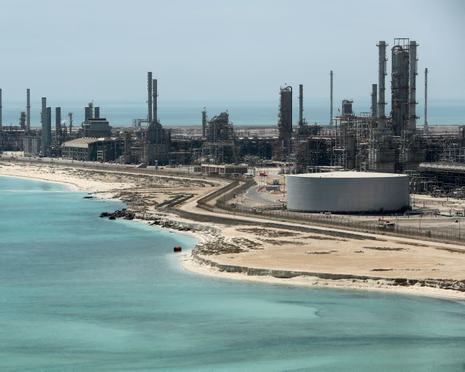
The findings arrive during another turbulent moment for international energy markets. Oil and gas prices have surged following tensions across the Middle East, reminding policymakers how vulnerable economies remain when they depend heavily on imported fossil fuels. The committee argues that investing steadily in clean energy systems would reduce exposure to such shocks while bringing wider benefits for public health and economic stability.
According to the advisory body, achieving the UK’s net zero goal would require roughly £4 billion in investment each year. Spread over the coming decades, the total would reach close to £100 billion by 2050. That figure may appear substantial, yet experts emphasise that the cost is broadly comparable to the economic impact of previous fossil fuel crises, including the surge in energy prices after the Russian invasion of Ukraine.
In that earlier crisis, gas and electricity prices soared across Europe. Governments were forced to spend billions supporting households and businesses struggling with higher bills. Analysts say similar shocks could easily happen again, especially when global politics disrupts supply routes or production.
The latest tensions affecting shipping routes near the Strait of Hormuz illustrate the danger clearly. The waterway handles a large share of global oil exports, making it one of the world’s most sensitive energy corridors. Even the threat of disruption can push prices sharply higher, creating ripple effects across global markets.

Advisers from the Climate Change Committee argue that a cleaner energy system would shield the UK from these pressures. By expanding renewable electricity, electrifying transport, and improving home heating systems, Britain could rely far less on imported fuels whose prices fluctuate unpredictably.
Technologies already exist to make this transition possible. Renewable power sources such as wind and solar are expanding rapidly across the country. Meanwhile, electric vehicles are becoming increasingly common, and modern heat pumps can warm homes more efficiently than traditional gas boilers.
Officials say these changes do more than reduce carbon emissions. They also improve daily life for millions of people. Cleaner energy systems mean lower air pollution, quieter streets, and warmer homes that require less energy to heat during winter.
The committee also highlighted the economic advantages of the shift. For every pound invested in the transition, the UK could receive between two and four pounds in wider benefits. These gains come from reduced energy costs, improved productivity, and fewer health problems linked to pollution.
Health improvements alone could save significant sums each year. Cleaner air and healthier lifestyles may reduce pressure on the National Health Service by billions of pounds annually. Experts believe fewer respiratory illnesses, combined with more active travel habits, could help both the healthcare system and individual households.
Government ministers welcomed the analysis, arguing that it confirms the economic logic behind Britain’s climate strategy. Ed Miliband said the findings show the clean energy transition is not only necessary but financially sensible. He stressed that moving toward net zero could protect families from future price shocks while strengthening national energy security.
The United Kingdom became the first major economy to enshrine a net zero target in law. Parliament approved legislation requiring the country to balance its greenhouse gas emissions by 2050. Under this framework, emissions must fall sharply while remaining pollution is offset by forests, land management, or carbon capture technologies.
However, the policy has increasingly become a political battleground. Some conservative commentators and populist groups argue the transition will impose enormous costs on the economy. Estimates circulating in some political debates claim the total bill could reach several trillion pounds.
The Climate Change Committee disputes those claims firmly. Its analysis says such figures often exaggerate the costs while ignoring the price of continuing fossil fuel dependence. If Britain delays the transition, it will still need to pay for imported gas and oil, which could become increasingly expensive over time.
Climate advisers say the real choice is not between spending and saving. Instead, the decision lies between investing gradually in a cleaner system or repeatedly paying for unpredictable fuel crises that strain households and businesses.
Experts outside government have echoed these arguments. Environmental organisations believe the latest energy price surge demonstrates why reducing reliance on fossil fuels is urgent. They warn that geopolitical tensions are likely to remain a constant feature of global energy markets.
Campaigners from Friends of the Earth say the current situation offers a clear lesson for policymakers. They argue that renewable electricity and electrified transport provide a safer long-term strategy than continued dependence on imported fuels.
Academic researchers have also highlighted the financial logic behind accelerating the transition. Economists studying energy systems note that renewable technologies are becoming cheaper every year. Meanwhile, the cost of fossil fuels can spike suddenly when conflicts or supply disruptions occur.
Researchers at the London School of Economics say a faster shift toward electrified systems could produce large long-term savings. By generating power domestically from wind, solar, and other clean sources, Britain would avoid many of the uncertainties associated with global fuel markets.
Such changes would also reduce the country’s exposure to climate risks. Rising temperatures, extreme weather, and sea-level changes already create economic pressures worldwide. Analysts warn that delaying action could increase future costs as governments respond to more severe environmental impacts.
Even so, political disagreements continue. Some opposition voices argue that current climate policies place excessive pressure on industries and households. Critics say certain measures, including incentives for installing heat pumps, should be reconsidered or scrapped entirely.
Supporters of climate action believe reversing those policies would be a mistake. Environmental groups say removing incentives could slow the transition at exactly the moment when energy markets highlight the importance of change.
Green campaigners from Greenpeace say the solution to rising gas prices is not greater dependence on gas. Instead, they argue the UK should accelerate its move toward renewable power and energy efficiency.

Despite political debate, analysts believe the overall direction of travel remains clear. Global investment in renewable energy continues to grow, and many countries have adopted long-term climate targets similar to Britain’s. As technology improves and costs decline, clean energy systems may become even more economically attractive.
The Climate Change Committee expects the government to respond formally to its latest recommendations later this year. Ministers will outline policies covering the seventh carbon budget, which sets emissions limits for the period between 2038 and 2042.
Those decisions could shape the next phase of Britain’s climate strategy. Supporters hope the new evidence will encourage faster action and stronger investment in clean technologies. Critics, however, will continue questioning the pace and scale of the transition.
For households and businesses, the debate ultimately concerns economic security as much as environmental responsibility. Energy crises have shown how quickly global events can affect everyday living costs. The committee believes a successful transition to net zero could shield the UK from many of those risks.
Whether political leaders agree on every detail remains uncertain. Yet the core message from climate advisers is increasingly difficult to ignore. Building a cleaner energy system may not only help the planet but also prove the most affordable path for Britain’s future.
Related News:
 Water firms may avoid fines under UK water reform plan
 No Gas Boiler Ban as UK Warm Homes Plan Backs Heat Pumps
 Scotland’s Climate Plans Face Scrutiny Over ‘Science Fiction’ Targets
 British Woman in Iran ‘Losing Hope’ Amid Ongoing Detention
 Green Party Surges Past Labour in Latest UK Poll
 Celebrities and Charities Demand UK Government Act on Child Poverty
 Trump’s UK Ambassador Urges North Sea Drilling to Strengthen US Ties
 FBI Director Kash Patel Defends Girlfriend Amid Government Jet Claims
 French Taxi Driver Cleared in David Lammy Theft Case After Fare Dispute
 ‘Reckless’ cuts to victims’ services will cost more than they save
 Millionaires group urge Reeves to introduce wealth tax to ‘lift kids out of poverty’
 Starmer Faces Growing Dissent as Labour MPs Weigh Leadership Challenge
 Reeves rejects £1bn plea for NHS redundancy payouts
 Politics latest: Starmer ‘will fight any leadership coup’ as Streeting denies attempt to oust Labour PM
 PM Condemns Leaks, Vows Loyalty to Ministers and Stability
 Major Rent Reform Ends No-Fault Evictions in England
 Peers Flood Assisted Dying Bill with 942 Amendments
 England’s Special Needs Support Faces Breaking Point
 MoD warned over Excel risks before Afghan data breach
 Labour Faces Historic Decline in Wales
 PM Highlights UK Business at G20 in South Africa
 Most Tories Expect to Support a Farage-Led Government
 Labour MP claims devolution bill is ‘blatant discrimination’ against Cornwall
 Millions Face Higher Taxes Under Reeves New Budget
 Peers Get Extra Time to Debate Assisted Dying Bill
 “Enough is Enough”: Local MP Vows to Fight Rainham Quarry Plans
 Starmer Says Labour’s Economic Plan Needs Years to Deliver
 Culture secretary to review Telegraph takeover by Daily Mail owner
 Storm Goretti leaves Cornwall homes without power
 Plans to Limit Jury Trials Face Retreat After Mounting Opposition
 Right Must Unite After Jenrick Defection, Urges Rees-Mogg
 UK Ministers Drop Foreign Student Targets for Global Education Push
 MPs warn AI financial risks threaten UK stability
 MPs warn AI financial risks threaten UK stability
 Hugh Grant Joins Call for Under-16 Social Media Ban in UK
 Shinzo Abe’s killer receives life sentence in Japan
 Lords Vote Piles Pressure on Starmer Over Social Media Ban
 Reform UK Health Plan ‘Would Cost £1.7bn’, Streeting Says
 Police response times face strict new national limits
 UK joins North Sea wind grid pact with nine European nations
 Labour policing overhaul sparks fears over growing central control
 Tories criticised after Braverman defection sparks mental health row
 Burnham Westminster return hopes fade amid Labour rift
 Devon hosts first high-density hydro power system
 Starmer warns of toxic division politics in Reform challenge
 Starmer China visit raises human rights pressure on Beijing
 Wigan Dump Crisis Sparks Health and Safety Alarm
 Palantir contracts face UK halt calls over transparency
 Labour Thinktank Row Deepens Over Journalist Probe Claims
 Labour Lord Doyle Apologises Over Paedophile Ties in Political Storm
 Cabinet Secretary Shake-Up Triggers Due Diligence Warning
 Starmer Faces Inquiry Calls Over Thinktank Probe
 Royal Mail Delivery Crisis Deepens Amid Weather Chaos
 Farage to Name Jenrick as Reform Chancellor Pick
 NHS Negligence Ruling Raises Payout Costs
 Civil Service Pay: Union Urges Ministers to End ‘Barking Mad’ Limits
 Antonia Romeo appointment sparks criticism
 Trump and Chagos Deal Rift Over Iran Strikes
 Farage Chagos Islands Row Sparks Fury
 Trump Tariffs Threat Spark UK and EU Alarm
 Gasfield Deal Sparks Debate Over Fracking in Lincolnshire
 Reform UK targets workers’ rights repeal
 Mandelson Denounces Arrest Over ‘Baseless’ Fleeing Claims
 Russian Trade Routed Through British Islands Exposed
 Mandelson Arrest: Met Apologises to Hoyle
 Palestine Action ban appeal moves forward
 Germany Faces Backlash Over Scrapped Renewable Heating Mandate
 Group Expands Legal Claim Over South West Water Pollution
 Reeves Must Back Defence Plan or Face Dismissal, Says Unite Chief
 NHS Maternity Units Cover Up Harmful Childbirth Errors
 Green Party Stuns Labour in Gorton and Denton Byelection
 Refugee Status Overhaul Sparks UK Debate
 BBC Charter Reform Sparks Independence Battle
 Asylum Seekers to Work After Year-Long Wait
 Thousands Protest Iran Strikes Outside US Embassy London
 US Bombers Arrive at RAF Base Amid Rising Iran Tensions
 UK Prepares Aircraft Carrier for Middle East Crisis
 UK Oil and Gas Supplies Reassured Amid Middle East Concerns
 Proposed Law Leaves Gap for Children of Convicted Paedophiles
 Ministers Urged to Act Faster on Deepfakes Threat