Published: 25 March 2026. The English Chronicle Desk. The English Chronicle Online.
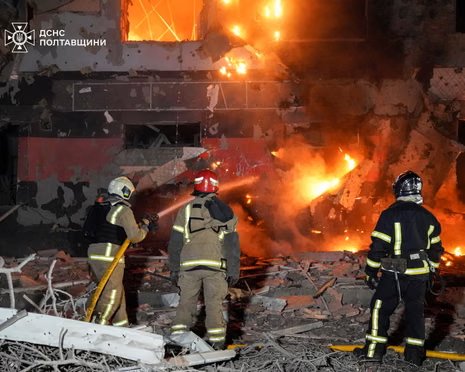
The Russia drone attack on Ukraine has escalated dramatically, marking one of the most intense aerial offensives since the war began. Nearly 1,000 drones were launched in a sweeping assault that struck multiple regions, leaving destruction and fear across the country. Ukrainian officials confirmed that the Russia drone attack killed at least seven people, while damaging infrastructure and historic sites in several cities.
The overnight barrage included around 400 long-range drones and 23 cruise missiles, followed by a rare daytime assault involving 556 additional drones. This coordinated operation demonstrated a shift in Moscow’s military strategy, combining sustained pressure with psychological impact on civilians. The scale and timing of the Russia drone attack suggest a renewed push as spring conditions improve for ground operations.
In the western city of Lviv, one drone struck the Bernardine monastery, a historic 16th-century church located within the city’s UNESCO-listed medieval centre. Local authorities described the damage as significant, with parts of the structure visibly affected. Footage circulating online showed a kamikaze drone crashing into a busy street, underlining the unpredictable danger faced by civilians.
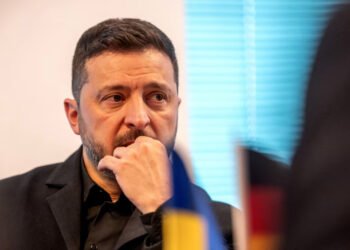
Ukrainian President Volodymyr Zelenskyy responded swiftly, confirming that the Russia drone attack had impacted 11 regions. He renewed urgent calls for international partners to provide additional air defence systems and ammunition. Zelenskyy emphasised that Ukraine’s ability to intercept incoming threats remains heavily dependent on Western support, particularly from the United States.

The timing of the offensive has raised concerns about a broader Russian spring campaign. Analysts believe that improving weather conditions often allow Moscow to intensify military operations, especially after winter slowdowns. Russian forces currently outnumber Ukrainian troops by a significant margin, giving them a numerical advantage along several frontline sectors.
In eastern Ukraine, particularly in the Donetsk region, Russian troops have continued a gradual advance throughout the winter months. They are now positioned roughly 20 kilometres from the outskirts of the strategic city of Sloviansk. Control of Sloviansk would provide a crucial logistical and symbolic victory for Moscow, potentially shifting momentum in the region.
Further south, open-source analysts have reported gains near Zaliznychne in the Zaporizhzhia region. These developments indicate a coordinated effort to stretch Ukrainian defences across multiple fronts. The Russia drone attack appears to complement these ground advances, aiming to weaken infrastructure and disrupt defensive coordination.
According to the Institute for the Study of War, Moscow has recently moved additional troops and heavy equipment closer to the frontline. This build-up suggests preparations for sustained offensives in the coming weeks. The use of drones on such a large scale also reflects evolving tactics, where unmanned systems play an increasingly central role in modern warfare.
Military analyst Michael Kofman from the Carnegie Endowment for International Peace noted that Russian mechanised assaults typically increase around April. However, he observed that these operations often come at high cost and limited success. Ukrainian forces, he explained, have adapted their defences to counter such tactics effectively.
Much of the current fighting has shifted toward drone warfare, where both sides attempt to suppress or disable each other’s unmanned units. This technological battlefield adds a new layer of complexity, requiring constant adaptation and innovation. The Russia drone attack illustrates how aerial systems are now central to both offensive and defensive strategies.
Despite the challenges, Ukraine has achieved some battlefield gains this year. In southern Zaporizhzhia, Ukrainian forces have reportedly retaken around 150 square miles of territory. February marked the first month since 2023 in which Kyiv regained more land than it lost, offering a rare moment of optimism.
One contributing factor was a decision by Elon Musk to restrict Russian access to Starlink satellite internet services. This move disrupted communication lines for Russian troops, highlighting the growing influence of private technology companies in modern conflicts. The impact of such decisions extends beyond the battlefield, shaping operational capabilities in real time.
However, Ukraine’s position remains fragile. Much of the global focus has shifted toward tensions in the Middle East, particularly involving Iran. This shift has raised concerns that Ukraine may struggle to secure continued supplies of critical defence systems. In particular, US-made Patriot missile interceptors, essential for countering ballistic threats, are reportedly in limited supply.
Diplomatic efforts to resolve the conflict have also faced setbacks. Delegations from Ukraine and the United States recently held talks in Florida, aiming to explore potential pathways toward peace. Despite detailed discussions, no significant breakthrough was achieved, leaving key issues unresolved.
One of the most contentious topics remains the future of the Donbas region. Russia continues to demand full control over the area, while Ukraine insists on maintaining its territorial integrity. Zelenskyy has repeatedly stated that any consideration of withdrawal would require strong and binding security guarantees from Western allies.
Reports from Ukrainian media outlets suggest that Washington may have applied pressure on Kyiv during the talks. According to these reports, the United States indicated it could scale back its involvement in peace negotiations if progress remains limited. Such a shift could further complicate Ukraine’s strategic position.
The Kremlin has acknowledged that diplomatic discussions are currently in a “situational pause.” Russian officials attribute this slowdown partly to the broader geopolitical climate, including ongoing tensions involving Iran. The intersection of these global conflicts appears to be influencing decision-making on all sides.

Meanwhile, neighbouring Moldova has also felt the impact of the Russia drone attack. Authorities reported damage to a key power line connecting the country to European energy networks. Citizens were urged to reduce electricity consumption during peak hours to prevent further strain on the system.
Ukraine itself has already endured a difficult winter marked by widespread power outages and heating shortages. The latest attacks raise fears of renewed disruptions as the country attempts to rebuild its energy infrastructure. Protecting these systems remains a critical priority for Ukrainian authorities.
The Russia drone attack also carries a psychological dimension, aiming to erode civilian morale. The use of drones allows for unpredictable and widespread strikes, creating a constant sense of vulnerability. This tactic reflects a broader strategy of attrition, where sustained pressure gradually weakens resistance.
As the conflict enters another year, the stakes remain high for both sides. Ukraine continues to rely heavily on international support, while Russia seeks to capitalise on shifting global dynamics. The coming months are likely to determine whether the current escalation leads to significant territorial changes or further stalemate.
For now, the scale of the Russia drone attack underscores the intensity of the conflict and the challenges ahead. It highlights the evolving nature of warfare, where technology, strategy, and geopolitics intersect in complex ways. As both sides prepare for the next phase, the human and political costs continue to mount.
Related News:
 UK Prepares Aircraft Carrier for Middle East Crisis
 North Korea Fires Missiles Amid US-South Korea Drills
 China’s Secret Mountain Ruins Rise Again in New Cold War
 ‘The frontline is like Terminator’: Ukraine’s fighting robots
 RAF Typhoons scrambled amid Russian drone threat near Nato
 Trump orders US troop pullout from Germany
 Ukraine strikes Tuapse as oil disaster worsens
 Trump likens US Navy actions to ‘pirates’
 Putin Declares Russia Victory at Scaled Victory Day Parade
 Zelenskyy warns over Oreshnik threat as Kyiv hit
 Discontent grows around Putin amid war strain
 Russian Frigate Fires Warning Shots Near British Yacht
 Trump dismisses concerns over 250-day carrier deployment
 BBC to Apologise Over Edited Trump Speech Amid Backlash
 Britain deploys RAF specialists to assist Belgium with drone threats
 Greene Pushes Epstein Files Amid Trump Fallout
 December Run-Off in Chile as Election Produces No Winner
 Zelenskyy Signs Fighter Jet Deal Amid Russian Drone Attacks
 Shadow Fleet at Sea: Europe’s Battle Against Illicit Oil Shipping
 Tiny Curacao Makes History as Smallest Nation to Reach World Cup
 US Suspends Afghan Immigration After White House Shooting
 Georgians Defy Government Crackdown After Year of Protests
 ‘Extinct’ Antelope Returns to Sahara, Bringing Hope
 American Mother Extradited From UK to U.S. on Murder Charges
 Irish Beach Tragedy: Irish Drown at Whitehaven Beach in Australia
 Sanctioned oil tankers sail Channel amid Russia scrutiny
 US and UK Withdraw Personnel as Middle East Tensions Rise
 Half the World’s Largest Cities Face Rising Water Stress
 Pentagon Signals Reduced Role in Deterring North Korea
 UK and US Drop in Global Corruption Index Rankings
 SA Police Intensify Search in Gus Lamont Case
 Canberra Poster Seizure Sparks Free Speech Row
 Evo Morales Returns After Mysterious Absence
 El Mencho Killed as Mexico Faces Violence
 Australian children in Syria deserve safe return
 Greenpeace $345m Ruling Sparks Appeal Battle
 Jacinda Ardern Moves To Australia Following Her US Fellowships
 Jacinda Ardern Move Sparks Kiwi Reflection
 Middle East Airspace Crisis Strands Thousands
 Nick Greiner Warns Over Election Review Fallout
 Kelly Wilkinson Inquest Reveals Bail Failure
 Tehran Strikes Mark War’s Most Devastating Night
 Injured Mojtaba Khamenei Elevated as Iran Leader
 Gordon Brown urges court for crimes against children
 Gaza Detainee Abuse: Israel Drops Charges Against Soldiers
 The Kill Line: A Shifting Vision of the American Dream
 Oil Prices Jump After Trump Claims Iran Oil Hub Destroyed
 Pakistan Targets Militant Hideouts in Afghanistan
 Lebanon Ground Campaign Raises Occupation Fears
 UK Condemns Reckless Iranian Missile Threats on Global Bases
 ICE detention warning sparks fear among immigrants
 Pope Rebukes Leaders for War as Middle East Tensions Rise
 Army Probes Apache Flyover at Kid Rock’s Nashville Estate
 Artemis II: Humanity Returns to the Moon After Decades
 Nuns of Schloss Goldenstein Move Closer to Staying Home
 Italian Town Buys Mussolini Villa to Keep Away Fascist Fans
 Report Says Pezzullo Acted ‘Recklessly’ in Dealings
 Trump and Tehran Find Common Ground in Landmark Ceasefire
 Suspected Plot Targets Pipeline Before Hungary Vote
 Reeves Slams Trump Over Iran War Lack Of Exit Plan
 Learner Driver Charged After Expo Tragedy
 Coalition pushes fossil fuel phaseout plan
 Trump approval plunges amid Iran war fears
 US ‘Narco Boat’ Strikes Draw Global Outcry
 FIFA Confirms Global Ban for Benfica Star Prestianni
 Putin Signals War End as Russian Momentum Stalls
 Scepticism and tight security as Beijing braces for Trump
 Philippine Senator Flees After Days Under Senate Siege
 Tensions Flare as Israeli Nationalists March in Jerusalem
 High Street Crisis: Fears Grow Over Post Office Closures
 Oil Markets Face ‘Red Zone’ Threat Amid Iran Crisis
 Pope Meets Families in Italy Toxic Waste Zone
 US Strikes Iranian Sites Amid Shaky Ceasefire Talks
 Starmer Leadership Under Pressure After Setbacks
 Papal Visit Offers Political Lifeline to Spanish Premier
 Aukus Deal Facing Fierce Backing and Historic Criticism
 Thai Princess Bajrakitiyabha Passes Away at 47
 Le Pen to Run for President Despite Embezzlement Conviction
 Ukraine Creates Long-Range Strike Command
 Houthis Strike Saudi Arabia as Middle East Tensions Rise