Published: 25 March 2026. The English Chronicle Desk. The English Chronicle Online.
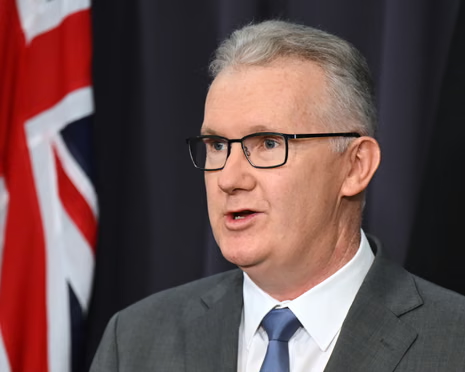
The Australian government has sparked a massive international debate following a sudden decision regarding its borders. Home Affairs Minister Tony Burke officially triggered tough new immigration laws on Wednesday evening to address changing global conditions. These measures specifically target Iranian nationals who currently hold valid tourist visas for travel to Australia. Under the new order, most of these visitors are now blocked from entering the country. This suspension is set to remain in place for at least the next six months. Government officials claim the move is necessary to maintain a sustainable and orderly migration system. However, the decision has been met with fierce criticism from humanitarian groups and political opponents. Many advocates have described the policy as a massive betrayal of people seeking safety. The ban could potentially affect up to 7,200 individuals who already possess the required legal documentation.
The specific legal mechanism used by the minister is known as a control determination order. This power allows the government to pause entry for certain groups in the national interest. Tony Burke explained that many visas were issued before the current regional conflicts began. He suggested that these visas might not be granted under the present global security climate. The minister argued that permanent residency should be a deliberate choice made by the state. He believes that migration should not be a random consequence of someone booking a holiday. This philosophy marks a significant shift in how Australia manages its temporary visa categories. The government is closely monitoring developments to ensure the migration system remains fair for everyone. Critics argue that this fairness does not extend to those now left in limbo. Many families had already made extensive travel plans and paid significant visa application fees.

The new policy focuses primarily on holders of the subclass 600 tourist visa category. It does not apply to those who are already physically present within Australian borders. The order will last for six months before it requires a formal ministerial renewal. There is some room for flexibility through a process called sympathetic consideration for families. Parents of Australian citizens may still be allowed to enter under very specific circumstances. Others who have an urgent need to travel can apply for a special certificate. Despite these exceptions, the vast majority of visa holders face a long period of uncertainty. Recent data shows there are more than 40,000 temporary visa holders across the affected region. The home affairs department confirms that 7,200 of these are Iranians currently located outside Australia. This group is the primary target of the latest restrictive measures by the government.
The reaction from the Iranian community in Australia has been one of deep sadness. Nos Hosseini represents the Iranian Women’s Association and expressed her profound disappointment with the news. She noted that the community is already grieving due to the ongoing regional violence. The sudden announcement has added immense stress to an already very difficult and painful situation. Hosseini believes this should be a time for compassion rather than restrictive border policies. Many people feel that the Australian government is turning its back on their plight. The speed at which these laws were passed in March also caused significant alarm. Advocates argue that the legislative process lacked the necessary oversight for such sweeping powers. They worry that this sets a dangerous precedent for future immigration and border control. Confidence in the integrity of the visa system appears to be at risk.
Political opposition to the move has been vocal and diverse within the federal parliament. Warringah MP Zali Steggall highlighted the real-world impact on individuals who followed every rule. She pointed out that these people acted in good faith when applying for visas. Invalidating lawfully obtained documents undermines the entire foundation of the national migration framework. Steggall called for a further look by parliament into these unchecked ministerial powers. Meanwhile, the Greens have taken a much sharper tone against the current Labor administration. Senator David Shoebridge accused the government of hypocrisy regarding its foreign policy and human rights. He claimed the government pretends to care about Iranians while passing very cruel laws. Shoebridge argued that the Labor party is responsible for pulling the trigger on these policies. He believes the government has abandoned its moral obligations to the Iranian people.
The Asylum Seeker Resource Centre has also issued a very strongly worded statement. Deputy chief executive Jana Favero called the decision a breathtaking and total moral failure. She stated that the government is slamming the door shut when people need safety. This move is seen as a massive betrayal of the values Australia claims to uphold. Favero noted that the ban adds unnecessary trauma to people whose country is suffering. The timing of the announcement has also raised many eyebrows among political observers. It came shortly after the government facilitated asylum for members of a football team. Tony Burke had previously welcomed several players from the Iranian women’s national soccer squad. He told the press that they were safe and should feel at home. This contrast in treatment between different groups has led to accusations of inconsistency. The government seems to be sending mixed signals to the international community.

The situation remains fluid as the six-month clock begins for those excluded from entry. Families separated by these new rules are desperately seeking clarity from the home affairs department. Legal experts are currently reviewing the validity of the control determination order under international law. There are concerns that Australia may be violating its obligations to valid visa holders. The government maintains that its primary duty is to protect the national interest. They argue that an orderly system prevents the chaos seen in other parts of the world. However, the human cost of this orderly system is becoming increasingly apparent every day. For the 7,200 Iranians affected, the dream of visiting Australia is now on hold. Many may never get the chance to use the visas they worked hard to obtain. The political fallout from this massive betrayal is expected to continue for weeks.
As the debate intensifies, the focus remains on the balance between security and humanity. Australia has long prided itself on being a multicultural and welcoming nation for visitors. This recent policy change challenges that reputation on the global stage for many observers. The government must now navigate the complex social and legal consequences of its actions. Future updates will likely depend on the evolving situation within the Middle East region. For now, the gates remain firmly shut for many Iranian travelers hoping for entry. This story highlights the growing tension between national borders and individual human rights. The English Chronicle will continue to monitor these developments as more information becomes available. The world is watching how Australia handles this sensitive and highly controversial migration issue.
Related News:
 British Woman in Iran ‘Losing Hope’ Amid Ongoing Detention
 BBC Journalist Held and Interrogated in Vietnam
 The diet that can significantly ease symptoms of IBS
 Trump Speaks on Prince Andrew’s Royal Scandal Fallout
 Pregnant UK Teen to Be Freed from Georgian Jail
 Zohran Mamdani becomes New York City’s first Muslim mayor
 Top Christmas Books Reads: Classics to Cozy Romcoms
 UPS Cargo Plane Crash in Kentucky Kills Seven
 Just Stop Oil Protesters Convicted Amid Climate Defence Row
Zohran Mamdani names all-female transition team for NYC mayoralty
Just Stop Oil Protesters Convicted Amid Climate Defence Row
Zohran Mamdani names all-female transition team for NYC mayoralty
 Tension and Turmoil at Aston Villa v Maccabi Match
 British Grandmother to Return Home After Death Sentence in Bali
 Parents Urge Home Office to Reunite Daughter After Hurricane
 Lando Norris Dominates Brazil GP to Strengthen F1 Title Bid
 Second world war veterans honoured as King leads Remembrance Sunday
 BBC director-general and news chief resign amid bias row
 Palace May Restore Hyphen to Andrew Mountbatten-Windsor’s Name
 Ronaldo Confirms Final World Cup and Plans Retirement
 Rama Rebukes Mahmood for Targeting Albanian Families
 Russian Vessel Used Lasers on RAF Pilots, UK Claims
 Royal Navy Shadows Russian Warships Entering the Channel
 Ireland Boosts Ukraine Aid as Zelensky Visits Dublin
 US Africa aid remarks spark anger after leaked State email
 Starmer China visit raises human rights pressure on Beijing
 UK and EU Signal Fresh Push for Defence Cooperation Talks
 UK New Car Discounts Near £6,000 as Prices Are Slashed
 Cory Bernardi joins One Nation for SA election
 Starmer Condemns ‘Depraved’ Russian Strikes on Ukraine
 Sydney Protest Pepper Spray Clash During Herzog Visit
 Mexico Challenges UK Asylum Decision
 Trump Warns Over Chagos Islands Deal
 NSW Mental Health Crisis: Escapes Spark Alarm
 Trump and Chagos Deal Rift Over Iran Strikes
 Andrew Mountbatten-Windsor Arrest After FBI Radar
 Farage Chagos Islands Row Sparks Fury
 Trump Tariffs Threat Spark UK and EU Alarm
 Mediterranean Storms: A New Era of Climate Tragedies
 UK Allows US Base Use Amid Iran Tensions
 Middle East evacuation plans for Britons
 Iranian Australian community divided after vigils
 Trump rebukes Starmer over Iran strikes
 Trump Rebukes Starmer Over Iran Strikes Row
 US Iran strikes strain special relationship
 Iran War Threatens Globalisation and UK Economy
 Gulf shipping crisis sparks food price fears
 UK Rescue Flight Delayed Amid Middle East War
 UK Rescue Flight Leaves Oman After Delay Amid Evacuation Effort
 UK Prepares Aircraft Carrier for Middle East Crisis
 Gordon Brown urges court for crimes against children
 Yvette Cooper: UK Must Follow Principles, Not US Pressure
 Iran War Warning: Starmer Backs Ukraine Visit
 UK Wage Growth Slows as Jobs Market Holds Firm
 UK Minister Denies Iran Missile Threat to Britain
 Middle East Conflict to Hit UK Economy Hardest
 Army Probes Apache Flyover at Kid Rock’s Nashville Estate
 Relationship with Trump may be beyond repair, Starmer warned
 ICE Detains Soldier’s Bride Days After Louisiana Wedding
 Zelenskyy Warns US Trust in Putin Risks Middle East Safety
 Charles Faces Trump Test in High-Stakes US Visit
 UK Stands Firm on Falklands Amid US Rift
 Premier League drama defines crucial weekend
 Ceasefire Standoff Deepens in Ukraine War
 Koh-i-noor Diamond Row Reignites Colonial Debate
 RFU Backs Borthwick Despite England’s Poor Six Nations
 Starmer Faces Revolt After Crushing Election Losses
 Fear and Betrayal: The Chilling Case of Kouri Richins
 Tragedy in the Maldives: Inside the Deep Sea Rescue
 US Ebola Case Sparks Urgent Global Screening Measures
 UK Pushes for New EU Goods Trade Deal
 Reeves Fights to Keep Treasury Role Amid Labour Turmoil
 Farage and Reform UK Reshape British Politics
 Starmer Leadership Under Pressure After Setbacks
 Deadly Russian Air Raids Strike Across Ukraine
 Britain’s Crowning Butterfly Takes the Nation by Storm
 Russian Frigate Fires Warning Shots Near British Yacht
 UK Government Cancels Higher Education Programme for Women and Girls
 New South Wales Premier Chris Minns Signals Tough Road Ahead for Labor
 Violent London Clash After World Cup Semi-Final Match
 Labour MPs Urge Burnham to Revive UK Aid Target
 UK’s Largest Muslim Convention Scales Up Security Amid Rising Bigotry