Published: March 30, 2026. The English Chronicle Desk.
The English Chronicle Online—Providing trusted news and professional analysis for the UK.
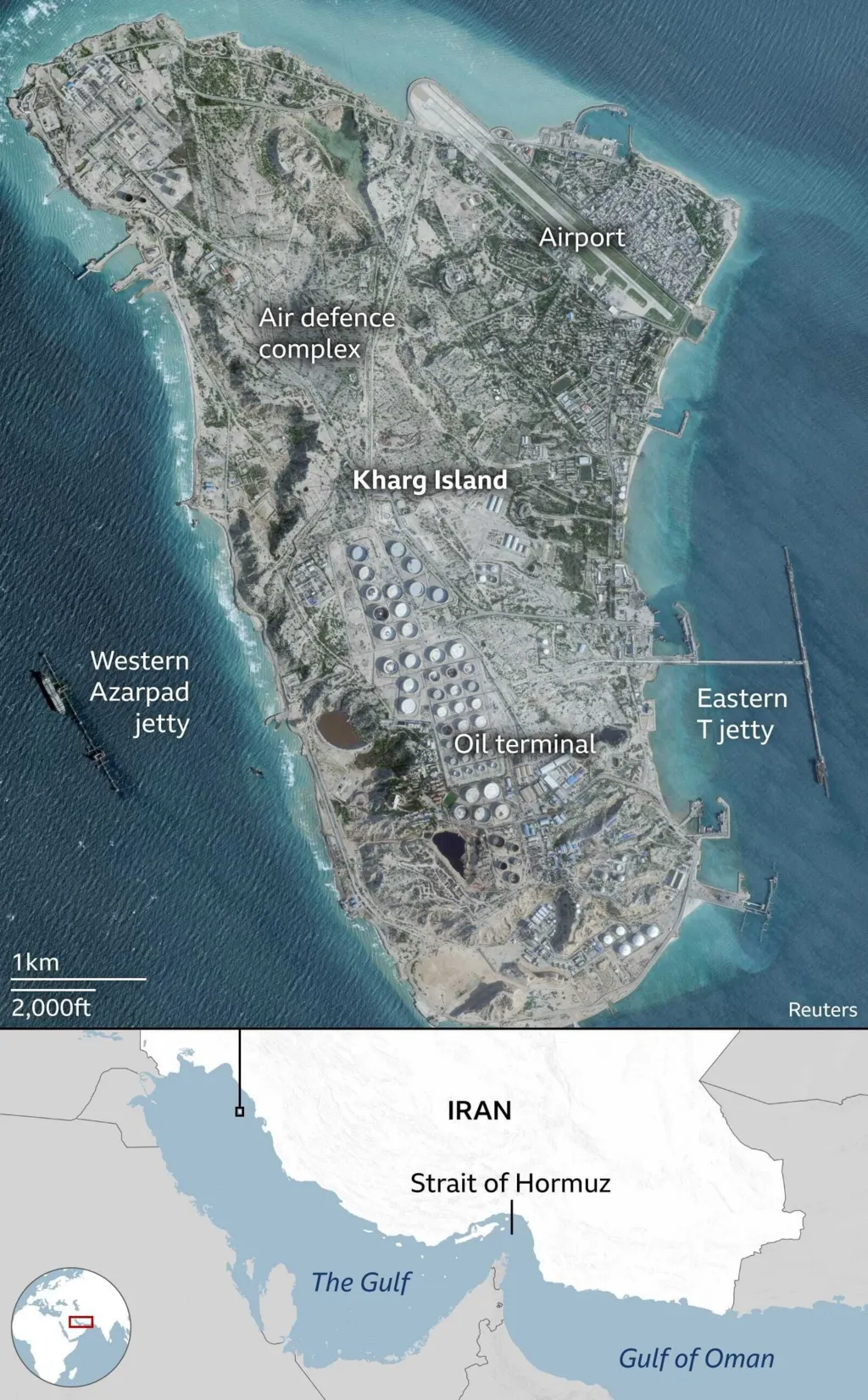
The strategic focus of the ongoing U.S.-Israeli conflict with Iran has shifted decisively toward a small coral outcrop in the northern Persian Gulf that acts as the jugular vein of the Iranian economy. Kharg Island, a territory less than nine square miles in size, has emerged as the primary target for a potential U.S. ground operation, as President Donald Trump openly muses about “taking the oil” to force a conclusion to the month-long war. In an interview with the Financial Times published early Monday, the President confirmed that seizing the island—which handles a staggering 90% of Iran’s crude oil exports—is one of several “high-pressure” options currently being weighed by the Pentagon. The rhetoric comes as more than 2,500 U.S. Marines arrive in the region, joining a massive naval buildup aimed at breaking Iran’s blockade of the Strait of Hormuz.

Military interest in Kharg Island is driven by its unique status as a “single point of failure” for the Islamic Republic. Unlike the Iranian mainland, which presents a daunting landscape for any invading force, Kharg is geographically isolated and hosts highly concentrated energy infrastructure, including deep-water terminals capable of loading ten supertankers simultaneously. Following a series of devastating U.S. airstrikes on March 14 that “totally obliterated” military installations and naval mine storage facilities on the island, the White House has held the actual oil infrastructure in reserve as a bargaining chip. By threatening a physical occupation or the total destruction of the loading bays, the U.S. aims to deprive Tehran of its last remaining source of significant revenue—mostly derived from sales to China—thereby compelling a ceasefire on American terms.
However, the prospect of “boots on the ground” has sparked a fierce debate among military analysts and global energy experts. While President Trump has claimed that the island could be taken “very easily,” retired commanders warn that an amphibious assault would be a high-risk gamble. Satellite imagery suggests that Iran has spent the last fortnight fortifying the island with shoulder-fired missile systems and extensive minefields along the shoreline to repel any landing craft. Furthermore, there are fears that a U.S. occupation could act as a “trap,” exposing American soldiers to relentless drone and rocket fire from the nearby Iranian mainland, just 25 kilometres away. Critics also point out that seizing the export hub might not actually reopen the Strait of Hormuz, as Iran could continue to harass shipping using mobile missile batteries hidden in the coastal mountains of the mainland.

As diplomatic efforts facilitated by Pakistan show tentative signs of progress, the “Kharg Option” remains the ultimate sword of Damocles hanging over the negotiations. Iran has responded to the threat with a chilling ultimatum: any attempt to seize its “crown jewel” will result in the immediate destruction of all energy and water infrastructure belonging to U.S. allies in the Gulf, potentially turning the regional conflict into a global economic catastrophe. With oil prices already hovering above $100 per barrel, the stakes for the upcoming week could not be higher. Whether the U.S. chooses to maintain its “airstrike-only” policy or proceeds with a daring island seizure will likely determine if 2026 ends with a negotiated peace or a much wider, more territorial war.
Related News:
 Kinnock’s Rebuke Echoes Loudly as Corbyn Allies Launch Left-Wing Breakaway: “A Gift to Farage”
 Trump Administration Dismisses 17 Immigration Judges, Sparking Debate Over Judicial Independence
 UK Must Act with Courage and Clarity on Israel-Palestine Conflict, Says Foreign Affairs Committee Report
 Trump Threatens 100% Tariff on Nations Importing Russian Oil Amid India Standoff Over Ukraine War
 Radioactive Leak at UK’s Nuclear Warhead Base Sparks Outcry Over Safety and Secrecy
 Mutual Inconvenience: Why Alaska Was Chosen for the Trump-Putin Summit on Ukraine
 Hong Kong Summons UK and Australian Envoys Following Asylum Grants to Democracy Activists
 Is the UK Ready to Put Boots on the Ground in Ukraine? Assessing Military Capacity and Challenges
 Conservative Influencer Charlie Kirk Fatally Shot During University Debate
 Thousands Gather in London to Protest Donald Trump’s Second UK State Visit
 Channel Crossings Surge: Over 1,000 People Arrive in the UK in Small Boats in a Single Day
 Widow of Charlie Kirk Forgives Killer at Emotional Memorial Service
 Yvette Cooper Signals Global Momentum Towards Gaza Peace Deal Amid Humanitarian Crisis
 A Third of EU Citizens in UK Report Discrimination by Public Bodies Post-Brexit
 Public Trust in SNP Hits Historic Low Amid NHS Concerns
 Johnson Suggests Mandelson Linked to China Spy Controversy
 Rachel Reeves signals welfare reform ahead of key budget
 Russia’s Latest Push to Win US Favors Shows Deep Desperation
 BBC to Apologise Over Edited Trump Speech Amid Backlash
 Britain deploys RAF specialists to assist Belgium with drone threats
 Trump Urges Herzog to Grant Netanyahu Full Pardon
 Indian authorities demolish Kashmir home linked to Red Fort blast
 Greene Pushes Epstein Files Amid Trump Fallout
 Trump Deploys DHS to Charlotte in Major Arrest Operation
 December Run-Off in Chile as Election Produces No Winner
 Canada Passes Carney’s First Budget in Tight Parliamentary Vote
 Shadow Fleet at Sea: Europe’s Battle Against Illicit Oil Shipping
 India’s COP30 Delay Raises Global Climate Concerns
 Georgians Defy Government Crackdown After Year of Protests
 Russia losses Ukraine war peace talks intensify amid rising deaths
 Albanese Opens Door to Bondi Royal Commission Amid Rising Pressure
 Trump Escalates Minnesota Immigration Surge Amid Rising Tensions
 Iran Protesters Defy Crackdown as Violent Clashes Intensify
 EU weighs response amid Greenland tariff crisis with Trump
 EU Says US Ties Have Suffered ‘Big Blow’ After Greenland Crisis
 Israel Moves to Bar MSF From Gaza Operations
 After the Landslide: Can India Reset Ties with BNP Bangladesh?
 Australian Families Leave Syrian Camp for Home
 Starmer Weighs Fast-Tracking Defence Boost
 Trump Attacks UK-California Energy Pact
 Nine Arrested in France Over Death of Far‑Right Student
 Andrew Arrest Sparks Republic Debate in Australia
 Australian PM Says Former Prince Andrew Has Suffered ‘Extraordinary Fall’ but That Won’t Prompt Republic Referendum
 Global corruption crisis: Who Washington shields
 Musk Cuts Starlink Access for Russian Forces – Giving Ukraine an Edge at the Front
 Farage Chagos Islands Row Sparks Fury
 How South Korea’s Democracy Rebounded After Martial Law Attempt
 Ukraine Negotiator Reveals What It Feels Like Facing Russia
 Chad Shuts Border With Sudan in Bid to Stop Conflict Spreading
 French Minister Moves to Block US Envoy Kushner from Government Access
 Trump Speech Sparks Intense Debate Across Divided America
 Has Europe truly learned from the failures of 2022?
 American Citizen Killed in Cuba Boat Shooting, U.S. Officials Say
 Iran’s Regime Still Intact — Coming Days Will Test Its Survival
 Allies of US in the Gulf Bear Brunt of Iran Attacks
 Trump Faces Questions Over Iran Conflict Plan
 Israel Launches Ground Invasion of Lebanon Amid Widening Middle East War
 Herzog Asio meeting sparks security storm
 Nepal Holds First General Election Since Gen Z Protests Toppled Government
 How Depleted Weapons Stockpiles Could Affect the Iran Conflict
 Macron Finds ‘Freedom Fries’ Redemption in Iran Crisis
 Finland Plans to Lift Decades‑Old Ban on Hosting Nuclear Weapons
 Minister Meets Crews Who Will ‘Take Out’ Iranian Drones
 UK–US Tensions Ease as Starmer and Trump Hold First Call Since Iran Row
 Nine Days of Strikes Reshape the Middle East
 Trump Pressures Congress Over Save America Act
 Iran War Puts Trump at Political Risk Amid Rising Prices
 Iran’s New Leader Faces Existential Test
 Iranian Football Squad Asylum Drama Shocks Australia
 Ukraine War Becomes Flashpoint in Hungarian Election
 Queensland Protest Laws Spark Free Speech Backlash
 Eswatini Deal Sparks Global Outcry Over US Deportations
 Yvette Cooper: UK Must Follow Principles, Not US Pressure
 Trump Iran War Stance Hardens as Conflict Widens
 Trump Nato threats expose Iran strategy vacuum
 Trump’s Confidence Undimmed — But Every Iran Option Carries Risk
 Israel Says Iran Security Chief Larijani ‘Killed’
 Philippines energy emergency sparks coal power surge
 Trump Facing Backlash from Epstein Survivors Over Files
 UK Forces Ready to Seize Russian Shadow Fleet Vessels