Published: 06th August 2025 | The English Chronicle Desk
The new Labour government, still in its first year in office, is confronting a deepening financial dilemma that could shape its economic credibility for the remainder of its term. Sir Keir Starmer, the Prime Minister, has come under mounting pressure to clarify whether taxes will rise in the upcoming autumn Budget after a leading economic think tank revealed the UK is heading toward a £50 billion shortfall in its public finances.
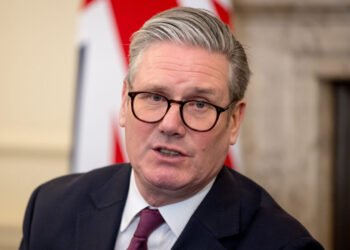
During a visit to Milton Keynes, Starmer carefully avoided committing to previous pledges not to raise major taxes such as VAT, income tax or corporation tax — a silence that has only fuelled speculation that the government may be forced into difficult fiscal decisions. While emphasising that his administration has already stabilised the economy and secured four interest rate cuts since taking office, the Prime Minister was notably non-committal on the possibility of new tax hikes.
The fiscal warning came from the National Institute of Economic and Social Research (NIESR), the UK’s oldest independent economic think tank, whose authoritative analysis carries considerable weight in Westminster. Their latest report projects that Chancellor Rachel Reeves could miss existing borrowing targets by £41.2 billion. To restore the £9.9 billion of fiscal headroom seen in last year’s budget, the government would either need to raise taxes or reduce spending by a staggering £51.1 billion.

These numbers pose a significant challenge to the Labour leadership, which had positioned itself during the election campaign as a party of economic responsibility and fiscal prudence. Although Labour promised not to increase the main tax burdens on working people, the mounting pressures of slowing economic growth, a weakening labour market, and the costs associated with several high-profile U-turns on welfare commitments have left little fiscal room to manoeuvre.
Starmer’s cautious language suggests an awareness of the delicate political calculus involved. “The focus will be living standards, so that we will build on what we’ve done in the first year of this government,” he said. He added that falling interest rates had already provided relief to households and mortgage holders. However, his refusal to rule out specific tax rises has left both voters and the financial sector uncertain about what lies ahead.
When asked directly about the warnings from economists and whether he accepted the necessity of raising taxes to stabilise revenue, Starmer dismissed some of the estimates, stating: “Some of the figures that are being put out are not figures that I recognise.” But this deflection did little to address growing concern that without significant policy shifts, Labour’s economic agenda may struggle to survive contact with fiscal reality.
David Aikman, director of the NIESR, warned that Chancellor Reeves is approaching a difficult balancing act. If she is to honour the government’s existing fiscal rules and spending promises, it may become impossible to avoid raising taxes on working people — something Labour had previously sought to avoid in order to distinguish itself from the previous Conservative administrations.
The political implications are far-reaching. The NIESR, co-founded by the influential economist John Maynard Keynes and now headed by former Bank of England deputy governor Sir Paul Tucker, is not merely a policy shop but a cornerstone of British economic thought. Its analysis is routinely used by the Treasury and international bodies such as the International Monetary Fund.

If Labour is seen to be veering toward the tax increases it once shunned, the party risks alienating key segments of its electoral base while simultaneously fuelling opposition attacks that it cannot be trusted to manage the economy. Conversely, if the government opts for deep spending cuts to avoid raising taxes, it could undermine the social investment agenda that has been central to its early vision for governance.
With the autumn Budget now looming, the government faces a test of its coherence, priorities and political courage. As the UK economy continues to show signs of stagnation, and with global markets watching closely, Starmer and Reeves must walk a tightrope — one that could define not just the success of their economic strategy but the political trajectory of this new Labour era.
Related News:
 Market Jitters Send Stocks Lower as Trade Tensions and Earnings Anxiety Weigh on Investors
 UK Banks Granted Reprieve as BoE Delays Basel III Capital Rules Until 2028
 UK Inflation Climbs to 3.6% as Food and Fuel Prices Squeeze Households
 Modi’s London Visit Seals Historic UK-India Trade Pact Amid Global Tensions
 UK Economy Defies Expectations with Stronger-than-Predicted Growth in Second Quarter
 MPs Warn Thousands Still Face Poverty Despite Labour’s Welfare Reform Retreat
 Rayner Faces Scrutiny as Taxpayer Costs for Trade Union Reps Soar Under Her Watch
 Britain’s Silent Tax Burden: Soaring Inheritance Bills Trap Thousands of Grieving Families
 Global Trade Earthquake: Trump Slaps 35% Tariff on Canada and Expands Tariff Blitz to Over 90 Nations
 Chancellor Faces Mounting Pressure Amid “Impossible Trilemma” Over Tax Rises
 Non-Dom Tax Crackdown Risks Backfiring as Exodus Threatens UK Revenue and Investment
 UK Jobs Market Faces Strain as Employers Cut Bonuses and Hiring Amid Economic Slowdown
 Money Problem: ‘My husband is freelance and in hospital – how can I make sure we don’t lose our home?’
 Labour Members Push for Wealth Tax as Public Finance Crisis Deepens
 Larger Families Could Gain Thousands if Labour Ends Two-Child Benefit Cap
 Reeves Weighs New Property Tax on Homes Worth Over £500,000
 HMRC Issues Urgent Warning Over Surge in Fraudulent Tax Refund Scams Targeting Britons
 Marxists Miss This One Basic Economic Reality That the UK Must Wake Up and Face
 Octopus Energy Expands Support Ahead of Winter Price Cap Rise with Free Home Upgrades
 Retail Sales See Uptick Amid Errors and Delays as ONS Faces Scrutiny
 UK House Prices Hit Record £299,331 as Market Shows Steady Growth
 UK Retail Sales Rise in August, but Tax Concerns Loom Over Festive Period
 Vodafone Faces Fourth Probe into Franchising Division Amid £120m Legal Battle
 Merck Abandons £1bn London Research Hub and Cuts 125 Jobs in Blow to UK Life Sciences
 UK Imposes 100 New Sanctions Targeting Russia’s Revenues and Military Supplies
 UK Economy Flatlines in July, Raising Pressure on Rachel Reeves Ahead of Autumn Budget
 UK Graduates in Healthcare Report Highest Satisfaction with Degree Choices
 Rachel Reeves Hosts Top UK and US Financial Executives as Trump’s State Visit Begins
 UK Labour Market Shows Signs of Cooling as Wage Growth Slows and Redundancies Rise
 UK Wage Growth Remains High, But Cost of Living Pressures Bite
 Privatisation of UK Industries Exacerbates Cost of Living Crisis, Warns Green Party Leader
 Next Shares Slide Amid Warning on Weak UK Growth and Jobs
 Resolution Foundation Chief Urges Chancellor Reeves to Rethink Budget Before November
 Dagenham Left in Limbo After Smithfield and Billingsgate Market Relocation Cancelled
 King Charles Earns Over £1 Million from Duchy Land Linked to Scrapped HS2 Project
 Vodafone Franchisees Sound Alarm: Mental Health Toll of Commission Cuts Revealed Years Before £120m Court Battle
 Public Skepticism Over AI Poses Challenge to UK’s Superpower Ambitions, Says Tony Blair Institute
 UK Government Backs Return of International Rail Travel to Kent Stations
 Assumption Island Dispute Dominates Seychelles Election as Environment, Economy and Geopolitics Collide
 UK Employment Bill Set to Grant Millions Greater Job Security, Thinktank Analysis Finds
 GSK Chief Executive Emma Walmsley to Step Down After Eight Years at the Helm
 AstraZeneca to List on New York Stock Exchange While Retaining London Ties
 Retailers Warn Tax Rises Could Prolong Inflation as Shop Prices Climb
 Marks & Spencer Staff to Work on Boxing Day for First Time in Five Years Amid Cost-Cutting Measures
UK Housing Market Returns to Growth Amid Signs of Stability and Regional Variation
Marks & Spencer Staff to Work on Boxing Day for First Time in Five Years Amid Cost-Cutting Measures
UK Housing Market Returns to Growth Amid Signs of Stability and Regional Variation
 UK households brace for October benefit payments and rising energy costs amid cost-of-living pressures
 Delivery Apps Could Double the Cost of Your Groceries, Warns Consumer Watchdog
 Dutch Government Seizes Control of China-Owned Chipmaker
 Massive Vodafone Outage Disrupts Internet and Mobile Services Across the UK
Rachel Reeves to Confirm Changes to Britain’s Planning System
Rachel Reeves Signals Tax Rises, Spending Cuts Ahead
Massive Vodafone Outage Disrupts Internet and Mobile Services Across the UK
Rachel Reeves to Confirm Changes to Britain’s Planning System
Rachel Reeves Signals Tax Rises, Spending Cuts Ahead
 November 2025 Benefit and Pension Payment Dates Announced
 Retail Sales Hit Three-Year High Amid Tech and Gold Rush
 Lotto result jackpot draw halted due to technical glitch
 Rachel Reeves to lead UK trade push in Saudi Arabia amid rights debate
 US Super-Rich Are Draining Planet’s Safe Climate Space
 Fed Cuts US Interest Rates Again Amid Labour Market Uncertainty
 Green Party Surges Past Labour in Latest UK Poll
 Celebrities and Charities Demand UK Government Act on Child Poverty
 Nvidia Secures Major AI Chip Deals with South Korean Tech Giants
 UK Small Business Owner to Challenge L’Oréal in Tribunal
 Court Hears Challenge Over Water Bills Funding Sewage Fixes
 Millions of Brits Adjust Lifestyle to Afford Essentials
 Rachel Reeves Set to Break Labour Pledge and Raise Income Tax
 Tony Blair think tank warns Rachel Reeves must cut taxes if manifesto broken
 MPs Press Rachel Reeves to Hike Gambling Taxes
 Crisis charity to become landlord amid UK housing emergency
 Warning as Britons prepare to spend £4 billion this Black Friday
 China’s Youth Save, Not Spend, Amid Job and Housing Worries
 Skims Eyes Global Expansion After Reaching $5 Billion Value
 Global markets drop amid tech sell-off and China slowdown
 Japan Tourism Stocks Slide Amid China-Taiwan Row
 UK Rejects Funding to Save Mossmorran Plant
 PM Highlights UK Business at G20 in South Africa
 Mossmorran Plant Closure Hits Cowdenbeath Hard
Reeves to Crack Down on Benefit Fraud While Lifting Two-Child Limit
Mossmorran Plant Closure Hits Cowdenbeath Hard
Reeves to Crack Down on Benefit Fraud While Lifting Two-Child Limit
 India’s Labour Law Overhaul Sparks Fierce Debate
 Rising Water Bills Lift Troubled Thames Back to Profit
 Tesla Warns UK That Weak EV Rules Could Threaten Sales
 Prada buys Versace for $1.38bn, expanding luxury fashion empire