Saturday, April 4, 2026
  • About Us
  • Advertise
  • Privacy & Policy
  • Team
  • Contact
The English Chronicle
Advertisement
  • Home
  • Business & Economy
  • Politics
  • Entertainment
  • Sports
  • Science & Technology
  • UK News
  • World News
  • Health
No Result
View All Result
  • Home
  • Business & Economy
  • Politics
  • Entertainment
  • Sports
  • Science & Technology
  • UK News
  • World News
  • Health
No Result
View All Result
The English Chronicle
No Result
View All Result

Death, displacement and military duties: children plunged into crisis

3 hours ago
in Child Safety, Human Rights, Latest, Middle East, War and Conflict, World News
Death, displacement and military duties: children plunged into crisis
0
SHARES
4
VIEWS
Share on FacebookShare on Twitter

Published:  4 April 2026. The English Chronicle Desk. The English Chronicle Online

Millions of children have been plunged into crisis by the war in the Middle East, with reports of child soldiers in Iran, mass forced displacements in Lebanon, and the killing of hundreds of minors.

According to the UN agency for children, Unicef, more than 340 children have been killed and thousands injured since the US and Israel launched attacks on Iran, which retaliated with bombings across the region. The highest reported child casualty occurred on the first day of the war when a US missile strike on a school in Iran killed at least 160 children and teachers.

Israel’s invasion of Lebanon – along with continued attacks in the occupied West Bank and Gaza – has compounded the bloodshed. Across the region, over 1.2 million children have been displaced.

“Children in the region are being exposed to horrific violence, while the very systems and services meant to keep them safe are coming under attack,” said Unicef’s executive director, Catherine Russell.

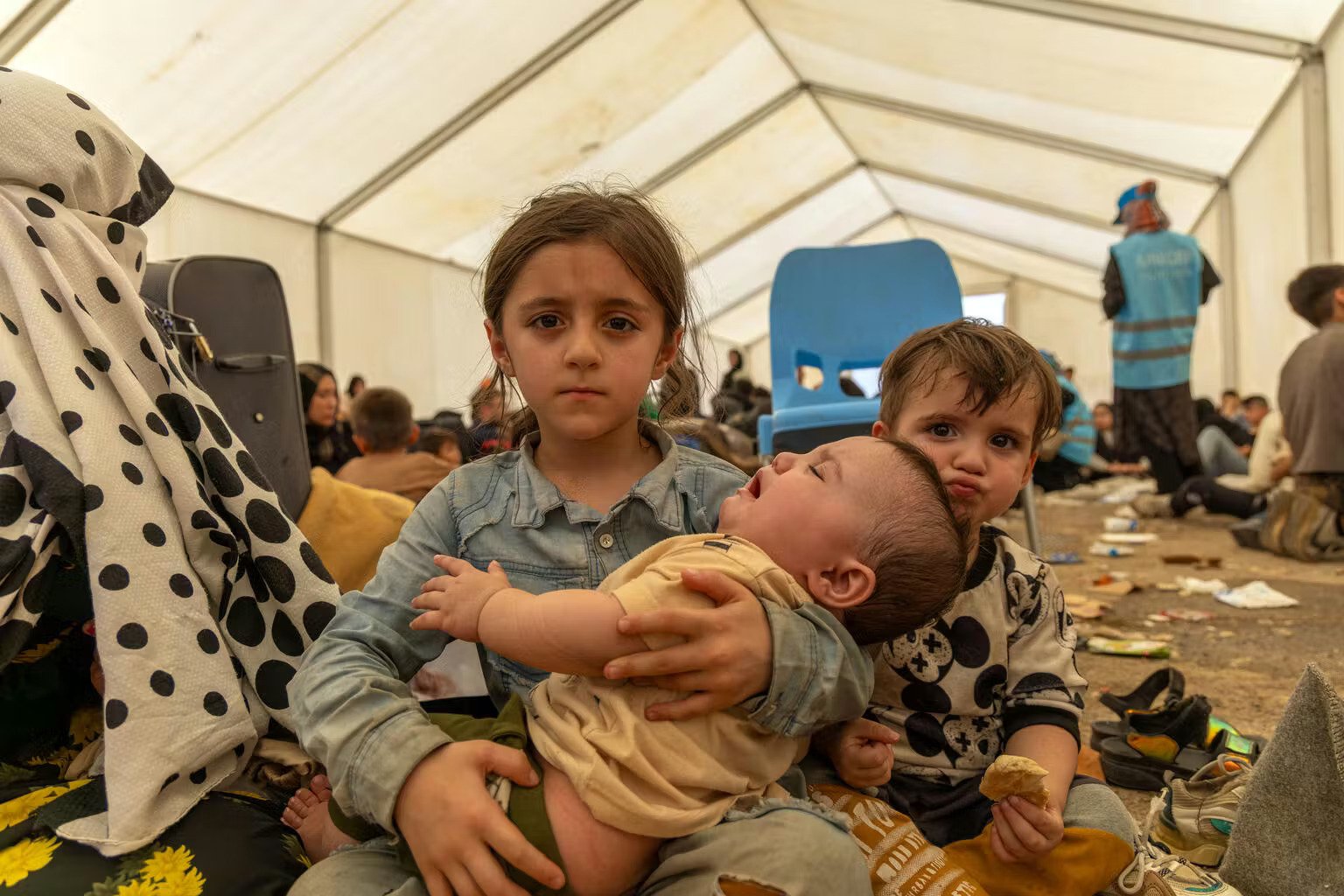
More than 1.1 million people, including nearly 400,000 children, have been forced to flee their homes due to Israeli bombing and displacement orders in Lebanon. Nearly 90% live outside shelters, often sleeping in the street.

Nidal Ahmed, 52, and two of his children live in a tent in an impromptu encampment in Biel, Beirut’s nightclub district. Ahmed’s home in Tyre was destroyed in an airstrike, and his brother’s home was later emptied by Israeli forces.

“It’s 5pm and we haven’t had anything to eat today,” Ahmed said, his eight-month-old daughter, Zahraa, sitting in a stained onesie. After a month of displacement, Ahmed has run out of money to feed his children and relies on irregular aid distributions.

The conditions are “humiliating,” he said, pointing to the blue tarpaulin tent he erected. His three-year-old son, Ahmad, showers only once a week at a friend’s house. Unicef’s representative to Lebanon, Marcoluigi Corsi, warned that “this relentless cycle of bombardment and displacement is severely compounding psychological scars, embedding deep-seated fear and threatening long-term emotional harm.”

Despite a ceasefire, at least 50 Palestinians have been killed by Israeli forces since the Iran conflict began. Israeli airstrikes on 29 March killed at least six Palestinians, including a girl. Gaza, already devastated by previous bombardments, has seen schools close, hospitals damaged, and crossings shut, blocking humanitarian aid.

In the occupied West Bank, Israeli settlers and security forces killed at least three children since the start of the Iran war. One tragic incident on 15 March saw five-year-old Mohammed and seven-year-old Othman killed alongside their parents in Tamoun, leaving their 11-year-old brother Khaled traumatized.

In Israel, retaliatory Iranian missiles killed at least four children, with one attack on 1 March hitting Beit Shemesh.

Reports indicate children as young as 12 are being used by Iran’s Islamic Revolutionary Guard Corps (IRGC) to guard checkpoints. Human Rights Watch condemned the recruitment campaign as a violation of children’s rights and a war crime for children under 15.

An 11-year-old boy, Alireza Jafari, was reportedly killed at a checkpoint while volunteering with the Basij militia. Bill Van Esveld of HRW said, “There is no excuse for a military recruitment drive that targets children. Iranian authorities are risking children’s lives for manpower.”

US bombing of a primary school in Minab on 28 February killed scores of children, mostly seven- to twelve-year-old girls. Across the region, 316 medical centres and 763 schools have been damaged or destroyed. At least 52 million school-age children have had their education disrupted, forced to move online or leave school entirely.

Ahmad Alhendawi from Save the Children said, “Every missed lesson deepens the scars of war. Schools are protected sites, and attacks on them could be grave breaches of international law.”

Exposure to prolonged violence threatens brain development, emotional regulation, and long-term mental health. Satellite TV and online broadcasts provide guidance on dealing with children’s fears, but the trauma is pervasive. Alhendawi emphasized, “Every war is a war on children. Children are living in fear, caught in the crossfire of this adult war.”

The US-Israeli war in the Middle East has created a humanitarian catastrophe for children, with displacement, education disruption, recruitment, and psychological trauma leaving a generation at risk of lifelong scars.

Related News:

UK Prepares Aircraft Carrier for Middle East CrisisUK Prepares Aircraft Carrier for Middle East Crisis mothers uniteGrief, Fear and Fury: Mothers Unite to End Israeli-Palestinian Violence Iran Leader Blames Protesters, Says They Serve TrumpIran Leader Blames Protesters, Says They Serve Trump Syria Alawite women kidnap rape‘I Would Scream in My Sleep’: Alawite Women from Syria Tell of Kidnap and Rape Syrian campAustralian Women in Syrian Camp Offer Separation Deal Russian soldiers shot refusing orders‘Anyone who runs is shot’: Russian soldiers describe killings of troops who refuse orders ZionistTribunal Rules Burgertory Founder’s Chant Incited Hatred Middle East Flights HaltedMiddle East Flights Halted After Iran Strikes Iran regime survival after Khamenei deathIran’s Regime Still Intact — Coming Days Will Test Its Survival Iran attacks Gulf US alliesAllies of US in the Gulf Bear Brunt of Iran Attacks US Iranian diaspora reactions Iran supreme leader topplingHopes and Fears as US Iranians Take to Streets After Toppling of Supreme Leader US-Israel attacks on Iran retaliation day twoRetaliations Continue on Day Two of US-Israel Attacks on Iran Iran school strike reported deathsAt Least 153 Dead After Reported Strike on School, Iran Says BBC Beit Shemesh Iran missile strike reportBBC Reports from Beit Shemesh After Deadly Iranian Missile Strike Iran World Cup participation 2026 uncertaintyIran, the US, and a World Cup That Starts in Three Months Iran attacks Gulf US alliesAllies of US in the Gulf Bear Brunt of Iran Attacks Middle East conflict 2026Israeli Attacks Kill 31 in Lebanon, Iran Strikes Across Region, US Warplanes Crash in Kuwait Middle East strikes map 2026In Maps: Strikes Across Iran and the Middle East US Israeli mission planning IranMonths of Planning Behind US‑Israeli Mission to Target Iran’s Supreme Leader UK stance US Iran strikesCooper: Joining US Strikes on Iran ‘Not in Britain’s Interest’ Khamenei death Russia China impactWhat Khamenei’s Death Means for Russia and China US Iran operationUS Iran Operation: Sixth Service Member Killed Hezbollah angerHezbollah Anger Erupts as War Returns to Beirut Iran Gulf shipping threat conflictTehran Makes New Threat to Gulf Shipping as US Says ‘Hardest Hits’ on Iran ‘Yet to Come’ Trump Iran war aims mixed messagingTrump’s Iran Endgame Unclear After Mixed Messaging on War Aims Trump Iran war powers CongressDid Trump Declare War and Did Congress Approve Iran Attacks? What to Know Gaza siegeGaza Siege Deepens as Iran War Escalates Rubio Iranian school strike responseRubio Responds to Reported Strike on Iranian School third day US‑Israeli war IranThe Third Day of the US‑Israeli War With Iran US Israel attack IranWhy the US and Israel attacked Iran Israel attack Tehran Beirut IranIsrael Launches Fresh Strikes on Tehran & Beirut; US Warns “Hardest Hits” Ahead Iran US Israel war unknown directionThree Days In, This War’s End Is Still Unclear US weapons stockpiles Iran warUS Has ‘Enough Weapons for Forever War,’ Trump Says Israel strikes Lebanon Hezbollah Iran conflictIsrael Strikes Lebanon After Hezbollah Rocket Fire as Iran Conflict Widens Middle East conflict strikes mapLatest on Middle East Conflict — In Maps: Strikes Across Iran and the Region Amazon drones damaged facilities UAE BahrainAmazon Says Drones Damaged Three Facilities in UAE and Bahrain terrifying Dubai missile ordealMan Recalls ‘Terrifying’ Dubai Missile Ordeal During Iran Strikes Israel Tehran Beirut Riyadh dronesIsrael’s New Airstrikes on Tehran & Beirut After US Embassy in Riyadh Is Hit Israel Lebanon ground invasion Middle East warIsrael Launches Ground Invasion of Lebanon Amid Widening Middle East War Iranian rockets Dubai Instagram starsIranian Rockets Are Testing the Resolve of Dubai’s Instagram Stars US embassy Riyadh Iranian drones Lebanese conflictUS Embassy in Riyadh Hit by Iranian Drones as Israeli Troops Enter Southern Lebanon Riyadh drone attackRiyadh Drone Attack Escalates Regional War US strikes Iran triggered Israel plan RubioUS Strikes on Iran Triggered by Israel’s Plan to Launch Attack, Rubio Says Iranian civilian deaths conflict clampdownCivilian Deaths in Iran Pass 700 Amid Fear of Bombs and Regime Clampdown Middle East attacksMiddle East attacks intensify as Trump rejects Iran talks Iran-Iraq border airstrikesIran-Iraq border airstrikes spark new tensions US Senate backs Trump war powers Iran missile barrageUS Senate Backs Trump War Powers Amid Iran Missile Barrage Thousands Protest Iran Strikes Outside US Embassy LondonThousands Protest Iran Strikes Outside US Embassy London US Bombers Arrive at RAF Base Amid Rising Iran Tensions Published: 08 March 2026. The English Chronicle Desk. The English Chronicle Online. Four United States strategic bombers have arrived at a Royal Air Force base in Britain as tensions with Iran escalate across the Middle East. The deployment signals growing military coordination between Washington and London during a rapidly developing regional conflict. British defence officials confirmed the aircraft will conduct defensive missions aimed at preventing Iranian missile attacks across the region. The move follows warnings from American leaders that military strikes against Iranian targets may intensify significantly in the coming days. The aircraft involved in the deployment are B-1 Lancer bombers, large supersonic aircraft designed for long-range strike missions. Each bomber measures approximately forty-five metres in length and can carry up to twenty-four cruise missiles. Their arrival at RAF Fairford in Gloucestershire occurred over two days during the weekend. One aircraft landed on Friday evening while three additional bombers arrived on Saturday morning. British officials confirmed that the deployment followed approval from Prime Minister Keir Starmer earlier this week. According to the Ministry of Defence, the aircraft will carry out what officials describe as specific defensive operations. These missions are intended to prevent Iran from launching missiles toward allied countries across the Middle East. Defence officials emphasised that the operations focus on protection rather than expanded offensive campaigns. However, the arrival of such powerful aircraft demonstrates the seriousness of the current security situation. Military planners expect the bombers to remain ready for action as tensions continue rising throughout the region. The deployment also reflects growing warnings from Washington about an escalation of military activity. American defence leaders recently announced that operations against Iranian targets could increase rapidly. Officials in the United States said additional aircraft, fighter squadrons, and defensive capabilities would soon be deployed. These preparations suggest that military pressure on Iran may intensify within a short period. The arrival of bombers in Britain forms part of that broader strategic preparation. Britain’s Chief of the Defence Staff, Admiral Sir Richard Knighton, confirmed that operational missions may begin soon. Speaking about the situation, Knighton said the United States could launch missions from RAF Fairford within days. Military personnel at the base have already begun preparing logistical support and operational planning. Aircraft crews are expected to coordinate closely with American and British defence authorities. Such preparations highlight the strategic role Britain plays within wider allied security operations. The decision to permit American operations from British bases followed intense discussions inside the British government. Prime Minister Starmer authorised defensive military action from RAF Fairford and the Diego Garcia base. Diego Garcia lies in the Indian Ocean and remains one of the most strategically important military facilities. Both locations provide critical support for long-range aircraft operating across the Middle East. Their use allows allied forces to respond quickly to developing threats within the region. On Saturday afternoon, the Ministry of Defence released a formal update outlining the current military activity. The statement confirmed that American forces had already begun limited operations using British facilities. Officials stressed that the missions focus on preventing Iranian missile launches threatening regional security. According to defence leaders, these operations are designed to protect British personnel and allied civilians living nearby. The statement emphasised that Britain remains committed to safeguarding its national security interests abroad. In addition to the bomber deployment, Britain has dispatched further military resources toward the Middle East. Defence officials confirmed that a Merlin helicopter is travelling toward the region to assist operations. The aircraft is widely known for its anti-submarine capabilities and advanced surveillance technology. Military planners say it will help monitor potential maritime threats and gather intelligence. Such surveillance missions play an important role in maintaining early warning systems during regional conflicts. The arrival of the bombers occurred shortly after comments from United States Defence Secretary Pete Hegseth. Earlier in the week, Hegseth warned that American military strikes could soon increase dramatically. He said the Pentagon was preparing more fighter squadrons, stronger defensive capabilities, and additional bomber missions. His remarks reflected Washington’s determination to respond strongly to Iranian military actions. Analysts believe the expanding deployments aim to deter further escalation from Tehran. Meanwhile, the political atmosphere surrounding the conflict remains tense both internationally and within Britain itself. On Friday, United States President Donald Trump demanded Iran’s unconditional surrender. His statement followed reports that Israeli warplanes carried out bombing raids against targets in Tehran and Beirut. At the same time, Iran reportedly launched a new wave of retaliatory missile strikes toward Israel and several Gulf states. These developments have intensified fears of a broader regional confrontation. Prime Minister Starmer has faced political pressure regarding his cautious approach to the conflict. Earlier in the crisis he blocked proposals allowing immediate offensive strikes from British territory. Instead, he approved only defensive operations intended to prevent missile launches. The decision aimed to balance security cooperation with caution about deeper military involvement. Nevertheless, the policy has sparked criticism from both domestic opponents and international observers. Donald Trump publicly criticised Starmer’s hesitation earlier this week during comments shared online. The American president compared the British leader unfavourably with wartime prime minister Winston Churchill. Trump suggested that Britain had delayed offering meaningful support during the conflict’s early stages. Despite that criticism, British officials insist the alliance between both nations remains strong. Defence cooperation continues through intelligence sharing, logistics support, and joint military planning. Reports have also emerged about discussions held during a confidential meeting of the National Security Council. According to several media outlets, some cabinet ministers initially questioned the decision to allow American operations. Figures including Yvette Cooper, Shabana Mahmood, Ed Miliband, and Rachel Reeves were reportedly cautious about the proposal. These concerns reflected wider political anxiety about becoming involved in another Middle Eastern conflict. Government sources later insisted that all ministers ultimately supported the agreed national position. Starmer rejected claims that divisions existed inside his cabinet over the policy decision. He said every minister involved in the National Security Council backed the final strategy. According to the prime minister, careful consideration of all options was necessary before making such a significant choice. He also emphasised that Britain’s primary goal remains protecting its citizens and allies. The government continues monitoring developments closely as the crisis evolves. London’s mayor, Sadiq Khan, also commented publicly on the growing tensions in the Middle East. Khan supported the prime minister’s decision to resist pressure for immediate offensive action. He warned that military interventions lacking international consensus could produce dangerous consequences. According to Khan, lasting peace requires diplomatic strategy rather than unilateral military escalation. His remarks reflected the cautious tone adopted by several political leaders within Britain. Diplomatic activity has also continued alongside the military preparations. Prime Minister Starmer recently held a conversation with Saudi Arabia’s Crown Prince Mohammed bin Salman. During that discussion, Starmer emphasised Britain’s willingness to support regional allies if necessary. The United Kingdom also remains committed to protecting British citizens living in the Gulf region. Such diplomatic contacts aim to reassure partners while avoiding further escalation. Recent developments have also highlighted concerns about regional security vulnerabilities. Earlier this week a drone evaded detection and struck RAF Akrotiri in Cyprus. The incident raised questions about air defence capabilities protecting key military installations. Some Gulf governments criticised Britain for failing to respond more rapidly to regional threats. These criticisms added further pressure on the British government during an already tense diplomatic period. Military planners are also preparing to deploy additional naval forces toward the eastern Mediterranean. The air defence destroyer HMS Dragon is expected to sail within the coming week. Defence officials say preparations require time because the ship may remain deployed for several months. Equipping the vessel for extended operations ensures greater operational readiness once it reaches the region. Allied countries including France and Greece have already dispatched military resources to defend Cyprus. Political debate within Britain has intensified as opposition parties challenge the government’s approach. Conservative leader Kemi Badenoch criticised Starmer during her party’s spring conference in Harrogate. She argued the government appeared hesitant during a moment of international crisis. Badenoch claimed Britain is already involved in the conflict whether ministers acknowledge that reality or not. Her remarks reflected growing pressure on the government from opposition politicians. Badenoch also suggested that the prime minister seemed reluctant to support allies decisively. She argued that hesitation could weaken Britain’s influence in global security partnerships. The Conservative leader insisted that strong leadership requires clear decisions during international crises. Her comments sparked heated debate among political commentators and defence analysts. Government ministers strongly rejected the accusations during subsequent interviews. Defence Secretary John Healey criticised Badenoch’s earlier remarks about British military readiness. She had suggested that British aircraft had been waiting without taking necessary action. Healey described the comment as disrespectful toward members of the armed forces. According to the defence secretary, British personnel work continuously to protect national and allied security interests. He urged political leaders to recognise the professionalism of military service members. Former Conservative foreign policy figures have defended Badenoch’s criticism of the government. Andrew Mitchell argued she raised legitimate concerns about slow decision-making during crises. He said the debate highlights broader questions about Britain’s role in global security. These political disagreements demonstrate how the Middle East conflict continues influencing domestic debate. Analysts believe such discussions will intensify if the conflict expands further. Meanwhile, efforts continue to assist British citizens affected by the growing regional instability. A second government-chartered evacuation flight arrived at Gatwick Airport on Saturday evening. The aircraft carried Britons who had been stranded in Oman as tensions escalated. Officials say evacuation operations will continue while conditions remain uncertain. Authorities remain focused on ensuring the safety of citizens living across the wider Gulf region. Those returning on the latest flight joined thousands of Britons who already left the region. Approximately six thousand five hundred people have returned from the United Arab Emirates since fighting intensified. The government continues monitoring travel conditions and advising citizens about potential risks. Diplomatic missions across the region remain prepared to assist additional evacuations if necessary. Such efforts underline the growing international impact of the conflict. As the crisis continues unfolding, military deployments and diplomatic discussions remain closely connected. The arrival of American bombers in Britain illustrates the strategic cooperation between both nations. At the same time, political debates reveal the complexity of balancing alliance commitments with caution. For now, defence leaders continue preparing for possible escalation while urging restraint. The coming days may prove critical for determining whether tensions rise further or begin to ease.US Bombers Arrive at RAF Base Amid Rising Iran Tensions Middle East nine days strikes mapsNine Days of Strikes Reshape the Middle East Iran conflictSeventh US Service Member Killed in Iran Conflict Identified Mojtaba KhameneiMojtaba Khamenei Supporters Rally as Iranians Fear Repression US missile Iran school strikeVideo Analysis Suggests US Missile Hit Base Near Iran School Tehran strikesTehran Strikes Mark War’s Most Devastating Night Iran defianceIran Defiance Grows Amid US-Israel War Pressure Middle East crisis Iran Israel LebanonMiddle East crisis live: Supreme leader ‘safe’, Iran and Israel escalate conflict Plan B strategyUS-Israeli Strategy Shifts to Plan B in Iran War Mojtaba KhameneiInjured Mojtaba Khamenei Elevated as Iran Leader US missile strikeUS Missile Strike on Iran School Sparks Global Shock Iran Gulf attacksIran Gulf attacks escalate as ships and airports targeted Iran targets Dubai International AirportBusy International Airport Targeted by Iran in Latest Strikes GPS jamming Middle East conflictGPS Jamming: The Invisible Battle in the Middle East Iran conflictIran Conflict: Trump’s Uncertain Path and Diplomatic Off-Ramp ancient heritage sitesAncient Heritage Sites Damaged in Recent Airstrikes China ethnic unity law Mandarin minoritiesChina Approves ‘Ethnic Unity’ Law Requiring Minorities to Learn Mandarin Tehran Diary: Dark Days Under Relentless Bombardment British tourist chargedBritish Tourist Charged Over Dubai Missile Strike Video Anti-Regime Iranians Turn Anger Toward TrumpAnti-Regime Iranians Turn Anger Toward Trump Trump Iran warTrump Iran War Stance Hardens as Conflict Widens Kabul hospital strikeKabul hospital strike sparks deadly blame row Ghalibaf IranGhalibaf Iran: Survivor Emerges in Shifting Power Game Gulf distrustGulf Distrust Grows Over Rumoured US-Iran Peace Talks health crisisWHO Warns of Health Crisis Unfolding in Middle East Saudi ArabiaSaudi Arabia Urging US to Keep Up Iran Attacks Iran Warns of US Ground Assault Amid Rising War TensionIran Warns of US Ground Assault Amid Rising War Tension Trump Threatens Iran With Total Infrastructure DestructionTrump Threatens Iran With Total Infrastructure Destruction UN Warns Israeli Death Penalty Bill Could Be a War CrimeUN Warns Israeli Death Penalty Bill Could Be a War Crime UK Activist Leaders Convicted Over Protest ViolationsUK Activist Leaders Convicted Over Protest Violations Albanese to Address Nation as War Sparks Economic CrisisAlbanese to Address Nation as War Sparks Economic Crisis Iranians Describe War Desperation and Sleepless Nights April 2026“I Haven’t Slept for Days”: Iranians Describe Mounting Desperation After a Month of War








STAY CONNECTED

  • 1000 Fans
  • 450 Followers
  • 600 Subscribers

MOST POPULAR

Trump Facing Backlash Over Firing of Cabinet Women

Trump Facing Backlash Over Firing of Cabinet Women

23 hours ago
Birmingham Faces Crisis as Bin Strike Spending Soars

Birmingham Faces Crisis as Bin Strike Spending Soars

1 day ago
Trump Mocks Starmer and UK Carriers in White House Speech

Trump Mocks Starmer and UK Carriers in White House Speech

23 hours ago
Labour Questions Farage Over Maldives Private Jet Costs

Labour Questions Farage Over Maldives Private Jet Costs

1 day ago
North Sea Drilling to Cut UK Imports Only Slightly

North Sea Drilling to Cut UK Imports Only Slightly

18 minutes ago
UK Records Earliest Spring as Nature Awakens Fast

UK Records Earliest Spring as Nature Awakens Fast

55 minutes ago
Load More

About Us

The English Chronicle

The English Chronicle is your trusted source for accurate, timely, and unbiased news. Based in the heart of the digital age, our mission is to deliver well-researched journalism that informs, engages, and empowers readers across the globe.

Address:-
UK Address: Harbour House, Cold Harbour Lane, Rainham, London Borough of Havering, United Kingdom. RM13 9YB

Browse by Category

  • Africa
  • Agriculture
  • Ai and Innovation
  • Animal Rights
  • Arts And Culture
  • Asia Pacific
  • Australia News
  • Business & Economy
  • Canada News
  • Child Health
  • Child Safety
  • Climate Change
  • Cricket
  • Crime
  • Defence And Military
  • Economics
  • Education
  • Energy
  • Entertainment
  • Environment
  • Europe
  • Fashion
  • Finance
  • Food
  • Health
  • History
  • Hobbies
  • Human Rights
  • innovation
  • International
  • Investigative Stories
  • Latest
  • Law
  • Life & Society
  • Market
  • Medical Innovation
  • Middle East
  • Natural Disaster
  • Politics
  • Premier League
  • Public Safety
  • Religion
  • Retail
  • Retail
  • Road Safety
  • Royal Family
  • Rural Economy
  • Science & Technology
  • Scotland and Highlands
  • Showbiz
  • Sports
  • Tech News
  • Tourism and Economy
  • Trade
  • Transport
  • Travel
  • UK News
  • US News
  • Violence
  • Wales News
  • War and Conflict
  • Weather
  • Wild Life
  • World News
Unions Raise Concerns Over Doctors’ Pay Dispute

Unions Raise Concerns Over Doctors’ Pay Dispute

6 minutes ago
North Sea Drilling to Cut UK Imports Only Slightly

North Sea Drilling to Cut UK Imports Only Slightly

18 minutes ago
UK Media Coverage Leaves Welsh Voters Confused

UK Media Coverage Leaves Welsh Voters Confused

27 minutes ago
Trump’s Harsh Rhetoric on Iran Sparks Global Alarm

Trump’s Harsh Rhetoric on Iran Sparks Global Alarm

38 minutes ago
  • About Us
  • Advertise
  • Privacy & Policy
  • Team
  • Contact

© 2025 The English Chronicle.

No Result
View All Result
  • Home
  • Business & Economy
  • Politics
  • Entertainment
  • Sports
  • Science & Technology

© 2025 The English Chronicle.