Published: 13 April 2026. The English Chronicle Desk. The English Chronicle Online.
The political landscape of Central Europe shifted dramatically on Sunday as Hungarian voters chose change. Péter Magyar and his Tisza party secured a historic victory over the long-standing Fidesz government. This monumental shift ends sixteen years of rule under the right-wing populist leader Viktor Orbán. The atmosphere across Budapest turned electric as the final election results were confirmed by officials. Supporters gathered in the thousands along the Danube to celebrate a new era for Hungary. The victory represents a significant turning point for a nation often at odds with Europe. Experts suggest this result will resonate far beyond the borders of the landlocked Hungarian nation.
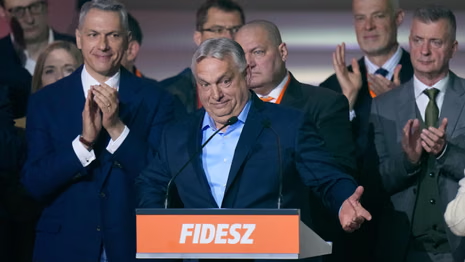
Viktor Orbán addressed his followers shortly after the polls closed to concede his unexpected defeat. He described the election outcome as a painful but unambiguous message from the Hungarian people. The outgoing leader promised to serve the nation from the opposition benches with continued dedication. His concession marks the end of an era defined by illiberalism and nationalistic political rhetoric. With nearly all votes counted, the Tisza party holds a commanding parliamentary super-majority today. They are projected to take one hundred and thirty-eight seats out of one hundred and ninety-nine. This decisive mandate allows Péter Magyar to pursue significant constitutional and legislative reforms immediately. Such a large majority provides the power needed to reverse many Fidesz-era legal changes.

Péter Magyar stood before a jubilant crowd to declare that truth had finally prevailed over lies. He praised his fellow citizens for answering the call to serve their homeland with courage. The forty-five-year-old leader has promised to repair the strained relationship between Budapest and Brussels. He aims to unlock billions in European Union funds currently frozen due to previous disputes. His platform focuses on cracking down on systemic corruption and revitalising neglected public social services. Magyar told his supporters that they had successfully rewritten the history of their ancient nation. The victory is seen as a rejection of the political playbook used by Orbán. Many international observers viewed this election as a test for the global far-right movement.
The implications of this result are already reaching across the Atlantic to the United States. Recent months saw high-profile American figures like JD Vance travelling to Budapest to support Orbán. Donald Trump had also offered his repeated endorsements and promises of American economic cooperation lately. The loss of such a key ideological ally may complicate future Republican foreign policy goals. US Democrat Hakeem Jeffries noted that the result does not bode well for Maga extremists. He suggested that the defeat of an authoritarian figure signals a shift in global trends. The White House will likely monitor how the new Hungarian government aligns with Western interests. This change could diminish the influence of populist movements that looked to Hungary for inspiration.
European leaders were quick to congratulate Péter Magyar on his stunning and historic electoral success. Keir Starmer described the moment as a major victory for the health of European democracy. The British Prime Minister highlighted the importance of this shift for the entire continent today. Other leaders, including the Italian Prime Minister Giorgia Meloni, offered their well-wishes to the winner. Even those who were friendly with Orbán acknowledged the clear will of the Hungarian voters. Meloni thanked her friend Viktor Orbán for years of intense and productive bilateral collaboration. She expressed a desire to continue working with Hungary under the new leadership of Magyar. This transition suggests a pragmatism that may help stabilise the region in the coming years.
The relationship between the European Union and Hungary had reached a breaking point recently. Viktor Orbán had notably vetoed essential aid for Ukraine and further sanctions against Russian interests. Tensions escalated following serious allegations that Budapest shared confidential European data with officials in Moscow. Ursula von der Leyen stated that the heart of Europe beats stronger in Hungary tonight. She welcomed the prospect of a country reclaiming its rightful path within the European Union. Polish Prime Minister Donald Tusk celebrated the victory with a pointed message to Russian influences. Emmanuel Macron and Friedrich Merz also expressed their eagerness to work with the new government. These endorsements reflect a collective sigh of relief from many established European political capitals.
President Volodymyr Zelenskyy expressed readiness to advance cooperation between Ukraine and the nation of Hungary. However, Péter Magyar has maintained a cautious stance regarding the ongoing conflict in the east. He plans to continue opposing the shipment of weapons through Hungarian territory to the front. He also remains sceptical about fast-tracking the entry of Ukraine into the European Union. Despite these reservations, Zelenskyy remains hopeful for a more constructive and stable bilateral relationship ahead. The new government in Budapest will need to balance domestic concerns with regional security obligations. Moving away from the pro-Russian rhetoric of the previous administration is a primary goal. This shift could lead to more unified European responses to future geopolitical challenges.
During the intense campaign, Péter Magyar visited dozens of towns to connect with disillusioned voters. He held multiple rallies every day to challenge the dominance of the Fidesz media machine. Viktor Orbán had consistently trailed in the polls as the desire for political change grew. His efforts to turn Hungary into a laboratory for illiberalism have seemingly come to an end. For sixteen years, his government methodically dismantled the checks and balances of the state. They gained control over the majority of media outlets and reshaped the national judiciary system. Election laws were rewritten to favour the ruling party and maintain their grip on power. However, these institutional advantages were not enough to stop the momentum of the Tisza party.
The youth of Hungary played a pivotal role in ousting the long-term Prime Minister on Sunday. Record turnout figures show that nearly eighty percent of eligible voters participated in this election. Polls indicated that sixty-five percent of voters under thirty supported the opposition Tisza party. These young citizens grew up during a period of declining press freedom and rising corruption. Many felt that their future opportunities were being stifled by the restrictive policies of Fidesz. On Sunday night, the streets of Budapest were filled with young people chanting for freedom. They expressed a profound sense of hope and happiness that the old system had fallen. This demographic shift represents a long-term challenge for any remaining right-wing populist movements.
Prominent cultural figures also lent their voices to the movement for change during the campaign. Actor Ervin Nagy was a visible supporter of the Tisza party from its early days. He told reporters that Hungarians can now expect safety, peace, and personal freedom again. He believes the new government will stop interfering in the daily lives of ordinary citizens. This sentiment was echoed by many who felt oppressed by the social policies of Orbán. The victory is seen as a cultural liberation as much as a political one. People are looking forward to a society that values pluralism and individual rights once more. The emotional weight of the victory was evident in the tears of many celebrants.

Political analysts warn that the transition of power will be a complex and difficult process. Fidesz has spent over a decade stacking state institutions with loyalists and party supporters. The influence of the outgoing party reaches deep into the business sector and public administration. Reforming these entrenched systems will require patience and a strategic approach from Péter Magyar. Dalibor Rohac noted that the defeat of Orbánism is a repudiation of a failed project. He suggested that this result provides an opportunity to choose a less polarised path. The new government must manage high expectations while dealing with significant fiscal and institutional constraints. Transforming a state designed for one-party rule is a daunting and monumental task.
The victory of the Tisza party is even more impressive given the obstacles they faced. The government used AI-generated billboards to portray Magyar as a dangerous puppet of foreign powers. State-controlled media outlets worked tirelessly to discredit the opposition and spread negative disinformation campaigns. Despite the massive state machinery working against them, the Tisza party found a way to win. This success offers a lesson to other democratic movements facing similar authoritarian tactics across Europe. It proves that a well-organised opposition can overcome even the most entrenched political systems. The result suggests that virtual realities created by propaganda cannot forever hide real-world failures. Hungary now looks toward a future defined by transparency and cooperation with its neighbours.
Related News:
 BBC to Apologise Over Edited Trump Speech Amid Backlash
 Britain deploys RAF specialists to assist Belgium with drone threats
 Palace May Restore Hyphen to Andrew Mountbatten-Windsor’s Name
 Greene Pushes Epstein Files Amid Trump Fallout
 December Run-Off in Chile as Election Produces No Winner
 Zelenskyy Signs Fighter Jet Deal Amid Russian Drone Attacks
 Canada Passes Carney’s First Budget in Tight Parliamentary Vote
 Shadow Fleet at Sea: Europe’s Battle Against Illicit Oil Shipping
 Tiny Curacao Makes History as Smallest Nation to Reach World Cup
 Deadly Russian Strikes Hit Western Ukraine, 20 Killed in Ternopil
 Ukraine Peace Plan: Zelensky Ready for Dialogue
 Royal Navy Shadows Russian Warships Entering the Channel
 US Suspends Afghan Immigration After White House Shooting
 Georgians Defy Government Crackdown After Year of Protests
 Tokyo court rules Japan’s same-sex marriage ban constitutional
 ‘Extinct’ Antelope Returns to Sahara, Bringing Hope
 American Mother Extradited From UK to U.S. on Murder Charges
 Irish Beach Tragedy: Irish Drown at Whitehaven Beach in Australia
 Sanctioned oil tankers sail Channel amid Russia scrutiny
 US and UK Withdraw Personnel as Middle East Tensions Rise
 Half the World’s Largest Cities Face Rising Water Stress
 Pentagon Signals Reduced Role in Deterring North Korea
 UK and US Drop in Global Corruption Index Rankings
 SA Police Intensify Search in Gus Lamont Case
 Canberra Poster Seizure Sparks Free Speech Row
 Evo Morales Returns After Mysterious Absence
 El Mencho Killed as Mexico Faces Violence
 Australian children in Syria deserve safe return
 Greenpeace $345m Ruling Sparks Appeal Battle
 Jacinda Ardern Moves To Australia Following Her US Fellowships
 Jacinda Ardern Move Sparks Kiwi Reflection
 Middle East Airspace Crisis Strands Thousands
 Nick Greiner Warns Over Election Review Fallout
 Kelly Wilkinson Inquest Reveals Bail Failure
 Tehran Strikes Mark War’s Most Devastating Night
 Injured Mojtaba Khamenei Elevated as Iran Leader
 Gordon Brown urges court for crimes against children
 Gaza Detainee Abuse: Israel Drops Charges Against Soldiers
 The Kill Line: A Shifting Vision of the American Dream
 Oil Prices Jump After Trump Claims Iran Oil Hub Destroyed
 Pakistan Targets Militant Hideouts in Afghanistan
 Lebanon Ground Campaign Raises Occupation Fears
 UK Condemns Reckless Iranian Missile Threats on Global Bases
 ICE detention warning sparks fear among immigrants
 Air Canada CEO Faces Outcry Over Recent Language Misstep
 Extreme Weather: Europe Shivers as Cyclone Narelle Hits
 Asia Turns Back to Coal Amid Middle East Energy Crisis
 Relationship with Trump may be beyond repair, Starmer warned
 Trump’s Six-Week Iranian War: The High Cost of Ignorance
 Artemis II Returns After Historic Moon Flyby
 Reeves Slams Trump Over Iran War Lack Of Exit Plan
 Learner Driver Charged After Expo Tragedy
 $13bn World Cup Set to Break All Revenue Records
 Coalition pushes fossil fuel phaseout plan
 Trump approval plunges amid Iran war fears
 Ohio’s Battle for Trust: Democrats Vying to Flip the Buckeye State
 China Fireworks Factory Blast Kills 21 in Hunan
 US ‘Narco Boat’ Strikes Draw Global Outcry
 FIFA Confirms Global Ban for Benfica Star Prestianni
 US Awaits Iran Reply on New Ceasefire Proposal
 US and Mexico Face Heatwave as Floods Batter South Africa
 Putin Signals War End as Russian Momentum Stalls
 Australia Welcomes the Iconic Michelin Guide
 Scepticism and tight security as Beijing braces for Trump
 Philippine Senator Flees After Days Under Senate Siege
 Tensions Flare as Israeli Nationalists March in Jerusalem
 High Street Crisis: Fears Grow Over Post Office Closures
 Xi Hosts Putin for Talks Right After Trump Visit
 Fragile Truce Shattered as Violence Escapes Diplomatic Control
 Oil Markets Face ‘Red Zone’ Threat Amid Iran Crisis
 Pope Meets Families in Italy Toxic Waste Zone
 Discontent grows around Putin amid war strain
 US Strikes Iranian Sites Amid Shaky Ceasefire Talks
 Starmer Leadership Under Pressure After Setbacks
 Papal Visit Offers Political Lifeline to Spanish Premier
 Aukus Deal Facing Fierce Backing and Historic Criticism
 Thai Princess Bajrakitiyabha Passes Away at 47
 Le Pen to Run for President Despite Embezzlement Conviction
 Ukraine Creates Long-Range Strike Command
 Houthis Strike Saudi Arabia as Middle East Tensions Rise