Published: 18 June 2026. The English Chronicle Desk. The English Chronicle Online.
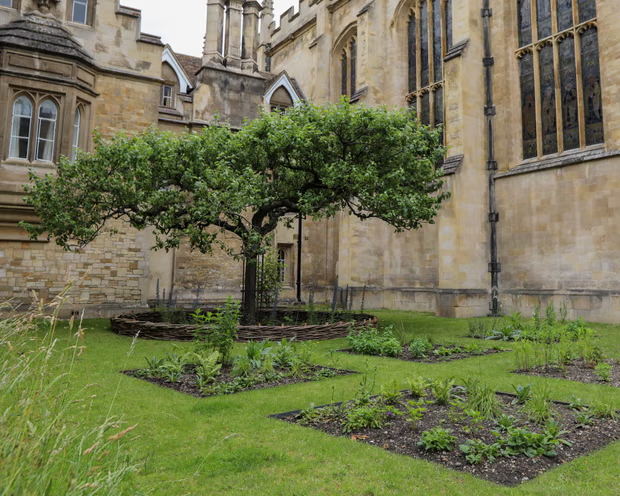
The historic grounds of Trinity College have recently undergone a remarkable and deeply inspiring transformation. Expert gardeners have carefully dug up a front lawn to revive a centuries-old botanical masterpiece. This ambitious initiative directly commemorates the upcoming four-hundredth anniversary of a visionary English naturalist. John Ray famously laid the vital foundations for modern biology through his extraordinary dedication. He is widely regarded today as the true father of English natural history across Europe. The innovative project beautifully reconnects modern academic life with its rich seventeenth-century scientific heritage.
Ray remarkably coined familiar botanical terms like petal and pollen during his incredibly lengthy career. His pioneering research effectively transformed how humanity observes and classifies the entire vast natural world. However, his magnificent journey into complex botanical studies originally began directly within this specific college. As a young tutor in the 1650s, he cultivated a profound love for plants. This original campus garden served as his primary laboratory for rigorous observation and experiments. The current restoration brings his early academic passions back to life for contemporary audiences.
Dedicated horticulturists utilized an intricate engraving from 1690 to accurately guide their entire physical reconstruction. This historical clue allowed them to perfectly map the precise location of his original plot. The newly recreated garden sits beautifully in front of a truly iconic and legendary tree. This specific apple tree is a direct descendant of the one that inspired Isaac Newton. Newton was another trailblazing Trinity alumnus whose immense scientific work changed our entire world view. Having these two legacies physically meet in one space creates an unparalleled historical atmosphere.
Ray meticulously recorded his diverse botanical findings in a landmark textbook first published in 1660. This famous Latin text was the first to thoroughly document regional flora within England. Head gardener Karen Wells had to decode historical phrases to discover his chosen varieties. She carefully searched through old Latin descriptions of their shared, deeply beloved university garden plot. Ray would frequently travel all across Cambridgeshire to gather unique specimens for his growing collection. He brought these wild plants back to college to study their growth and structure.
Historical records indicate that Ray initially attempted to cultivate roughly seven hundred distinct species. His expansive collection surprisingly included various fenland lichens and highly specialized moisture-loving bog fungi. He also experimented with dangerous poisonous plants like American pokeweed and exotic Dutchman’s pipe. However, the modern restoration deliberately prioritizes environmental sustainability and safety over total historical exactness. Wells has thoughtfully selected unique drought-tolerant varieties that easily survive contemporary British climate patterns. This careful strategic choice ensures that the new garden remains highly resilient and beautiful.
The modern planting selection focuses intensely on encouraging local biodiversity and supporting native pollinators. This strategic environmental focus effectively avoids any potential safety hazards from historical toxic flora. Her curated list includes charming wood avens, which display small, delicate yellow wildflower petals. She also included traditional betony, a lovely flowering mint that naturally attracts beneficial insects. Golden rod and vibrant violet pasqueflowers add immensely striking visual texture to the historic layout. White-flowered moth mullein completes the beautiful collection, serving as an oasis for local bees.
Local wildlife immediately embraced the new habitat as soon as the planting phase concluded. Wells delightfully observed a wild bee foraging on the freshly planted mullein blossoms yesterday. She strongly believes the eye-catching pinky-purple betony flowers will continue attracting many useful insects. The garden also features Good King Henry, a classic herb with royal historical connections. This particular medieval plant pays direct tribute to King Henry the Eighth, who founded Trinity. Ray famously wrote about cooking these delicious, buttery stems for his personal evening meals.
The grand project is now fully complete and ready for its formal public unveiling. Wells expressed profound amazement at watching the ancient 1690 design slowly materialize before her. She noted that working on this unique botanical recreation truly felt like genuine time travel. The physical transformation perfectly bridges centuries of academic dedication and artistic horticultural design skills. Visitors can now experience the exact atmosphere that inspired early modern British natural philosophy. This living monument offers a tangible connection to the roots of empirical scientific investigation.
The specific geographic location of this new garden holds immense significance for scientific history. In 2005, researchers investigated the ground directly beneath Isaac Newton’s former campus living quarters. Professor Peter Spargo traveled from the University of Cape Town to analyze the soil. He was determined to discover exactly where the legendary physicist conducted his alchemy experiments. His systematic scientific testing revealed surprisingly high concentrations of heavy metals within the dirt. The earth contained notable traces of copper, arsenic, gold, and volatile liquid mercury residues.
These chemical residues clearly confirmed that Newton had operated his secret private laboratory there. The presence of historic brick and mortar fragments further validated this important archaeological discovery. Consequently, this small plot represents an incredibly crucial nexus of major seventeenth-century scientific advancement. Professor Richard Serjeantson highlights the unique dual historical importance of this specific ground. He suggests it might be the most scientifically significant spot of land from that era. Both Ray and Newton utilized this precise space to pioneer completely new intellectual paradigms.
John Ray came from very humble beginnings before achieving academic greatness at Cambridge University. He was born the son of a modest blacksmith in a small Essex village. He arrived at Trinity College on a scholarship at the tender age of sixteen. His initial studies focused heavily on traditional subjects like rhetoric, logic, and classical grammar. However, his profound curiosity soon led him toward exploring the surrounding natural environment outside. His humble background instilled a practical, hands-on approach to his subsequent scientific endeavors.
Ray beautifully detailed the early origins of his botanical passion in a moving preface. He explained that he had been feeling rather unwell due to intense academic pressures. Doctors recommended that he take regular breaks to restore his physical and mental health. He began taking long, relaxing walks and horse rides through the local countryside lanes. These therapeutic outdoor excursions allowed him to appreciate the complex beauty of local flora. This period of personal recovery ultimately ignited his lifelong devotion to systematic botanical categorization.
Serjeantson emphasizes that Ray’s deep passion for local plants offers valuable lessons for today. Modern society exists in an globalized age where consumer goods travel across vast distances. However, contemporary communities are increasingly conscious of heavy carbon footprints and invasive species. There is a powerful, undeniable attractiveness to a garden that celebrates native local flora. This living display encourages modern visitors to appreciate the immediate natural world around them. It reminds us that groundbreaking scientific discoveries often begin right in our backyards.
Related News:
 BP’s Influence Sparks Controversy in UK STEM Education
 AI Climate Claims Face Greenwashing Backlash
 Ocean Warming Drives Massive Marine Life Loss, Study Warns
 Musk’s xAI Permit Sparks Fury Over Power Plant Expansion
 ‘Drinking from a Fetid Pond’: Superbug Genes in Lough Neagh
 Big Tech Lobbies EU to Hide Massive Datacentre Emissions
 Record May Heat to Cold Front in Eastern Australia
 AI Turf War Erupts at the Prestigious Chelsea Flower Show
 Green Lawsuits Surge as AI Expansion Strains Planet
 Deadly H5 Bird Flu Reaches Australia’s East Coast
 Lanarkshire AI Hub Fails Energy Promises
 Concerns Rise Over New Zealand’s AI Datacentre Plans
 Virgin Trains Moves Closer to Challenging Eurostar Monopoly
 UK Bans Fake Numbers: Scammers Lose Their Trick
 Vibe coding’ named Collins dictionary’s word of the year
 Patients to Test Health at Home to Ease NHS Winter Pressure
 Britain deploys RAF specialists to assist Belgium with drone threats
 Stop using ChatGPT to write speeches, AI minister tells MPs
 Northern Lights may illuminate UK skies this week
 New laws to bolster UK’s defences against cyber attacks on NHS, transport and energy
 New AI tool could cut wasted efforts in organ transplants
 Sundar Pichai Cautions on AI Hype and Market Risks
 Google Chief Urges Caution: Don’t Trust AI Blindly
 Healthy Habits in Your 30s That Boost Life in Your 70s
 Coffins Now Too Large to Cremate Amid Rising Obesity Crisis
 ‘Extinct’ Antelope Returns to Sahara, Bringing Hope
 Dutch Nationwide Fireworks Ban Expected to Transform New Year Traditions
 Google Removes Some AI Health Summaries Over Safety Concerns
 Polycrisis Anxiety Leaves Many Feeling Trapped in the Present
 Judi Dench Champions Fight to Save London’s Green Spaces
 Half the World’s Largest Cities Face Rising Water Stress
 EU launches Grok AI probe into X over explicit images
 AI job losses UK: Britain faces sharper employment shock
 ABC Facebook Page Briefly Hacked, Adult Photos Posted
 US Robotaxis Train for London Streets Before Launch
 Meta trial over child exploitation claims begins
 Autistic Girls Often Missed in Childhood Diagnoses, Study Finds
 Childnet Censorship Row Over Teen Safety Speeches
 BT Names New Openreach Chief Amid Major Fibre Expansion
 Tech Trends Set to Transform Life in 2026
 Chikungunya Spread in Europe Climbs as Climate Warms
 Stewart Brand on Musk, Bezos and a Life of Long Thinking
 Facial Recognition Error Leads to Wrongful Arrest in Milton Keynes
 Greenpeace $345m Ruling Sparks Appeal Battle
 Zorevunersen Breakthrough for Dravet Syndrome
 Cancer Death Rate in Britain Falls by Nearly a Third
 Taking Multivitamins Daily Could Slightly Slow Ageing, Study Finds
 Welsh Water Faces £44.7m Enforcement Over Sewage Breaches
 The Kill Line: A Shifting Vision of the American Dream
 Extreme Weather: Europe Shivers as Cyclone Narelle Hits
 Middle East Deluge: Freak Storms Bangle Desert Nations
 Artemis II: Humanity Returns to the Moon After Decades
 Artemis II Returns After Historic Moon Flyby
 UK Banks to Deploy Controversial Mythos AI Tool Next Week
 Medellín’s Green Revolution: A Global Climate Blueprint
 Robots Outpace Humans in Beijing Half-Marathon
 UK Faces Growing Threat of Scale Hacktivist Attacks
 Urban Flood Crisis: A Growing Threat to English Homes
 WHO approves first malaria drug for babies
 UK Watchdogs Warn Over AI Facial Recognition Oversight
 DeepMind Staff Vote to Unionize Over US Military Contract
 EU Deal May Force UK Ban on Cancer-Linked Weedkiller
 Britain’s Quest to Crown Its Ultimate Butterfly Superstar
 Court Upholds Landmark Win for Transgender Rights
 UK Faces Mass Water Shortages by 2055, Lords Warn
 Tech Trends and the Battle Against Exam Hall Cheating
 Stolen Mobiles Could Soon Become Useless Bricks
 From Pocket Monsters to the Frontline
 UK Ministers Lobby Trump Over Under-16s Social Media Ban
 US Courts Back Trump on Park Signage Removals
 Sydney Records Hottest June Since 1859 as Expert Warns New High a ‘Signature’ of Global Warming
 UK Heatwaves Ignite Crisis of Sleep and Public Safety
 Britain’s Mini Fan Craze Sparks Major Waste Crisis
 Record £28m Fine for Virgin Media Over Cancellation Woes
 Telstra Software Fault Triggers Massive Nationwide Outage
 US Chemical Accidents Rise as Protections Are Rolled Back
 Swift Nesting Crisis Sparks Outrage in South Tyneside
 Japan Bear Hunt: Serial Fridge Raider Sparks Panic
 Thames Water Future Remains Uncertain Amid Funding Crunch
 Gen Z turns to BirdTok for a gentler digital escape