Published: 17 April 2026. The English Chronicle Desk. The English Chronicle Online.
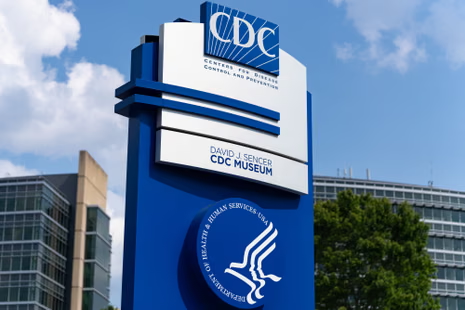
Fourteen months after Robert F Kennedy Jr was sworn in as health secretary, the CDC remains in total disarray. Eighty per cent of top director positions at the health agency currently stand vacant without any permanent leaders. No one is in place to coordinate the daily work of fighting infectious disease or screening for cancer. Senior officials have told reporters that productivity has slowed to a crawl due to massive bureaucratic delays. The agency is essentially flying blind after significant breaks in data collection for critical public health areas. Daniel Jernigan resigned in protest at the politicised approach now being taken toward American public health safety. He feared that the experience and decisive action needed for a future pandemic simply would not exist.
On Thursday, Donald Trump moved to fill some holes by nominating Erica Schwartz as the new director. Her appointment remains dependent on confirmation by the Senate before she can begin her new leadership role. Trump also announced two deputy positions to help manage an agency currently in the throes of trauma. Since Kennedy took office, at least 2,400 employees have either been fired or have chosen to quit. Hundreds of staff members remain on full pay while being stripped of their duties for a year. Remaining staff feel destabilised by Kennedy’s assault on scientific procedures and his focus on long-held vaccine skepticism. The number of recommended routine vaccinations for children has been sharply reduced under his controversial new watch. Half a billion dollars have been slashed from development budgets for critical mRNA vaccine technology and research.

The agency is now investigating links between vaccines and autism despite numerous studies debunking the entire theory. These vacant posts among the highest officials are only exacerbating the disruption within the medical science community. The position of director has remained unfilled for eight months following the firing of the previous leader. Susan Monarez was fired in August after less than a month for refusing to rubber-stamp political decisions. Dr Jay Bhattacharya has been acting director but recently hit a term limit for his temporary post. He is closely aligned with Kennedy but is perceived as being spread too thin across multiple roles. The two most senior positions charged with coordinating daily functions had also stood vacant until very recently.
Dr Debra Houry resigned as chief medical officer because Kennedy repeatedly censored science and politicised internal processes. She warned that the health secretary is dismantling public health by leaving these vital positions entirely unfilled. Without a chief medical officer, the agency’s flagship scientific publication is in danger of losing all credibility. Experts argue that someone with a science background must review the output through a strictly professional lens. According to monitoring groups, twenty out of twenty-five center directors have left since the new secretary started. Union leaders say centers are operating without stable leadership and are essentially making up their own rules. This lack of oversight has caused a ripple effect across the entire American healthcare infrastructure and network.
The center for chronic disease prevention receives a massive budget that affects millions of vulnerable American citizens. Under the current administration, this center has lost a third of its staff and many divisions. Karen Hacker quit her director role because she did not want to be paid for doing nothing. She has watched as vital public health work has been hit by cuts, firings, and general chaos. A monitoring system developed to reduce infant death has been undermined by new political labels and disclaimers. Hacker noted that the administration is flying blind regarding issues related to pregnancy and infant mortality rates. The fight against infectious diseases has become especially fraught as Kennedy focuses his animus against modern vaccines.
Record numbers of children died from influenza-related conditions during the recent season under this new leadership team. Measles cases are currently running at a thirty-year high as immunization centers remain rudderless without any directors. Jennifer Shuford was named as the new chief medical officer to help handle these growing disease outbreaks. She faces an uphill struggle as many national centers for respiratory diseases still have no permanent leaders. Dr Demetre Daskalakis warned that leadership holes pose a direct threat to the future health of Americans. He questioned who would make decisions if a new Ebola outbreak were to reach the United States. The problem is further compounded by the chaos surrounding the advisory committee on vaccine recommendation and policy.
Kennedy fired the entire expert panel in June and replaced them with a team of hand-picked skeptics. A judge has blocked those selections as unqualified, leaving US vaccine policy in a state of limbo. Important decisions regarding the latest versions of flu shots are currently on hold for millions of people. This situation is not sustainable because new vaccines are waiting for reviews that simply cannot happen now. The Department of Health and Human Services claims the agency has returned to its core mission lately. They expressed hope that the judicial decision blocking their new panel would be overturned on appeal soon. Kennedy has long been open about his disdain for the federal public health system he now leads.

He previously denounced his own department as a sprawling bureaucracy that was in a state of pandemonium. Former staffers argue that the leadership vacuum is actually what is destroying the clarity of the mission. By leaving positions unfilled, Kennedy is diluting the typical checks and balances that usually govern his office. Critics suggest he feels empowered to do whatever he likes while surrounded by his hand-picked political appointees. The result is unregulated power that ignores the established scientific protocols that have protected the public for decades. For thousands of employees still working at the agency, the immediate future looks increasingly bleak and uncertain. Staff are completely demoralised by the lack of vision while work has come to a total standstill.
A long-term employee stated that productivity slowed because even minor decisions cannot be taken by line managers. Approvals as trivial as permission to travel to field offices must go to the health secretary’s office. This means that simple travel requests frequently take several months to be processed by the political staff. There is nothing more demoralising for scientists than being unable to do the work they were hired for. Many chose this career to make public health better, but they feel everything has ground to a halt. The vacancy crisis remains the primary obstacle to restoring the agency to its former status as a leader. Without permanent directors, the infrastructure of American public health continues to erode under the weight of politics.
The international community is watching with concern as the world’s premier health agency struggles to function internally. Partners in the UK and Europe rely on the data produced by the CDC for global safety. If the leadership vacuum continues, the impact will be felt far beyond the borders of the United States. Scientific collaboration requires a stable environment and a clear chain of command that is currently missing here. Public trust in health institutions is at an all-time low as political agendas replace evidence-based medical advice. The next few months will be critical as the Senate considers the new nominations for these roles. Whether these appointments can fix the deep-rooted trauma within the agency remains a very open question. The legacy of this period will likely be defined by the vacancies that left a nation vulnerable.
Related News:
 Hospice Cuts Raise Alarm Across England Amid Funding Crisis
 Celebrities and Charities Demand UK Government Act on Child Poverty
 Patients to Test Health at Home to Ease NHS Winter Pressure
 London’s Childlessness Crisis: Schools Closing as Families Shrink
 Shouting Works Best to Deter Gulls, UK Study Finds
 Reeves rejects £1bn plea for NHS redundancy payouts
 Working-Class Men with Prostate Cancer Left Behind by NHS
 Senator John Fetterman Hospitalized After Fall from Heart Flare-Up, Keeps Sense of Humor
 New AI tool could cut wasted efforts in organ transplants
 Stroke Patient Mistaken for Drunk, Care Delayed
 ‘Traumatic Wait’: Northern Ireland Women Face Breast Cancer Delays
 Healthy Habits in Your 30s That Boost Life in Your 70s
 Scottish Families Take Legal Action Over School CO Leak
 Coffins Now Too Large to Cremate Amid Rising Obesity Crisis
 Vicki Fears Losing Motability Car
 Delhi’s Toxic Air Crisis Leaves Children Sick and Vulnerable
 Five-Year-Old Dies After Rare Tonsil Surgery Complication
 Fibromyalgia Patients Struggle as NHS Fails to Provide Care
 More Patients Now Contacting GPs Online, Data Shows
 Kenya Signs $2.5bn Health Deal with US Amid Data Concerns
 Children to Receive Home Vaccines as England Acts
 Childhood Hypertension Sparks Urgent UK Testing Calls
 UK Enforces Junk Food Ad Ban Before 9pm
 Patients Collapsing in NHS Corridors, Watchdog Warns
 Google Removes Some AI Health Summaries Over Safety Concerns
 Polycrisis Anxiety Leaves Many Feeling Trapped in the Present
 UK Mothers Overloaded: Mental Health Pressures Worsen
 Small risk warning raised over weight-loss jabs in UK review
 Streeting moves on doctor pay to end strike dispute
 Autistic Girls Often Missed in Childhood Diagnoses, Study Finds
 UK reports baby formula toxin poisoning cases across the country
 Most Statin Side-Effects Are Not Caused by Drugs, Study Confirms
 UK, US Medics Barred from Gaza Amid Rising Aid Concerns
 Chikungunya Spread in Europe Climbs as Climate Warms
 Placenta Accreta Warning as Hunt Urges Action
 Half of Britons Avoid GP When Ill, Survey Reveals Growing Concern
 The rise of rejection sensitive dysphoria: How it shapes lives
 Sudden Blindness 2,000 Miles from Home – Alone and Penniless
 NHS Maternity Units Cover Up Harmful Childbirth Errors
 Weight-loss drugs may transform heart attack recovery
 Zorevunersen Breakthrough for Dravet Syndrome
 Cancer Death Rate in Britain Falls by Nearly a Third
 New Zealand Covid Response Praised Despite Lingering Scars
 Taking Multivitamins Daily Could Slightly Slow Ageing, Study Finds
 Canada Plasma Deaths Raise Safety Concerns After Two Donors Die
 ‘Drinking from a Fetid Pond’: Superbug Genes in Lough Neagh
 UK Biobank Health Data Leaks Raise Privacy Concerns
 NHS Plans to Cut Overseas Workers Labeled Overambitious
 Palantir Boss Defends NHS Deal Amid Government Break Clause
 Reformer Pilates Boom Sparks Surge in Injuries, Experts Warn
 Unions Raise Concerns Over Doctors’ Pay Dispute
 Blue Badge Surge Prompts Calls for Urgent Fraud Crackdown
 Private Profits From NHS Contracts Spark Urgent National Debate
 Gene Therapy Wins Major Prize for Restoring Vision
 New Scan Offers Hope for Faster Endometriosis Diagnosis
 New AI Tool To Target Obesity Risk And Transform NHS Care
 WHO approves first malaria drug for babies
 The Hidden Danger Facing Mothers in British Hospitals
 Hantavirus Cruise: Britons Face 45-Day Isolation Order
 Florida Surgeon ‘Devastated’ Over Fatal Surgery Error
 Crisis in the Canary Islands as Cruise Ship Evacuated
 Mission to the World’s Edge: A Heroic Rescue in Tristan
 UK Experts Urge Four-Day Week to Combat National Obesity
 French Patient Told Hantavirus Was Just Anxiety
 Heavy Caring Burden Linked to Faster Mental Decline
 NHS Drug Deal Faces Legal Threat Over US Trade Agreement
 Ebola Returns to the DRC: A Crisis of Panic and Hope
 Pope Meets Families in Italy Toxic Waste Zone
 Record Spending Highlights Growing Crisis In National Health Service
 The Hidden Perils of Online Health Advice for Women
 NHS to Tell Minor A&E Patients to Return Later
 Clean Air Initiatives Spark Major Fall in London Hospital Admissions
 NHS Urges Investigation For Irregular Periods
 Deadly H5 Bird Flu Reaches Australia’s East Coast
 UK Heatwaves Ignite Crisis of Sleep and Public Safety
 Arizona Toddler Found Alive in Hospital Cold Room
 Trump Immigration Cuts Threaten US Caregiver Stability
 UK Schools Struggle as Classrooms Top 40C
 London Tube Heat Reaches Dangerous Levels
 Weight-Loss Drugs Offer Food Savings Mainly to High Earners