Published: 30 April 2026. The English Chronicle Desk. The English Chronicle Online
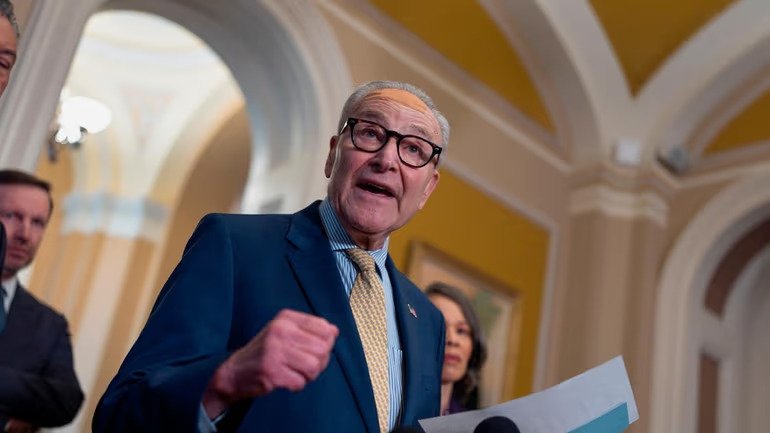
A landmark decision by the Supreme Court of the United States has dramatically altered the trajectory of American civil rights law, marking what many observers describe as the culmination of a long-running judicial effort to weaken the Voting Rights Act of 1965. At the centre of this transformation stand Chief Justice John Roberts and Associate Justice Samuel Alito, whose legal philosophies and rulings over decades have steadily reshaped how voting protections are interpreted in the United States.
The court’s recent 6–3 ruling in a Louisiana redistricting case represents a decisive turning point. By effectively dismantling key provisions of Section 2 of the Voting Rights Act, the judgment limits the ability of minority voters—particularly Black Americans—to challenge electoral maps that dilute their political influence. The decision frames such protections as potentially unconstitutional if they rely too heavily on race as a factor in drawing districts, a reinterpretation that critics argue reverses the original intent of the law.
The ruling did not emerge in isolation but rather reflects a broader judicial pattern spanning more than a decade. Legal scholars point to earlier cases, such as the 2013 decision in Shelby County v. Holder, which removed federal oversight requirements for states with histories of racial discrimination in voting. That decision opened the door for states to implement new electoral without prior federal approval, significantly weakening enforcement mechanisms designed to protect minority voters.

Subsequent rulings continued to narrow the scope of voting rights protections. In Brnovich v. Democratic National Committee, the court made it more difficult to challenge voting laws under Section 2, while the 2024 decision in Alexander v. South Carolina Conference of the NAACP further strengthened the presumption that state legislatures act in “good faith” when drawing district boundaries, even when outcomes disproportionately affect minority communities.
Together, these decisions have gradually shifted the legal landscape, culminating in the latest ruling that critics say renders Section 2 largely ineffective. The majority opinion, authored by Alito, argues that efforts to create electoral districts based on racial considerations—even when intended to ensure fair representation—may violate the Constitution’s equal protection clause. This interpretation reframes the clause in a way that prioritises race-neutral policies, even if such neutrality results in diminished minority representation.
Dissenting justices strongly opposed this reasoning. Justice Elena Kagan, joined by Sonia Sotomayor and Ketanji Brown Jackson, warned that the decision effectively strips minority voters of meaningful legal recourse. In a sharply worded dissent, Kagan described the Voting Rights Act as a once-powerful safeguard that has now been reduced to a shadow of its former self.
The ideological divide within the court reflects deeper tensions in American constitutional interpretation. Roberts and Alito, both shaped by conservative legal movements dating back to the 1980s, have long expressed scepticism toward race-based remedies. Their approach emphasises formal equality under the law, arguing that government policies should not differentiate based on race, even for remedial purposes. Critics, however, contend that such an approach ignores the historical and structural inequalities that the Voting Rights Act was designed to address.
The implications of the ruling extend far beyond Louisiana. Legal experts suggest that states across the country may now feel emboldened to redraw congressional and legislative districts in ways that prioritise partisan advantage over minority representation. Without the robust protections previously provided by Section 2, challenges to such maps are likely to face significantly higher legal hurdles.
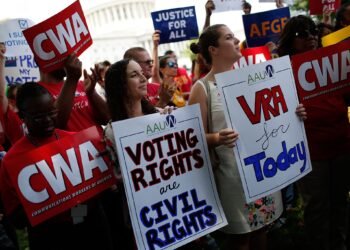
Political reactions have been swift and polarised. Supporters of the decision argue that it restores constitutional balance by limiting federal overreach and ensuring that electoral are applied without racial bias. Opponents, including civil rights organisations, warn that it represents a profound setback for democracy, potentially reversing decades of progress in expanding political participation among historically marginalised communities.
The ruling also raises broader questions about the role of the judiciary in shaping public policy. By overturning longstanding interpretations of the Voting Rights Act, the court has effectively redefined the boundaries of federal authority in protecting voting rights. This shift underscores the enduring influence of the Supreme Court in determining the direction of American democracy.

Historically, the Voting Rights Act has been regarded as one of the most significant achievements of the civil rights movement, enacted in 1965 to combat systemic racial discrimination in voting. Its provisions played a crucial role in increasing voter registration and political representation among Black Americans, particularly in the southern states. Over time, however, the law has faced increasing scrutiny and legal challenges, culminating in the current moment.
As the legal landscape continues to evolve, the long-term consequences of the court’s decision remain uncertain. While some states may move quickly to redraw districts, others may proceed more cautiously, anticipating further legal battles or potential legislative responses at the federal level. Calls for Congress to enact new voting rights protections are likely to intensify, though political divisions may complicate such efforts.
What is clear is that the ruling marks a pivotal chapter in the ongoing debate over voting rights in the United States. By redefining how constitutional principles apply to electoral representation, the Supreme Court has set the stage for a new era of legal and political one that will shape the future of American democracy for years to come.
Related News:
 Thousands Protest ICE Operations in Nationwide US Day of Action
 US states redraw maps after voting rights ruling
 Judge halts deportation of Yemeni refugees in US
 Trump warns Iran as Middle East tensions surge again
 US Court Restores Abortion Pill Access Temporarily
 Trump’s Revenge Drive Deepens GOP Divide
 Former ICC prosecutor condemns US sanctions
 Gunman Killed After White House Security Shootout
 Mystery Grows Over Mitch McConnell’s Health
 China-critical UK academics face ‘extremely heavy’ pressure from Beijing
 US Justice Department Files Lawsuit Against California Over Partisan Voting Maps
 Trump Deploys DHS to Charlotte in Major Arrest Operation
 Congress Approves Release of Epstein Files, Trump Expected to Sign
 Texas Governor Faces Lawsuit From CAIR
 US National Guard Member Killed in DC Shooting
 Trump to Recheck Green Cards from 19 Nations After DC Attack
 Chinese & Japanese Boats Clash Near Disputed Islands
 Putin Meets US Envoy Amid Key Ukraine Peace Talks
 US Defence Chief on Drug Boat Strike: “Did Not See Survivors”
 Franklin Turtle, Sabrina Carpenter Slam US Social Media Use
 Trump Escalates Minnesota Immigration Surge Amid Rising Tensions
 Greenland Faces Pivotal Summit Over Arctic Power Struggle
 Trump Threatens Strong Action If Iran Executes Protesters
 Trump Receives Machado’s Nobel Medal in White House Meeting
 EU Says US Ties Have Suffered ‘Big Blow’ After Greenland Crisis
 Trump officials continue false claims after Alex Pretti shooting
 UK and EU Signal Fresh Push for Defence Cooperation Talks
 Partial US Government Shutdown Hits Homeland Security Funding
 Epstein Files Reveal Trump Officials’ Emails with Financier
 Thousands Protest ICE in New York Against Trump Deportation Campaign
 Trump Praises ‘Terrific’ Petro After White House Talks
 Sydney Protest Clash Triggers Police Probe
 Clinton Testimony Erupts in Fiery Exchange
 UK Prepares Aircraft Carrier for Middle East Crisis
 Pete Hegseth Iran War Remarks Spark Alarm
 Queensland Protest Laws Spark Free Speech Backlash
 Trump’s Harsh Rhetoric on Iran Sparks Global Alarm
 Report Says Pezzullo Acted ‘Recklessly’ in Dealings
 Hungary election: Orbán faces biggest test amid scandal
 Suspected Plot Targets Pipeline Before Hungary Vote
 Trump Faces Crisis as Iran Reopens Hormuz Tensions
 Harmeet Dhillon Faces Scrutiny in DOJ Role Debate
 Charles Faces Trump Test in High-Stakes US Visit
 UK Stands Firm on Falklands Amid US Rift
 Trump at Press Dinner Sparks Tension
 US Court Weighs Fate of TPS for Migrants
 Florida Redistricting Map Sparks Major US Political Battle
 US Voting Rights Ruling Sparks Celebration and Outcry
 Cartel crackdown raises fears of fresh violence
 Trump likens US Navy actions to ‘pirates’
 White House Security Case Sparks Political Firestorm
 Trump approval plunges amid Iran war fears
 Giuliani hospitalised in critical condition
 Ohio’s Battle for Trust: Democrats Vying to Flip the Buckeye State
 Trump Threatens UN Budget Cuts as US Pushes ‘Trade Over Aid’ Agenda
 US Supreme Court fast-tracks Voting Rights ruling
 US ‘Narco Boat’ Strikes Draw Global Outcry
 Indiana Republicans Defy Trump in Key Vote Test
 Ohio Primaries Set Stage for Crucial Midterms
 Afghan Families Left in Limbo Face Risk of Deportation
 Tensions Emerge in Netanyahu-Trump Alliance
 US Awaits Iran Reply on New Ceasefire Proposal
 Immigration Judges Fear Pressure in Trump Era
 FDA Chaos Deepens as Trump Eyes Makary Exit
 US green card applicants must apply from abroad, DHS says
 Tulsi Gabbard exits after turbulent intelligence tenure
 Hormuz Talks Near Critical Stage
 Trump Claims Iran Peace Deal Near Completion
 Irish Gangland Figure Fails in Dublin Election Bid
 Prosecutor Proposes Law to Combat Election Deceit
 Trump Weighs Retreat from Controversial $1.8bn Slush Fund
 US Midterm Primaries: Democrats Target Key Republican Seats
 House Curbs Trump’s War Powers in Rare Rebellion
 Le Pen’s Popularity Holds Despite Conviction
 Trump Refuses to Sign Housing Bill, But Law Takes Effect
 Senate Halts Defense Bill Over Iran Clashes
 Houthis Strike Saudi Arabia as Middle East Tensions Rise
 Trump Orders Signs Criticising Smithsonian Museum
 Is America Ready for an AOC Presidential Run?
 Trump dismisses concerns over 250-day carrier deployment