Published: 08 May 2026. The English Chronicle Desk. The English Chronicle Online.
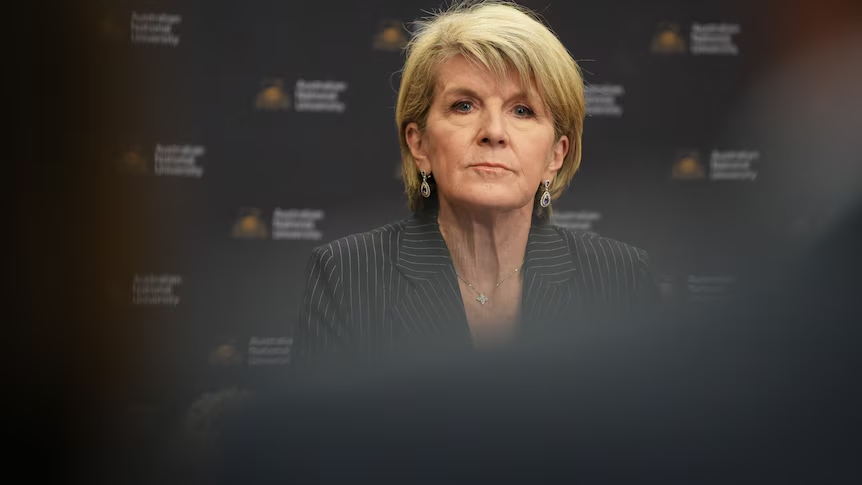
The former Australian foreign minister Julie Bishop has officially resigned from her prestigious role as chancellor. This sudden announcement followed months of intense public pressure regarding the governance of the national university. A spokesperson for the institution confirmed the resignation was tendered during the evening of the previous day. The university council has now appointed Dr Larry Marshall to serve as the acting pro-chancellor today. This interim leadership will continue until a permanent replacement is selected through a completely independent process. The appointment of the next chancellor will strictly follow guidelines set by the national education regulator. This decision marks a significant turning point for an institution that has faced many public challenges.
The university council released a statement thanking Julie Bishop for her six years of dedicated service. They highlighted her efforts in raising the global profile of the university during very difficult periods. Her advocacy helped strengthen international connections even while the world faced the many hurdles of COVID. However, the council emphasized a new commitment to providing strong and positive governance moving forward. They hope to restore the reputation of the university within the broader academic and local community. Finance minister Katy Gallagher also commented on the resignation from her office early on Friday morning. She noted that the embattled university must now focus on rebuilding trust and genuine institutional confidence.
Minister Gallagher stated that the current challenges did not simply arise over a single night period. Rebuilding the confidence of the staff and students will require careful work and much time. She urged the leadership to work openly with the community to find a better path forward. Independent senator David Pocock has also been a vocal critic of the recent leadership at ANU. He praised the students and staff for standing together against what he called poor governance. Pocock reminded the public that the university was founded as a beacon of hope for Australia. He believes it is now time to recommit to that original mission and optimistic vision.
The senator acknowledged that speaking out was a very scary process for many staff and students. Many individuals provided evidence to a Senate inquiry last year at a significant personal cost. Dozens of professors and alumni have signed letters demanding better governance over the last few years. Pocock suggested that this collective bravery forced the university leaders to finally take some personal responsibility. He stated that by stepping aside now the chancellor is acting in the best interests of ANU. Several formal reviews into the institution are still ongoing under the higher education regulator TEQSA. The voluntary decision to conduct an independent search for a new chancellor is a welcome step.
Julie Bishop is leaving her post less than a year after the former vice-chancellor departed. Professor Genevieve Bell resigned last September following a very tumultuous three-year period for the famous university. This era was unfortunately defined by large scale redundancies and many controversial proposed course closures. There were also serious allegations concerning a toxic work culture within the academic and administrative departments. When Professor Bell resigned last year Bishop initially vowed to remain in her powerful chancellor role. She faced immense pressure from the student unions and academic groups to step down immediately. Many critics pointed to a failure of transparency regarding several serious and growing governance concerns.
The university had embarked on a sweeping restructure that caused rising dissatisfaction among the student body. Under interim leadership some of the forced job cuts and restructures have recently been walked back. Records show that at least 399 redundancies were taken since the restructure began in early 2024. At the time of the previous resignation Bishop claimed there were no grounds for her departure. she stated that the university council fully backed her to serve until the year 2026. She also argued that the financial difficulties of the university began a very long time ago. Bishop noted that many other universities were finding themselves in similar financial positions at that time.
Despite these defenses the university remains under intense scrutiny from the national higher education regulator. TEQSA is currently reviewing the financial sustainability and the institutional culture of the entire university. The National Tertiary Education Union has welcomed the news of the resignation as a positive step. Dr Lachlan Clohesy described the departure as a real chance for much needed calm and stability. He compared the current situation to a fire that has finally been put out today. The union is now waiting for the final regulator report to explain how these issues started. They hope the findings will provide a roadmap for better management in the coming years.
The National Union of Students also expressed support for the change in the university top leadership. ACT branch president Leila Clarke said that considerable damage was done during the recent tenure period. She pointed to the restructure process as a source of massive instability for the student population. This period saw the loss of many world class academics and several important academic courses. These cuts led to a perceived decline in the overall quality of the national university experience. Students are hopeful that new leadership will prioritize the quality of education over further budget cuts. The community now looks toward a future focused on healing and renewed academic excellence.
Related News:
 BBC to Apologise Over Edited Trump Speech Amid Backlash
 Britain deploys RAF specialists to assist Belgium with drone threats
 Palace May Restore Hyphen to Andrew Mountbatten-Windsor’s Name
 Greene Pushes Epstein Files Amid Trump Fallout
 December Run-Off in Chile as Election Produces No Winner
 Zelenskyy Signs Fighter Jet Deal Amid Russian Drone Attacks
 Canada Passes Carney’s First Budget in Tight Parliamentary Vote
 Shadow Fleet at Sea: Europe’s Battle Against Illicit Oil Shipping
 Tiny Curacao Makes History as Smallest Nation to Reach World Cup
 Deadly Russian Strikes Hit Western Ukraine, 20 Killed in Ternopil
 Ukraine Peace Plan: Zelensky Ready for Dialogue
 Royal Navy Shadows Russian Warships Entering the Channel
 US Suspends Afghan Immigration After White House Shooting
 Georgians Defy Government Crackdown After Year of Protests
 Tokyo court rules Japan’s same-sex marriage ban constitutional
 ‘Extinct’ Antelope Returns to Sahara, Bringing Hope
 American Mother Extradited From UK to U.S. on Murder Charges
 Irish Beach Tragedy: Irish Drown at Whitehaven Beach in Australia
 Sanctioned oil tankers sail Channel amid Russia scrutiny
 US and UK Withdraw Personnel as Middle East Tensions Rise
 Half the World’s Largest Cities Face Rising Water Stress
 Pentagon Signals Reduced Role in Deterring North Korea
 UK and US Drop in Global Corruption Index Rankings
 SA Police Intensify Search in Gus Lamont Case
 Canberra Poster Seizure Sparks Free Speech Row
 Evo Morales Returns After Mysterious Absence
 El Mencho Killed as Mexico Faces Violence
 Australian children in Syria deserve safe return
 Greenpeace $345m Ruling Sparks Appeal Battle
 Jacinda Ardern Moves To Australia Following Her US Fellowships
 Jacinda Ardern Move Sparks Kiwi Reflection
 Middle East Airspace Crisis Strands Thousands
 Nick Greiner Warns Over Election Review Fallout
 Kelly Wilkinson Inquest Reveals Bail Failure
 Tehran Strikes Mark War’s Most Devastating Night
 Injured Mojtaba Khamenei Elevated as Iran Leader
 Gordon Brown urges court for crimes against children
 Gaza Detainee Abuse: Israel Drops Charges Against Soldiers
 The Kill Line: A Shifting Vision of the American Dream
 Oil Prices Jump After Trump Claims Iran Oil Hub Destroyed
 Pakistan Targets Militant Hideouts in Afghanistan
 Lebanon Ground Campaign Raises Occupation Fears
 ICE detention warning sparks fear among immigrants
 Air Canada CEO Faces Outcry Over Recent Language Misstep
 Extreme Weather: Europe Shivers as Cyclone Narelle Hits
 Asia Turns Back to Coal Amid Middle East Energy Crisis
 Relationship with Trump may be beyond repair, Starmer warned
 Trump’s Six-Week Iranian War: The High Cost of Ignorance
 Artemis II Returns After Historic Moon Flyby
 Orbán Ousted: Péter Magyar’s Tisza Party Wins in Hungary
 Trump Brokers Landmark Lebanon Ceasefire Amid Regional Hopes
 Ben Roberts-Smith Denies War Crime Allegations in First Statement
 UK Stands Firm on Falklands Amid US Rift
 Oil Prices Surge Above $120 Amid Iran Blockade Fears
 Trump orders US troop pullout from Germany
 Japan Protests Erupt Over Plans to Revise Constitution
 Global Conflict Hits Home As Bullock Warns Of Economic Pain
 RFU Backs Borthwick Despite England’s Poor Six Nations
 Infantino Defends Soaring World Cup 2026 Ticket Costs
 US Awaits Iran Reply on New Ceasefire Proposal
 US and Mexico Face Heatwave as Floods Batter South Africa
 Putin Signals War End as Russian Momentum Stalls
 Australia Welcomes the Iconic Michelin Guide
 Scepticism and tight security as Beijing braces for Trump
 Philippine Senator Flees After Days Under Senate Siege
 Tensions Flare as Israeli Nationalists March in Jerusalem
 High Street Crisis: Fears Grow Over Post Office Closures
 Xi Hosts Putin for Talks Right After Trump Visit
 Fragile Truce Shattered as Violence Escapes Diplomatic Control
 Oil Markets Face ‘Red Zone’ Threat Amid Iran Crisis
 Pope Meets Families in Italy Toxic Waste Zone
 Discontent grows around Putin amid war strain
 US Strikes Iranian Sites Amid Shaky Ceasefire Talks
 Starmer Leadership Under Pressure After Setbacks
 Papal Visit Offers Political Lifeline to Spanish Premier
 Aukus Deal Facing Fierce Backing and Historic Criticism
 Thai Princess Bajrakitiyabha Passes Away at 47
 Le Pen to Run for President Despite Embezzlement Conviction
 Ukraine Creates Long-Range Strike Command
 Houthis Strike Saudi Arabia as Middle East Tensions Rise