Published: 21 May 2026. The English Chronicle Desk. The English Chronicle Online.
Public health experts in England have recently revealed a significant increase in laboratory-confirmed cases of Lyme disease over the past year. This worrying statistical trend emerges just as international pharmaceutical companies are actively working to develop advanced new vaccines and specialized drugs. The primary objective of these medical developments is to effectively tackle the complex challenges posed by this tick-borne illness. According to the latest surveillance data released by the UK Health Security Agency, England recorded more than one thousand instances. Specifically, the government agency identified one thousand one hundred and sixty-eight cases during the course of last year. This figure represents a notable twenty-two percent increase from the nine hundred and fifty-nine cases confirmed previously.
Despite this sudden annual spike, health authorities note that the current numbers mirror historical trends quite closely. For context, the country experienced one thousand one hundred and fifty-one confirmed infections just two years ago. Public health officials also identified two probable cases of tick-borne encephalitis complex during the same period. These recent discoveries bring the total number of locally acquired encephalitis infections to six since its emergence. This specific viral pathogen was first formally identified within the United Kingdom back in the year twenty-nine. The fluctuations in these diseases remind us how closely human health relates to changing environmental factors.
Dr Claire Gordon serves as the accomplished head of the rare and imported pathogens laboratory at the agency. She explained that annual variations in these laboratory-confirmed acute cases are generally expected by scientific experts. Case rates routinely fluctuate based on public awareness, local testing frequencies, and various outdoor environmental factors. Seasonal weather conditions play a massive role in determining how much time citizens spend in nature. Dr Gordon emphasized that the broader epidemiological trends observed throughout last year remain entirely consistent with expectations. She reassured the public that health systems continue to monitor these delicate environmental changes very closely.
The biological cause of Lyme disease is a specific bacterium known scientifically as Borrelia burgdorferi. This microscopic organism primarily lives inside the digestive tract of tiny, spider-like creatures known as ticks. These small parasites typically thrive in long grass, dense woodland areas, and lush countryside spaces. Ticks survive by feeding on the blood of various wild birds and small woodland mammals. Unfortunately, these creatures also readily feed on domestic pets and human beings who walk nearby. Understanding this basic biological cycle helps people protect themselves effectively when enjoying the beautiful British countryside.
Public health observations indicate that the geographic distribution of ticks has been steadily expanding across the country. Dr Gordon noted that these tiny creatures are appearing in several regions where they were previously rare. However, local tick populations still vary significantly due to changing weather conditions and broader climate trends. Local habitat modifications and shifting populations of wild host animals also influence these fluctuating regional numbers. As these vectors expand their territory, public education regarding safe outdoor practices becomes increasingly vital for communities. Awareness remains the first and most effective line of defense against these expanding parasitic populations.
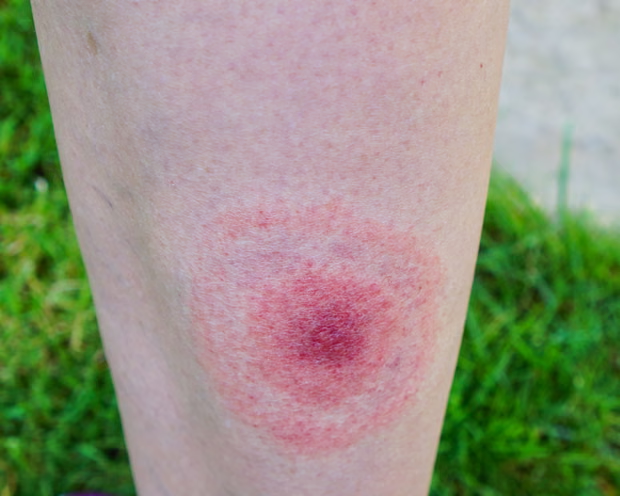
The clinical symptoms associated with a Lyme infection can be highly diverse and physically draining. Many infected individuals develop a distinctive rash that closely resembles a circular, red bullseye on the skin. Other common symptoms include high fevers, severe muscle aches, painful joint inflammation, and intense physical lethargy. If left completely untreated by medical professionals, the underlying bacterial condition can easily become a chronic illness. Even among patients who receive standard antibiotic treatments, some individuals unfortunately report experiencing long-term ongoing symptoms. These prolonged health struggles highlight the absolute necessity of securing an early and accurate medical diagnosis.
It is reassuring to note that not all ticks carry the hazardous Borrelia burgdorferi bacteria. Medical research suggests that removing a tick rapidly and correctly significantly reduces the overall infection risk. If you remove the parasite quickly, the bacteria rarely have enough time to transmit successfully. Currently, a wide variety of effective preventative medications are readily available to protect our domestic pets. Pet owners can utilize monthly oral tablets and specialized veterinary vaccines to keep animals safe. In sharp contrast, advice for human beings still focuses almost entirely on basic physical prevention methods.
Human prevention strategies generally involve applying effective insect repellents before heading out into the wilderness. Experts recommend covering exposed skin by wearing long trousers and tucking them securely into thick socks. Wearing light-coloured clothing is also highly recommended because it makes the dark ticks much easier to spot. These simple practical habits can successfully prevent a tick from attaching itself to your skin unobserved. Taking these precautions allows individuals to enjoy outdoor recreation without facing unnecessary health risks from hidden parasites.
Linden Hu is a respected professor of immunology based at the prestigious Tufts medical school. He recently explained why veterinary medicine and human healthcare approaches differ so drastically on this issue. Professor Hu noted that pet owners are routinely more willing to medicate their domestic animals. People often hesitate far more when considering similar preventative medications for themselves or young family members. Furthermore, conducting rigorous clinical trials for human vaccines is inherently much more complicated than testing animals. These logistical differences explain why animal treatments have advanced much faster than equivalent human options.
The professor explained that controlling experimental conditions is far easier when conducting vital veterinary research studies. Scientists can safely place infected ticks onto animal subjects to verify if a treatment works. Ethical boundaries clearly dictate that researchers cannot perform these same direct exposure experiments on human volunteers. Consequently, human researchers must rely entirely on real-world field trials which are incredibly expensive and risky. These large-scale trials are unpredictable because scientists cannot guarantee how many natural infections will actually occur. This uncertainty makes funding and organizing human clinical trials an immense challenge for global pharmaceutical companies.
Historically, a human vaccine designed to prevent Lyme disease was actually available within the American market. This previous vaccine, known commercially as LYMErix, demonstrated an encouraging seventy-six percent efficacy after three doses. However, the manufacturer completely withdrew the product from the market in the year two thousand and two. This withdrawal was primarily driven by very poor commercial uptake and declining public demand across America. Professor Hu pointed out that several distinct societal factors coalesced to cause those disappointing product sales.
During that period, the US Centers for Disease Control recommended the vaccine only for high-risk individuals. This narrow recommendation inadvertently signaled to the general public that the vaccine was not universally necessary. Simultaneously, intense public concerns emerged regarding a theoretical link between the vaccine and the development of arthritis. Although robust scientific evidence supporting this negative claim was lacking, media coverage amplified the public fear. This negative press coverage and a distinct lack of public trust ultimately destroyed market demand entirely. Lessons from this historical event are now actively guiding modern pharmaceutical companies toward better communication.
Fortunately, several innovative medical treatments are currently making significant progress through various stages of development. The well-known pharmaceutical company Moderna is actively developing an advanced mRNA vaccine to combat the illness. Professor Hu has personally contributed his scientific expertise to this promising project, which is in phase two. Meanwhile, rival drug companies Pfizer and Valneva are collaboratively testing a completely different style of vaccine. Both of these modern vaccine projects represent a massive leap forward in contemporary preventative medical science.
Crucially, both of these new vaccine approaches aim to avoid activating specific human immune pathways. Some historical researchers suspected these exact pathways caused the arthritic symptoms associated with the older vaccine. Developing these modern alternatives has not been entirely plain sailing for the scientists involved, however. The collaborative Pfizer and Valneva vaccine trial encountered an unexpected hurdle during its recent phase three. The researchers recorded fewer natural cases of Lyme disease among their human participants than originally anticipated.
This low infection rate meant that the trial results lacked the desired level of statistical robustness. Even though the vaccine successfully demonstrated an impressive efficacy rate of more than seventy percent overall. Despite these statistical challenges, the companies still plan to submit their data to global regulatory authorities. Medical researchers remain optimistic that regulators will recognize the profound public health benefits of this formula. Having an approved vaccine available could completely transform how societies manage this growing regional health threat.
Scientists are also enthusiastically exploring alternative biomedical approaches to protect the public from tick-borne illnesses. Tonix Pharmaceuticals is currently developing a specialized monoclonal antibody treatment designed for use before tick exposure. Meanwhile, Professor Hu is collaborating with Tarsus Pharmaceuticals to adapt an effective existing veterinary medication. Unlike traditional vaccines, this unique drug, known as lotilaner, directly targets and kills the attached ticks. Instead of fighting the internal bacteria, it eliminates the vector before transmission can even begin.
According to Professor Hu, lotilaner works incredibly rapidly to neutralize the parasite upon skin contact. The medication destroys the tick before it has any physical opportunity to transmit the Lyme bacteria. This rapid action could potentially prevent the transmission of various other dangerous tick-borne diseases as well. This multi-disease protection makes the medication an incredibly exciting prospect for international public health professionals. Such innovations could provide an invaluable extra layer of safety for individuals working in high-risk environments.
Julia Knight represents the dedicated national charity known formally across the country as Lyme Disease UK. She expressed uncertainty regarding whether a human vaccine would be widely adopted within the United Kingdom. Knight noted that official statistics for the illness in England currently appear relatively low to observers. However, she emphasized that the true number of local infections is likely significantly higher than reported. Official figures omit roughly seventy percent of patients who fortunately develop the classic telltale skin rash.
These clearly symptomatic patients receive immediate antibiotic treatment from general practitioners without undergoing formal laboratory tests. Consequently, their cases are never officially recorded in the national laboratory-confirmed surveillance statistics. Furthermore, many trickier cases of Lyme disease are unfortunately missed entirely or misdiagnosed as other conditions. Knight stated that any genuine scientific advancement preventing this debilitating disease is always incredibly welcome. However, she noted that widespread public acceptance of a new vaccine remains uncertain in today’s climate. The ongoing prevalence of vaccine hesitancy means health communication will be vital if a vaccine arrives.
Related News:
 Hospice Cuts Raise Alarm Across England Amid Funding Crisis
 The diet that can significantly ease symptoms of IBS
 Celebrities and Charities Demand UK Government Act on Child Poverty
 Experts Warn on Home Birth Risks, Call for Skilled Midwives
 Experts Urge Legal Right to Timely Cancer Care
 Patients to Test Health at Home to Ease NHS Winter Pressure
 London’s Childlessness Crisis: Schools Closing as Families Shrink
 North Sea oil workers must lose weight or face job loss
 Crisis charity to become landlord amid UK housing emergency
 No link found between paracetamol in pregnancy and autism
 Shouting Works Best to Deter Gulls, UK Study Finds
 Reeves rejects £1bn plea for NHS redundancy payouts
 Leading doctors issue warning amid ‘bad’ flu season
 Stroke Patient Mistaken for Drunk, Care Delayed
 ‘Traumatic Wait’: Northern Ireland Women Face Breast Cancer Delays
 Welsh Government Christmas 2020 Lockdown Criticised
 Coffins Now Too Large to Cremate Amid Rising Obesity Crisis
 NHS paediatric leave parents waiting months for answers
 Catherine urges end to stigma around addiction
 Five-Year-Old Dies After Rare Tonsil Surgery Complication
 Fibromyalgia Patients Struggle as NHS Fails to Provide Care
 More Patients Now Contacting GPs Online, Data Shows
 Streeting launches review into mental health and ADHD diagnoses
 People in England’s Poorest Areas Face Higher Lung Health Emergencies
 Minor A&E Visits Surge Across England as Hospitals Face Pressure
 Children to Receive Home Vaccines as England Acts
 UK Enforces Junk Food Ad Ban Before 9pm
 Patients Collapsing in NHS Corridors, Watchdog Warns
 Offenders to Receive Health Support During Probation Appointments
 NHS Violence Crisis: Staff Face Daily Assaults
 NHS corridor care crisis sparks fears over patient safety
 Jess’s Rule Urges GPs to Rethink Persistent Symptoms
 UK Glaucoma Rise Signals Looming Eye Health Crisis by 2060
 Small risk warning raised over weight-loss jabs in UK review
 Pneumonia Surge Pushes England Emergency Cases Higher
 Streeting moves on doctor pay to end strike dispute
 UK reports baby formula toxin poisoning cases across the country
 Children of Close-Relative Parents Face Higher Mortality Risk in England
 Campaign Demands NHS Action on Placenta Accreta Diagnosis
 NHS Bone Cement Shortage Threatens Surgeries
 Placenta Accreta Warning as Hunt Urges Action
 Half of Britons Avoid GP When Ill, Survey Reveals Growing Concern
 NHS Maternity Units Cover Up Harmful Childbirth Errors
 Drop in Overseas Workers Sparks ‘Car Crash’ for UK Hospitals
 Weight-loss drugs may transform heart attack recovery
 Cancer Death Rate in Britain Falls by Nearly a Third
 Palantir NHS Contract Sparks Fears Over Data Power
 UK Patients Face Long Journeys as Pharmacies Cut Hours
 UK Biobank Health Data Leaks Raise Privacy Concerns
 NHS Plans to Cut Overseas Workers Labeled Overambitious
 Kent Meningitis Outbreak Claims Two Young Lives as Cases Rise
 Meningitis Cases in Kent Outbreak Rise to 27
 Palantir Boss Defends NHS Deal Amid Government Break Clause
 NHS Staff Shortages Stifling Recovery for Stroke Survivors
 Unions Raise Concerns Over Doctors’ Pay Dispute
 Wes Streeting Accuses Doctors of Torpedoing Pay Deal
 Private Profits From NHS Contracts Spark Urgent National Debate
 Crisis in NHS Surgery Scheduling Hits Patients Hard
 NHS Safety Fears as Nurses Cover Doctor Gaps
 New Scan Offers Hope for Faster Endometriosis Diagnosis
 New AI Tool To Target Obesity Risk And Transform NHS Care
 Barrister Criticises Trial After Suicide Case Verdict
 NHS Drug Deal Faces Legal Threat Over US Trade Agreement
 NHS Staffing Crisis Reaches Dangerous Levels
 Crisis in Care: Children Stuck in A&E for Days
 Empowering the Elderly or Shifting the Blame to Individuals?
 Record Spending Highlights Growing Crisis In National Health Service
 The Race for Radical Change in Westminster
 Clean Air Initiatives Spark Major Fall in London Hospital Admissions
 Swimming Champion Demands Urgent Action on Brain Cancer
 Nursing Workforce Crisis Leaves Disabled Patients at Risk
 UK Heatwave: Why Extreme Humidity is Making June Feel Unbearable
 Mortuary Crisis Exposed at Scandal-Hit NHS Trust
 The Hidden Revival of a Fatal Infection on British Soil
 NHS Urges Investigation For Irregular Periods
 BMA Faces Unprecedented Staff Cuts Amidst Severe Financial Turmoil
 Trump Immigration Cuts Threaten US Caregiver Stability
 Stricter Rules Proposed to Shield Children from Vaping
 UK Schools Struggle as Classrooms Top 40C
 London Tube Heat Reaches Dangerous Levels