Published: 04 September 2025 | The English Chronicle Desk
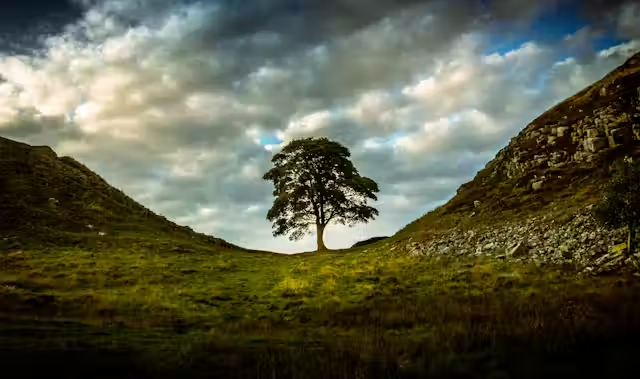
The Sycamore Gap tree, one of Britain’s most iconic and beloved natural landmarks before its shocking felling in 2023, has been confirmed to be at least 100 to 120 years old, according to a new scientific investigation. The discovery strengthens the long-held belief that the tree was planted in the late 19th century by John Clayton, the Newcastle town clerk and philanthropist celebrated as “the man who saved Hadrian’s Wall.”
Historic England released the findings after dendrochronologists – experts in tree-ring dating – carried out the first formal analysis of the tree. Their work involved examining a carefully cut section from the trunk, transported to the organisation’s national science facility in Portsmouth. The tests revealed tightly packed and irregular growth rings, characteristic of an old sycamore, making the precise dating complex but confirming beyond doubt that the tree was well over a century in age.

Although the rings studied represented a section about a metre above the ground, scientists concluded that the tree was certainly older than 120 years, with its earliest growth dating back to the late 19th century or earlier. This timeline fits with the widely accepted theory that John Clayton, who died in 1890, arranged for its planting as part of his efforts to protect and beautify the landscape surrounding Hadrian’s Wall.
The Sycamore Gap tree was more than a landmark – it was a cultural symbol woven into the fabric of national memory. Nestled dramatically between two ridges along the UNESCO World Heritage-listed Hadrian’s Wall in Northumberland, it provided the backdrop for countless personal milestones, including proposals, birthdays, and commemorations. Its silhouette became world-famous after appearing in films and photographs, but its sudden destruction in September 2023 sparked outrage and grief far beyond the UK.
Two men, Daniel Graham and Adam Carruthers, were later convicted of illegally felling the tree and sentenced to four years and three months in prison each. The act was described by conservationists and locals alike as a profound vandalism of heritage, severing a living link between nature and history.
Tom Frater, regional director at Historic England, acknowledged the enduring fascination with the tree. “I think people had a real sense of it being an old feature in the landscape but you don’t know, you can’t know just by looking at it when it’s living, and the historical records give us clues but only so much,” he said. “The process of ageing a tree of this kind is delicate work. The rings are incredibly close together, and anomalies in the wood make interpretation challenging. But the evidence points strongly to a planting date consistent with the late 1800s.”
The research has reinforced the connection between the tree and John Clayton’s legacy. A visionary landowner and antiquarian, Clayton recognised the need to excavate and safeguard Hadrian’s Wall at a time when parts of it were under threat from neglect and development. Whenever parcels of land along the wall came up for sale, he attempted to buy them to ensure their preservation. His efforts earned him the reputation as the saviour of the wall, and if the Sycamore Gap tree was indeed planted under his guidance, it would be one more testament to his foresight.

Although the scientific analysis cannot definitively prove Clayton’s involvement, the dating provides the strongest evidence yet in support of the story passed down by locals, conservationists, and the National Trust. For many, the confirmation of the tree’s great age has only deepened the sense of loss. What was once a sentinel on the Northumberland landscape is now gone, leaving behind a stump and memories of the beauty that drew visitors from across the world.
Yet the research also ensures that the Sycamore Gap tree’s place in history is properly documented. More than a symbol of endurance, it now stands as a reminder of the power of heritage to connect generations and the importance of protecting cultural landmarks – both natural and manmade – from acts of irreversible destruction.
Related News:
 Lisbon’s Historic Funicular Turns to Tragedy: The Elevador da Glória Derailment
 World Whisky Tour: 9 Global Gems
 A Colourful Cultural Escape in Mexico’s Querétaro
 “I Feel English”: Young Migrant’s Dream of Britain Amid Political Pressure Over Channel Crossings
 Epic Journeys Through Time and Terrain: Holidays That Inspire, Dazzle and Excite
 British teen mistakenly takes wrong flight from Menorca airport and lands in Italy
 Italians Abandon Private Beaches Amid Rising Rental Costs and Economic Pressures
 New Zealand mother and young son endure harrowing US detention over visa confusion
 EuroMillions Record-Breaking £210m Jackpot Won by Lucky Lottery Ticket Holder
 British Couple Among Victims in Lisbon Funicular Tragedy
 First Group of Children from Gaza Arrive in UK for Life-Saving NHS Treatment
 Global Study Reveals Violence in GP Surgeries Linked to Long Waiting Times and Drug Refusals
 Kashmir: Nature’s Splendid Masterpiece Shaped by Climate
 History Will Remember Who Showed Up: Pressure Mounts on Keir Starmer to Attend Cop30 Summit
 A Third of EU Citizens in UK Report Discrimination by Public Bodies Post-Brexit
 Conservation Pioneer Jane Goodall Passes Away at 91
 WW2 Pilot’s Long-Lost Crash Site Unearthed in Essex
 Tragedy on Lizard Island: Cruise Passenger Dies
 UK launches search for first-ever ‘town of culture’ to highlight overlooked areas
 UK Charters Emergency Flights to Evacuate Britons from Jamaica
 The Lowry Hotel: Manchester’s Iconic Five-Star Retreat
 British Grandmother to Return Home After Death Sentence in Bali
 Parents Urge Home Office to Reunite Daughter After Hurricane
 Second world war veterans honoured as King leads Remembrance Sunday
 Mali’s Daily Life Cripples Under Jihadists’ Fuel Blockade
 Shouting Works Best to Deter Gulls, UK Study Finds
 Deadly Peru Bus Crash Kills 37 on Pan-American Highway
 Truck Crashes into South Korean Market, 2 Dead, Dozens Hurt
 Bataclan Anniversary: France Remembers but Jihadist Danger Lingers
 Irish Hero Parrott Says Goal Brought First Tears in Years
 Snow and Ice Warnings Affect Scotland and Northern England
 Scotland Fans Reflect on France ’98 as World Cup Looms
 Thousands at Risk in Gaza Amid Winter Flooding
 Seven Countries, One Winner: Europe’s Best Christmas Market
 Arctic Blast Hits UK as Snow and Ice Warnings Trigger Travel Disruption
 Forgotten War, Shattered Lives: Sexual Violence Devastates Women in Ethiopia
 Ethiopia Welcomes Historic Artefacts Returned from Germany
 South African Women Call Purple Protest Over Gender Violence
 Families wait in agony for missing after Hong Kong tower blaze
 Scotland Gains 33 New Towns – Life in Growing Communities
 Rare shark attack kills woman, injures man at remote NSW beach
 Europe, North America face early wave of bird flu
 Tokyo court rules Japan’s same-sex marriage ban constitutional
 Search underway for British man overboard off Tenerife
 UK Criticises Gaza Aid Delays as Tents Arrive After Year
 7 Travel Trends Set to Shape 2026 Adventures
 Post Office Scandal Compensation Tops £1 Billion as Victims Finally See Justice
 UK Must Act with Courage and Clarity on Israel-Palestine Conflict, Says Foreign Affairs Committee Report
 The Ketamine Crisis in the UK is a Silent Epidemic Leaving Users with Lifelong Pain
 The Fight for Trans Safety Is a Fight for Everyone’s Safety — MPs Must Debate This Crucial Issue
 Tottenham Takes On Newcastle
 Heartbreak in the New Forest as Shetland Ponies Vanish, Community on Edge
 Radioactive Leak at UK’s Nuclear Warhead Base Sparks Outcry Over Safety and Secrecy
 Terence Stamp, ’60s British Film Legend and Star of Superman, Dies at 87
 Corfu Beyond the Crowds: Discovering Serenity in Southern Villages and Hidden Taverns
 Hong Kong Summons UK and Australian Envoys Following Asylum Grants to Democracy Activists
 Is the UK Ready to Put Boots on the Ground in Ukraine? Assessing Military Capacity and Challenges
 Why E-Bikes and E-Scooters Are Making Streets a ‘Nightmare’ for Blind People
 Conservative Influencer Charlie Kirk Fatally Shot During University Debate
 Thousands Gather in London to Protest Donald Trump’s Second UK State Visit
 Zarah Sultana Seeks Legal Action After Bitter Clash with Jeremy Corbyn Over Party Membership Funds
 Las Vegas Faces Decline as Rising Costs Drive Tourists Away
 Canadian Officials Find TikTok Fails to Adequately Protect Children’s Data
 Beloved Actress Dame Patricia Routledge Dies Aged 96
 Arsenal Showcase Depth and Flexibility as Arteta Eyes Title Challenge
 Public Trust in SNP Hits Historic Low Amid NHS Concerns
 Johnson Suggests Mandelson Linked to China Spy Controversy
 Rachel Reeves signals welfare reform ahead of key budget
 King urges faster action on climate change initiatives
 Hospice Cuts Raise Alarm Across England Amid Funding Crisis
 Children to Learn Local History in Major Curriculum Overhaul
 Prince William Plants Trees with Brazil’s Nature Heroes
 Son Reveals UK Couple in Iran Resort to Hunger Strike for Help
 Japan Deploys Police to Curb Deadly Bear Attacks
 Trump Deploys DHS to Charlotte in Major Arrest Operation
 Orban Says Ukraine Has ‘No Chance’ as EU Support Continues
 ‘Traumatic Wait’: Northern Ireland Women Face Breast Cancer Delays
 Two National Guard Soldiers Critically Injured Near White House
 Fibromyalgia Patients Struggle as NHS Fails to Provide Care
 Virgin Media Fined £23.8m Over Telecare Safety Failures