Published: 22 September 2025. The English Chronicle Desk
The memorial service for conservative activist Charlie Kirk, held in Arizona over the weekend, was intended to be a solemn gathering, a unifying moment for a movement mourning the sudden loss of one of its most recognisable figures. The event, however, descended into controversy after former President Donald Trump delivered a speech that many have described as self-serving, divisive, and deeply inappropriate for the occasion.
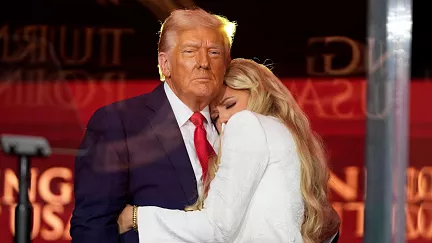
Charlie Kirk, known as a prominent voice among young conservatives and the founder of Turning Point USA, was tragically killed earlier this month, a murder that has shaken the conservative movement and sparked a national conversation about political violence and the risks faced by public figures. Supporters, friends, and family members gathered to celebrate his life, honour his legacy, and reflect on his contributions. His widow, Erika Kirk, stood before the crowd and delivered a moving message, telling those in attendance that she forgave her husband’s killer. Her words carried grace, restraint, and a remarkable strength that momentarily brought a sense of peace to the deeply divided room.

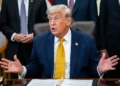
But the spirit of Erika Kirk’s remarks was quickly overshadowed once Trump took to the stage. What was meant to be a eulogy for one of his most ardent supporters turned into a campaign-style rally that veered into grievances, conspiracy theories, and attacks on political opponents. Instead of focusing on Kirk’s memory and the grief of those in attendance, Trump spoke at length about crowd sizes, alleged plots against him, and his continued grievances with the political establishment.
Observers noted the stark contrast between the widow’s dignified composure and Trump’s combative tone. As Erika Kirk sought to extend forgiveness and healing, Trump indulged in rhetoric that many in the audience felt debased the very purpose of the gathering. “It was jarring,” one attendee remarked. “We came to honour Charlie, not to listen to another stump speech.”
The backlash was not limited to observers. Reports indicate that hundreds of attendees began leaving the stadium while Trump was still speaking, visibly dismayed by the tone and content of his remarks. Many had queued in the Arizona heat since dawn to be present at the memorial, expecting tributes that celebrated Kirk’s life and contributions. Instead, they were met with a speech that repeatedly circled back to Trump’s personal grievances, from media coverage of his presidency to his ongoing legal battles. By the time he concluded, the crowd had thinned significantly, with rows of empty seats standing as a silent rebuke.
For those close to Kirk, the disappointment was palpable. He had spent much of his career championing Trump’s agenda, often defending him against critics and dedicating his organisation’s resources to amplifying the former president’s message. Many expected Trump to reciprocate that loyalty in a moment of collective mourning. Yet, as political analysts have noted, Trump instead made the event less about Kirk and more about himself.
Critics argue that Trump’s performance at the memorial reflects a broader pattern of behaviour: an inability to set aside self-interest in moments that demand empathy and unity. The occasion, they argue, could have provided Trump with an opportunity to demonstrate humility, to speak directly to Americans across the political spectrum, and to show leadership at a time of grief. Instead, it was marked by what one commentator described as “rhetorical vandalism”—an act that trampled on the dignity of the event and undermined the memory of the deceased.
The timing of Trump’s remarks also amplified the criticism. His speech came during a week in which his administration had doubled down on authoritarian rhetoric, including threats to imprison political opponents and proposals to restrict press freedoms. Against that backdrop, his decision to use Kirk’s memorial as another platform for divisive politics struck many as particularly inappropriate.
Meanwhile, Erika Kirk’s address has been widely praised. Her calm yet emotional statement that she “forgives” her husband’s killer drew admiration across political lines, with many noting the stark moral contrast between her composure and Trump’s combative posture. Social media platforms lit up with messages of support for her, with commentators describing her as the true voice of dignity on a day meant to commemorate her husband’s life.
Political analysts suggest that Trump’s handling of the memorial may have longer-term consequences for his standing within the conservative movement. While his grip on the Republican base remains strong, moments like this highlight the growing frustration among supporters who want to see a leader capable of unifying, rather than dividing, at times of tragedy. “Charlie Kirk adored Trump,” one political observer noted. “Yet even in honouring Kirk’s memory, Trump couldn’t resist making it all about himself. That tells you everything about where his priorities lie.”

The incident has reignited debates about Trump’s capacity for empathy and his fitness for leadership. Supporters of the former president have defended him, claiming his remarks were misunderstood or taken out of context. Critics, however, view the speech as yet another reminder of his unwillingness to step outside his political persona and act as a statesman when the moment demands it.
Charlie Kirk’s death could have been an opportunity for reflection, a moment for Americans—regardless of political affiliation—to recognise the shared fragility of life and the importance of compassion in public discourse. Instead, the memorial service became another stage for political division, a reminder of the turbulent era in which Kirk built his career and the polarising figure he championed.
As the crowd dispersed and reactions poured in, one truth became evident: Erika Kirk’s quiet forgiveness may be remembered far longer than Trump’s angry speech. Her words offered a glimpse of reconciliation in a fractured nation, while his underscored the very divisions that continue to define American politics. In the end, the memorial service said as much about the state of the nation as it did about the man being remembered—revealing both the potential for grace and the enduring grip of bitterness.
Related News:
 Kinnock’s Rebuke Echoes Loudly as Corbyn Allies Launch Left-Wing Breakaway: “A Gift to Farage”
 Post Office Scandal Compensation Tops £1 Billion as Victims Finally See Justice
 UK and Norway Forge Stronger Ties Through Joint Sanctions and Enhanced Defence Cooperation
 Exclusive: Leaked Documents Reveal Khan’s Controversial Road Policy Overhaul – Drivers Warn of ‘Final Nail in Coffin’
 UK Banks Granted Reprieve as BoE Delays Basel III Capital Rules Until 2028
 Trump Administration Dismisses 17 Immigration Judges, Sparking Debate Over Judicial Independence
 England Grapples with Unprecedented Bluetongue Virus Outbreak: Entire Nation Declared Infected Zone
 Justice Deferred, Not Denied: Government Orders Full Statutory Inquiry into Orgreave Clash Four Decades On
 Northern Ireland Family of Three Shot Dead in Maguiresbridge Home Incident
 West End Exposed as London’s Knife Crime Epicentre Amid Alarming Surge in Violence
 Singapore Corruption Scandal: Details Emerge on Iswaran’s Luxury Flight and Ties to Tycoon Ong Beng Seng
 Mystery Wallaby Spotted on Norfolk-Suffolk Border Sparks Police Appeal
 Manchester Airport Faces Delays After EasyJet Planes’ Wings ‘Clip’ on Runway
 Peter Andre Breaks 16-Year Silence with Scathing Statement Against Katie Price
 UK Weather: Heat Alerts Extended as Temperatures Set to Reach 30°C This Weekend
 Access to Iconic Cornish Beach Cut Off by National Trust Amid Safety Concerns
 Where Is Prince William and Kate Middleton’s New House? Inside the Historic Lodge Set to Become Their ‘Forever Home’
 Costa Blanca Holiday Horror as Food Poisoning Outbreak Hits Four-Star Hotel
 Hundreds of Swimming Pool Closures Leave Children ‘At Risk of Drowning’, Union Warns
 Xi, Putin and Kim Display Unified Front at Massive Beijing Military Parade
 British Holidaymaker’s Tragic Death in Greece Confirmed as Drowning
 India Triumph in Dubai Amid Unexpected Twists
 Gen Z Uprising in Asia: How Social Media and TikTok Fuel Anti-Corruption Movements
 Denmark Investigates Professional Drone Incursions Across Multiple Airports, No Evidence of Russian Involvement
 Nicolas Sarkozy Sentenced to Five Years in Jail in Libya Campaign Financing Case
 Aston Villa Fight Back to End Winless Run with Convincing Victory over Fulham
 Bournemouth Stun Fulham with Dramatic Comeback in Premier League Thriller
 Misinformation and Political Pressure Force Weston-super-Mare to Abandon Refugee Sanctuary Plan
 Arsenal Showcase Depth and Flexibility as Arteta Eyes Title Challenge
 UK Affirms No Relaxation of Visa Rules for India Amid Trade Push
 Nobel Peace Prize Officials Probe Suspicious Online Bets
 Women Challenge Meta Over Targeted Ads After Miscarriage
 Vice President Vance Warns of ‘Painful’ Job Cuts as U.S. Government Shutdown Deepens
 Hope Amid Heartbreak: The Stories Behind the Freed Israeli Hostages
 Japanese Court Sentences Man to Death for 2023 Quadruple Murder in Rare Gun and Knife Attack
 Zelensky to Urge Missile Aid as Trump and Putin Plan Summit
 Gibbs-White Inspires Forest to Thrilling Win Over Porto
 Manchester United triumph as Mbeumo brace seals thrilling win
 Fabio Wardley stuns Joseph Parker to earn Usyk title shot
 Hospice Cuts Raise Alarm Across England Amid Funding Crisis
 Tragedy on Lizard Island: Cruise Passenger Dies
 Fed Cuts US Interest Rates Again Amid Labour Market Uncertainty
 Zarah Sultana Launches Party to Change Politics
 Ex-Army Sergeant Jailed for Assault on Soldier Who Later Died
 US Senate Passes Funding Bill to End Historic Shutdown
 Mary Earps’s Manchester United Return Faces Mixed Reception
 Son Reveals UK Couple in Iran Resort to Hunger Strike for Help
 Pressure Mounts on Starmer to Sack Chief of Staff Over Briefing Row
 US Justice Department Files Lawsuit Against California Over Partisan Voting Maps
 Former Lion Heskey Warns of Shortage of England Strikers
 How Cultures Interpreted the Aurora Through History
 Orban Says Ukraine Has ‘No Chance’ as EU Support Continues
 Mother Watches in Horror as Teen Daughter Dies on Tracks
 Seven Countries, One Winner: Europe’s Best Christmas Market
 Israeli Strike Kills 13 Near Palestinian Camp in Lebanon
 Commuters warned as yellow snow and ice alert hits Northern Ireland
 Haiti Qualifies for World Cup Despite Coach Never Visiting Country
 US Judge Says Meta Did Not Hold Illegal Social Media Monopoly
 Serial Rapist and Former Cop Found Guilty Again
 Pentagon Officials in Ukraine to Discuss War End
 Ex-Harvard President Pauses Teaching Over Epstein Emails
 Vietnam Battles Deadly Floods as Rains Continue
 Scottish Families Take Legal Action Over School CO Leak
 Venezuela Threatens Nobel Winner Machado with Fugitive Status
 At Least Three Dead in Bangladesh Earthquake
 Vicki Fears Losing Motability Car
 Israel Confirms Hamas Returned Dror Or’s Body
 Millions Face Higher Taxes Under Reeves New Budget
 Two National Guard Soldiers Critically Injured Near White House
 Mbappe Scores 4 as Real Madrid Edge Olympiakos
 Sri Lanka Floods Leave 56 Dead, Dozens Missing
 Scotland Gains 33 New Towns – Life in Growing Communities
 Jordan Bardella: France’s Young Presidential Contender
 AI Actress Creator Says Tilly Norwood Won’t Replace Actors
 Search underway for British man overboard off Tenerife
 Pavarotti statue frozen in Italian ice rink sparks backlash
 Barcelona, Atletico set for decisive La Liga showdown
 EU plans $105bn Ukraine aid using frozen Russian assets
 Global campaign launched to free Palestinian leader Barghouti
 Kenya Signs $2.5bn Health Deal with US Amid Data Concerns