Published: 26 September 2025, The English Chronicle Desk
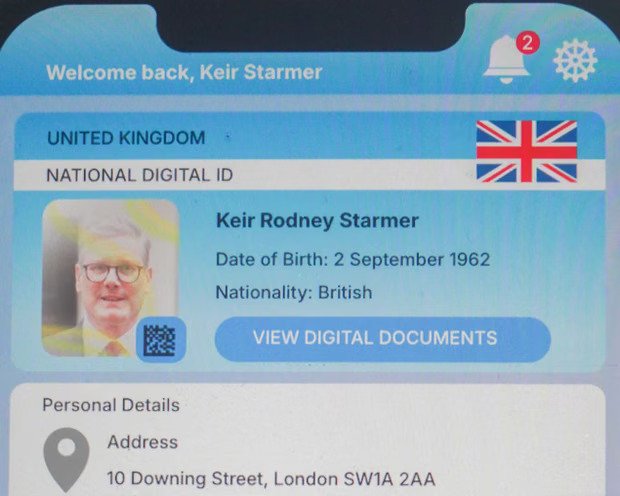
More than two decades after Tony Blair’s government first proposed a national identity card scheme, the debate over state-issued identification has once again risen to the forefront of British politics. This time, the proposal has taken a digital form, with Prime Minister Keir Starmer’s Labour government preparing to reintroduce the concept of national ID cards through digital technology.
The policy, controversial when first suggested in the early 2000s, was originally pitched as a tool to reduce illegal immigration and unlawful working, while also simplifying access to government services. But it quickly became a flashpoint in the battle between civil liberties and state authority. Now, as technology and society have evolved, the government believes the idea can be revived with less public opposition. Whether that hope proves true remains an open question.
Back in 2004, the Blair administration described physical ID cards as a necessary step to modernise Britain’s systems of security and identification. Critics, including David Cameron’s Conservatives, were quick to respond, branding the scheme “intrusive, ineffective and enormously expensive.” The backlash grew so strong that, by 2010, one of the first acts of Cameron’s government was to abolish the programme entirely.

Today, however, Tony Blair is again a prominent voice in the debate. Through the Tony Blair Institute, he has argued that digital ID cards would not resemble the authoritarian caricature of a “papers, please” society. Instead, the institute describes them as a fair, modern, and convenient tool for citizens, as well as a practical solution to pressing national issues. According to its proposals, digital ID cards could help close loopholes exploited by human traffickers, reduce illegal migration pull factors, cut down on identity fraud, and improve interactions between individuals and the state. Supporters also argue they could symbolise a more responsive and flexible government.
On paper, the arguments in favour of digital ID are compelling. They align with a world in which most Britons already conduct banking, shopping, and even healthcare consultations online. Supporters say that if people are trusted to manage their finances digitally, there is little reason why identity verification should remain reliant on paper documents or outdated systems. The challenge, however, lies in trust. Campaigners such as Liberty and Big Brother Watch warn that the centralisation of citizens’ data could hand unprecedented power to the state. Even if the current government uses the system responsibly, future administrations could exploit it for more invasive purposes, such as mass surveillance or social profiling. Critics argue that once such infrastructure is built, it is virtually impossible to dismantle.
Cybersecurity experts have added their voices to the debate. They note that databases of sensitive information are highly attractive to hackers, citing recent cyberattacks on Jaguar Land Rover, the Co-op, and the British Library. If such systems can be compromised, what guarantee is there that a national digital ID database would remain secure? While advocates suggest that decentralisation could be the answer, there is little clarity yet on how such models would be implemented.
Perhaps the most contentious issue, beyond privacy, is the cost. Large-scale government technology projects in the UK have a history of spiralling beyond their budgets. From the NHS IT programme to various public sector databases, taxpayers have witnessed ambitious digital initiatives collapse under the weight of cost overruns and technical mismanagement. The Tony Blair Institute estimates that establishing a digital ID system would cost £1 billion, with annual running costs of around £100 million. The Association of Digital Verification Providers places the figure even higher, at more than £2 billion for a full mandatory system. Meanwhile, an alternative proposal by the Labour Together thinktank, known as the BritCard, is projected to cost between £140 million and £400 million, with running costs capped at £10 million annually.
Government sources insist they are determined to avoid the mistakes of the past. Unlike earlier projects that relied on massive contracts awarded to multinational giants like IBM or Fujitsu, officials suggest that the digital ID system could be built in-house by the government’s digital services department. Smaller, more local contracts with UK firms would be used to keep costs manageable.
Another major obstacle to the digital ID proposal is inclusivity. While younger generations are adept at navigating smartphones and digital platforms, older citizens often struggle. Age UK estimates that around 1.7 million people over the age of 74 do not use the internet. For them, a mandatory digital ID system could pose serious difficulties in accessing essential services. This issue of digital exclusion risks creating a two-tier society in which tech-savvy individuals move smoothly through modern systems while vulnerable groups are left behind. Critics argue that any digital ID system must include robust support for those without access to the internet or those with limited digital literacy. Otherwise, a tool designed to promote fairness could end up exacerbating inequality.
The government believes public resistance may not be as strong as in the early 2000s. Ministers point to the widespread adoption of digital banking, contactless payments, and biometric verification as signs that citizens are now more comfortable with technology. In this view, a digital ID card is simply the next logical step in modernising Britain’s identity systems. Yet, public scepticism remains. Civil liberties groups have begun mobilising against the proposals, framing them as a step toward state surveillance. Early polls suggest that while some citizens support digital IDs for reasons of convenience and security, others remain uneasy about the potential misuse of personal data.

Globally, digital ID systems are not new. Countries such as Estonia have pioneered digital identity schemes with relative success, integrating them into everything from voting to tax returns. India’s Aadhaar programme, while widely used, has faced intense criticism over privacy breaches and exclusionary practices. These international examples show that while digital ID systems can deliver efficiency and convenience, they also carry risks that cannot be ignored. For Britain, the challenge lies in striking a balance. Can the system deliver on its promises of fairness and efficiency without compromising privacy, security, and inclusivity? Or will it become another costly misadventure in the history of government technology projects?
As Starmer’s government prepares to advance the proposal, the debate is set to intensify in Parliament, among civil society groups, and across the media. With figures such as Tony Blair championing the cause, momentum is building. But for every voice that highlights the benefits of convenience and modernisation, there are others warning of surveillance, inequality, and spiralling costs.
What is clear is that the question of digital ID cards will not be resolved easily. At stake is not only a new technological tool but also a broader debate about the relationship between citizens and the state in the digital age. The outcome will shape how Britain defines fairness, security, and personal freedom in the years to come.
Related News:
 Donald Trump’s UK State Visit Kicks Off Amid Major Tech Investments and Business Engagements
 Ed Davey Urges UK to Attract US Cancer Scientists Amid Funding Cuts Under Trump
 UK Fighter Jet Purchase Could Breach Nuclear Treaty, Warns CND
 Russia repeatedly targets UK military satellites, warns Space Command chief
 Teen and Man Arrested Over Nursery Cyber Attack Exposing 8,000 Children
 Yvette Cooper Backs Digital ID Plan for UK Teens
 UK to Test Digital ID Scheme with Veteran Card
 Reform UK candidate fined £19,000 after using AI-generated cases to challenge election
 Starmer Defends Digital ID Plan Amid Growing Criticism
 UK Must Act with Courage and Clarity on Israel-Palestine Conflict, Says Foreign Affairs Committee Report
 How to Exit Your Broadband Contract Without Paying Exit Fees
 Wethersfield Controversy Deepens as Asylum Seeker Numbers Set to Surge by 50%
 Unseen Killers of the Deep Inside the UK Lab Uncovering the Silent Deaths of Sea Creatures
 Chancellor Faces Mounting Pressure Amid “Impossible Trilemma” Over Tax Rises
 Radioactive Leak at UK’s Nuclear Warhead Base Sparks Outcry Over Safety and Secrecy
 Mass Arrests in London as Protest Defies Ban on Palestine Action
 Mutual Inconvenience: Why Alaska Was Chosen for the Trump-Putin Summit on Ukraine
 Russell T Davies Warns of Declining UK Gay Rights Amid Rise of Reform UK and Trump Influence
 UK Government Expands ‘Deport Now, Appeal Later’ Policy to 23 Countries
 Farage Accuses PM of ‘Democratic Disparity’ in House of Lords Representation
 Chancellor Rachel Reeves Pushes for Sweeping Changes to Environmental Protections to Accelerate Development
 Larger Families Could Gain Thousands if Labour Ends Two-Child Benefit Cap
 Is the UK Ready to Put Boots on the Ground in Ukraine? Assessing Military Capacity and Challenges
 Palestine Action Ban Protesters Plan Tactic to Overwhelm Police at Next London Demonstration
 Police Scotland Spends £500,000 Compensating Officers Over Trump Visit
 Britain’s Migration Challenge: Rising Asylum Numbers and Hotel Pressures
 Elon Musk Sparks New Controversy by Backing Tommy Robinson Amid Farage Feud
 Urgent Action Needed on Windrush Compensation as Survivors Speak of “Waiting to Die”
 Tanni Grey-Thompson Faces Abuse Over Opposition to Assisted Dying Bill
 TfL Invites RMT to Resume Talks as London Tube Strikes End
 UK Rejoining EU ‘Unlikely in My Lifetime,’ Says Starmer’s Europe Reset Negotiator
 ‘Unite the Kingdom’ Rally Sparks Fears of Far-Right Normalisation Among Minority Britons
 Jaguar Land Rover Extends Production Halt Following Cyber-Attack
 Thousands Gather in London to Protest Donald Trump’s Second UK State Visit
 Persistent Offenders Owe Over £700m in Ulez Fines as TfL Cracks Down on Evasion
 Zarah Sultana Seeks Legal Action After Bitter Clash with Jeremy Corbyn Over Party Membership Funds
 Nigel Farage Unveils Controversial Immigration and Welfare Plans at Reform UK Press Conference
 Top Andy Burnham Ally Launches Fierce Critique of Starmer Ahead of Labour Conference
 Mahmood Pledges Reform of Modern Slavery Laws After Court Blocks Deportation Appeal
 Migrants in UK May Need to Contribute or Face Removal, Home Secretary Signals
 Ed Miliband Urges Labour to Confront Billionaire-Backed Opposition to Net Zero Goals
 A Third of EU Citizens in UK Report Discrimination by Public Bodies Post-Brexit
 Senior Tories Condemn Badenoch’s Vow to Repeal Climate Change Act as Catastrophic
 Home Secretary condemns Gaza protests after Manchester synagogue attack as “un-British”
Digital ID Plans Ignite Debate Over £600m Treasury Tax Boost and Privacy Concerns
Home Secretary condemns Gaza protests after Manchester synagogue attack as “un-British”
Digital ID Plans Ignite Debate Over £600m Treasury Tax Boost and Privacy Concerns
 Robert Jenrick Reiterates Controversial Comments on Birmingham’s Integration as Backlash Grows
 Millions in the UK at Risk of Cyber-Attacks as Microsoft Ends Windows 10 Updates, Warns Which?
 Public Trust in SNP Hits Historic Low Amid NHS Concerns
 Cooper Unveils £4m Cyber Plan Against Russian Hackers
 Starmer Faces Backlash Over Downing Street Shake-Up and Progressive Exodus
 Genetic Tests May Predict Return of Blood Cancer
 Johnson Suggests Mandelson Linked to China Spy Controversy
 Ministry of Justice fails to file £11bn in spending receipts
 Rachel Reeves signals welfare reform ahead of key budget
 Starmer pledges to claw back Baroness Michelle Mone’s Covid contract millions
 The debate over England’s compulsory reading test for 13-year-olds
 Harry and Meghan join global AI leaders urging superintelligence ban
 Kosovo agrees to host Britain’s refused asylum seekers
 Met Launches Drones to Respond Rapidly to 999 Calls
 William Steps Up Over Prince Andrew Palace Response
 UK Health Leaders Push for Urgent Tobacco & Vape Bill
 Experts Warn Russia’s Burevestnik Missile Could Destabilise Arms Control
 How the Royal Navy Can’t Stop the Channel Boats
 Johnson Approved China’s London ‘Super-Embassy’ in 2018
 Green Party Surges Past Labour in Latest UK Poll
 Celebrities and Charities Demand UK Government Act on Child Poverty
 Zarah Sultana Launches Party to Change Politics
 FBI Director Kash Patel Defends Girlfriend Amid Government Jet Claims
 ‘Reckless’ cuts to victims’ services will cost more than they save
 Starmer Faces Growing Dissent as Labour MPs Weigh Leadership Challenge
 Politics latest: Starmer ‘will fight any leadership coup’ as Streeting denies attempt to oust Labour PM
 Valve Opens the Door for Android Games on Steam
 Pressure Mounts on Starmer to Sack Chief of Staff Over Briefing Row
 Peers Flood Assisted Dying Bill with 942 Amendments
 England’s Special Needs Support Faces Breaking Point
 MoD warned over Excel risks before Afghan data breach
 Coffins Now Too Large to Cremate Amid Rising Obesity Crisis
 Most Tories Expect to Support a Farage-Led Government
 Labour MP claims devolution bill is ‘blatant discrimination’ against Cornwall
 Millions Face Higher Taxes Under Reeves New Budget