Published: 10 October 2025 | The English Chronicle Desk | The English Chronicle Online.
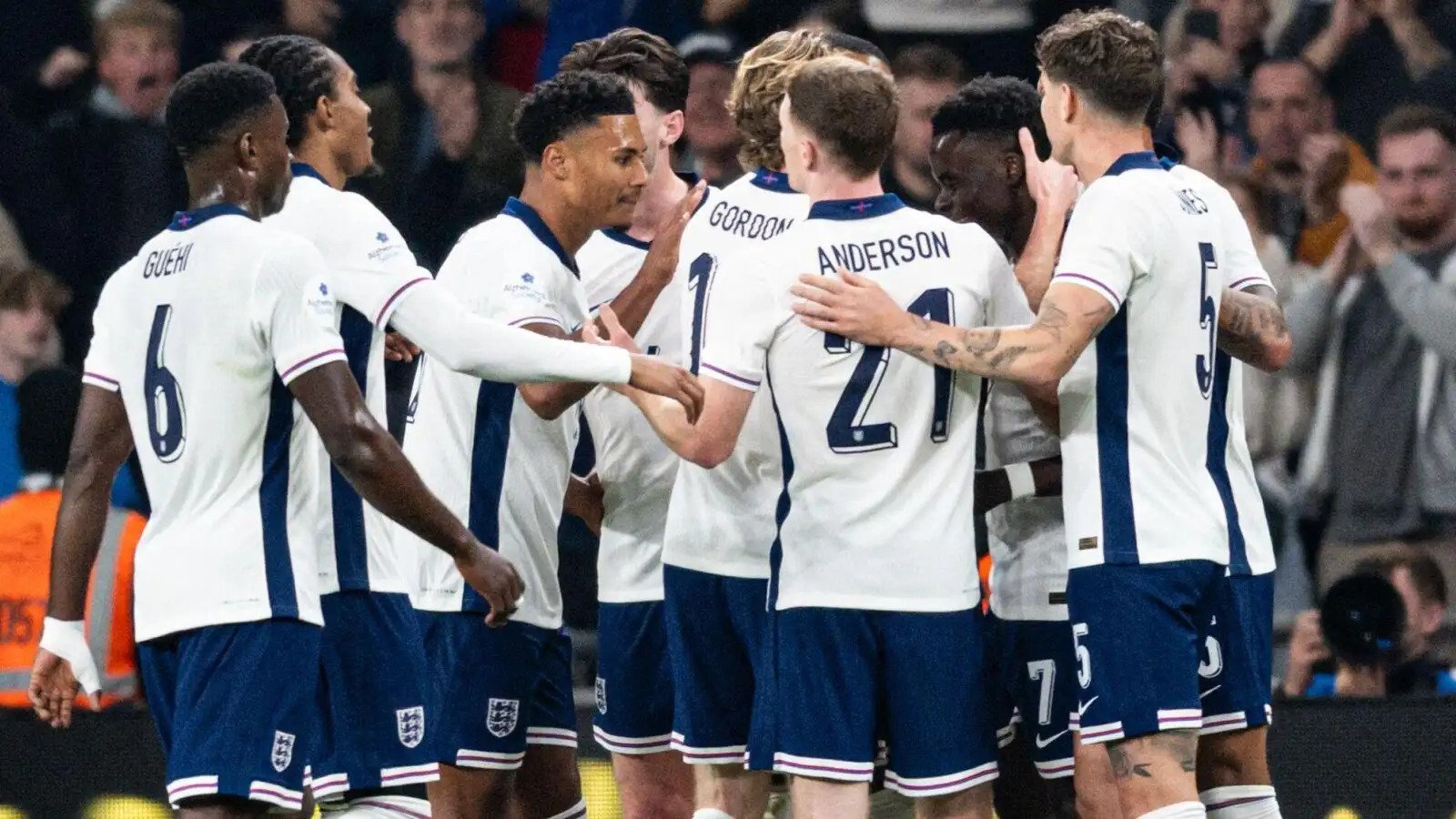
Craig Bellamy’s words before kick-off could not have been more prophetic. The Wales manager had compared the upcoming clash to a boxing match between opponents of unequal strength — and he was right. Within 20 minutes, England had raced to a commanding 3-0 lead, effectively ending the friendly in what felt like a technical knockout. The gulf in class was clear, and for Thomas Tuchel, it was another night of satisfaction as his rejuvenated England side continued to impress.
Tuchel, who has quickly built a sense of rhythm and confidence in his squad, once again placed his faith in the players who had delivered that stunning 5-0 win over Serbia in Belgrade last month. His decision to exclude big names like Jude Bellingham and Phil Foden had sparked debate, but the German coach’s plan was simple — to maintain the momentum, energy, and team chemistry that had begun to define this new-look England.

While Wembley wasn’t quite buzzing with electricity, the football on display in the first half was sparkling enough. Wales were outplayed in every department. England’s dominance was so complete that it sometimes felt unfair — yet Tuchel’s men were ruthless, clinical, and hungry, ensuring their path to automatic World Cup qualification remained firmly on course ahead of their next trip to Riga to face Latvia.
On this particular night, Bellingham and Foden weren’t missed. The spotlight belonged to Morgan Rogers, who took full advantage of his chance in the No. 10 role. The young forward not only opened the scoring with his first England goal but also set up Ollie Watkins for the second. Bukayo Saka then added his signature flair to complete the demolition job with a beautifully curled strike for the third.
Wales, to their credit, never gave up. Their traveling supporters — loud, proud, and loyal — stayed until the final whistle, cheering every rare foray forward, even as their side struggled to create clear chances. England fans, on the other hand, began drifting out long before full time, satisfied that the job was already done.
From the outset, Wales looked vulnerable. Anthony Gordon, operating with speed and precision, found acres of space down the left, forcing goalkeeper Karl Darlow into early action. Bellamy had vowed to play attacking football, naming a strong side ahead of their vital qualifier against Belgium, but his players failed to deliver. Their approach lacked bite; their challenges were soft; and their defensive organization crumbled under pressure.
England’s first goal came from a well-worked corner routine. John Stones, making his first start under Tuchel, rose highest to meet Declan Rice’s delivery. Marc Guéhi reacted quickest to keep the ball in play near the byline when most of the Welsh defense had stopped, assuming it was going out. Guéhi’s alertness paid off — he pulled the ball back for Rogers, who calmly slotted home with an elegant first-time finish.
The second goal was an even greater embarrassment for Wales. Saka’s cross from the inside left found Rogers again, who delicately lobbed the ball toward the far post. With Guéhi unable to convert, Ollie Watkins had time and space to bring it down and tap in from a yard out. It was too easy — a reflection of England’s superiority and Wales’ defensive frailties.
Then came the moment of artistry from Bukayo Saka. David Brooks failed to close him down, allowing the Arsenal winger to cut inside and unleash a trademark left-footed curler into the top corner. It was a goal that underlined Saka’s world-class quality — and perhaps raised a simple question: had Brooks never watched him play before?
As the teams went into the interval, Bellamy’s frustration was palpable. His side had been second best in every department. Anthony Gordon, in particular, had been unplayable, tormenting Neco Williams with blistering pace and trickery. Rogers orchestrated play in the middle, while Saka and Watkins provided a constant threat. England’s pressing was relentless, their transitions smooth, and their intent clear. For all of Tuchel’s tactical precision, it was his players’ hunger that stood out most.
Saka almost added another in the first half when he burst down the right channel, only to be denied by a brave block from Joe Rodon. Moments later, Watkins missed a golden opportunity, slicing wide from point-blank range after Elliot Anderson’s driven cross.
At halftime, Tuchel made a few tactical tweaks. Marcus Rashford replaced Watkins, moving into his preferred left-wing position, while Gordon shifted centrally. The manager’s instructions were clear — maintain intensity, stay aggressive, and don’t lose focus. When Gordon won possession and sprinted clear only to misplace his final pass to Rashford, Tuchel’s reaction on the touchline was one of visible frustration.
England continued to probe, with Saka once again carving open the Welsh defense to set up Rogers, whose curling effort rattled the crossbar — though the move was later flagged offside. For a moment, it looked like England might completely humiliate their opponents. But to their credit, Wales eventually found some rhythm and registered their first meaningful attempt on goal.
On 56 minutes, David Brooks tested Jordan Pickford with a well-struck volley that forced a sharp save from the Everton keeper’s feet. It was a small victory, but one that gave Wales a flicker of pride. They began to play with a little more urgency in the final quarter, and England eased off slightly, conserving energy for the next qualifier.

Wales substitute Chris Mepham nearly pulled one back with a glancing header that Pickford had to stretch to save, while Mark Harris sent another effort over the bar — though he appeared to have fouled John Stones in the process. Those half-chances summed up Wales’ night: valiant but ultimately futile.
For Tuchel, however, it was another step in the right direction. England’s balance, shape, and attacking rhythm looked polished and purposeful. Rogers’ breakout performance added a new creative option behind the strikers, while Watkins’ positioning and Saka’s flair ensured the attack remained fluid and unpredictable. The defense, led by Stones and Guéhi, stayed composed, and Rice dictated the tempo in midfield like a seasoned conductor.
By the final whistle, there was no doubt about the result — or the statement England had made. They had dominated from start to finish, displayed attacking intent, and showcased the depth and flexibility of their squad. For Wales, it was a humbling lesson in the difference between ambition and execution. For Tuchel and his players, it was another night to remember on their journey toward the World Cup.
Related News:
 Glory for the Lionesses: England Crowned Women’s Euros Champions Again Amid National Calls for Bank Holiday
 Manchester City Announce Their Return in Style with Haaland Double and Debut Goals at Wolves
 New Season, Same Strife Between the Sticks for Manchester United
 FIFA Eyes Biennial Club World Cup from 2029, Plans Possible Expansion
 Germany and Northern Ireland Set for Crucial World Cup Qualifier Clash in Cologne
 Serbia Humiliated 0-5 by England in World Cup Qualifier
 Man City 2-0 Napoli: Haaland Reaches 50 Champions League Goals After Red Card Turns Tide
 Rashford’s Brilliance Stuns Newcastle as Barcelona Claim Champions League Victory
 Tributes Pour In as Former Liverpool Women Manager Matt Beard Dies Aged 47
 Liverpool Vs outhampton Set for Carabao Cup Clash at Anfield
 Ferguson Fires Scotland to Dramatic Comeback Win Over Greece
 Tuchel Criticises ‘Silent Wembley’ After England Win
 Clarke’s Anger Overshadows Scotland’s Historic Win
 Kane’s Double Seals England’s World Cup Qualification
 Barnes Inspires Newcastle to Champions League Triumph Over Benfica
City shine with PlayStation-style football to overwhelm Villarreal
Barnes Inspires Newcastle to Champions League Triumph Over Benfica
City shine with PlayStation-style football to overwhelm Villarreal
 Fabio Wardley stuns Joseph Parker to earn Usyk title shot
 Tension and Turmoil at Aston Villa v Maccabi Match
 Lando Norris Dominates Brazil GP to Strengthen F1 Title Bid
 Ronaldo Confirms Final World Cup and Plans Retirement
 England’s Euro Odyssey: A Tale of Grit, Glory and the Lionesses’ Miraculous March to the Final
 UK Must Act with Courage and Clarity on Israel-Palestine Conflict, Says Foreign Affairs Committee Report
 Predicted Leicester Line-ups Reflect Cifuentes’ Tactical Plans Ahead of New Season
 Central London Gears Up for Lionesses’ Victory Parade as Thousands Prepare to Celebrate Historic Women’s Euros Win
 London Set to Honour Euro 2025 Champions as Lionesses Take Victory Parade Through the Capital
 Rangers Boss Russell Martin Launches Blistering Critique After Disappointing Draw with Motherwell
 Tottenham Takes On Newcastle
 Radioactive Leak at UK’s Nuclear Warhead Base Sparks Outcry Over Safety and Secrecy
 Mutual Inconvenience: Why Alaska Was Chosen for the Trump-Putin Summit on Ukraine
 Premier League Supercomputer Predicts Tough Season for Man Utd Amid Three-Team Title Battle
 Aston Villa Under Pressure as Newcastle Take on Hosts in Premier League Opener
 Terence Stamp, ’60s British Film Legend and Star of Superman, Dies at 87
 Where Is Prince William and Kate Middleton’s New House? Inside the Historic Lodge Set to Become Their ‘Forever Home’
 Is the UK Ready to Put Boots on the Ground in Ukraine? Assessing Military Capacity and Challenges
 Grimsby Stun Manchester United in Dramatic Penalty Shootout
 Guardiola Admits City ‘Forgot to Play’ After Shock Defeat to Brighton
 Shein UK Faces Allegations of Shifting Majority of Profits to Singapore to Reduce UK Tax
 British Couple Among 16 Killed in Lisbon Funicular Tragedy
 Protests Expected as Israeli Arms Firms Join Global Defence Trade Fair in London
 Thousands Gather in London to Protest Donald Trump’s Second UK State Visit
 British AI Startup Outshines Human Forecasters in Global Prediction Contest
 Dembélé and Bonmatí Shine as Ballon d’Or Winners in Glittering Paris Ceremony
 UK Fighter Jet Purchase Could Breach Nuclear Treaty, Warns CND
 Arsenal VS Newcastle Hearts with Dramatic Late Turnaround at St James’ Park
 Aston Villa Fight Back to End Winless Run with Convincing Victory over Fulham
 Everton Held by West Ham as Bowen Cancels Out Keane’s Header in Nuno’s First Game
 ICC Women’s World Cup 2025: India to Host as Pakistan Fixtures Moved to Neutral Venues
 A Third of EU Citizens in UK Report Discrimination by Public Bodies Post-Brexit
Monaco Hold Man City to Dramatic 2-2 Draw as Eric Dier Converts Late Penalty
A Third of EU Citizens in UK Report Discrimination by Public Bodies Post-Brexit
Monaco Hold Man City to Dramatic 2-2 Draw as Eric Dier Converts Late Penalty
 Arsenal Edge Past West Ham Amid Injury Concerns
 Chaos at Ibrox as Martin’s Rangers Era Comes to an End
 Arsenal Showcase Depth and Flexibility as Arteta Eyes Title Challenge
 Questions Remain as Rugby Legend Lewis Moody Faces Motor Neurone Disease Diagnosis
 Public Trust in SNP Hits Historic Low Amid NHS Concerns
 Cooper Unveils £4m Cyber Plan Against Russian Hackers
 Johnson Suggests Mandelson Linked to China Spy Controversy
 Witness statements reveal the CPS China spy row collapse in the UK
 China warns UK over delayed London mega embassy decision
 Rachel Reeves signals welfare reform ahead of key budget
 Fulham vs Arsenal Trossard Strike Sends Gunners Three Points Clear
 Kosovo agrees to host Britain’s refused asylum seekers
 Gibbs-White Inspires Forest to Thrilling Win Over Porto
 Manchester United triumph as Mbeumo brace seals thrilling win
 British Woman in Iran ‘Losing Hope’ Amid Ongoing Detention
 Johnson Approved China’s London ‘Super-Embassy’ in 2018
 BBC Journalist Held and Interrogated in Vietnam
 Salah & Gravenberch Lead Liverpool to Win Against Villa
 Granit Xhaka Rescue Earns Everton Draw at Sunderland
 Top Christmas Books Reads: Classics to Cozy Romcoms
 Just Stop Oil Protesters Convicted Amid Climate Defence Row
 Bellingham has ‘the edge’ among England No 10s
Man City Masterclass on Guardiola’s Milestone Day Exposes Liverpool Woes
Bellingham has ‘the edge’ among England No 10s
Man City Masterclass on Guardiola’s Milestone Day Exposes Liverpool Woes
 VAR Must Rein Its Neck In to Save Football’s Spirit
 Trescothick Hints Pope Will Keep Number Three Spot
 Mary Earps’s Manchester United Return Faces Mixed Reception
 Sam Kerr Stars in Chelsea Return with Champions League Double
 Former Lion Heskey Warns of Shortage of England Strikers
 Haiti Qualifies for World Cup Despite Coach Never Visiting Country
 Moyes Defends Gueye After Dramatic Everton Bust-Up
 Mbappe Scores 4 as Real Madrid Edge Olympiakos