Published: 12 October 2025. The English Chronicle Desk. The English Chronicle Online.
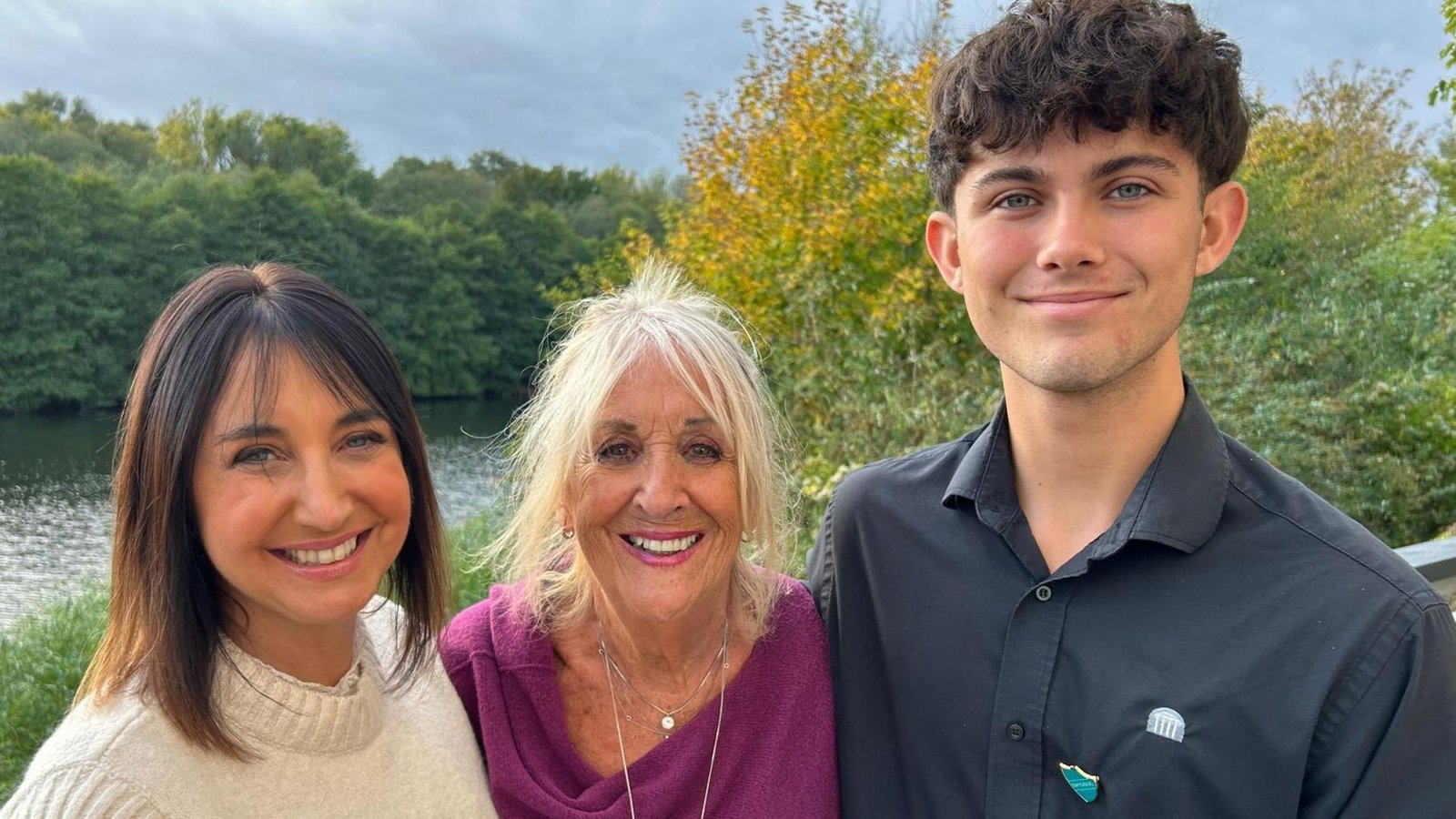
Talking about death with one’s parents is something few people ever want to face. Yet for journalist and daughter [Author Name], that difficult conversation arrived in the most unexpected way when her 86-year-old mother, Patsy Cohen, calmly revealed her wish to donate her body to medical science after she dies.
For many, such a conversation would feel deeply uncomfortable — but for Patsy, it was simply a practical, generous decision rooted in gratitude and purpose.
Even during her battle with bowel cancer a few years ago, when her family avoided confronting thoughts of loss, Patsy was already thinking ahead. She wanted to give something back to the medical professionals who had helped save her life.

“I wouldn’t be here if it wasn’t for them,” she said. “This is just my way of saying thank you.”
Her announcement shocked her daughter at first. Body donation was not something she had ever considered or even discussed before. Questions came flooding in: How would her body be used? Would there still be a funeral? Could the family visit a grave or say goodbye properly?
But Patsy, ever the realist, was determined. “I imagine a great big saw will come out and they’ll chop off a leg, but I don’t really mind,” she said with her trademark humour. Her calm acceptance, mixed with a touch of dry wit, reflected her lifelong pragmatism — and her belief that helping future doctors was more important than sentimentality.
Every year, around 1,300 people in the UK choose to donate their bodies to science, helping medical students learn anatomy, surgeons refine their skills, and researchers understand disease. Without such donors, many medical schools would struggle to offer the same level of hands-on education.
Curious and inspired, the journalist decided to explore what exactly would happen after her mother’s death. She visited Cardiff University’s anatomy centre, the very institution Patsy had registered with, to see what really happens to donated bodies and how they are treated.
The university granted rare behind-the-scenes access for her documentary. Cameras captured students and educators describing the profound respect they hold for their donors — known affectionately as their “silent teachers.”
Dr Hannah Shaw, who leads the anatomy education team, explained why real human bodies remain invaluable despite technological advances. “There really is no substitute for being able to see, touch and feel real anatomy,” she said. “Textbooks make everything look identical, but in reality, we’re all different — both outside and inside.”
She added that conditions such as cancer, arthritis, or hip replacements all shape the body uniquely, giving students a deeper understanding of what they will face in their medical careers.
However, the use of real bodies in medical teaching is gradually declining as 3D digital models and virtual anatomy tools become more common. Still, for educators like Dr Shaw and students like Freya Gillson, the human connection remains irreplaceable.
“Things in real life look completely different from what you expect,” said Freya, a 19-year-old medical student. “Working with donors is incredible. They are our first patients, and you do develop a connection with them.”
When a registered donor passes away, Cardiff University’s team ensures the body is brought to the anatomy centre as quickly as possible. After preservation, some parts may be retained for specialist teaching, provided the donor consented. Bodies can remain in the centre for up to three years before being returned to their families for cremation or burial.
Funeral arrangements are typically handled by a professional funeral director, with costs covered by the university. This means the donor’s family may have to wait a long time before a final farewell, an emotional challenge for some.
The family of Joy Sesay, another donor, shared that while they were proud of her choice, waiting for closure was difficult. “Her whole ethos was about helping others and being a good person,” said her daughter Jenny. With eight children and dozens of grandchildren, Joy’s family held memorial services while waiting for her cremation.
Granddaughter AJ described the experience as surreal. “It’s been strange because it hasn’t been the usual — go to the funeral and then move on. It felt like we were in limbo.”
Despite such emotional complexities, most families express deep pride in their loved one’s final act of generosity. For many, it transforms grief into purpose.
Yet, interest in body donation has declined in recent years. Cardiff University reports a 50% drop in registrations since 2020, though 154 people still signed up in 2024. Experts attribute the fall partly to the pandemic, as health restrictions and misinformation made people more hesitant.
Not everyone can donate. Certain medical conditions or post-mortem procedures can make bodies unsuitable for study. That’s why universities strongly recommend discussing the decision with family members in advance — both for legal clarity and emotional understanding.
At the end of each academic year, Cardiff University hosts a memorial service for families and students. The event allows medical students to reflect on their experiences and express gratitude to those who taught them through their final gift.
“Seeing the photos of our donors with their families made it so real,” said Freya, the student. “It’s a very poignant moment. Everyone realises that this journey has come to an end — and that we’ve been part of something deeply human.”

For Joy’s family, the memorial brought comfort. “You think it’s a one-off gift — that it ends with death,” said Joy’s daughter Carol. “But in truth, it’s the start of something far bigger. Her body will help not just doctors, but countless future patients. The impact is enormous.”
As for Patsy, she remains lively and defiant in her late 80s — enjoying her daily walks, reading, and the occasional glass of wine. Her humour is intact, and so is her resolve. “When I’m not here, I don’t want to be wasted,” she said. “If I can help make a better doctor, then I’ll be doing something good.”
For her daughter, the experience has been unexpectedly transformative. Understanding her mother’s decision — and seeing firsthand how donated bodies are honoured — has brought her peace rather than fear.
“It will be heartbreaking when the time comes to say goodbye,” she admitted. “But knowing what will happen, and knowing she’ll keep helping others even after she’s gone, gives me comfort and pride.”
The journey has even inspired her to register as a donor herself. “It feels right,” she said. “Mum has taught me one final lesson — that death doesn’t have to be the end of giving.
Related News:
 The Ketamine Crisis in the UK is a Silent Epidemic Leaving Users with Lifelong Pain
 Woman Warned She Might Need Leg Amputation to Survive After Liquid Brazilian Butt Lift
 Alarming rise in abusive teen relationships in the UK sparks urgent warnings
 Breakthrough Clinical Trial Lets 12-Year-Old Boy with Rare Skin Disorder Play Football
 Over 65? Gardening Instincts Can Help You Spot Financial Fraud
 Inquest Finds Agency Worker Failings Led to Unlawful Death of Vulnerable 14-Year-Old
 Expanded Access to Health Diagnostics in England Now Available Beyond Standard Hours
 Shocking Rise in Children’s Exposure to Violent Online Pornography Raises Alarm
 Experienced Skydiver Dies by Suicide Following Relationship Breakdown
 Martha’s Rule Now Fully Implemented Across All Acute Hospitals in England
 Why E-Bikes and E-Scooters Are Making Streets a ‘Nightmare’ for Blind People
 Council Proposes Limits on Ice Cream Van Music and Parking in South Cambridgeshire
 Norfolk Hospital Ranked Worst in England as NHS League Tables Return
 Ofsted Pushes Ahead with Controversial New Inspection Regime Despite Widespread Opposition
 More Than Half of UK Births Now Involve Medical Intervention
 Hospices ‘on the Brink’ as Assisted Dying Legislation Looms
 NHS ‘Toxic Culture’ Risks Harm to Mothers and Babies, Health Leader Warns
 First Group of Children from Gaza Arrive in UK for Life-Saving NHS Treatment
 One in Three GPs in England Do Not Work in NHS, Raising Concerns Over Access to Care
 UK Doctors Guilty of Sexual Misconduct Continue Practising Amid Weak Sanctions, Research Finds
 Private Psychology Costs Surge in UK as Practitioners Turn Away Clients Amid Record Demand
NHS Urged to Revamp Prostate Cancer Treatment for Black Men Amid Rising Death Toll
Private Psychology Costs Surge in UK as Practitioners Turn Away Clients Amid Record Demand
NHS Urged to Revamp Prostate Cancer Treatment for Black Men Amid Rising Death Toll
 Heavy Drinkers Lead Growth in Non-Alcoholic and Low-Alcohol Market
 One Lap, 400 Miles, One Week: GP Sets Sights on Cornwall Perimeter Record Run
 Starmer Unveils Plan for NHS “Online Hospital” to Tackle Waiting Lists
 Tragic Death Strikes Half-Marathon in Stoke-on-Trent: Runner Dies Shortly After Crossing Finish Line
 Medical Cannabis Offers New Hope for British Women Struggling with Chronic Pain
 One in four UK residents fear a loved one drinks excessively as addiction concerns rise
 Majority of UK Men Would Opt for Prostate Cancer Screening, Survey Finds
One in Three UK Workers Call in Sick After Work Drinks as Cultural Pressures Persist, Survey Finds
Majority of UK Men Would Opt for Prostate Cancer Screening, Survey Finds
One in Three UK Workers Call in Sick After Work Drinks as Cultural Pressures Persist, Survey Finds
 NHS Facilities Staff Vote to Strike Over Pay Discrimination
 Ambulance Worker Fired After Flinging Amputee from Wheelchair and Offering Bribe
 Women Challenge Meta Over Targeted Ads After Miscarriage
 UK Woman Becomes Longest Survivor of Heart-Lung Transplant
 Phillipson Warns Parents Over Poor Quality Online Advice
£18 Prostate Cancer Test Could Save Thousands of Lives
Phillipson Warns Parents Over Poor Quality Online Advice
£18 Prostate Cancer Test Could Save Thousands of Lives
 Pregnant Women in England Face Rising Risk of Severe Birth Injury
 My ADHD left me drowning in debt and unable to cope
 One in 12 Secondary Pupils Sent to Isolation Weekly
 M&S and Morrisons Lead Christmas Supermarket Taste Test
 Mother dies after black market weight loss injection
 Young Woman Missed 13 Times by GPs Before Bowel Cancer Diagnosis
 UK Health Leaders Push for Urgent Tobacco & Vape Bill
 Man Trapped in Quicksand Rescued in Dramatic Coastal Rescue
 Hospice Cuts Raise Alarm Across England Amid Funding Crisis
 Morning-After Pill Now Free Across England’s Pharmacies
 Experts Warn on Home Birth Risks, Call for Skilled Midwives
 Experts Urge Legal Right to Timely Cancer Care
 NHS Takes Over Nuffield Hospital in ‘Windfall’ for London Care
 North Sea oil workers must lose weight or face job loss
 Crisis charity to become landlord amid UK housing emergency
No link found between paracetamol in pregnancy and autism
Crisis charity to become landlord amid UK housing emergency
No link found between paracetamol in pregnancy and autism
 UK Disability Pay Gap Means Millions Work for Free From Today
 Shouting Works Best to Deter Gulls, UK Study Finds
 Reeves rejects £1bn plea for NHS redundancy payouts
 NHS trust fined after woman takes life in mental health unit
 Leading doctors issue warning amid ‘bad’ flu season
 New Campaign Trains Vets to Spot Farmers’ Health Risks
 ‘Traumatic Wait’: Northern Ireland Women Face Breast Cancer Delays
 Coffins Now Too Large to Cremate Amid Rising Obesity Crisis
 David Cameron Reveals Prostate Cancer Diagnosis, Advocates Screening
 Five-Year-Old Dies After Rare Tonsil Surgery Complication
 Fibromyalgia Patients Struggle as NHS Fails to Provide Care
 “Enough is Enough”: Local MP Vows to Fight Rainham Quarry Plans
 More Patients Now Contacting GPs Online, Data Shows
 Heartbreak in the New Forest as Shetland Ponies Vanish, Community on Edge
 Birmingham Bin Strike Enters Sixth Month as Negotiations Stall
 Over 40% of Private Renters Forced to Ration Energy to Afford Bills, Study Reveals
 Systemic Racism in Maternity Care Continues to Endanger Black Women in England, MPs Warn
 Northern Ireland Faces Fears of Prolonged Race Riot “Permacrisis”
 Scottish Teenager’s Petition on Single-Use Plastics Gains Parliamentary Support
White Low-Income Pupils in England Show Lowest Levels of School Engagement, Study Finds
Scottish Teenager’s Petition on Single-Use Plastics Gains Parliamentary Support
White Low-Income Pupils in England Show Lowest Levels of School Engagement, Study Finds
 Massive London Poundland Fire Engulfs High Street
 Children to Learn Local History in Major Curriculum Overhaul
 Prince William Plants Trees with Brazil’s Nature Heroes
 How to get help when a child goes missing – call 999 urgently
 Son Reveals UK Couple in Iran Resort to Hunger Strike for Help
 Mother Watches in Horror as Teen Daughter Dies on Tracks
 Vicki Fears Losing Motability Car
 Virgin Media Fined £23.8m Over Telecare Safety Failures