Published: 28 October 2025. The English Chronicle Desk. The English Chronicle Online.
Van Gogh’s paintings recent study has revealed that experiencing art firsthand can have significant health benefits, reducing stress and positively influencing the body’s physiological systems. Researchers at King’s College London (KCL) have found that viewing original works of art by masters such as Vincent van Gogh and Édouard Manet can lower stress hormone levels, stimulate the immune system, and engage the nervous and endocrine systems. These findings provide compelling evidence that cultural experiences may have tangible effects on physical well-being, alongside their long-recognized emotional and psychological impact.
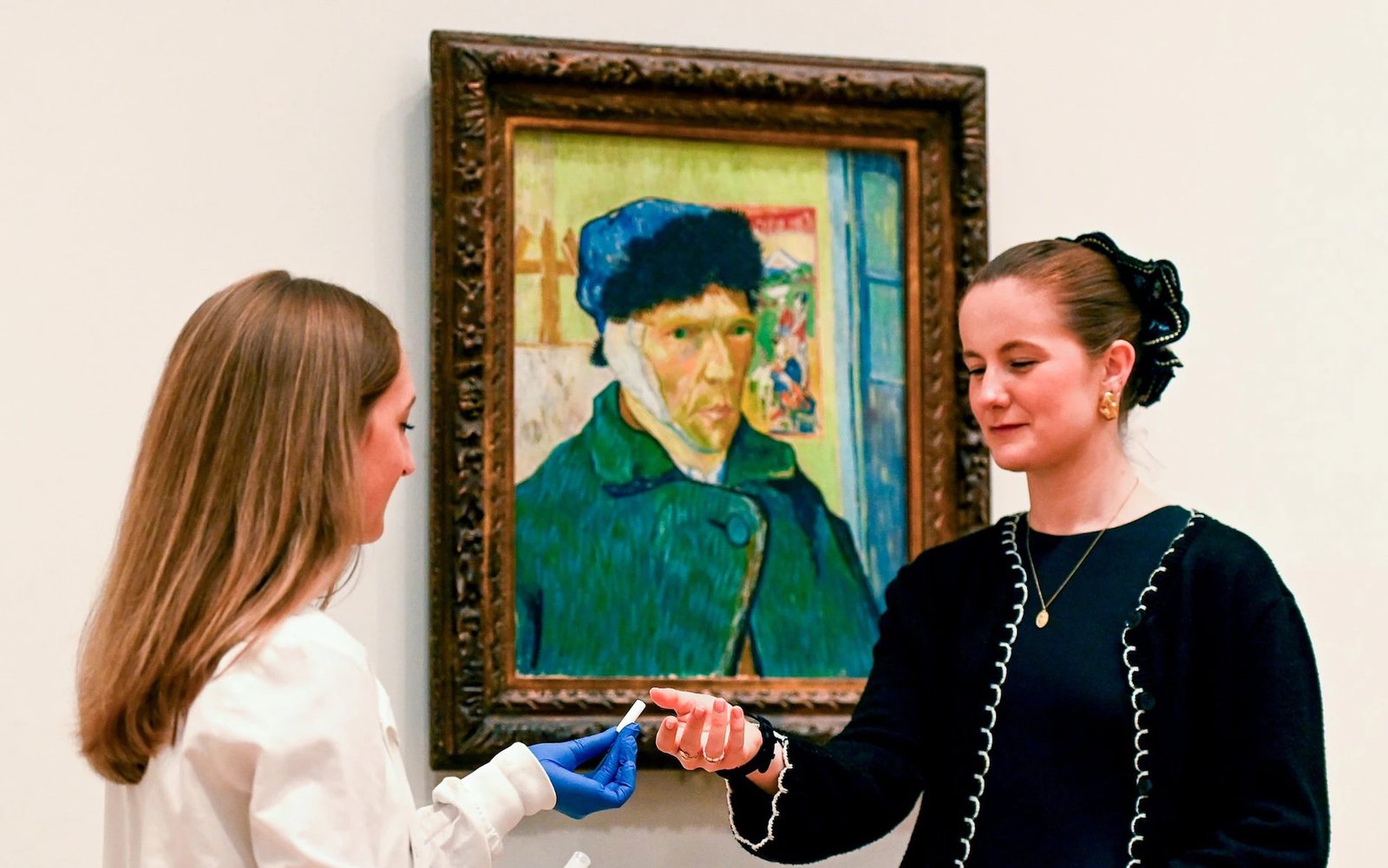
The study involved 50 participants between the ages of 18 and 40, who were divided into two groups. One group visited the Courtauld Gallery in London, where they observed a selection of five paintings, while the second group viewed high-quality photographs of the same works. The research team employed a variety of scientific measures to monitor the participants’ physiological responses during a 20-minute session, including sensors that recorded heart rate, skin temperature, and saliva samples taken before and after the viewing.
Among the artworks included in the study were Vincent van Gogh’s Self-Portrait with Bandaged Ear, Henri de Toulouse-Lautrec’s Jane Avril in the Entrance to the Moulin Rouge, Putting on Her Gloves, Édouard Manet’s Bar at the Folies-Bergère and Banks of the Seine at Argenteuil, and Paul Gauguin’s Te Rerioa (The Dream). These works, spanning late 19th-century European art, were chosen for their visual and emotional richness, providing a diverse range of stimuli for the participants.

The results revealed a stark difference between the two groups. Participants who viewed the original works in the gallery experienced an average 22% reduction in the stress hormone cortisol, compared with just an 8% decrease among those who looked at photographs. In addition, markers linked to the immune system and associated with stress and disease dropped by 30% for gallery visitors, whereas no significant changes were observed in the photo-viewing group. This suggests that direct interaction with original artworks can produce measurable physiological benefits beyond simple visual appreciation.
Dr Tony Woods, a leading researcher at KCL, highlighted the broader implications of the study. “Our research clearly demonstrates the stress-reducing properties of viewing original art, as well as its ability to excite, engage, and stimulate the viewer,” he said. “Stress hormones and inflammatory markers such as cortisol, IL-6, and TNF-alpha are associated with a wide range of health problems, including heart disease, diabetes, anxiety, and depression. The fact that viewing original art reduced these markers indicates that cultural experiences may play a genuine role in protecting both the mind and body.”
The study also examined how art engages multiple body systems simultaneously. Participants in the gallery group showed physiological signs of excitement, including decreased skin temperature, elevated heart rates, and variations in heartbeat patterns, indicating activation of the autonomic nervous system. The research suggests that art can have a profound effect on the endocrine system, responsible for hormone regulation, as well as on the immune system, which plays a central role in overall health.
“This is an entirely unique finding,” Dr Woods explained. “Art had a positive impact on three different physiological systems at the same time – the immune, endocrine, and autonomic systems. We were genuinely surprised to observe such a widespread effect. In essence, art does more than move us emotionally; it also calms the body, reduces stress, and may support long-term physical health.”
Jenny Waldman, director of the Art Fund, emphasized the significance of these findings for the wider public. “For a long time, we have believed that engaging with art has profound benefits for mental and emotional well-being,” she said. “This study provides scientific evidence that these benefits are universal and accessible to anyone. Visiting a museum or gallery is not only an enriching cultural experience but also a practical way to support one’s health.”
The study’s methodology underscores the importance of seeing art in person rather than digitally. While photographs of artworks can provide visual information, they do not replicate the immersive experience of standing before an original painting. Subtle details, texture, scale, and color nuances are lost in reproduction, limiting the potential physiological impact. According to the researchers, these sensory differences may explain why cortisol and other stress markers dropped more significantly among participants who experienced the works directly in the gallery.
Beyond stress reduction, the study’s findings suggest that art engagement may have broader implications for public health. Chronic stress has been linked to a variety of medical conditions, including hypertension, cardiovascular disease, metabolic disorders, and mental health issues such as depression and anxiety. By lowering stress markers and promoting relaxation, visiting art galleries could serve as a preventative measure against such conditions.
The KCL study adds to a growing body of research exploring the intersection of art, culture, and health. Previous studies have suggested that creative expression, music, and theatre can positively influence mood, cognitive function, and overall well-being. The current research builds on this knowledge, providing quantifiable evidence that visual art, in particular, has the power to impact physiological processes and contribute to holistic health.
Public engagement with the findings has already been enthusiastic. Cultural institutions across the UK are considering how to leverage this research to encourage greater participation in the arts. Local museums and galleries may use the study as a platform to highlight the health benefits of visiting exhibitions, potentially expanding outreach programs to attract broader and more diverse audiences.

Dr Woods emphasized that the research also highlights the importance of making art accessible to all. “Everyone should have the opportunity to experience the health benefits of viewing original artworks,” he said. “Whether through local museums, national galleries, or community initiatives, these cultural experiences should be considered an essential part of public life, not a luxury for the privileged few.”
The study also has implications for healthcare and wellness practices. Hospitals, care facilities, and mental health programs may incorporate art viewing as a complementary therapy to reduce stress and improve patient outcomes. By integrating cultural engagement into wellness initiatives, institutions can enhance both emotional and physical health, creating environments that support recovery, relaxation, and resilience.
While the KCL study is yet to be peer-reviewed, it offers a strong case for the physiological benefits of art exposure. The findings suggest that original artworks have a unique capacity to affect the human body, from calming stress-related hormones to stimulating the immune system. The research provides a scientific basis for the longstanding belief that art nurtures the human spirit and now demonstrates that its effects extend to physical well-being as well.
In conclusion, the King’s College London study confirms what many art lovers have long suspected: encountering original masterpieces in person is more than an aesthetic experience. Van Gogh, Manet, Gauguin, and Toulouse-Lautrec do not merely captivate the eye—they engage the body and mind, reducing stress, boosting the immune system, and positively influencing hormone regulation. As Dr Woods notes, “Art doesn’t just move us emotionally—it calms the body, too.” These findings underscore the value of cultural experiences and provide a compelling argument for making art galleries and museums accessible to everyone, as part of a broader approach to public health and well-being.
Related News:
 One of world’s last dinosaurs on sale for £3m
 How to Exit Your Broadband Contract Without Paying Exit Fees
 Michele Dougherty Makes History as the UK’s First Female Astronomer Royal
 Unseen Killers of the Deep Inside the UK Lab Uncovering the Silent Deaths of Sea Creatures
 UK Launches World-First Gonorrhoea Vaccine Amid Record Infection Surge
 Mind the Grab’: Bold Campaign Launched on Oxford Street to Combat Phone Theft
 AI Tools Used by English Councils Found to Downplay Women’s Health Issues, Raising Concerns Over Gender Bias in Care
 From ‘Skibidi’ to ‘Mouse Jiggler’: Cambridge Dictionary Expands with Modern Slang and Social Terms
 Shocking Rise in Children’s Exposure to Violent Online Pornography Raises Alarm
 Ed Davey Urges Government to Block Elon Musk’s Tesla from Supplying UK Home Energy
 Spectacular ‘Blood Moon’ Illuminates Skies Across the Globe
 Britain’s Butterfly Numbers Rebound but Remain Average
 Apple Unveils Ultra-Thin $999 iPhone Air at “Awe-Dropping” Annual Event
 Weatherwatch: From Astrology to Modern Meteorology
 Merck Abandons £1bn London Research Hub and Cuts 125 Jobs in Blow to UK Life Sciences
 British Pilot Joins Crew Training for Year-Long Mars Simulation Mission
 UK and US Forge Landmark Deals to Build Modular Nuclear Reactors Across Britain
 Big Pharma Investment Freeze Puts UK Life Sciences Sector Under Strain
 UK Could Generate Nearly £2bn Annually by Taxing SUVs, New Study Reveals
 Jaguar Land Rover Extends Production Halt Following Cyber-Attack
 Persistent Offenders Owe Over £700m in Ulez Fines as TfL Cracks Down on Evasion
 British AI Startup Outshines Human Forecasters in Global Prediction Contest
Public Skepticism Over AI Poses Challenge to UK’s Superpower Ambitions, Says Tony Blair Institute
British AI Startup Outshines Human Forecasters in Global Prediction Contest
Public Skepticism Over AI Poses Challenge to UK’s Superpower Ambitions, Says Tony Blair Institute
 UK Fighter Jet Purchase Could Breach Nuclear Treaty, Warns CND
 Google at 27: The Untold Story of Ruth Kedar, the Woman Behind the Iconic Logo
 Omeprazole Alert: NHS Issues Guidance on Safe Use for Heartburn and Indigestion
 Biomethane Found Unfit for Large-Scale UK Home Heating as Study Highlights Limitations
 Royal Mail Owner Acquires Stake in Collect+ and Launches High Street Rebrand
 Russia repeatedly targets UK military satellites, warns Space Command chief
 Karen Carney Shines on Strictly Come Dancing Week Two Despite Tango Wobbles
 Jilly Cooper: The Bonkbuster Queen Who Redefined Romantic Fiction
 Eligibility Confusion Over COVID Vaccination Leaves Pharmacies Struggling Across the UK
 Millions in the UK at Risk of Cyber-Attacks as Microsoft Ends Windows 10 Updates, Warns Which?
 Majority of UK Men Would Opt for Prostate Cancer Screening, Survey Finds
 Scientists Announce First Potentially Accurate Blood Test for Chronic Fatigue Syndrome
 Cooper Unveils £4m Cyber Plan Against Russian Hackers
 Survey Shows Most GPs Rushing Appointments
 Yvette Cooper Backs Digital ID Plan for UK Teens
 Genetic Tests May Predict Return of Blood Cancer
 UK Woman Becomes Longest Survivor of Heart-Lung Transplant
 Labour MPs Warn Digital ID Scheme Risks Cost and Support
 Thousands in the UK sue Johnson & Johnson over alleged talcum powder, linked to cancer
 Man Charged Over 2020 Death of Tattoo Artist Georgina Ward
 ‘Game-Changing’ HIV Prevention Jab Set for NHS Approval
 Reform UK candidate fined £19,000 after using AI-generated cases to challenge election
 Harry and Meghan join global AI leaders urging superintelligence ban
 UK Campaigners Launch Bill to Grant Legal Rights to Nature
 Met Launches Drones to Respond Rapidly to 999 Calls
 Dave Ball: The Unsung Genius Behind Soft Cell’s Bold Sound
 Experts Warn Russia’s Burevestnik Missile Could Destabilise Arms Control
 Charlie Kaufman: They told me Being John Malkovich would never get made
 UK launches search for first-ever ‘town of culture’ to highlight overlooked areas
 Experts Urge Legal Right to Timely Cancer Care
 North Sea oil workers must lose weight or face job loss
 Government urges schools to ban phones to curb classroom disruption
 David Szalay’s ‘Flesh’ Wins 2025 Booker Prize
 Stop using ChatGPT to write speeches, AI minister tells MPs
 New laws to bolster UK’s defences against cyber attacks on NHS, transport and energy
 Nigeria’s $25m Museum Faces Political Storm Amid Benin Bronzes Debate
 Valve Opens the Door for Android Games on Steam
 Hitler’s DNA Confirms He Truly Had Only One Testicle
 Working-Class Men with Prostate Cancer Left Behind by NHS
 Pokémon to open world’s first theme park in Japan next year
 How Cultures Interpreted the Aurora Through History
 From War to Wales: Teen Innovator Eyes Net Zero Future
 From Baby Teeth to Bioengineering: The Future of Self-Healing Teeth
 Google Chief Urges Caution: Don’t Trust AI Blindly
 UK launches major AI drive to fight deadly superbugs
 US Judge Says Meta Did Not Hold Illegal Social Media Monopoly
 Healthy Habits in Your 30s That Boost Life in Your 70s
 Raccoons Could Become America’s Next Pet
 Australia to Ban Social Media for Kids Under-16 Starting December
 Coffins Now Too Large to Cremate Amid Rising Obesity Crisis
 UK Taskforce Unveils Plan to Streamline Nuclear Reactor Rules
 NHS paediatric leave parents waiting months for answers
 Bill Murray Terrified Wes Anderson but Became His Closest Collaborator
 Ofcom urges platforms to limit abuse and curb online ‘pile-ons’
 Rosalía Inspires Young Listeners to Discover Classical Music
 AI Actress Creator Says Tilly Norwood Won’t Replace Actors
 Pavarotti statue frozen in Italian ice rink sparks backlash