Published: 10 November 2025. The English Chronicle Desk. The English Chronicle Online.
Veterans of the Second World War received warm applause as they arrived for the Remembrance Sunday service at the Cenotaph in Whitehall, joined by members of the royal family and senior politicians to pay tribute to those who lost their lives in conflicts across generations.
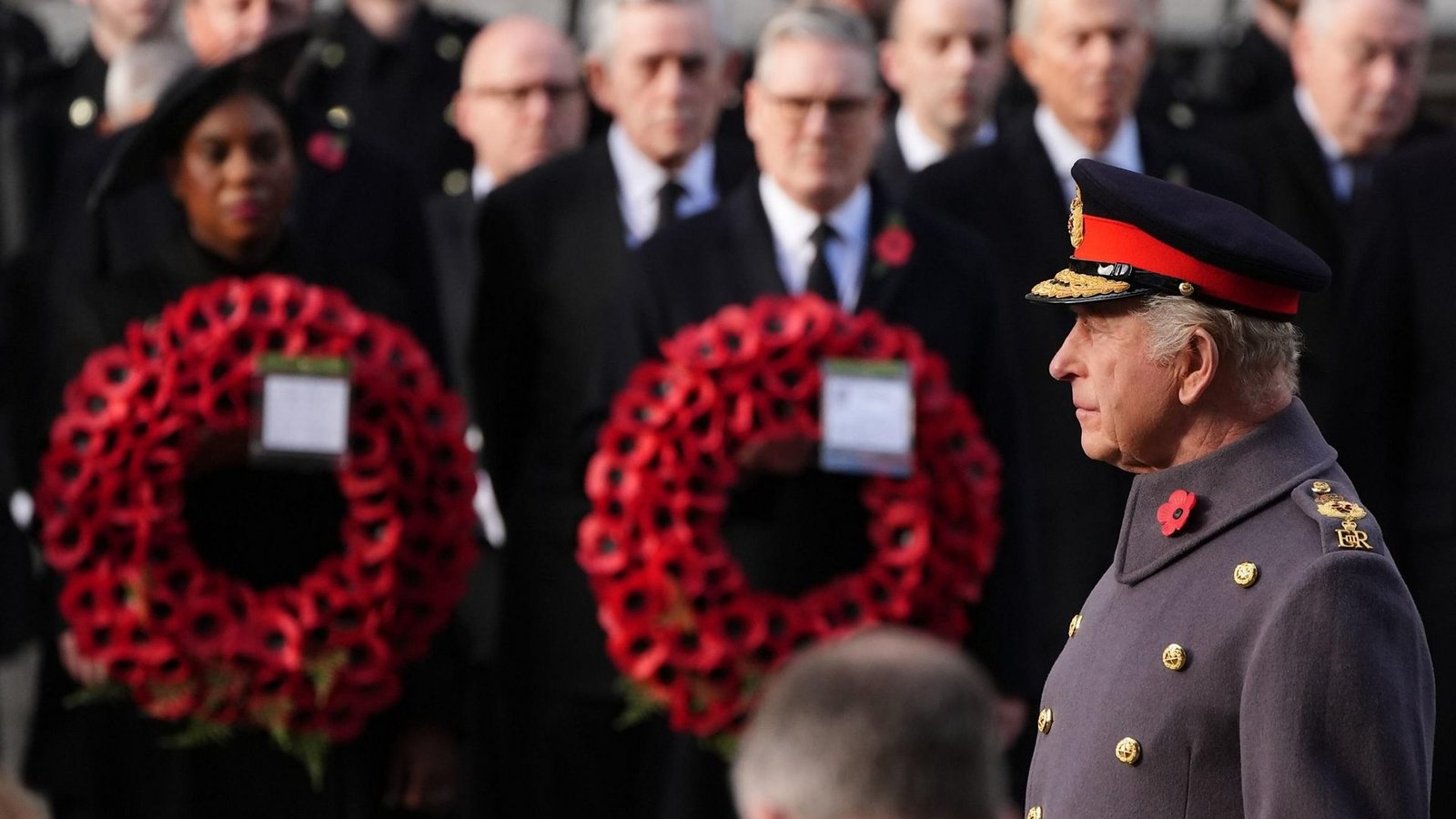
King Charles laid the first wreath in recognition of those who died in wars dating back to the First World War. Following tradition, he wore a field marshal uniform, the army’s highest rank, and saluted before observing a two-minute silence. The Prince of Wales, dressed in Royal Air Force uniform with the rank of wing commander, followed suit, saluting after laying his wreath at the Cenotaph.

Prime Minister Keir Starmer also laid a floral tribute, accompanied by senior politicians including Kemi Badenoch, Ed Davey, Yvette Cooper, Shabana Mahmood, Lindsay Hoyle, and representatives from the Commonwealth. Starmer highlighted the courage of the armed forces, saying: “This Remembrance Sunday, we pause as a nation to honour all those who have served our country. We reflect on the extraordinary courage of our armed forces in the world wars and subsequent conflicts, whose service secured the freedoms we cherish today.”
Marking the 80th anniversary of the Second World War, Starmer paid tribute to the generation who “stood against tyranny and shaped our future,” emphasizing that such sacrifices demand more than silence. He reaffirmed the government’s commitment to supporting veterans, their families, and those currently serving.
Observing the service from a balcony at the Foreign Office were the Princess of Wales, Queen Camilla, and other royals, including the Duke and Duchess of Gloucester, the Duke of Kent, and the Duchess of Edinburgh. Alongside them, eight former prime ministers—John Major, Tony Blair, Gordon Brown, David Cameron, Theresa May, Boris Johnson, Liz Truss, and Rishi Sunak—stood close to the Cenotaph.
In Scotland, First Minister John Swinney led commemorations at the Stone of Remembrance outside the City Chambers in Edinburgh. Across the UK, 10,000 armed forces personnel participated in the Royal British Legion’s annual march past, including a small group of Second World War veterans marking the 80th anniversary since the conflict’s end in 1945. Applause rang out along Whitehall as veterans, some in wheelchairs, saluted the crowd.
Among those present was 101-year-old Donald Poole, a Royal Army Ordnance Corps technician who served in India in 1945 when Japan surrendered. Reflecting on the occasion, Poole said, “It is a great honour to be able to pay tribute to the poor souls who have died in all conflicts, and I know how lucky I am to still be here thanks to all those who have fought and served, past and present. I also want to pay tribute to the civilian services who suffered during the Second World War, particularly the fire service, who saved so many lives during the Blitz—many of whom lost their own.”

Other veterans attending included Henry Rice, who arrived off Juno Beach five days after D-Day, and Mervyn Kersh, who reached Normandy three days after the start of the invasion. Sid Machin, a Chindit special forces soldier from the Burma campaign, also marched; at 101 years old, he is among the last surviving members of his unit. Machin recalled his wartime service at just 19, operating behind enemy lines in a glider at night to disrupt Japanese supply routes and infrastructure.
Commemorations were not limited to London. Across villages, towns, and cities throughout the UK, war memorials became sites of reflection, where communities gathered to honour the memory of those who gave their lives in service, ensuring that the sacrifices of past generations are remembered for years to come.
Related News:
 Prince Andrew Stripped of Title: Giuffre Family Hails Historic Moment
Trump Speaks on Prince Andrew’s Royal Scandal Fallout
Prince Andrew Stripped of Title: Giuffre Family Hails Historic Moment
Trump Speaks on Prince Andrew’s Royal Scandal Fallout
 British Grandmother to Return Home After Death Sentence in Bali
 Boris Johnson accused of undermining BBC leadership
 ‘Reckless’ cuts to victims’ services will cost more than they save
 MPs Warn Thousands Still Face Poverty Despite Labour’s Welfare Reform Retreat
 UK Home Office to Launch French Beach Signage to Warn Asylum Seekers of Risks
 Zarah Sultana Seeks Legal Action After Bitter Clash with Jeremy Corbyn Over Party Membership Funds
 Anti-Immigration Protesters and Counter-Protesters Clash in Glasgow
 A Third of EU Citizens in UK Report Discrimination by Public Bodies Post-Brexit
 Jailed Georgian Opposition Leaders Warn UK of Iranian Links to Ruling Party
 Prince Andrew met alleged Chinese spies during Pitch@Palace China trips
 Kosovo agrees to host Britain’s refused asylum seekers
 Mother dies after black market weight loss injection
 Peterborough Mosques Tighten Security After Attack
 British Woman in Iran ‘Losing Hope’ Amid Ongoing Detention
 BBC Journalist Held and Interrogated in Vietnam
 Nearly 48,000 Zombie Knives Removed from UK Streets in a Year
 Reform Councillor Defects to Tories Over ‘Uncomfortable’ Policies
 FBI Director Kash Patel Defends Girlfriend Amid Government Jet Claims
 Experts Warn on Home Birth Risks, Call for Skilled Midwives
 French Taxi Driver Cleared in David Lammy Theft Case After Fare Dispute
 UK University Faces Counter-Terror Probe Over China Pressure
 Prince William Plants Trees with Brazil’s Nature Heroes
 Just Stop Oil Protesters Convicted Amid Climate Defence Row
 Oprah enjoys Meghan’s jam on English muffins
 Met Police Culture Makes Racial Harm ‘Inevitable’
 Nicola Sturgeon Urges SNP to Oppose New Oil Fields
 Eleven Arrested After Pro-Palestine Protest at Villa Match
 Jailed UK climate protesters face extremist-style restrictions
 Remaining rebel Labour MPs have whip restored
 Tim Davie resigns as BBC director general amid bias claims
 How to get help when a child goes missing – call 999 urgently
 BBC director-general and news chief resign amid bias row
 BBC Faces Backlash as Reform UK Withdraws from Film
 The Debate Over Princess Beatrice and Eugenie’s Royal Status Intensifies
 Wes Streeting Denies Leadership Plot Against Starmer
 Tim Davie Defends BBC Amid Bias Scandal Storm
 Farage appointee to lead Reform youth accused of anti-British views
 Palace to reinstate hyphen in Andrew’s surname
 British state supplied victims to ‘worst sex offender in history’
 Politics latest: Starmer ‘will fight any leadership coup’ as Streeting denies attempt to oust Labour PM
 Ukraine-Russia war latest: Putin’s troops exploit bad weather to force Kyiv withdrawal from multiple towns
 Leading doctors issue warning amid ‘bad’ flu season
 New Epstein Files Spark Political Clash in Washington
 Ukraine Energy Corruption Scandal Hits Zelensky’s Inner Circle
 New review urges UK to repatriate Shamima Begum, others from Syria
 Victims’ commissioner Baroness Newlove dies aged 63
 Crowborough Protest Over Plan to House 600 Asylum Seekers
 UK Asylum Overhaul Sparks Debate Over Human Rights and Deportations
 UK Asylum Reforms: Temporary Refugee Status and Faster Deportations
 Mum Calls for New Licence Rules After Teen Road Death
 UK Candidate Moved to Safe House After Election Threats
 Mother Watches in Horror as Teen Daughter Dies on Tracks
 UN Security Council Approves Trump’s Gaza Peace Plan
 Thousands at Risk in Gaza Amid Winter Flooding
 Forgotten War, Shattered Lives: Sexual Violence Devastates Women in Ethiopia
 Rama Rebukes Mahmood for Targeting Albanian Families
 Russian Vessel Used Lasers on RAF Pilots, UK Claims
 PM Shares Emotional Letter to Son on Men’s Struggles
 Podcaster Faces Abuse Charges Over Controlling Behaviour
 Kate Forbes: Motherhood Harder Than Politics
 WhatsApp Messages Expose Nathan Gill’s Bribery
 South African Women Call Purple Protest Over Gender Violence
 Venezuela Threatens Nobel Winner Machado with Fugitive Status
 Reeves to Crack Down on Benefit Fraud While Lifting Two-Child Limit
 Most Tories Expect to Support a Farage-Led Government
 DWP to Reassess Hundreds of Thousands in Carer Allowance Scandal
 BBC Chairman Faces Scrutiny Over Bias Claims
 Labour MP claims devolution bill is ‘blatant discrimination’ against Cornwall
 Ex-Classmate Accuses Farage of Dishonesty on Racism Claims
 Trump Envoy to Discuss Ukraine Peace at Kremlin
 Planned Palestinian Flag Raising at Belfast City Hall Faces Delay Amid Legal Concerns
 Sudanese Family Vows to Stay After Racist Graffiti
 Video shows Israeli troops kill Palestinians after surrender
 Ex-Brexit MEP Rejects Claim of Pro-Russia Payments
 Guinea-Bissau President Flees After Military Coup
 Rare shark attack kills woman, injures man at remote NSW beach
 Kent Reform Councillors Criticised Over Political Staff Spending
 Prince George Helps Father at London Homelessness Charity