Published: 09 December 2025. The English Chronicle Desk. The English Chronicle Online.
UK households reduced their spending at the fastest rate in nearly five years, according to Barclays’ latest survey. The report highlighted that consumers delayed their Christmas shopping as uncertainty surrounding the budget weighed heavily on confidence. Barclays revealed that card spending dropped by 1.1% year on year in November, marking the steepest decline since February 2021.
Despite the slowdown, retailers reported a busy Black Friday, with transaction volumes rising 62.5% above an average day in 2025. Yet, analysis from the British Retail Consortium (BRC) and consultancy KPMG indicated that this year’s Black Friday boost was weaker than usual, reflecting shoppers’ cautious attitudes. Black Friday remains a key indicator for retailers, marking the start of the festive shopping season and offering early insights into consumer demand.
The BRC noted that overall sales in November were modestly higher than the same month in 2024, mainly supported by increased spending on food. Food sales rose by 3%, although this growth lagged behind inflation, which stood at 3.6%. Spending on other products rose only 0.1% year on year, well below the 12-month average of 1.6%, showing broad consumer restraint.

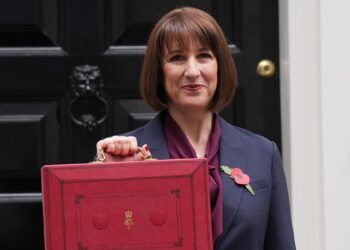
Opposition parties have criticized Chancellor Rachel Reeves, claiming months of speculation prior to the budget on 26 November undermined consumer confidence. Retailers, particularly medium-sized businesses and pub chains, have urged the government to reconsider changes to business rates, which are expected to affect profitability. Barclays also reported a slowdown in pub spending, declining 1.5% in November. Younger adults showed a preference for alcohol-free beverages and activities, with 42% of 18-34-year-olds choosing alcohol-free drinks and 40% opting for alcohol-free leisure options.
The survey revealed that while confidence in the broader economy remained subdued, consumers’ confidence in their personal finances improved slightly. Economic analysts predict that slowing growth, rising unemployment, and challenges faced by high street retailers could influence the Bank of England to reduce interest rates from 4% to 3.75% in its upcoming policy meeting.
There were positive developments for certain sectors, however. Travel agents saw a 10.7% boost on Black Friday, while streaming services and subscriptions grew 3.5%, buoyed by popular shows like Stranger Things and Pluribus. Homeware and upholstery also performed well as households prepared for festive gatherings, whereas fashion sales were dampened by a mild early November, reducing winterwear demand.
Jack Meaning, chief UK economist at Barclays, commented, “Even with Black Friday support, consumer spending remained muted in the final quarter. The question is whether easing interest rates and declining inflation can reverse this trend or if uncertainty will persist into 2026.”
Helen Dickinson, BRC chief executive, added, “Pre-budget jitters curtailed Black Friday’s impact, leaving the month weaker than anticipated. Moving forward, policy measures must prioritise reviving consumer confidence and lowering business costs to enable growth and economic recovery.”
The Barclays survey paints a clear picture of cautious households, highlighting the persistent economic uncertainty in the UK. Retailers and policymakers face the pressing challenge of encouraging consumer activity while navigating inflationary pressures and potential fiscal constraints. With 2025 closing under muted spending conditions, the upcoming year will test the resilience of household budgets and retail strategies alike.
Related News:
 Market Jitters Send Stocks Lower as Trade Tensions and Earnings Anxiety Weigh on Investors
 Global Markets Tumble as Trade Tensions Spark Investor Anxiety
 U.S. Slaps 30% Tariff on EU Imports, Sparking Fierce Backlash and Emergency Talks in Brussels
 FTSE 100 Soars to Unprecedented 9,000 Points in Historic Market Rally
 UK Banks Granted Reprieve as BoE Delays Basel III Capital Rules Until 2028
 UK Inflation Climbs to 3.6% as Food and Fuel Prices Squeeze Households
 Bank of England Poised to Cut Interest Rates Amid Rising Unemployment and Global Trade Pressures
 Non-Dom Tax Crackdown Risks Backfiring as Exodus Threatens UK Revenue and Investment
 Money Problem: ‘My husband is freelance and in hospital – how can I make sure we don’t lose our home?’
 China’s crackdown on civil servant perks sparks economic concerns
 Labour Members Push for Wealth Tax as Public Finance Crisis Deepens
 Inflation Latest: Cost of Living Expected to Rise Again in Key Figures Released Today
 Family in Fear After Tommy Robinson Shares Video of Black Man With White Granddaughters
 Energy Users Could Save £5bn Annually if Gas Power Plants Are Removed from Market
 Retail Sales See Uptick Amid Errors and Delays as ONS Faces Scrutiny
 UK House Prices Hit Record £299,331 as Market Shows Steady Growth
Shein UK Faces Allegations of Shifting Majority of Profits to Singapore to Reduce UK Tax
UK House Prices Hit Record £299,331 as Market Shows Steady Growth
Shein UK Faces Allegations of Shifting Majority of Profits to Singapore to Reduce UK Tax
 UK Retail Sales Rise in August, but Tax Concerns Loom Over Festive Period
 Vodafone Faces Fourth Probe into Franchising Division Amid £120m Legal Battle
 John Lewis Partnership Posts £88m Loss as Costs and Restructuring Bite
 UK Economy Flatlines in July, Raising Pressure on Rachel Reeves Ahead of Autumn Budget
Business Rates Hike Could Threaten Hundreds of UK Retailers, Putting 100,000 Jobs at Risk
UK Economy Flatlines in July, Raising Pressure on Rachel Reeves Ahead of Autumn Budget
Business Rates Hike Could Threaten Hundreds of UK Retailers, Putting 100,000 Jobs at Risk
 Rachel Reeves Hosts Top UK and US Financial Executives as Trump’s State Visit Begins
 UK Labour Market Shows Signs of Cooling as Wage Growth Slows and Redundancies Rise
 UK Wage Growth Remains High, But Cost of Living Pressures Bite
UK Inflation Holds Steady at 3.8% as Rising Fuel Costs Offset Falling Air Fares
UK Wage Growth Remains High, But Cost of Living Pressures Bite
UK Inflation Holds Steady at 3.8% as Rising Fuel Costs Offset Falling Air Fares
 Ben & Jerry’s Co-Founder Resigns, Accusing Unilever of Silencing Brand’s Social Mission
 Resolution Foundation Chief Urges Chancellor Reeves to Rethink Budget Before November
 UK Borrowing Surges to £18bn in August, Exceeding Forecasts
 Farage’s Reform UK Receives £100,000 from Design Firm with Past Tax Issues
Rachel Reeves Faces Criticism Over Appearance at Gambling Industry Event Amid Tax Review
Farage’s Reform UK Receives £100,000 from Design Firm with Past Tax Issues
Rachel Reeves Faces Criticism Over Appearance at Gambling Industry Event Amid Tax Review
 Dagenham Left in Limbo After Smithfield and Billingsgate Market Relocation Cancelled
 Public Skepticism Over AI Poses Challenge to UK’s Superpower Ambitions, Says Tony Blair Institute
 Gatwick Secures Approval for £2.2bn Second Runway Expansion
 GSK Chief Executive Emma Walmsley to Step Down After Eight Years at the Helm
 Retailers Warn Tax Rises Could Prolong Inflation as Shop Prices Climb
UK Housing Market Returns to Growth Amid Signs of Stability and Regional Variation
Retailers Warn Tax Rises Could Prolong Inflation as Shop Prices Climb
UK Housing Market Returns to Growth Amid Signs of Stability and Regional Variation
 Richard Desmond Begins High Court Battle Over National Lottery Licence
 UK households brace for October benefit payments and rising energy costs amid cost-of-living pressures
 Delivery Apps Could Double the Cost of Your Groceries, Warns Consumer Watchdog
 Jaguar Land Rover to Resume Production After Cyber-Attack, Launches Supplier Support Scheme
 Jaguar Land Rover to Resume Production After Major Cyber-Attack, Supplier Support Program Launched
 Kemi Badenoch Unveils ‘Golden Rule’ to Halve Spending Cuts for Deficit Reduction at Tory Conference
 Gold Hits Historic $4,000 Amid Global Uncertainty
 UK GDP edges up 0.1% in August as Reeves faces budget pressure
 Rachel Reeves urged to consider welfare cuts to boost fiscal credibility
 Travel Chiefs Warn Budget May Price Out Holidaymakers
 UK inflation update: New rate expected as Budget approaches
 Real living wage set to rise nearly 7% for UK workers in 2026
 Co-op Urged Staff to Promote Vapes After Cyber-Attack Hit Sales
 Rachel Reeves to lead UK trade push in Saudi Arabia amid rights debate
 Aston Martin cuts £300m investment as Trump tariffs and weak China demand hit profits.
 Starmer Faces Pressure as Tax Promises Come Under Question
 Fed Cuts US Interest Rates Again Amid Labour Market Uncertainty
 Nvidia Secures Major AI Chip Deals with South Korean Tech Giants
 UK Small Business Owner to Challenge L’Oréal in Tribunal
 Rachel Reeves Eyes 20% Tax on Assets for UK Departures
 Court Hears Challenge Over Water Bills Funding Sewage Fixes
 Millions of Brits Adjust Lifestyle to Afford Essentials
Thinktanks Urge Rachel Reeves to Reform UK Tax System
Millions of Brits Adjust Lifestyle to Afford Essentials
Thinktanks Urge Rachel Reeves to Reform UK Tax System
 Tony Blair think tank warns Rachel Reeves must cut taxes if manifesto broken
MPs Press Rachel Reeves to Hike Gambling Taxes
Tony Blair think tank warns Rachel Reeves must cut taxes if manifesto broken
MPs Press Rachel Reeves to Hike Gambling Taxes
 Warning as Britons prepare to spend £4 billion this Black Friday
 Troubled drinks giant Diageo names former Tesco boss to lead turnaround push
 Global markets drop amid tech sell-off and China slowdown
 UK Government Borrowing Higher Than Expected
 Minister Denies Budget Leaks Have Harmed UK Economy
 Budget 2025: Reeves Drops Economic Growth Reference
 Black Friday Footfall Falls as UK Shoppers Hold Back Amid Economic Concerns
 Rising Water Bills Lift Troubled Thames Back to Profit
 Tesla Warns UK That Weak EV Rules Could Threaten Sales
 Treasury Opens Inquiry into Autumn Budget Leak Claims
 Tough Market Conditions Hit Frasers Group Half-Year Retail Sales
 UK Axes Hundreds of ‘Zombie’ Energy Projects to Clear Grid
 HSBC Manager: Keep 3-6 Months’ Expenses in Separate Account
 Nationwide Fined £44m Over Financial Crime Failings
 Young People Hit Hardest by UK Jobs Downturn, Thinktank Finds
 UK House Prices May Rise Up to 4% in 2026 as Rates Fall
 UK Borrowing Rises Above Forecasts as November Pressures Mount
 UK Slashes Aid to Western Balkans, Raising Security Concerns