Published: 05 January 2026. The English Chronicle Desk. The English Chronicle Online.
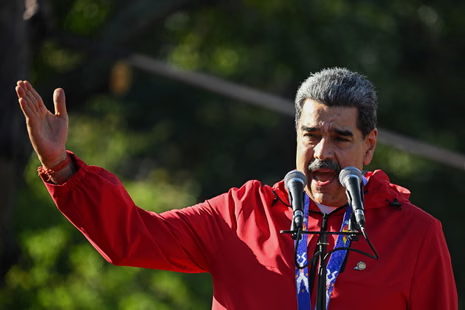
Deposed Venezuelan leader Nicolás Maduro will appear in New York court on Monday afternoon, facing serious drugs and weapons charges. The Maduro case, already making headlines globally, involves allegations that he operated a corrupt government that facilitated extensive drug trafficking networks. In the first hundred words, the focus keyword “Maduro case” is already central to the narrative, highlighting the significance of the legal proceedings. Maduro and his wife, Cilia Flores, were captured in a pre-dawn raid at a Caracas compound over the weekend, a shocking event that left at least 40 people dead, including military personnel and civilians, according to verified reports.
The indictment claims that Maduro helmed a government that systematically exploited its authority for illegal activities over decades. The US Department of Justice alleges Maduro orchestrated narco-terrorism operations, cocaine importation schemes, and the possession of destructive weapons. In addition to Maduro, his son and three associates are charged under the same indictment, reflecting a broad sweep against those linked to his administration’s criminal activities.

This weekend’s raid followed months of US operations targeting Venezuelan vessels accused of transporting illicit substances. Sanctioned oil tankers were seized off the nation’s coast, intensifying economic pressure on Maduro’s already fragile government. Analysts note that these strikes, which resulted in over 110 deaths, have raised legal questions concerning potential violations of international law. The unfolding Maduro case thus represents not only a criminal prosecution but also a geopolitical flashpoint.
Former US President Donald Trump, who authorized operations connected to the Maduro case, asserted that the United States would assume temporary control over Venezuela. Speaking at Mar-a-Lago, Trump emphasized, “We will run the country until a safe and proper transition is established.” He framed the intervention as a necessity to prevent alternative leadership that could disregard Venezuelan interests, describing the operation as a historic military assault unparalleled since World War Two.
The Maduro case has sparked heated responses across US political circles. Top Democratic leaders condemned the unilateral action, citing constitutional limits on presidential military powers. Senator Chris Murphy criticized the administration, stating that Congress was misled about the mission’s intent, which was portrayed as a counter-narcotics operation rather than a move toward regime change. Observers highlight that the Maduro case intertwines questions of legality, international intervention, and US domestic law, complicating what initially appeared to be a straightforward criminal prosecution.
Trump also revealed plans to integrate US oil companies into Venezuela’s energy infrastructure, projecting substantial economic gains. He stated that American firms would repair and manage Venezuela’s oil facilities and could participate in a second, larger military operation if deemed necessary. Despite these assertions, actual US control over Venezuela remains ambiguous, and Maduro’s government continues to operate, underscoring the complexities surrounding the ongoing Maduro case.

The legal proceedings in New York will focus on narcotics trafficking, conspiracy charges, and possession of military-grade weapons. Lawyers representing Maduro face a formidable challenge, given the breadth of evidence compiled by US authorities. International attention is also intensifying, as the Maduro case raises questions about sovereignty, intervention, and global drug enforcement practices. Experts emphasize that the outcome of this trial could set lasting precedents for the treatment of heads of state accused of organized crime activities.
Meanwhile, in Caracas, Maduro loyalists are rallying to contest the US-led operation, demonstrating that domestic support remains significant. The Maduro case, therefore, continues to have both immediate legal implications and broader geopolitical consequences. Analysts anticipate further developments as the trial approaches, with potential ramifications for US foreign policy, Venezuelan politics, and international law.
As the world watches, the Maduro case illustrates a complex intersection of criminal accountability, international diplomacy, and military intervention. Observers underscore that the trial is more than a legal proceeding; it is a pivotal moment in the ongoing struggle over Venezuela’s governance and the global fight against narcotics trafficking. Both legal experts and political analysts are closely monitoring every step, recognizing that the case’s outcome will resonate far beyond the courtroom walls.
The Maduro case is expected to dominate headlines in the coming weeks, highlighting the intricate balance of justice, power, and international oversight that defines contemporary geopolitics.
Related News:
 BBC to Apologise Over Edited Trump Speech Amid Backlash
 Britain deploys RAF specialists to assist Belgium with drone threats
 US Justice Department Files Lawsuit Against California Over Partisan Voting Maps
 Greene Pushes Epstein Files Amid Trump Fallout
 Trump Deploys DHS to Charlotte in Major Arrest Operation
 December Run-Off in Chile as Election Produces No Winner
 Canada Passes Carney’s First Budget in Tight Parliamentary Vote
 Shadow Fleet at Sea: Europe’s Battle Against Illicit Oil Shipping
 Pentagon Officials in Ukraine to Discuss War End
 Venezuela Threatens Nobel Winner Machado with Fugitive Status
 Georgians Defy Government Crackdown After Year of Protests
 India’s Labour Law Overhaul Sparks Fierce Debate
 EU plans $105bn Ukraine aid using frozen Russian assets
 Global campaign launched to free Palestinian leader Barghouti
 US Strategy in Venezuela Clarified, Johnson Says No War
 Iran Leader Blames Protesters, Says They Serve Trump
 Trump Policies Boost China’s Global Rise, Survey Finds
 Iran unrest slows under brutal crackdown and global tensions
 Thousands Protest ICE Operations in Nationwide US Day of Action
 Epstein Files Reveal Trump Officials’ Emails with Financier
 Thousands Protest ICE in New York Against Trump Deportation Campaign
 Starmer Condemns ‘Depraved’ Russian Strikes on Ukraine
 Herzog visit sparks protests across Australian cities
 Sydney Protest Escalates and Elderly Woman Suffers Severe Injury
 Tarique Rahman’s Rise Toward Bangladesh’s Top Job
 Glass Cliff Debate After Ley’s Ouster
 Japan Seizes Chinese Boat Amid Rising Tensions
 AFP Reviews Pauline Hanson Comments
 Duterte ICC Hearing Begins Amid Defiance
 Trump Tariffs Threat Spark UK and EU Alarm
 Difficult Grace Tame Label Ignites Fury and Debate Down Under
 The Dangerous Rise of Remigration Across Modern Europe
 Trump’s Marathon Speech Fails to Mask a Growing National Disconnect
 US to offer passport services in West Bank settlements
 Clinton Testimony Erupts in Fiery Exchange
 Health Funding Row Rocks US‑Africa Relations
 New UK-EU Reset Faces Criticism from Parliament
 Cuba charges six exiles for terrorism after speedboat raid
 US and Ecuadorian Forces Strike Drug Cartels Together
 Mojtaba Khamenei Chosen as Iran’s New Supreme Leader
 Iran Defiance Grows Amid US-Israel War Pressure
 US Strikes on Iran Set for Most Intense Day Yet
 Iran Nuclear Stockpile Sparks US Special Forces Debate
 China’s Ethnic Unity Law Set to Reshape Minority Schools
 Moscow Internet Blackouts Raise Censorship Fears
 Republicans Rebuke FCC Threat Over Iran War Coverage
 Oil Prices Surge as IEA Weighs Emergency Release
 Danish Election Deadlock Shakes Frederiksen’s Grip
 Trump to Visit China in May After Iran War Delay
 Pope Rebukes Leaders for War as Middle East Tensions Rise
 Trump to Deploy “God Squad” Over Gulf Wildlife Protections
 Army Probes Apache Flyover at Kid Rock’s Nashville Estate
 Italian Town Buys Mussolini Villa to Keep Away Fascist Fans
 Report Says Pezzullo Acted ‘Recklessly’ in Dealings
 Trump Employs Nixon’s Madman Theory Amid Iran Crisis
 Trump Voices Frustration Over Nato Role in Iran Conflict
 Hungary election: Orbán faces biggest test amid scandal
 Suspected Plot Targets Pipeline Before Hungary Vote
 Trump Slams UK Ties and Threatens To Rewrite Trade Deal
 Southeast Asia Turns to Russia Amid Energy Crisis
 Capitalism ‘Suicidal’, Warns Petro at Climate Summit
 Judge halts deportation of Yemeni refugees in US
 Activists allege abuse after Gaza flotilla seizure
 Trump approval plunges amid Iran war fears
 Ohio’s Battle for Trust: Democrats Vying to Flip the Buckeye State
 US ‘Narco Boat’ Strikes Draw Global Outcry
 Ohio Primaries Set Stage for Crucial Midterms
 Afghan Families Left in Limbo Face Risk of Deportation
 Tensions Emerge in Netanyahu-Trump Alliance
 US Awaits Iran Reply on New Ceasefire Proposal
 Hormuz Talks Near Critical Stage
 Discontent grows around Putin amid war strain
 Starmer Leadership Under Pressure After Setbacks
 House Curbs Trump’s War Powers in Rare Rebellion
 Germany Summons Chinese Envoy Over Russian Troop Training
 New South Wales Premier Chris Minns Signals Tough Road Ahead for Labor
 Le Pen to Run for President Despite Embezzlement Conviction
 Ukraine Creates Long-Range Strike Command
 Le Pen’s Popularity Holds Despite Conviction
 Houthis Strike Saudi Arabia as Middle East Tensions Rise