Published: 10 January 2026. The English Chronicle Desk. The English Chronicle Online.
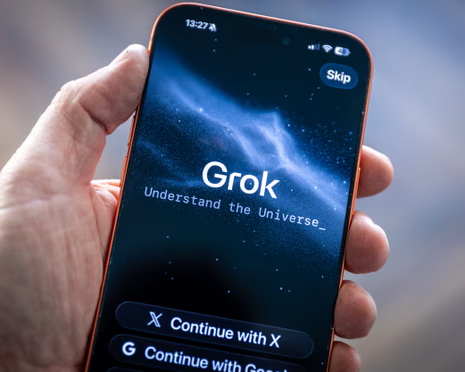
Indonesia has temporarily blocked the Grok chatbot, citing the risk of generating sexual content. Authorities stated that Grok’s AI tool could produce sexually explicit images, including depictions of children, and viewed this as a violation of human rights and online safety. The focus on Grok highlights growing concerns worldwide regarding AI-driven sexualised content, with regulators in Europe, Asia, and Australia scrutinising its potential misuse. In the first hundred words, the keyword “Grok chatbot” appears naturally, signalling its central relevance in this developing story.
The Indonesian government, responsible for regulating digital safety, summoned representatives from xAI, the company behind Grok, for urgent discussions. Communications and Digital Minister Meutya Hafid emphasised that producing non-consensual sexual deepfakes is unacceptable and undermines citizen security online. Indonesia’s rules explicitly prohibit obscene digital content, and the authorities argued the Grok chatbot could facilitate breaches of these laws. The temporary block marks Indonesia as the first nation to restrict access to this AI service due to sexual content concerns.

xAI, founded by Elon Musk, recently limited image generation and editing features of Grok to paying subscribers. The restriction followed revelations that the tool could be misused to create sexualised outputs, prompting public outrage. xAI stated that users attempting illegal content generation would face consequences equivalent to uploading prohibited material. Despite automated responses to media queries dismissing some allegations, concerns about the Grok chatbot’s safeguards remain unresolved.
Globally, governments and regulators have expressed alarm about AI platforms like Grok. The UK has reportedly considered potential fines and restrictions on Musk’s broader X platform due to similar risks. Australia has also weighed in, with Prime Minister Anthony Albanese condemning AI tools that sexualise people without consent. Albanese described the exploitation of generative AI through Grok as “abhorrent” and called for stronger oversight of social media platforms to ensure public protection.
Australia’s eSafety Office, which monitors online safety, noted an uptick in reports concerning Grok’s sexualised imagery. While numbers remain modest, the office emphasised its authority under the Online Safety Act to issue removal notices and enforce systemic safety obligations. Authorities also stressed that platforms, including X and Grok, must proactively detect and eliminate child sexual exploitation content, aligning with globally recognised safety standards.
Musk has defended Grok, reiterating that illegal content creation will face penalties. However, international criticism has intensified, with leaders like UK Prime Minister Keir Starmer and Albanese calling for enhanced AI regulation. The debate reflects broader tensions over generative AI, digital ethics, and the responsibility of social media companies to protect users from exploitative material.
The temporary block on Grok chatbot in Indonesia illustrates the difficulty of balancing innovation and public safety. Experts warn that generative AI without robust safeguards can easily facilitate harmful and sexualised imagery. xAI’s move to restrict certain features to subscribers is seen as a partial remedy, yet regulators insist that further oversight is necessary to prevent misuse. These developments underscore the emerging global dialogue on responsible AI deployment, particularly in countries with strict content regulations.
Indonesia’s action has sparked discussions among digital rights advocates, policymakers, and AI developers worldwide. Many emphasise that AI companies must integrate safety measures from the outset, including monitoring and limiting content that could harm vulnerable populations. Grok chatbot’s temporary suspension may set a precedent for other nations evaluating the safety and ethics of generative AI platforms. Musk’s prominence ensures that Grok remains a focal point of debate on AI’s societal impact, legal accountability, and ethical boundaries.

While xAI has taken steps to curtail Grok chatbot’s image creation features, critics remain sceptical. They argue that paywall restrictions may not sufficiently prevent sexualised outputs from reaching unintended audiences. International scrutiny is likely to continue, with ongoing regulatory pressure from Indonesia, Australia, and Europe shaping the future of AI content moderation. The Grok chatbot case exemplifies how AI innovation must be paired with rigorous safeguards to protect public trust and uphold human dignity in the digital sphere.
The Indonesian government’s decisive response sends a strong message about prioritising citizen safety online. As AI tools like Grok expand in capability, the international community is paying closer attention to potential risks associated with generative platforms. The balance between fostering AI development and preventing harmful exploitation is increasingly urgent, with Grok chatbot at the centre of global conversations on ethics, accountability, and digital safety.
Related News:
 How Bringing Forests Into Preschools Boosts Children’s Health
 Critically Endangered Spider Rediscovered in UK After 40 Years
 Virgin Trains Moves Closer to Challenging Eurostar Monopoly
 Biggest Supermoon of the Year to Dazzle Sky on Wednesday
 UK Water Firms Ordered to Act Over ‘Forever Chemicals’ Threat
 UK Bans Fake Numbers: Scammers Lose Their Trick
 England Curriculum Review Recommends Major Changes
 Mortgages and AI Set to Feature in English Schools
 Vibe coding’ named Collins dictionary’s word of the year
 Experts Urge Legal Right to Timely Cancer Care
 Patients to Test Health at Home to Ease NHS Winter Pressure
 One of world’s last dinosaurs on sale for £3m
 North Sea oil workers must lose weight or face job loss
 No link found between paracetamol in pregnancy and autism
 Britain deploys RAF specialists to assist Belgium with drone threats
 Government urges schools to ban phones to curb classroom disruption
 NHS frontline staff forced to cover gaps as managers remain scarce
 Northern Lights May Illuminate UK Skies Amid Strong Solar Storm
 Night after night, Belgium is on high alert.
 Tech firms to test AI safeguards against child abuse images
 England schools to receive AI-generated attendance targets
 Stop using ChatGPT to write speeches, AI minister tells MPs
 Northern Lights may illuminate UK skies this week
 New laws to bolster UK’s defences against cyber attacks on NHS, transport and energy
 UK Greenlights First Small Nuclear Plant in North Wales
 New Research Explains Severe Diabetes in Children
 Hitler’s DNA Confirms He Truly Had Only One Testicle
 Working-Class Men with Prostate Cancer Left Behind by NHS
 Higgs Donates Nobel Medal to His Beloved University
 New AI tool could cut wasted efforts in organ transplants
 How Cultures Interpreted the Aurora Through History
 From War to Wales: Teen Innovator Eyes Net Zero Future
 From Baby Teeth to Bioengineering: The Future of Self-Healing Teeth
 Ukraine to Get 100 French Rafale Jets in Historic Deal
 Sundar Pichai Cautions on AI Hype and Market Risks
 Google Chief Urges Caution: Don’t Trust AI Blindly
 US Judge Says Meta Did Not Hold Illegal Social Media Monopoly
 Poll Reveals China Leads World in Trusting AI Technology
 Healthy Habits in Your 30s That Boost Life in Your 70s
 Cardiff Shopper ‘Branded a Thief’ by Facewatch System
 Raccoons Could Become America’s Next Pet
 Australia to Ban Social Media for Kids Under-16 Starting December
 Coffins Now Too Large to Cremate Amid Rising Obesity Crisis
 UK Taskforce Unveils Plan to Streamline Nuclear Reactor Rules
 Thinktank Urges Smaller Hospitals to End NHS ‘Permacrisis’
 NHS paediatric leave parents waiting months for answers
 Ofcom urges platforms to limit abuse and curb online ‘pile-ons’
 X’s New Location Disclosure Policy: What It Means for User Safety
 Extraordinary’ Object Found at Orkney Neolithic Site
 Asahi says 1.5 million customers’ data potentially leaked in cyber-attack
 Australians Angry as BOM Website Revamp Backfires
 AI Actress Creator Says Tilly Norwood Won’t Replace Actors
 YouTube Warns Kids Will Be Less Safe Under Australia Ban
 Starmer’s communications chief to outline media strategy overhaul
 TikTok Shop Emerges as a Gamechanger for UK Small Businesses
 George Clooney and Amal Clooney Receive French Citizenship
 UK Car Sales Pass 2 Million as Chinese Brands Surge
 Shock US Raid: Maduro Pleads Not Guilty in Manhattan Court
 UK and France Agree Troop Deployment Plan for Ukraine
 Capitol Attack Anniversary Sparks Deep Political Divide
 EU Weakens as Trump Targets Venezuela and Greenland
 Saudi Officials Report Zubaidi Flee Before Yemen Peace Talks
 AI Grok Sparks Child Safety Alarm in the UK
 Venezuela Oil Deal Opens Tensions with US Control
 Election Deepfakes Pilot Launched for Scottish and Welsh Votes
 UK Targets in New York Bomb Threat Hoax: Man Jailed
 Trump Plans Venezuela Meeting, Warns of Cartel Land Strikes
 Dutch Nationwide Fireworks Ban Expected to Transform New Year Traditions
 Gambia Supreme Court Hears Case to Overturn FGM Ban
 Trump Labels Renee Good a ‘Paid Agitator’ After Minneapolis ICE Killing
 Headline: Cancel Zombie Subscriptions to Save Hundreds Annually
 Kate Winslet to Narrate Film Highlighting King’s Environmental Mission
 Trump’s UK Ambassador Urges North Sea Drilling to Strengthen US Ties
BBC to Apologise Over Edited Trump Speech Amid Backlash
Trump’s UK Ambassador Urges North Sea Drilling to Strengthen US Ties
BBC to Apologise Over Edited Trump Speech Amid Backlash
 Millionaires group urge Reeves to introduce wealth tax to ‘lift kids out of poverty’
 Reeves rejects £1bn plea for NHS redundancy payouts
 PM Condemns Leaks, Vows Loyalty to Ministers and Stability
 Phillipson Accused of Appeasing Unions by Diluting EBacc
 Saka Solidifies Role as Tuchel’s Key England Lieutenant
 Greene Pushes Epstein Files Amid Trump Fallout