Published: 20 February 2026. The English Chronicle Desk. The English Chronicle Online.
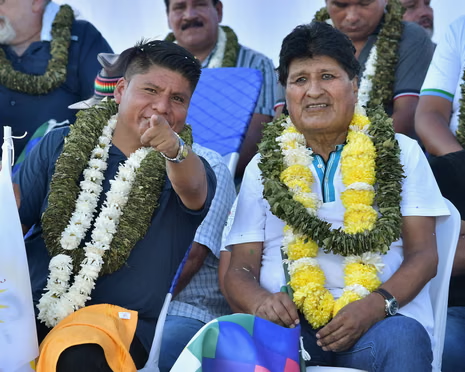
The return of Evo Morales to public view has stirred Bolivia’s political landscape this week. After nearly seven weeks of unexplained silence, Evo Morales reappeared in his rural stronghold, ending intense speculation about his whereabouts. Supporters gathered in the tropical town of Chimoré as cameras captured his arrival. The images, widely shared across social media, showed a familiar yet visibly frailer figure. For many Bolivians, the reappearance of Evo Morales marked a dramatic moment in an already tense political chapter.
The former president had not been seen publicly since early January. Rumours circulated quickly, suggesting he might have fled Bolivia amid mounting legal pressures. Some online commentators linked his absence to international developments, including US actions against regional allies. However, no official confirmation supported claims that Evo Morales had left the country. The uncertainty highlighted how little verified information emerged from the remote Chapare region.
Chapare remains the heart of Morales’ political base and coca-growing movement. It is also the area where he has spent much of the past year. Authorities have sought his arrest on human trafficking charges, which he firmly denies. His supporters argue the allegations are politically motivated. The government insists that legal processes must proceed without interference.
Footage released by Radio Kawsachun Coca showed Morales arriving at a stadium by tractor. Wearing dark sunglasses and greeting cheering crowds, he appeared determined despite visible signs of fatigue. Addressing supporters, Evo Morales explained that illness caused his extended absence. He said he had contracted chikungunya, a mosquito-borne disease known for fever and joint pain. The 66-year-old described complications that caught him by surprise.

Medical experts note that chikungunya can leave patients weak for weeks. Morales urged citizens to protect themselves against mosquito exposure. His comments carried a rare tone of vulnerability. Observers remarked that he looked noticeably thinner and more subdued than before. Yet his message remained defiant and politically charged.
During his speech, he rejected suggestions that he intended to flee Bolivia. “I am not going to leave,” he declared to applause. Evo Morales insisted he would remain in the country despite the arrest warrant. He framed his decision as a commitment to defend national sovereignty. His words resonated strongly among loyal supporters gathered in Chimoré.
The political context surrounding his return is complex and highly charged. Bolivia underwent significant change following the October election of President Rodrigo Paz. Paz’s victory ended nearly two decades of rule by the Movement Toward Socialism party. That party, widely known as MAS, had been closely identified with Morales. The transition marked a sharp ideological shift for the Andean nation.
Paz has pursued renewed diplomatic ties with the United States. He also expressed interest in restoring cooperation with the US Drug Enforcement Administration. Morales had expelled American anti-drug agents 17 years earlier. At the time, he accused Washington of interference in Bolivia’s sovereignty. His administration instead fostered closer ties with countries such as China and Russia.
The new president’s approach reflects a broader geopolitical recalibration. Paz confirmed plans to meet US President Donald Trump in Miami next month. The summit aims to strengthen alliances among like-minded Latin American leaders. Washington has emphasised countering Chinese influence across the region. For critics of Morales, these developments represent pragmatic diplomacy.
For Morales and his allies, however, the shift fuels deep suspicion. In his speech, Evo Morales criticised what he described as revived US interventionism. He referred to the Monroe Doctrine, first articulated in 1823. According to Morales, modern reinterpretations threaten left-wing governments in Latin America. His remarks drew loud applause from supporters waving party flags.
The reference to the Monroe Doctrine underscores longstanding ideological divisions. Throughout his presidency, Morales positioned Bolivia as resistant to perceived imperial pressures. He championed Indigenous rights and national control over natural resources. His policies won praise from supporters and criticism from opponents. The political debate remains deeply polarised years after his 2019 ouster.
Morales’ fall from power followed contested elections and widespread protests. He resigned amid accusations of electoral irregularities and later sought temporary exile. Subsequent investigations and legal battles have kept him in headlines. His return to Chapare last year signalled a renewed presence within domestic politics. Now, his latest appearance reinforces his intent to remain active.
Analysts suggest his re-emergence serves multiple strategic purposes. It reassures supporters who feared he might be incapacitated or abroad. It also signals resilience amid legal and political challenges. By endorsing candidates for upcoming municipal and regional elections, Morales seeks continued influence. Local races often shape national momentum in Bolivia’s decentralised system.
The municipal elections scheduled next month carry symbolic weight. They represent the first local tests under President Paz’s administration. Both sides view them as indicators of shifting public sentiment. Evo Morales used his speech to rally grassroots activists and emphasise unity. He portrayed the contests as crucial for defending social gains achieved under MAS governance.
Beyond domestic politics, his reappearance resonates regionally. Bolivia sits at the crossroads of competing global interests. The lithium-rich nation attracts attention from international investors and governments. Debates over resource management remain intertwined with ideological alliances. Morales consistently advocated state-led development and partnerships outside traditional Western frameworks.
His critics argue that such policies limited economic diversification. Supporters counter that they reduced poverty and empowered marginalised communities. The renewed political contestation reflects unresolved tensions from his presidency. Each public appearance therefore carries symbolic and practical implications. This week’s event in Chimoré proved no exception.

Observers also highlight the power of social media in shaping perceptions. Speculation about Morales’ disappearance spread rapidly across platforms. Unverified claims flourished in the absence of official communication. The episode illustrates how digital narratives can amplify uncertainty. His televised address sought to counter that uncertainty directly.
As Bolivia navigates this transitional period, stability remains a key concern. Investors and citizens alike watch developments closely. The legal case against Morales continues to loom over the political environment. Government officials insist that due process will proceed independently. Morales maintains that he faces politically driven persecution.
Public reaction to his return appears mixed but intense. Supporters celebrate what they see as courage and perseverance. Critics question whether his continued prominence hinders national reconciliation. The coming weeks may clarify how much influence he retains. Much depends on local election outcomes and broader economic conditions.
For now, the image of Evo Morales standing before supporters symbolises unfinished business. His health explanation may quiet rumours temporarily. Yet fundamental political divisions remain unresolved. Bolivia’s trajectory will depend on dialogue, institutional strength, and public trust. The return of Evo Morales adds another chapter to a complex story still unfolding.
Related News:
 British Woman in Iran ‘Losing Hope’ Amid Ongoing Detention
 BBC Journalist Held and Interrogated in Vietnam
 UK University Suspends Human Rights Research Following Pressure from China
 UK University Faces Counter-Terror Probe Over China Pressure
 Abigail Spanberger Elected Virginia’s First Female Governor
China-critical UK academics face ‘extremely heavy’ pressure from Beijing
Abigail Spanberger Elected Virginia’s First Female Governor
China-critical UK academics face ‘extremely heavy’ pressure from Beijing
 British military receives first Ajax armoured vehicles – eight years late
 BBC to Apologise Over Edited Trump Speech Amid Backlash
 Britain deploys RAF specialists to assist Belgium with drone threats
 Ukraine-Russia war latest: Putin’s troops exploit bad weather to force Kyiv withdrawal from multiple towns
 Trump Claims Victory as Longest Shutdown Ends
 Hamas Fighters in Gaza Tunnels Stall Ceasefire Progress
 US Justice Department Files Lawsuit Against California Over Partisan Voting Maps
 South Sudan President Removes Vice-President Amid Political Uncertainty
 Greene Pushes Epstein Files Amid Trump Fallout
 Trump Deploys DHS to Charlotte in Major Arrest Operation
 December Run-Off in Chile as Election Produces No Winner
 Canada Passes Carney’s First Budget in Tight Parliamentary Vote
 Why Russian Liberals Push Strongly Pro-Israel Narratives
 Congress Approves Release of Epstein Files, Trump Expected to Sign
 Shadow Fleet at Sea: Europe’s Battle Against Illicit Oil Shipping
 Rama Rebukes Mahmood for Targeting Albanian Families
 Russian Vessel Used Lasers on RAF Pilots, UK Claims
 Pentagon Officials in Ukraine to Discuss War End
 US Military Team Visits Kyiv Amid War Talks
 Venezuela Threatens Nobel Winner Machado with Fugitive Status
 Texas Governor Faces Lawsuit From CAIR
 Trump Envoy to Discuss Ukraine Peace at Kremlin
 Pope Leo XIV Begins Historic Trip to Turkey and Lebanon
 Georgians Defy Government Crackdown After Year of Protests
 India’s Labour Law Overhaul Sparks Fierce Debate
 Video shows Israeli troops kill Palestinians after surrender
 Trump to Recheck Green Cards from 19 Nations After DC Attack
 Chinese & Japanese Boats Clash Near Disputed Islands
 EU plans $105bn Ukraine aid using frozen Russian assets
 Global campaign launched to free Palestinian leader Barghouti
 UK Aid Cuts Could Undermine Global Influence, Experts Warn
 Thailand and Cambodia Agree Ceasefire After Weeks of Deadly Clashes
 Russia losses Ukraine war peace talks intensify amid rising deaths
 Zelenskyy Accuses Russia of Sabotaging Peace Talks
 Trump ‘Not Worried’ as China Conducts Massive Taiwan Wargame
 Khaleda Zia Laid to Rest with State Honour in Dhaka
 Maduro Faces Court in New York Over Drugs and Weapons Case
 Albanese Opens Door to Bondi Royal Commission Amid Rising Pressure
 Shock US Raid: Maduro Pleads Not Guilty in Manhattan Court
 Trump Escalates Minnesota Immigration Surge Amid Rising Tensions
 Iran Protesters Defy Crackdown as Violent Clashes Intensify
 Iran Leader Blames Protesters, Says They Serve Trump
 Trump Eyes Strong Military Options Amid Iran Protest Crackdown
 Trump Threatens Strong Action If Iran Executes Protesters
 Machado Trump medal gesture reshapes Venezuela power struggle
 Trump Receives Machado’s Nobel Medal in White House Meeting
 EU weighs response amid Greenland tariff crisis with Trump
 US Considers Asylum for British Jews Amid Rising Antisemitism
 ICE street raids expose a chilling future for public freedoms
 US Africa aid remarks spark anger after leaked State email
 Trump Launches “Board of Peace” Amid Global Diplomacy Push
 EU Says US Ties Have Suffered ‘Big Blow’ After Greenland Crisis
 Andrew Hastie Emerges as Leadership Rival to Ley
 Russia Strikes Kyiv and Kharkiv as Peace Talks Enter Day Two
 Pentagon Signals Reduced Role in Deterring North Korea
 Starmer China visit underscores clear-eyed national security stance
 Starmer China visit raises human rights pressure on Beijing
 Israel Moves to Bar MSF From Gaza Operations
 Mandelson resignation shakes Labour over Epstein row
 Cory Bernardi joins One Nation for SA election
 Saif al-Islam Gaddafi Reportedly Killed in Libya Shooting
 Trump Praises ‘Terrific’ Petro After White House Talks
 Sydney Protest Escalates and Elderly Woman Suffers Severe Injury
 Tarique Rahman’s Rise Toward Bangladesh’s Top Job
 Glass Cliff Debate After Ley’s Ouster
 Japan Seizes Chinese Boat Amid Rising Tensions
 Sydney Protest Clash Triggers Police Probe
 Australian Families Leave Syrian Camp for Home
 Trump Attacks UK-California Energy Pact
 Kim Jong-un Unveils Housing for War Families
 Trump Warns Over Chagos Islands Deal
 Trump and Chagos Deal Rift Over Iran Strikes
 Andrew Mountbatten-Windsor Arrest After FBI Radar
 Andrew Arrest Sparks Republic Debate in Australia