Published: 27 February 2026. The English Chronicle Desk. The English Chronicle Online.
The debate over health funding between the United States and several African nations has intensified, stirring deep unease across the continent’s political and public health landscape. Zimbabwe’s decision to withdraw from talks on a significant bilateral health aid package underscored growing resistance to what critics describe as unequal and intrusive terms. The dispute has drawn diplomatic criticism, legal challenges, and fresh scrutiny from regional health authorities who argue that new agreements compromise sovereignty and community interests for substantial funding.
Zimbabwe’s formal rejection of a proposed health aid arrangement worth hundreds of millions of dollars was framed by its leaders as a necessary defence of national autonomy and public health governance. President Emmerson Mnangagwa’s administration said the negotiating terms, which reportedly included extensive data access provisions, risked making Zimbabwe too dependent on foreign guidance for the management of sensitive health information. Authorities argued that powerful nations should not extract biological data without guaranteed reciprocation in access to vaccines or treatments.
The government’s stance reverberated across diplomatic circles, with officials emphasising that any agreement must respect Zimbabwe’s ability to make independent decisions about its health priorities. This position aligns with broader concerns that the new generation of health partnerships promoted by Washington under its “America First” health strategy constitutes a departure from traditional multilateral cooperation. Zimbabwe’s withdrawal from negotiations has raised questions about the future of U.S. funding that has long supported the country’s HIV and tuberculosis programmes.

Elsewhere, Zambia has also voiced significant reservations about the structure of a planned U.S. health funding deal, which was due to include more than one billion dollars in support. The agreement, intended to tackle HIV, malaria, maternal and child health issues, and disease preparedness, has stalled after Zambian officials said parts of the proposal did not align with their national interests. Reacting to media scrutiny of the draft pact, government representatives asked for revisions and greater clarity on provisions linked to unrelated sectors like mining collaboration and data management.
Civil society groups in Zambia and beyond have expressed alarm at elements they believe could prioritise external strategic interests over local community health needs. Health advocates warned that conditional funding tied to economic concessions or long‑term data access commitments could undermine the integrity of domestic healthcare systems and divert attention from core health challenges. Critics also highlighted a lack of transparency in negotiations, suggesting deeper engagement with community groups and health professionals was urgently needed.
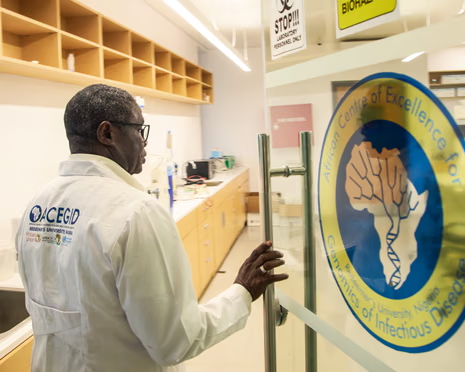
The Africa Centres for Disease Control and Prevention has entered the debate, with its director general raising public concerns about how some bilateral agreements require the sharing of critical health data, including pathogen information, as a precondition for receiving funding support. At a virtual press briefing, the agency’s head questioned whether such requirements could expose African health systems to undue risk and complicate responses to future outbreaks. This feedback added a regional health governance perspective to the ongoing diplomatic dialogue.
In Kenya, the unfolding situation has taken a legal turn as civil organisations brought a case challenging the constitutionality of agreements signed with the United States. A High Court temporarily suspended implementation after campaigners argued that the data sharing terms contravened national privacy protections. The outcome of this case is being watched closely across the continent, as it could set important legal precedents regarding how sovereign nations engage with powerful external partners on health matters.
At the heart of these disputes lies a fundamental philosophical divide about how health assistance should be structured. Washington’s approach departs from the historic model led by entities such as the World Health Organization and the now‑dismantled United States Agency for International Development, focusing instead on direct bilateral partnerships that require increasing contributions from recipient governments over time. Proponents of this model argue it promotes self‑reliance and ensures that each country has a seat at the negotiating table.
Supporters of the new strategy also contend that the scale of funding on offer cannot be ignored. Nations negotiating or signing agreements with the United States are often facing severe health system challenges that would otherwise go unfunded. For example, the Democratic Republic of Congo recently agreed to a $1.2 billion health partnership intended to strengthen disease surveillance and resilience against infectious threats. This deal, while controversial, illustrates how some governments are willing to engage in these bilateral frameworks to secure long‑term support.
 Still, sceptics caution that tying aid to terms perceived as one‑sided could erode trust and deepen dependency, even if increased domestic funding obligations are part of the framework. Public health advocates emphasise that genuine partnership must be rooted in mutual respect, clear benefit sharing, and robust safeguards for patient privacy. Without these elements, they argue, there is a risk of creating structural inequities under the guise of cooperation.
From Harare to Lusaka and Nairobi, the debates reflect broader questions about how international health diplomacy should evolve in a post‑pandemic world. African leaders asserting their sovereignty argue that health funding must support national priorities without compromising control over sensitive information or yielding undue leverage to external partners. These concerns echo in international forums and are shaping how negotiations proceed.
As Africa navigates these complex negotiations, the reactions reveal a nuanced interplay between securing essential health resources and safeguarding sovereign decision‑making. Governments and civil society alike are pushing for more equitable terms that uphold ethical standards while addressing the urgent health needs of their populations. Observers note that the outcome of these debates could influence wider global health funding practices for years to come.
In the meantime, some countries are advancing cautiously, seeking assurances that their data, biological samples, and strategic health information will be protected and used in ways that benefit their communities. Emerging legal challenges, regional health authority involvement, and heightened public scrutiny are shaping this contentious chapter in global health relations. The results of these negotiations will likely resonate far beyond the immediate stakeholders, affecting how the global community approaches collaboration, data governance, and equitable access to medical advancements in the years ahead.
Related News:
 British Woman in Iran ‘Losing Hope’ Amid Ongoing Detention
 BBC Journalist Held and Interrogated in Vietnam
 UK University Suspends Human Rights Research Following Pressure from China
 UK University Faces Counter-Terror Probe Over China Pressure
 Abigail Spanberger Elected Virginia’s First Female Governor
China-critical UK academics face ‘extremely heavy’ pressure from Beijing
Abigail Spanberger Elected Virginia’s First Female Governor
China-critical UK academics face ‘extremely heavy’ pressure from Beijing
 BBC to Apologise Over Edited Trump Speech Amid Backlash
 Britain deploys RAF specialists to assist Belgium with drone threats
 Ukraine-Russia war latest: Putin’s troops exploit bad weather to force Kyiv withdrawal from multiple towns
 Trump Claims Victory as Longest Shutdown Ends
 Hamas Fighters in Gaza Tunnels Stall Ceasefire Progress
 US Justice Department Files Lawsuit Against California Over Partisan Voting Maps
 Greene Pushes Epstein Files Amid Trump Fallout
 Trump Deploys DHS to Charlotte in Major Arrest Operation
 December Run-Off in Chile as Election Produces No Winner
 Canada Passes Carney’s First Budget in Tight Parliamentary Vote
 Why Russian Liberals Push Strongly Pro-Israel Narratives
 Shadow Fleet at Sea: Europe’s Battle Against Illicit Oil Shipping
 Rama Rebukes Mahmood for Targeting Albanian Families
 Russian Vessel Used Lasers on RAF Pilots, UK Claims
 Pentagon Officials in Ukraine to Discuss War End
 Venezuela Threatens Nobel Winner Machado with Fugitive Status
 Trump Envoy to Discuss Ukraine Peace at Kremlin
 Pope Leo XIV Begins Historic Trip to Turkey and Lebanon
 Georgians Defy Government Crackdown After Year of Protests
 India’s Labour Law Overhaul Sparks Fierce Debate
 Video shows Israeli troops kill Palestinians after surrender
 Chinese & Japanese Boats Clash Near Disputed Islands
 EU plans $105bn Ukraine aid using frozen Russian assets
 Global campaign launched to free Palestinian leader Barghouti
 UK Aid Cuts Could Undermine Global Influence, Experts Warn
 Thailand and Cambodia Agree Ceasefire After Weeks of Deadly Clashes
 Russia losses Ukraine war peace talks intensify amid rising deaths
 Zelenskyy Accuses Russia of Sabotaging Peace Talks
 Trump ‘Not Worried’ as China Conducts Massive Taiwan Wargame
 Khaleda Zia Laid to Rest with State Honour in Dhaka
 Maduro Faces Court in New York Over Drugs and Weapons Case
 Albanese Opens Door to Bondi Royal Commission Amid Rising Pressure
 Trump Escalates Minnesota Immigration Surge Amid Rising Tensions
 Iran Protesters Defy Crackdown as Violent Clashes Intensify
 Iran Leader Blames Protesters, Says They Serve Trump
 Trump Eyes Strong Military Options Amid Iran Protest Crackdown
 Trump Threatens Strong Action If Iran Executes Protesters
 Machado Trump medal gesture reshapes Venezuela power struggle
 Trump Receives Machado’s Nobel Medal in White House Meeting
 EU weighs response amid Greenland tariff crisis with Trump
 US Considers Asylum for British Jews Amid Rising Antisemitism
 ICE street raids expose a chilling future for public freedoms
 US Africa aid remarks spark anger after leaked State email
 Trump Launches “Board of Peace” Amid Global Diplomacy Push
 EU Says US Ties Have Suffered ‘Big Blow’ After Greenland Crisis
 Andrew Hastie Emerges as Leadership Rival to Ley
 Russia Strikes Kyiv and Kharkiv as Peace Talks Enter Day Two
 Starmer China visit underscores clear-eyed national security stance
 Starmer China visit raises human rights pressure on Beijing
 Israel Moves to Bar MSF From Gaza Operations
 Mandelson resignation shakes Labour over Epstein row
 Cory Bernardi joins One Nation for SA election
 Trump Praises ‘Terrific’ Petro After White House Talks
 Sydney Protest Escalates and Elderly Woman Suffers Severe Injury
 Tarique Rahman’s Rise Toward Bangladesh’s Top Job
 Glass Cliff Debate After Ley’s Ouster
 Japan Seizes Chinese Boat Amid Rising Tensions
 Australian Families Leave Syrian Camp for Home
 Trump Attacks UK-California Energy Pact
 Kim Jong-un Unveils Housing for War Families
 Trump and Chagos Deal Rift Over Iran Strikes
 Andrew Mountbatten-Windsor Arrest After FBI Radar
 Andrew Arrest Sparks Republic Debate in Australia
 Global corruption crisis: Who Washington shields
 Duterte ICC Hearing Begins Amid Defiance
 Farage Chagos Islands Row Sparks Fury
 Trump Tariffs Threat Spark UK and EU Alarm
 Albanese on One Nation and Pocock Attack
 The Dangerous Rise of Remigration Across Modern Europe
 Trump’s Marathon Speech Fails to Mask a Growing National Disconnect
 Trump Speech Sparks Intense Debate Across Divided America
 Jacinda Ardern Moves To Australia Following Her US Fellowships
 US to offer passport services in West Bank settlements
 Has Europe truly learned from the failures of 2022?